Many East Londoners are familiar with the Pontiac Indian Head sculpture that adorns the glass façade of the new Home Affairs building. Some have fond memories of Gonubie’s ‘Humpty Dumpty’ Egg. But few know that these, and other iconic pieces of East London history, were the work of a local artisan named Toby Skolmen.
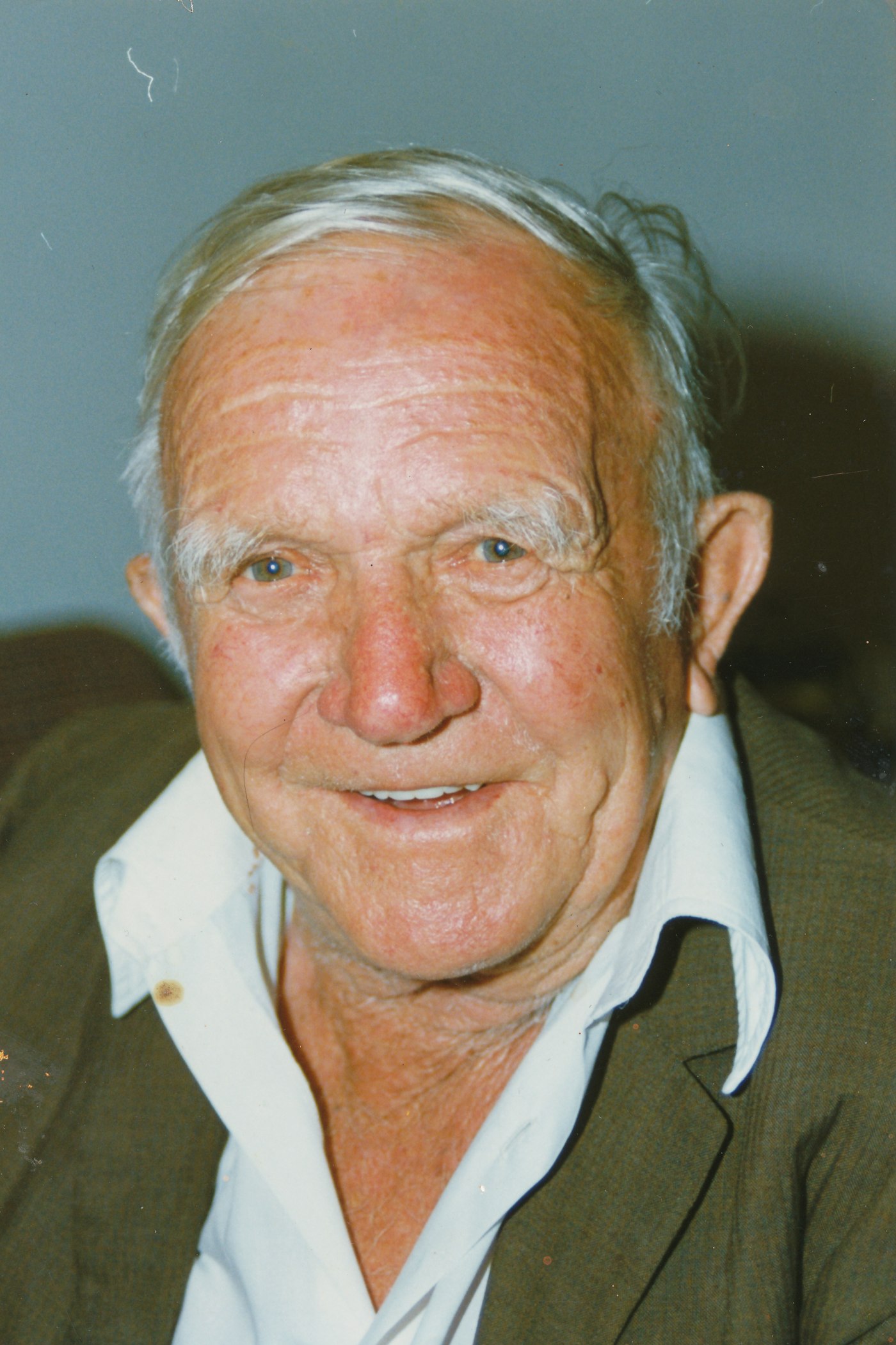
Toby (as everyone called him) was born Thorbjorn Christian Synnestvedt Skolmen in Nqutu, Zululand in the Natal Province on 28 January 1912. His parents, Thoralf Skolmen and Henninge Bolling Hillestad, were both Norwegian immigrants who arrived in South Africa just after the turn of the century. There had already been evidence of artistic talent in the Skolmen family; Toby’s grandfather, Kristian Skolmen, was a renowned Norwegian artist who created wonderful watercolour landscape paintings. Toby lived and attended school in Norway for five years (1922-1927) and could speak Norwegian and Zulu in addition to English.
Toby learned the building trade while growing up in Durban. He apprenticed with the stonemasonry firm of Pike and Martin Modellers, Plasterers and Tilers. During his apprenticeship he also took evening classes at Tech College (Natal Technical College). He later joined the R.N.V.R (Royal Navy Volunteer Reserve) and became a leading Seaman Gunner and Drill Instructor.
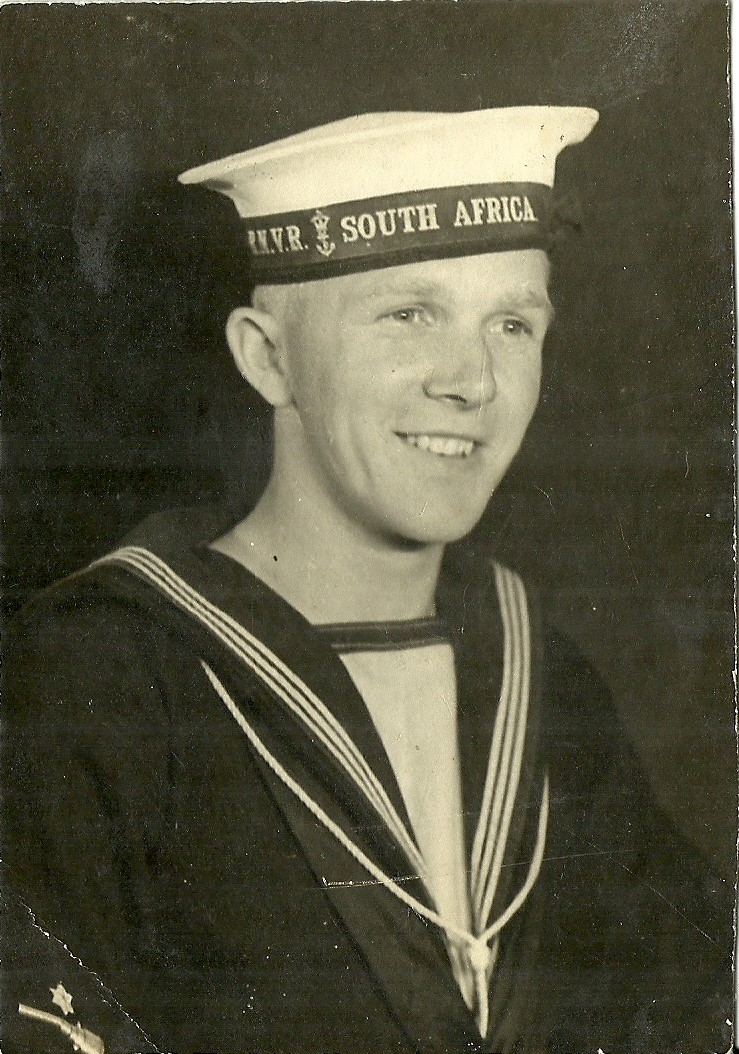
Photo credit: Gary Skolmen
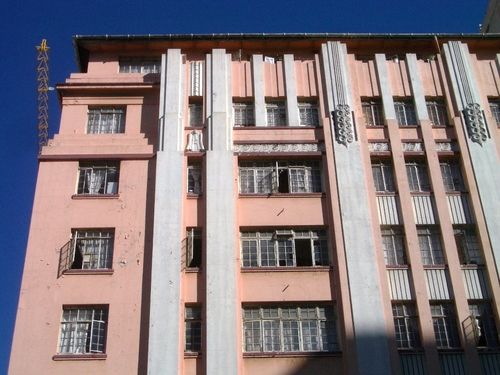
In the late 1930s Toby was employed by a contractor named Mr Rorvig and worked on two of Durban’s landmark Art Deco flat blocks, Manhattan Court and Nordic Court in Broad Street.

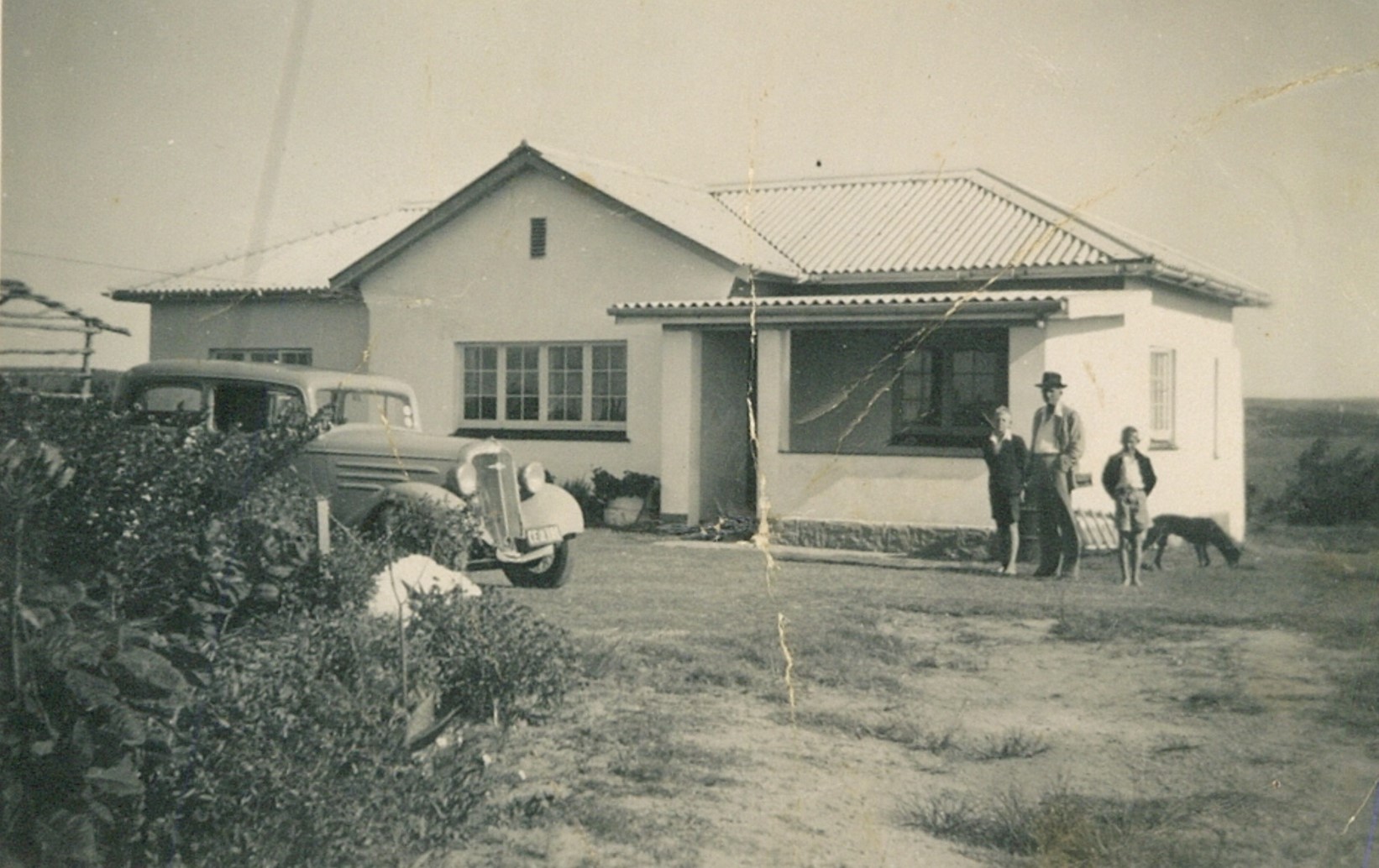
Toby was invited by his foreman (Wallace Jordan) to spend Christmas with his wife’s family in East London. During this time Toby met and fell in love with his foreman’s young sister-in-law, Eva Hilda Bauer. Toby and Eva married in 1940 and started raising their family in Durban. The couple moved to East London around 1946 with their sons John Frederick Skolmen and David Ernest Skolmen. They purchased a farm in Thornvlei Road, Meisies Halt, which Toby named Sunset Farm (now owned by Umso Construction). Two more children were born in East London: Linda Marie Skolmen and Edward James Skolmen. Linda’s name was derived from the Zulu word meaning “long awaited” since she was the couple’s first and only daughter. Toby built a house on Sunset Farm to accommodate his growing family.
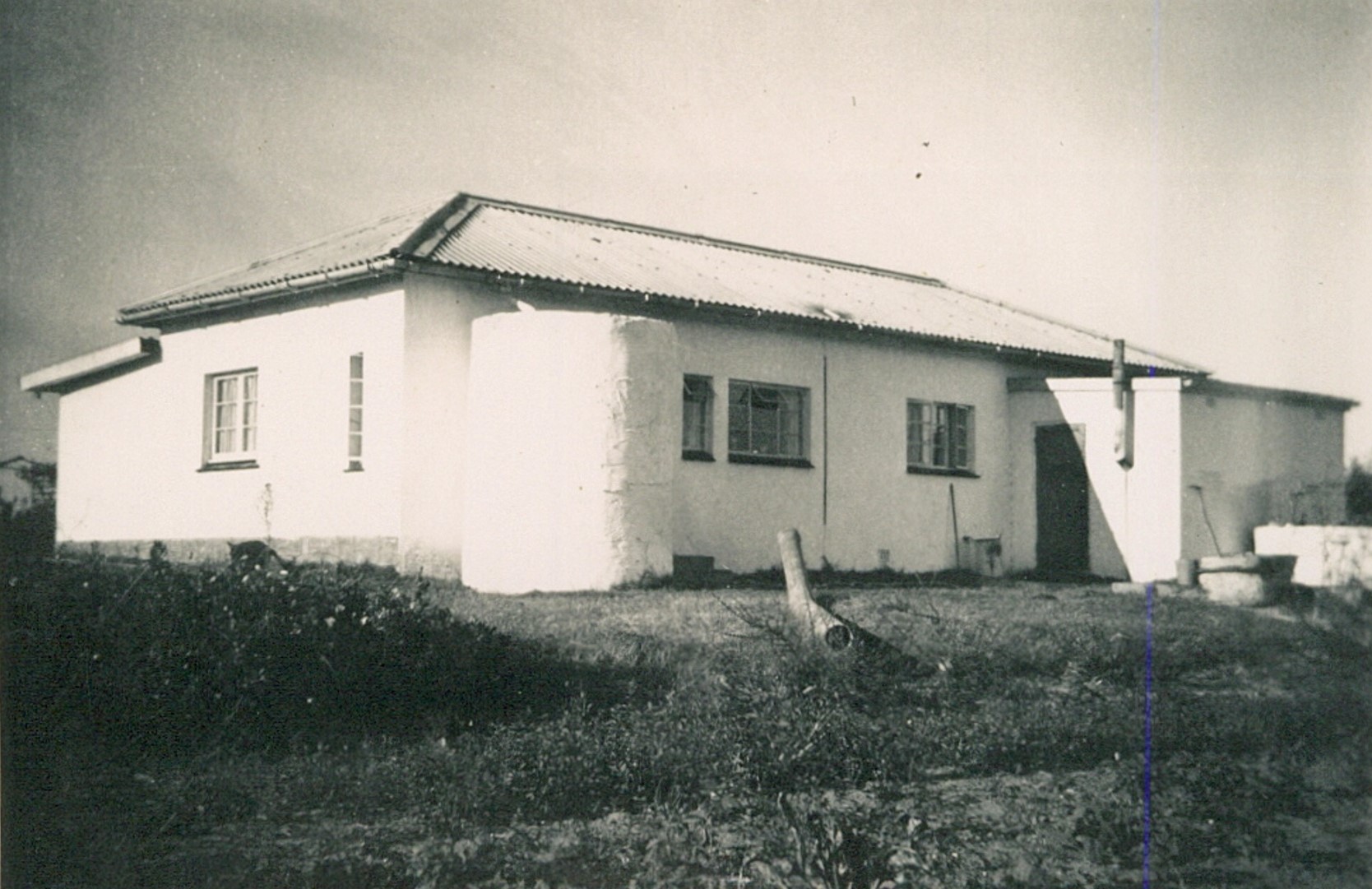

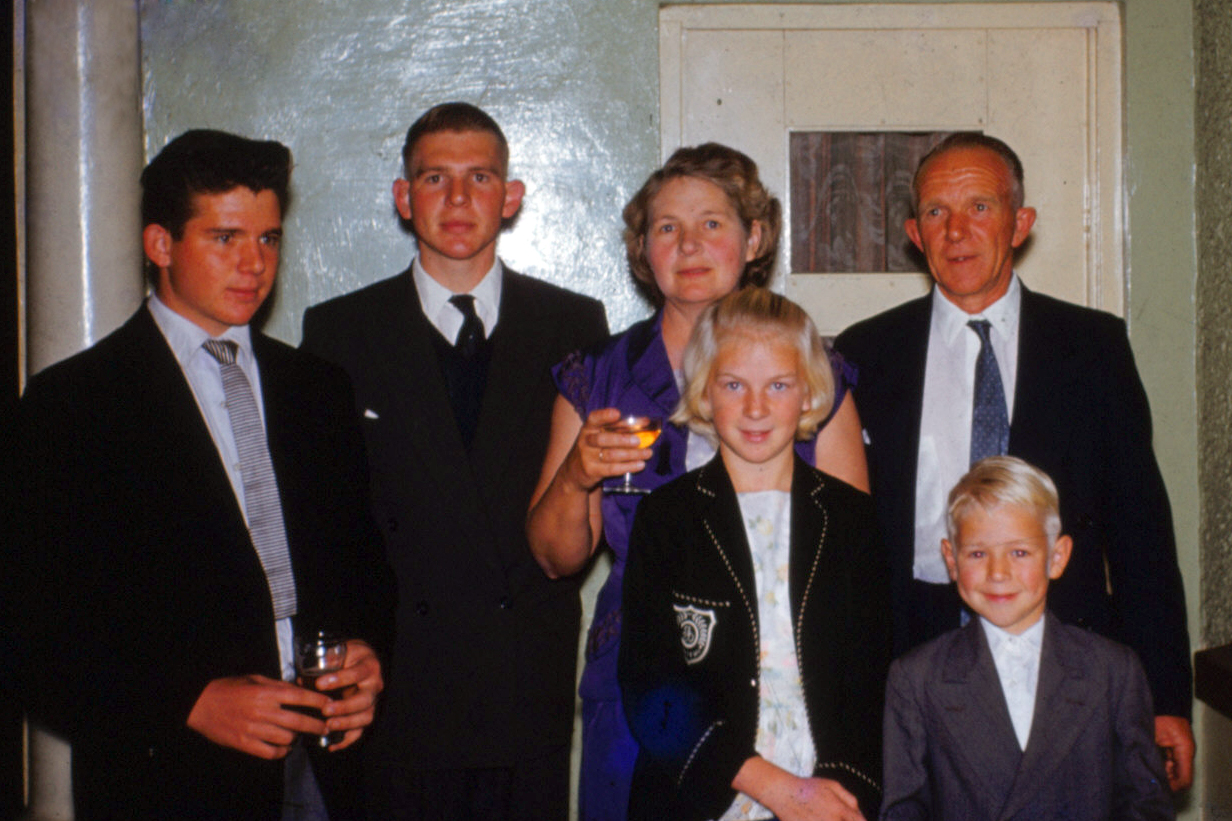
Toby devoted his life to the building trade. In the late 40s and 50s he worked for the firm of Ch. Katz Building Contractors in East London, for whom he apparently assisted Chaim Katz with sculpting the head of a Native American (in relief plasterwork or precast concrete) representing the Pontiac logo.

Photo credit: William Martinson
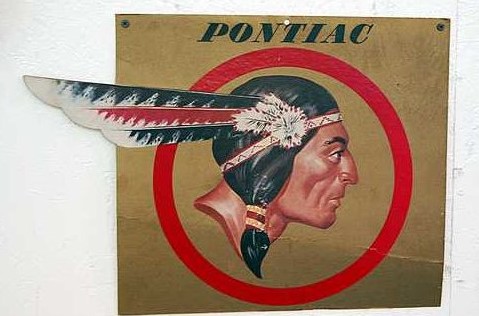
This job was done for Fleet Motors, situated on the corner of Fleet Street and Cambridge Street in East London’s Central Business District.
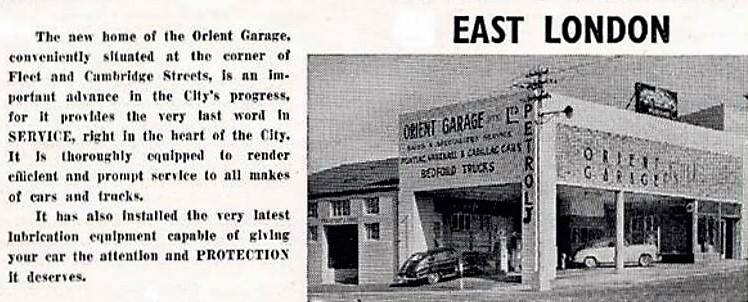
Photo credit: Mike Greyvensteyn
Pontiac is a brand of motor vehicle named after the famous Ottawa chief who had also given his name to the city of Pontiac, Michigan where the car was produced. Fleet Motors was a Pontiac dealership. The sculpture was mounted on the curved stone parapet wall, and advertised this fact (William Martinson, October 2014).
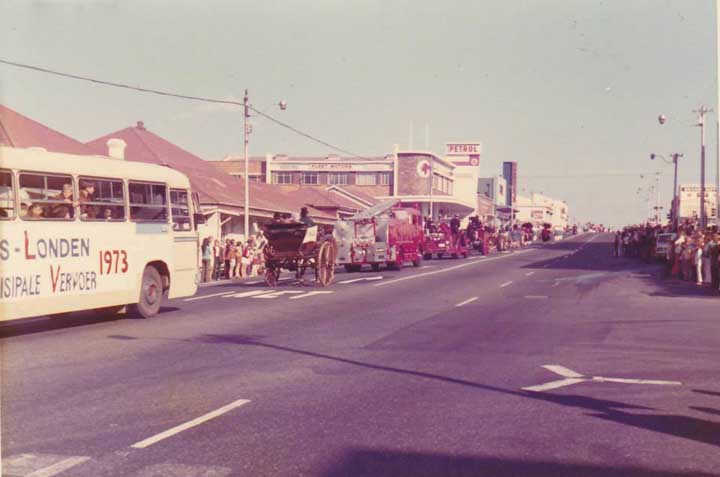
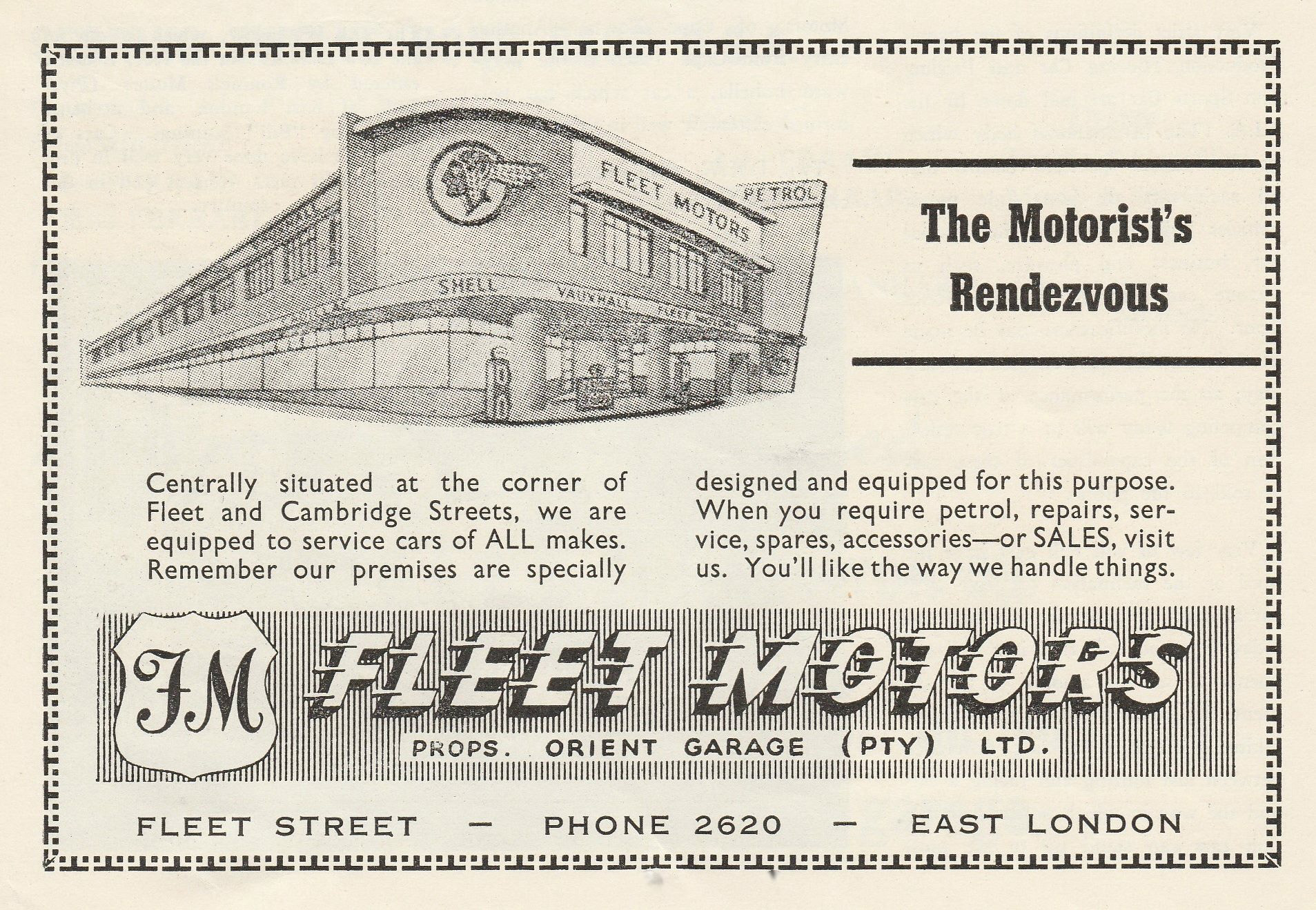
Photo credit: William Martinson
The building itself has housed many businesses in the past, including Chieftain Paints and Motorland, where it was used as a Mahindra franchise.

Photo credit: William Martinson
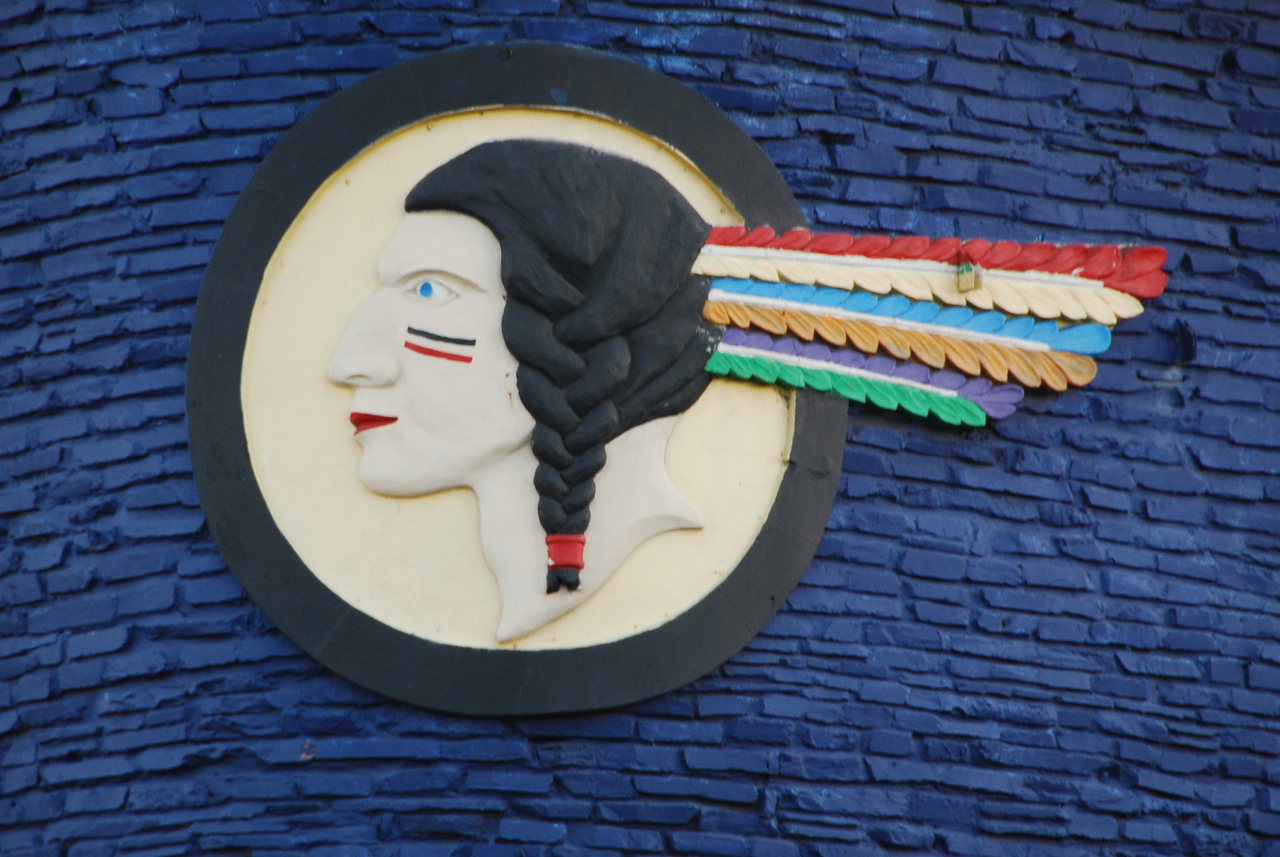
Photo credit: William Martinson
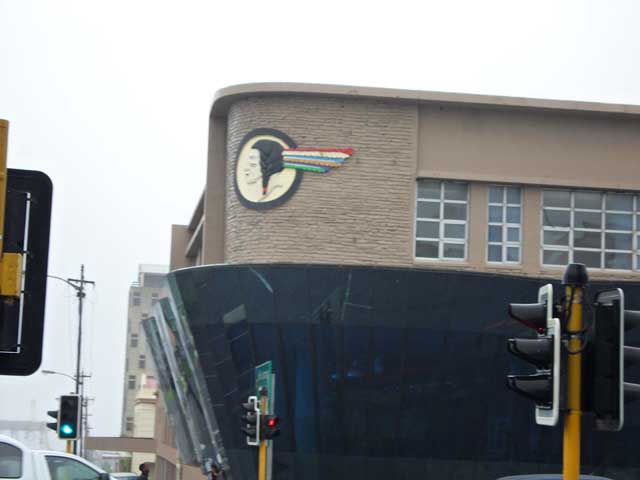
The building was substantially modified in September 2014 with a wrap-around, inclined glass facade at ground floor level to accommodate a government office. Fortunately, this adaptive re-use did not obscure the Pontiac Logo. This alteration, however, significantly modified the curved outline of the original cantilevered concrete forecourt canopy and entailed the removal of the original inclined plate-glass shop fronts (William Martinson, October 2014).
Originally painted plain red in the typical colours of the Pontiac logo, the sculpture has been painted quite decoratively over the decades. But sure as the sun sets, no matter what it has been used for or as, the iconic East London symbol has remained, even now as the Government Department of Home Affairs building. From what I understand, it is a protected part of the local heritage and may not be removed from the building.

Photo credit: Eddie Botha
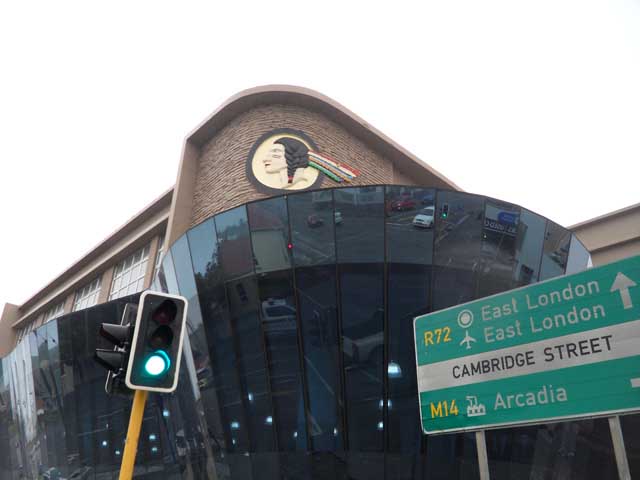
Although there is no solid evidence pointing to Toby Skolmen as the creator of the Pontiac sculpture, according to members of the Skolmen family, the Indian Head was a significant project for Toby. “I remember Grandpa Toby telling me about the Indian Head, he apparently battled with sculpting the feathers” says Gary Skolmen. Judy Skolmen Bouwer agrees. “Toby was very proud of the Indian Head,” she says. “He had a unique talent and was sought after to do ‘special’ jobs in East London.” This was further discussed with Reinard Joseph Ivan Hill, a family friend who stayed in a rondavel with his wife on Toby’s farm in the early 1970s for a year or two, “Toby and I chatted many times when he was in the mood, which was very often. In fact, he was very proud when he mentioned doing the Indian chief head. I have no doubt that he did it, even though he worked for Chaim Katz. Why would he out of the blue mention a lie? That was not Toby. He was genuine! He also mentioned the egg at Springbok Farm Stall, but it was the Indian Head that intrigued me.”
Later, Toby worked for a company called Christofferly & Son, which specialized in mosaics. Toby was very talented with his hands. He created wonderful castings in his spare time including cement gnomes, squirrels, frogs and bird baths.
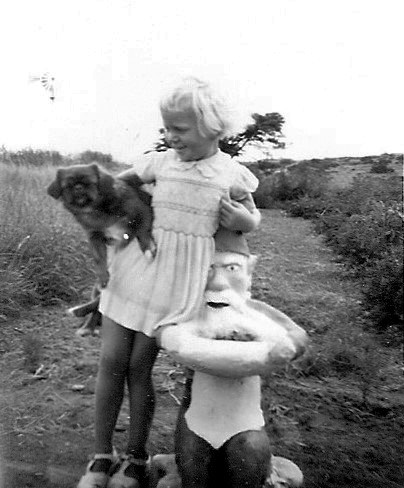
Source: Berit Svenman

Photo credit: Nigel Meier
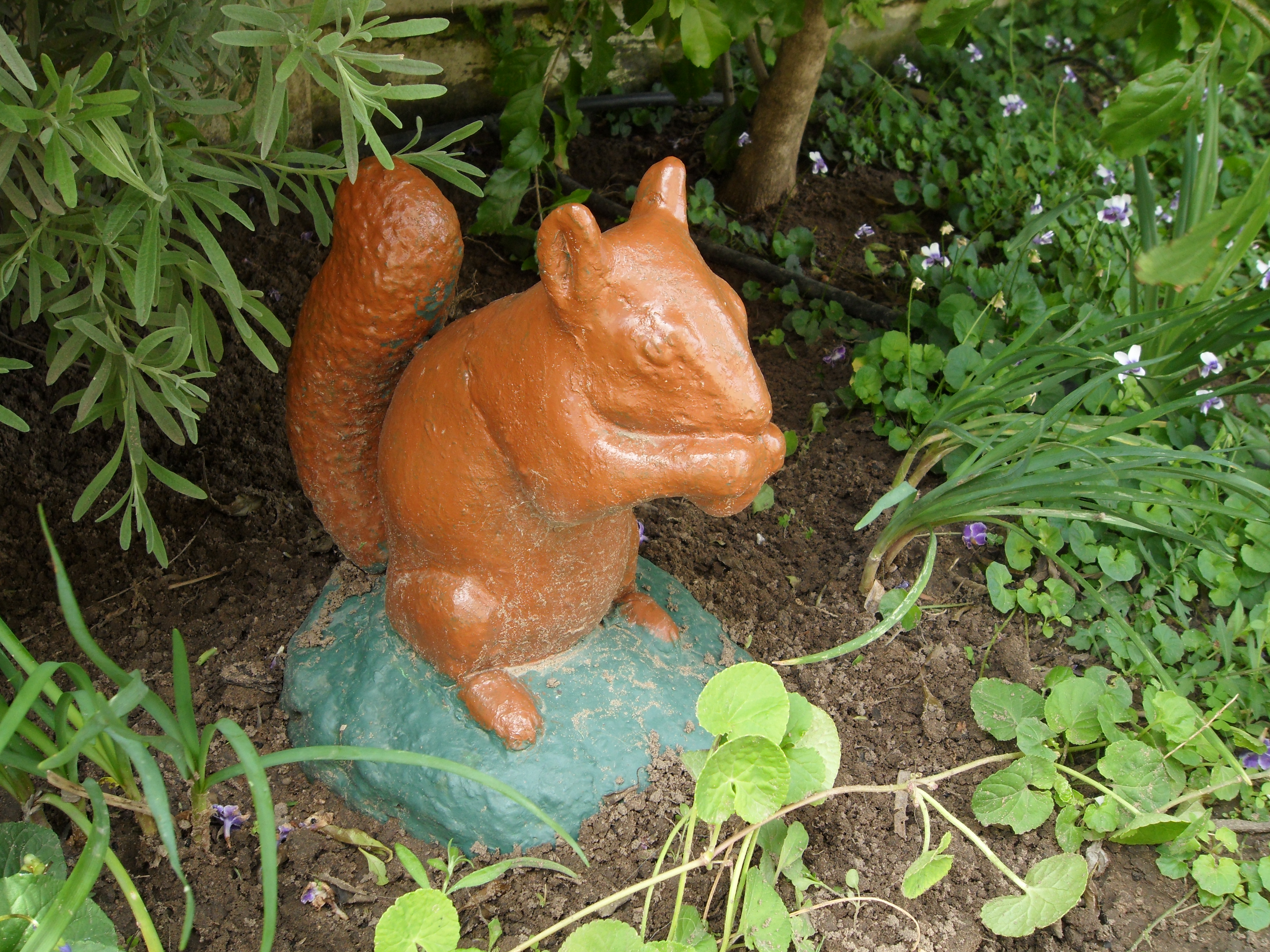
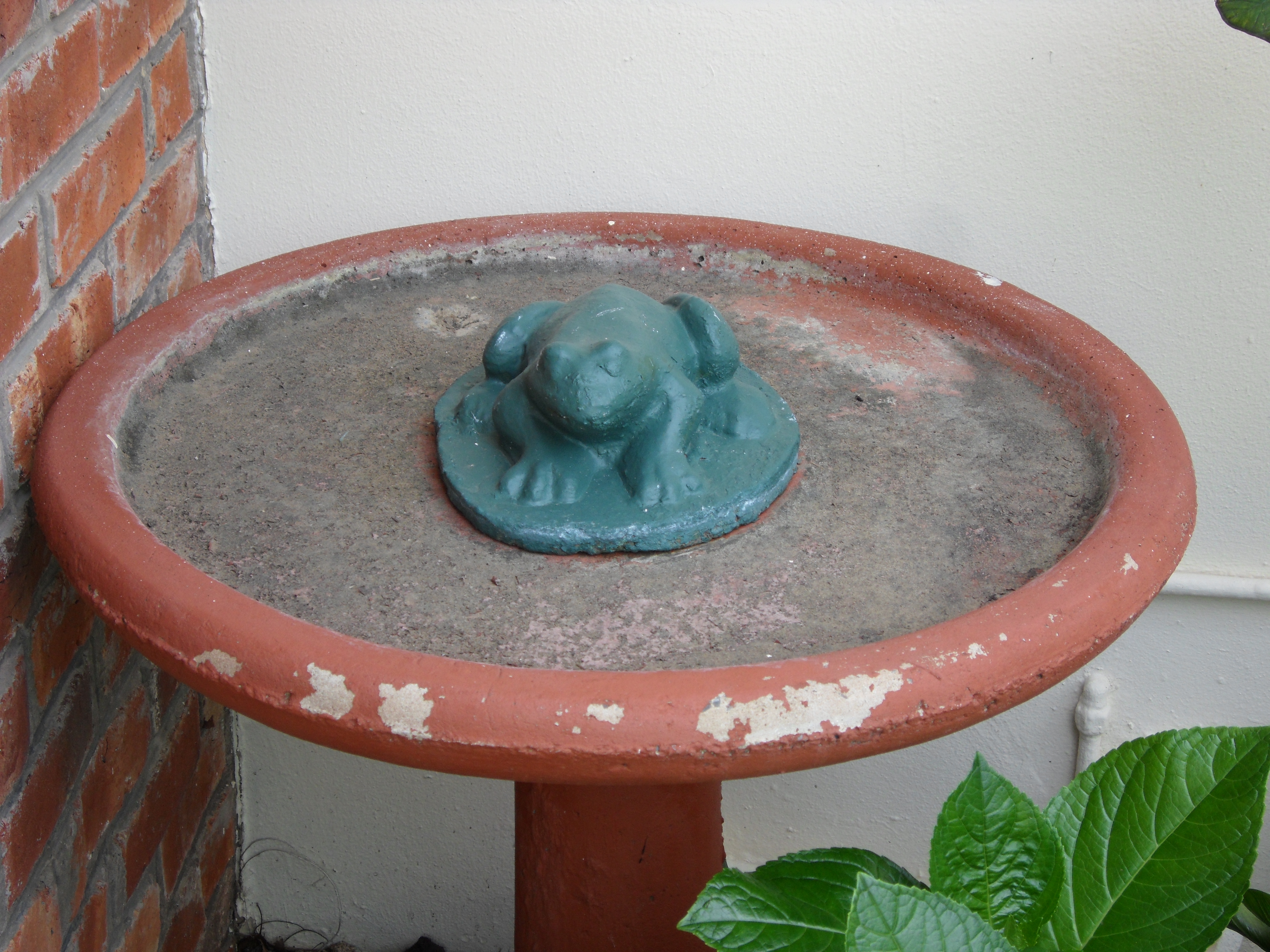
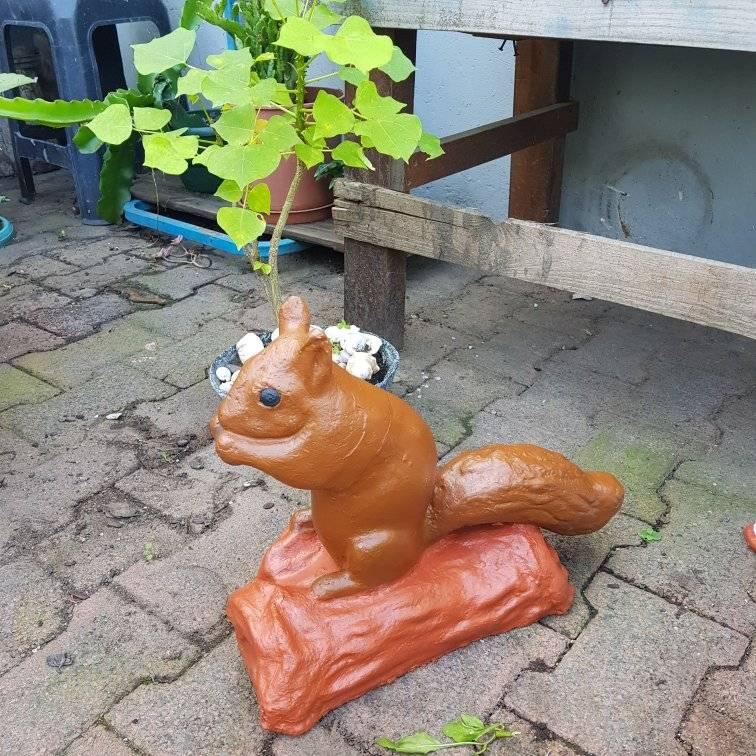
Photo credit: Brenda van Heerden (Nee Bridger)

Photo credit: Brenda van Heerden (Nee Bridger)
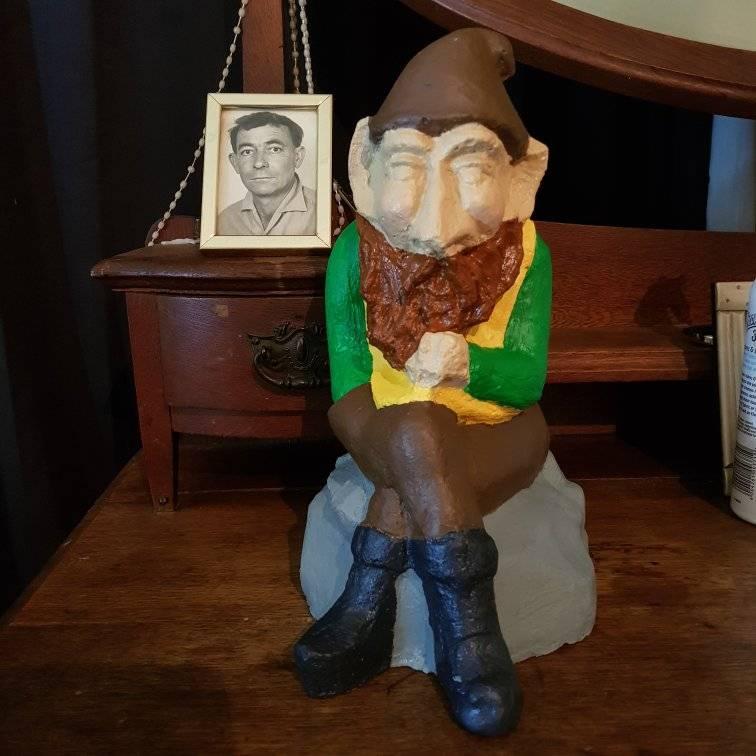
Photo credit: Brenda van Heerden (Nee Bridger)

Photo credit: Brenda van Heerden (Nee Bridger).
Toby made each unique mould for his cement sculptures, which according to his son Eddie Skolmen, is quite challenging and requires creativity and artistic skill. Eddie also mentioned the difficulty of the casting process, “Casting is a very difficult task and requires great skill. You have to angle the wood and when you place the cement in, everything is upside down. It is like building a sandcastle; when you place the sand inside a bucket and turn it over and pat the back of the bucket and out comes the sand in the exact shape of the bucket.”
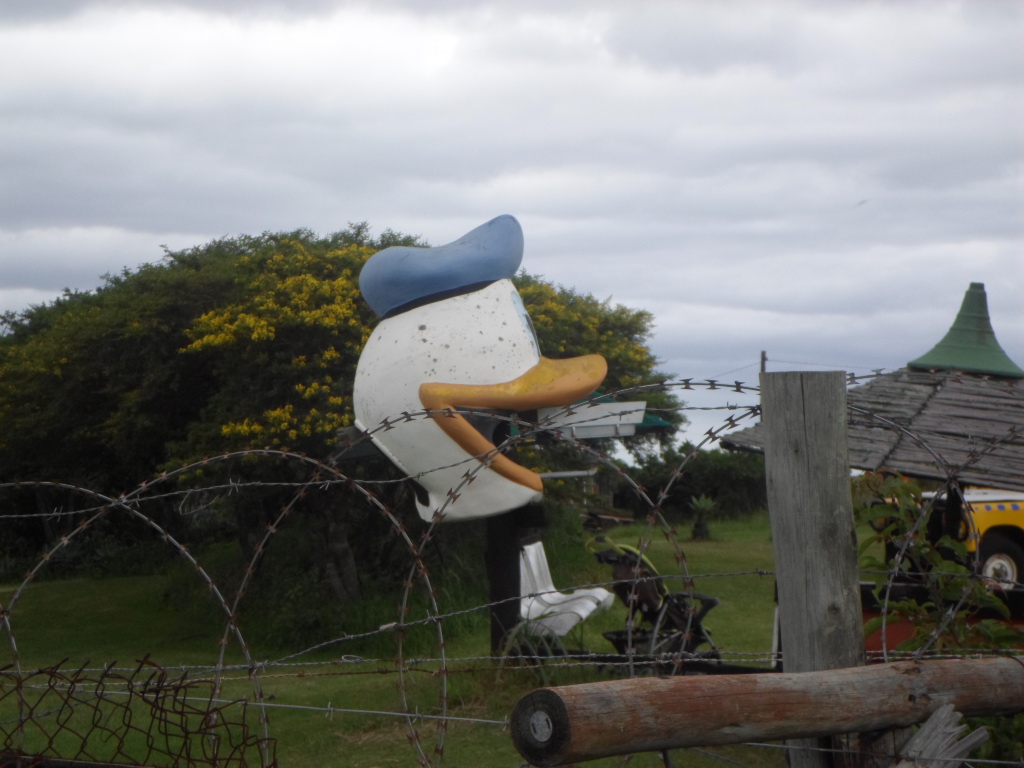
Toby also created many interesting sculptures, such as the cabbage, tomato and pineapple that were displayed on the roof of Attwell’s Farm Stall outside Gonubie right before Farmarama. Many readers may recall the plastic Donald Duck head that also stood on the farm stall’s roof (which is now situated in Billy Nel’s collection on his farm near Kei Mouth), this item was not done by Toby.
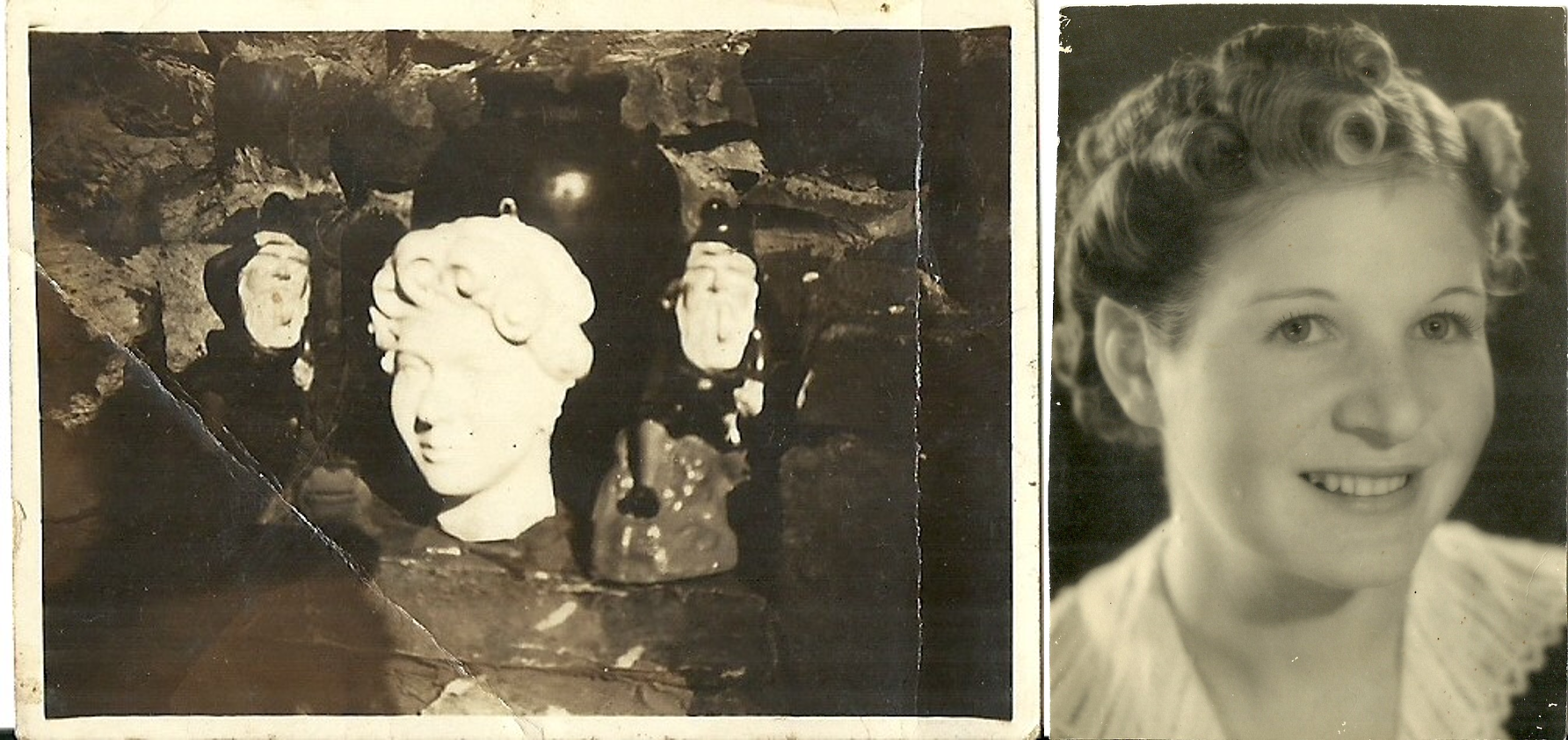
Toby would also create works of art from looking at photographs. He created a white plaster bust of his wife’s head simply by looking at a photograph of her. As you can see in the image below, the resemblance is striking.
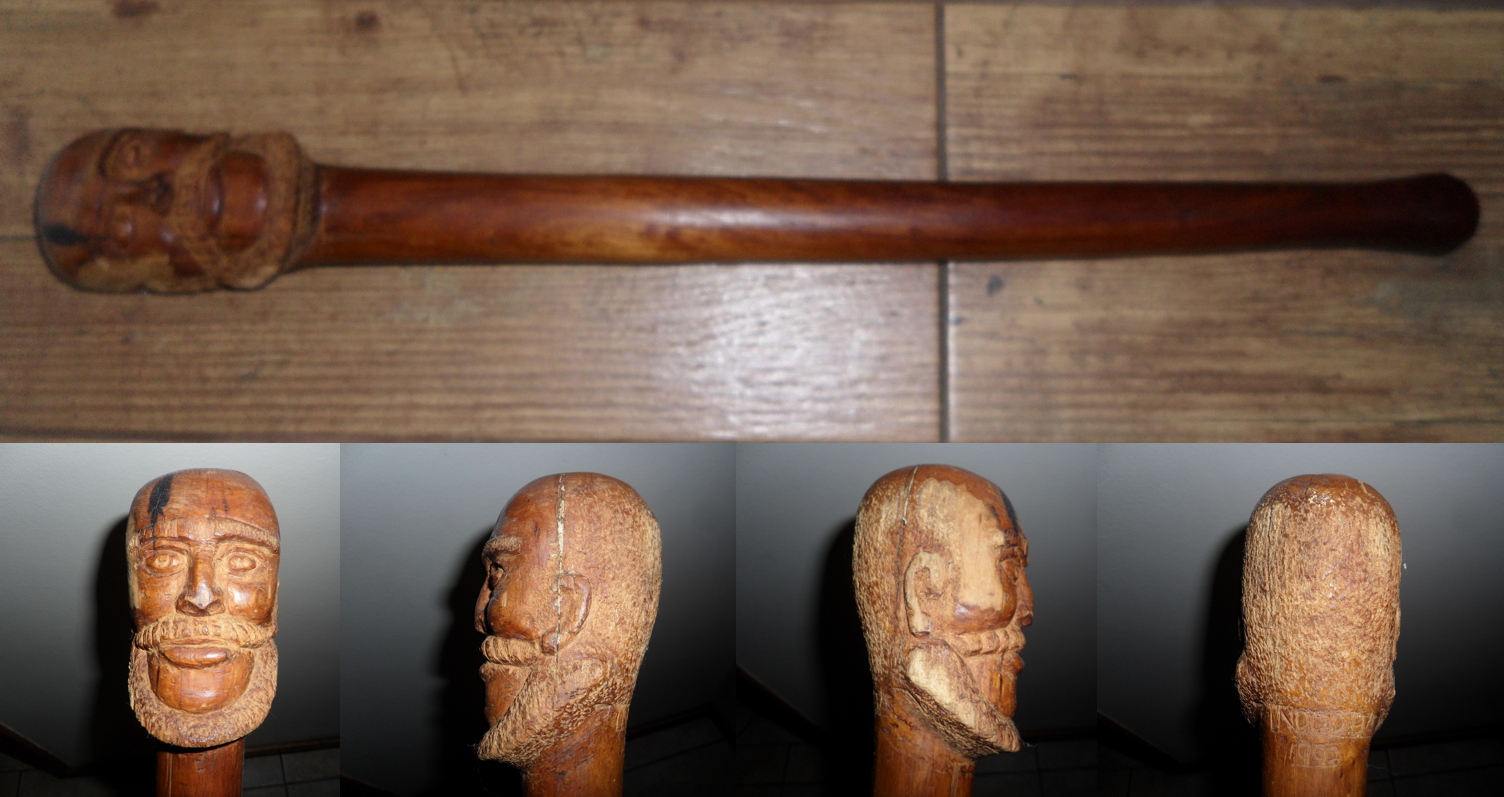
Toby also carved a wooden sculpture from a postcard of an African carving a thick wooden baton-like stick with an African face at the top. He mimicked what he saw on the postcard and the end result was identical.
One of Toby’s best-known sculptures was the ‘Humpty Dumpty’ Egg situated next to the Springbok Farm Stall, which could be seen when leaving Gonubie. The egg was more than just a decoration, according to Biggy Barnard. “I came across a large rugby ball at Border Boxes, which had come from the Border Rugby Union (BRU) grounds when the All Blacks played in East London. I offered to buy the rugby ball and then came up with the idea to turn the rugby ball into an egg to advertise my egg business from the farm stall. I contracted Toby Skolmen (who was a good friend of my husband and regular customer at the farm stall) to have the rugby ball plastered with bricks and cement in order to turn it into an egg.” Milly Skolmen recalls that when President F.W. De Klerk visited Gonubie in the early 1990s his face was painted on the egg. The resemblance was striking, since the president and the egg were both bald. Later between 1994 and 1998 the egg was painted with Coca-Cola branding and arms, legs, a red cap and a coke bottle were added. The iconic egg met a sad fate, according to the Gonubie community on Facebook. After losing its arms and legs in a misguided attempt to move the egg, it was converted into a Springbok rugby ball. A second attempt to move the egg resulted in its destruction and permanent removal. Many were saddened by the demolition of the egg, feeling that a significant part of Gonubie’s history had been lost. Joy Phillips wrote “Very sad that we lost the Humpty Dumpty egg. Was an icon for all people especially the children.”
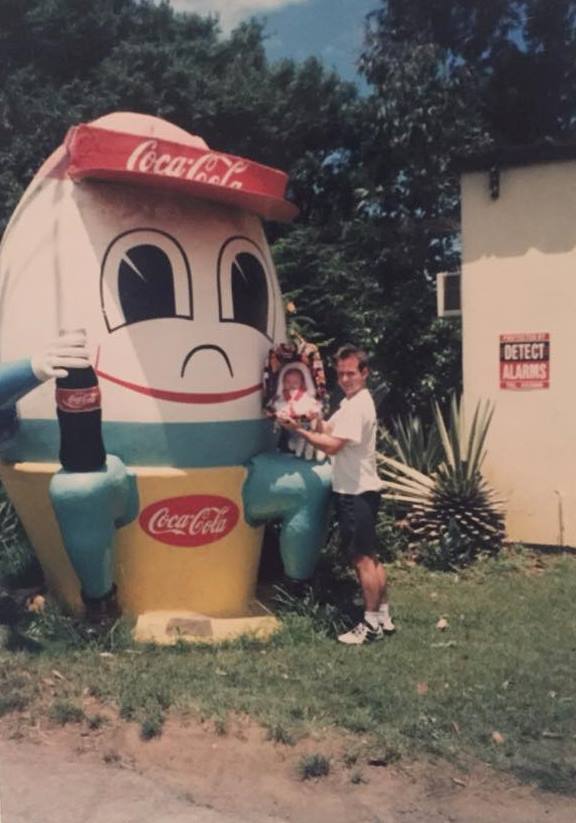
Photo credit: Tracy Skolmen
In addition to these pieces, Toby was contracted by Katz and Robinson in the seventies to do the Clarendon Girls’ High School cement sign with its detailed trimmings. He also made the plaster sculpture of the Beaconhurst Primary School badge located at the entrance to the school.
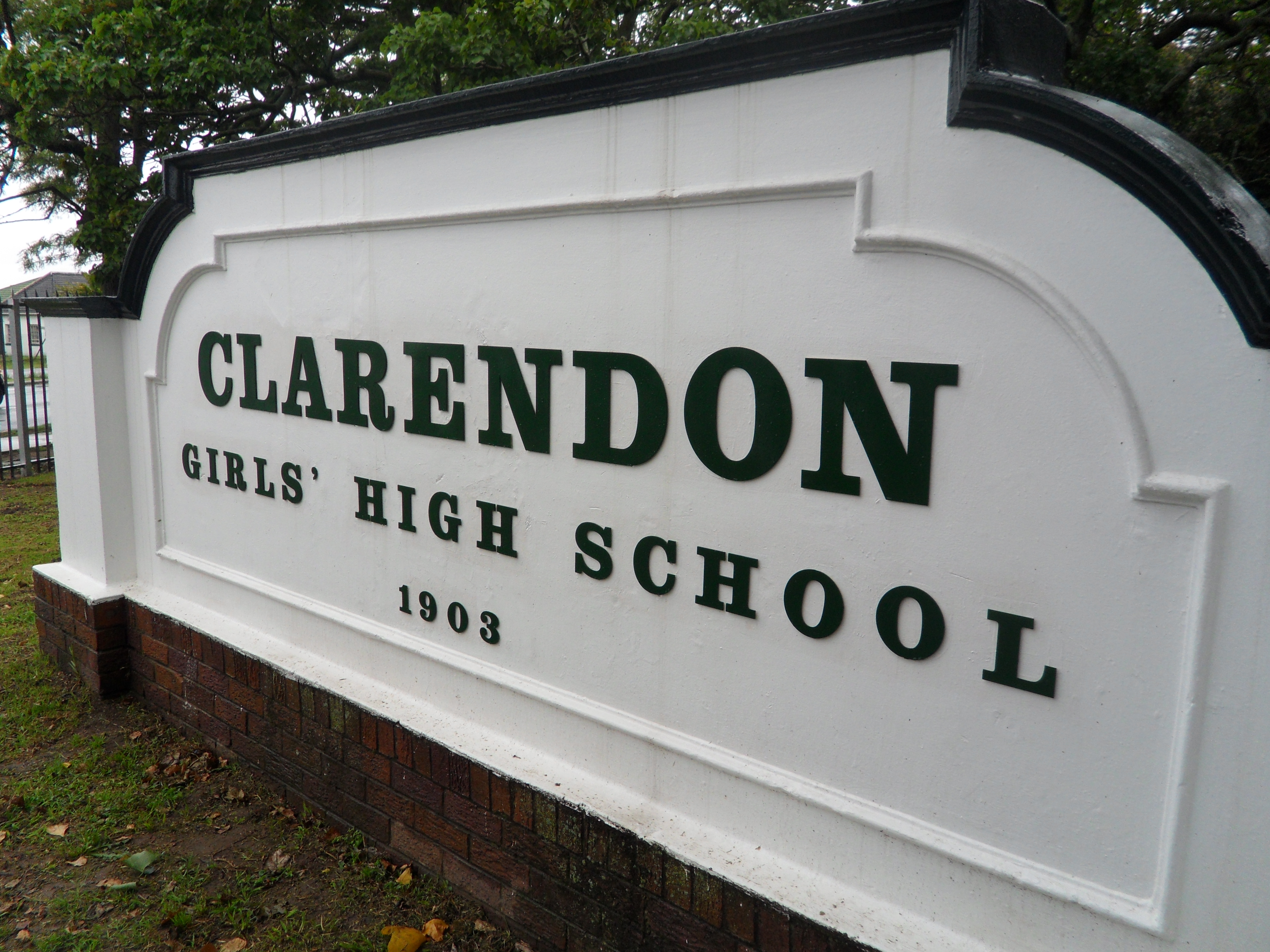
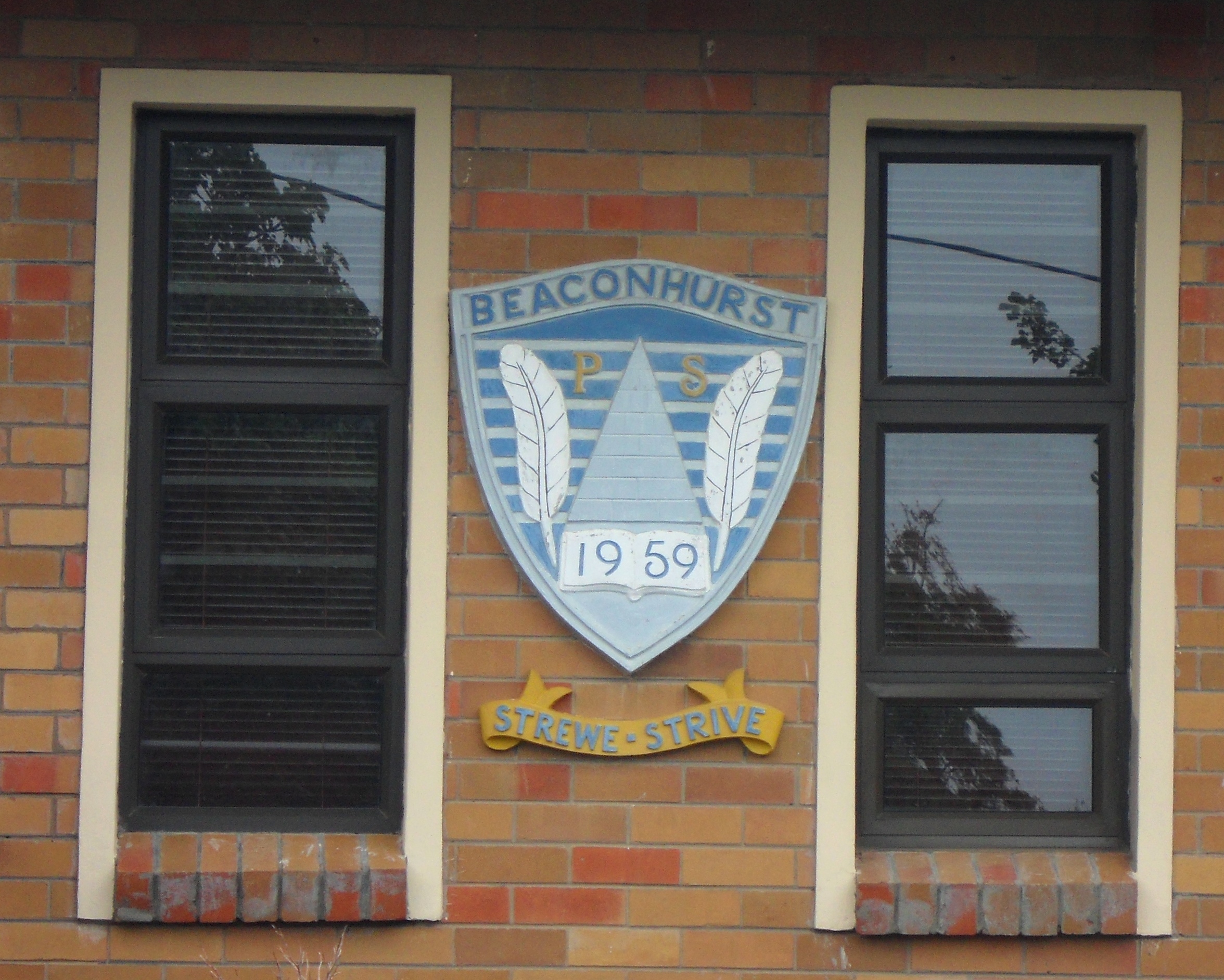
These two works, along with the Pontiac head and Toby’s personal cement castings, are all that remain of Toby’s legacy, according to Eddie Skolmen. Toby died on the 30 June 1993 from a stroke. He was 81 years old. Since then much of his work has been lost and all that remains are family stories and a few old photographs.
About the Author
For more articles visit Dayne’s Discoveries Blog, browse our online shop, or contact us to share information, stories, or photographs relating to Toby Skolmen and the sculptures he created.

 Dayne's Discoveries
I stop and gaze at the Pontiac sign every time I visit EL
LikeLiked by 1 person
I too have heard the story of Uncle John wrestling the bull off of his father! John is a lovely man, soft and kind. I haven’t seen him in years. I worked with him for a while just before his retirement. Thank you for the lovely article, I enjoyed reading it!
LikeLiked by 1 person
Hi Travis-Lee. I am glad you enjoyed the article. Here is the story of Uncle John and the bull: https://skolmen.wordpress.com/2014/12/20/south-african-skolmen-family-stories/
LikeLike
Uncle Toby and Auntie Eva were our neighbours for many years on the farm.
We loved to visit and admire his works and moulds strewn across the yard, (not to mention the biscuits and cookies) and I especially remember the front court yard decorated with sea shells. A more friendly and nice couple you will not find. I remember a story that made the papers, when Uncle Toby was attacked by a Bull, John his son, ran in and tackled the bull and managed to chase him off and save his farther’s life.
It was a very sad day and a great loss when he passed away.
LikeLiked by 1 person
Hi Barry. Thank you for those kind words about my grandparents. The story of my uncle John and the bull is a well known one in the family, although there are different versions of it depending on who you ask haha. There was supposedly a newspaper article titled ”John K.O.s Bull” but I have not been able to identify which newspaper it was to try and find it in the archives. Did you have any of Toby’s sculptures on your farm? I spoke to my father (Eddie Skolmen) and he has fond memories of the Springers on the neighbouring farm in Meisies Halt.
LikeLike