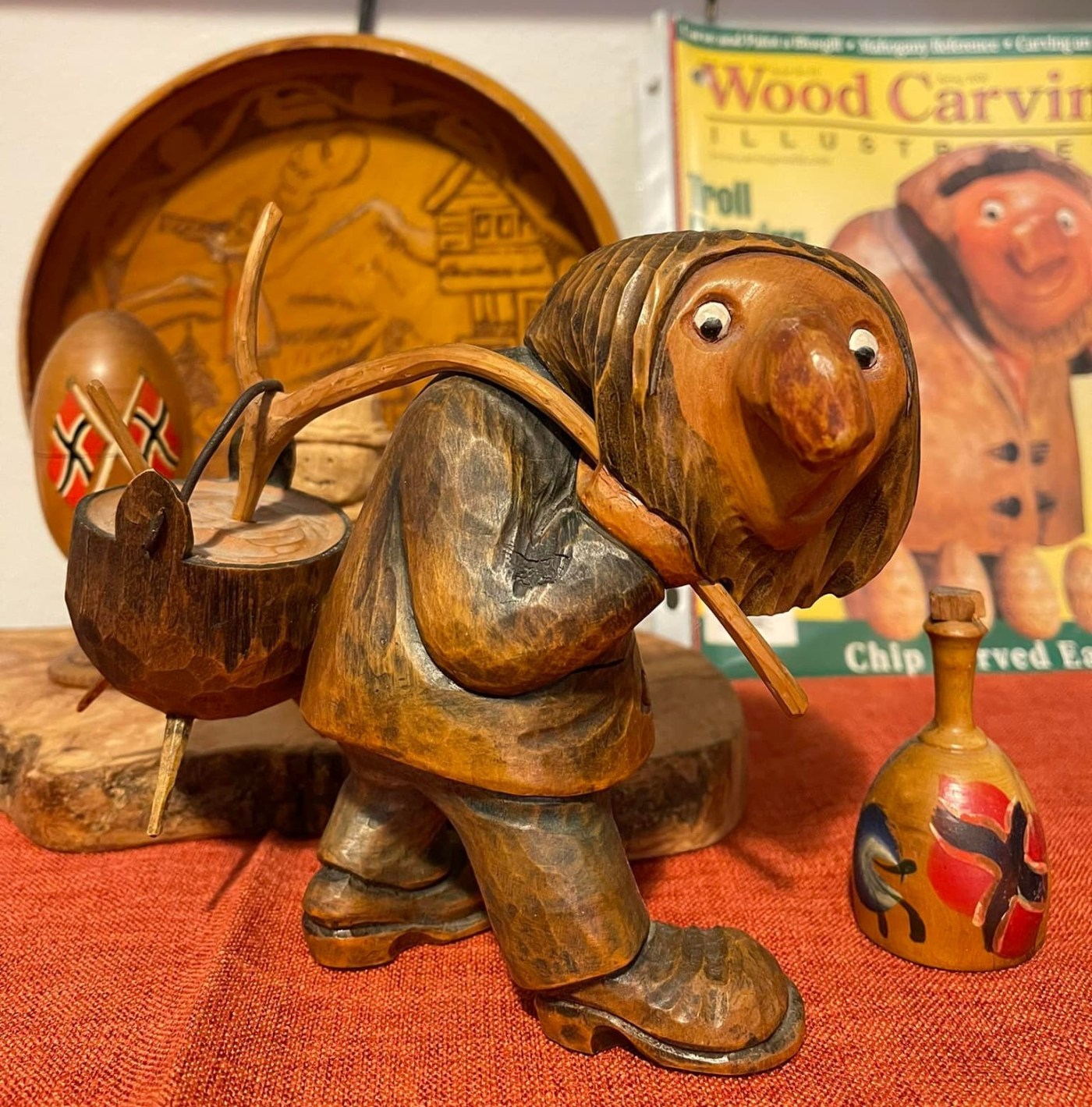
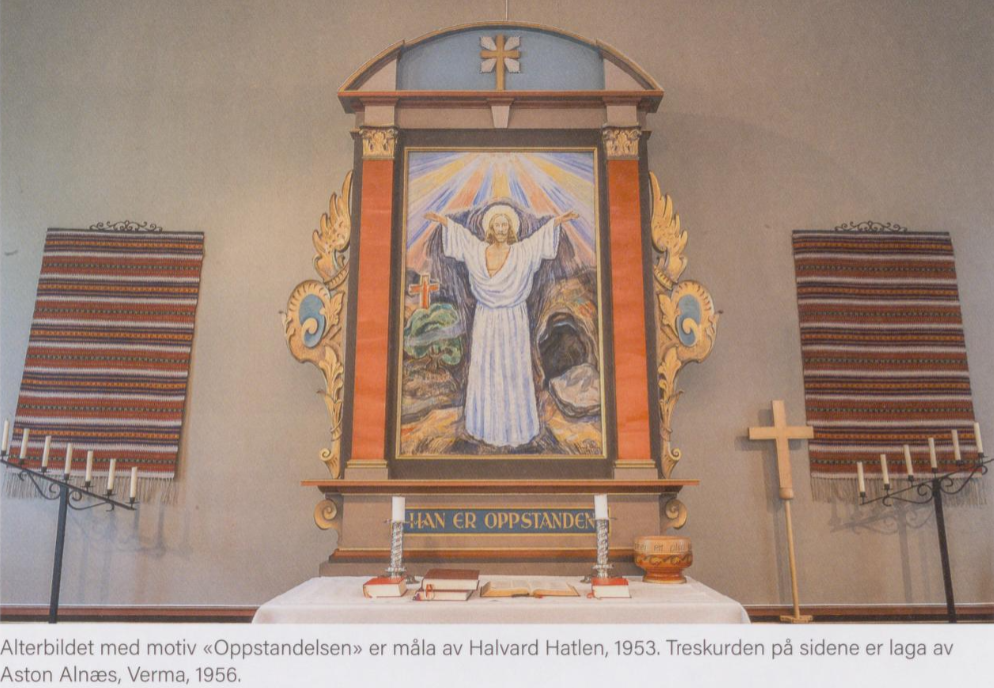
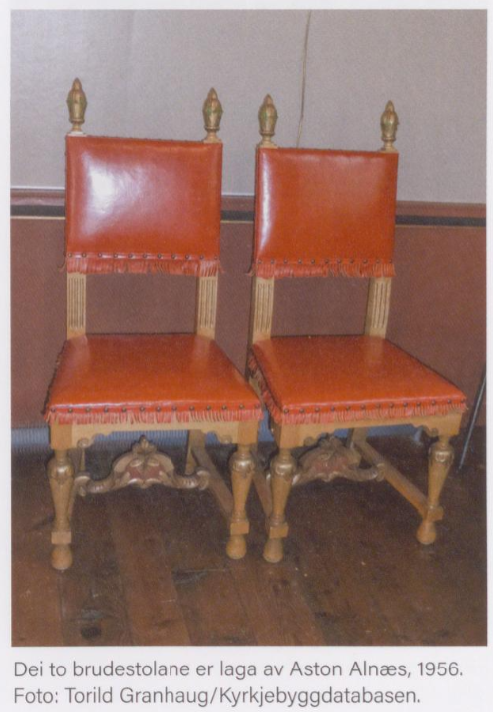
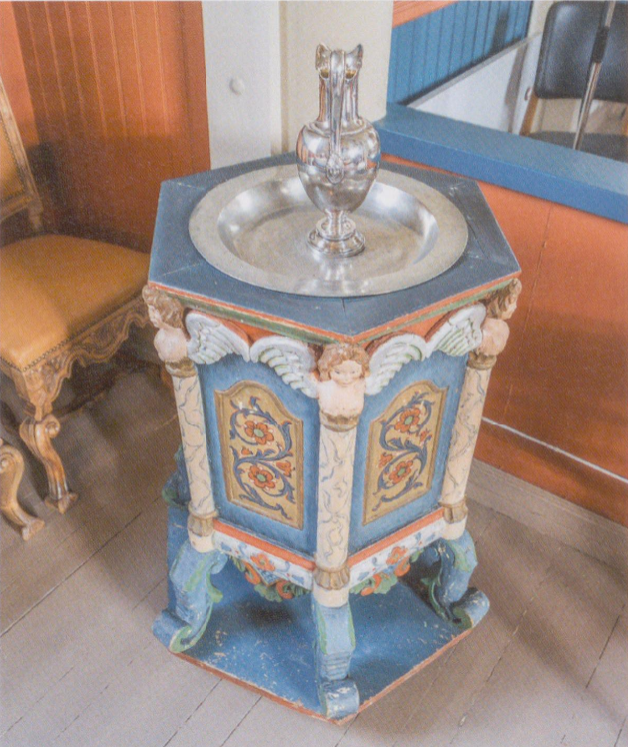
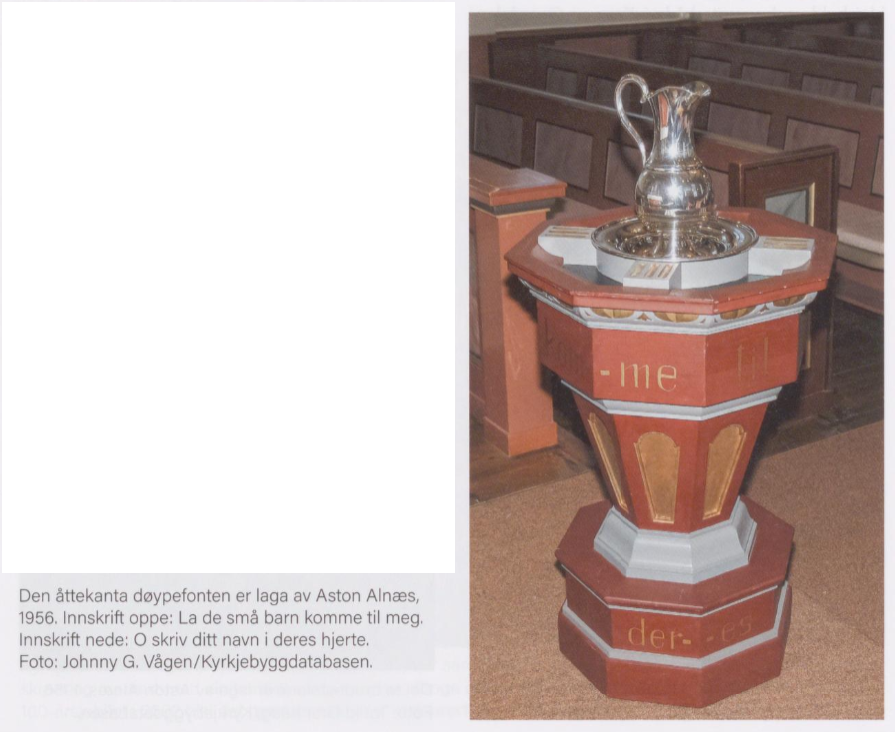
Aston Alnæs was a skilled Norwegian woodcarver from Verma. He made his living as a woodcarver and painter throughout his life. He worked in his hometown, and most of his production was sold locally or to tourists, particularly those interested in trolls and animal figures. He also undertook commissions for larger carving projects. His craftsmanship and great attention to detail characterize his work. In Romsdal, he created the baptismal font, the wedding chairs, and the wood carvings on the altarpiece in Øverdalen Church, as well as the gilded dove above the baptismal font in Eid Church (Source: Årsskrift (Romsdal sogelag). 2021, page 379-380).
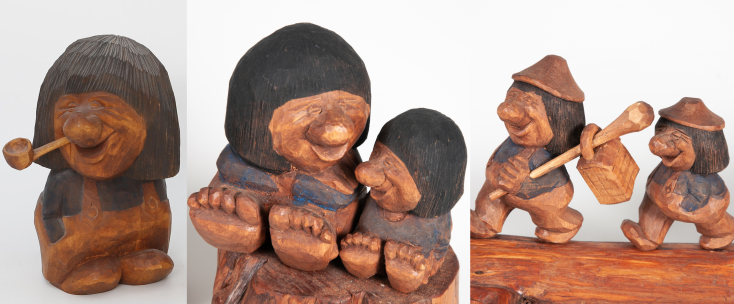
Today, Aston Alnæs is best known for his happy carved trolls. Though not much is known about the trollmaker, there has been a significant spark of interest in his trolls and collectors are eager to find out about the man behind them.
Aston Alnæs was born in 1904 in Øverdalen in Rauma, Norway. In his younger years, he lived in America, where he began woodcarving during the Great Depression. Upon returning to his home village, he continued this craft, which later became his main profession.
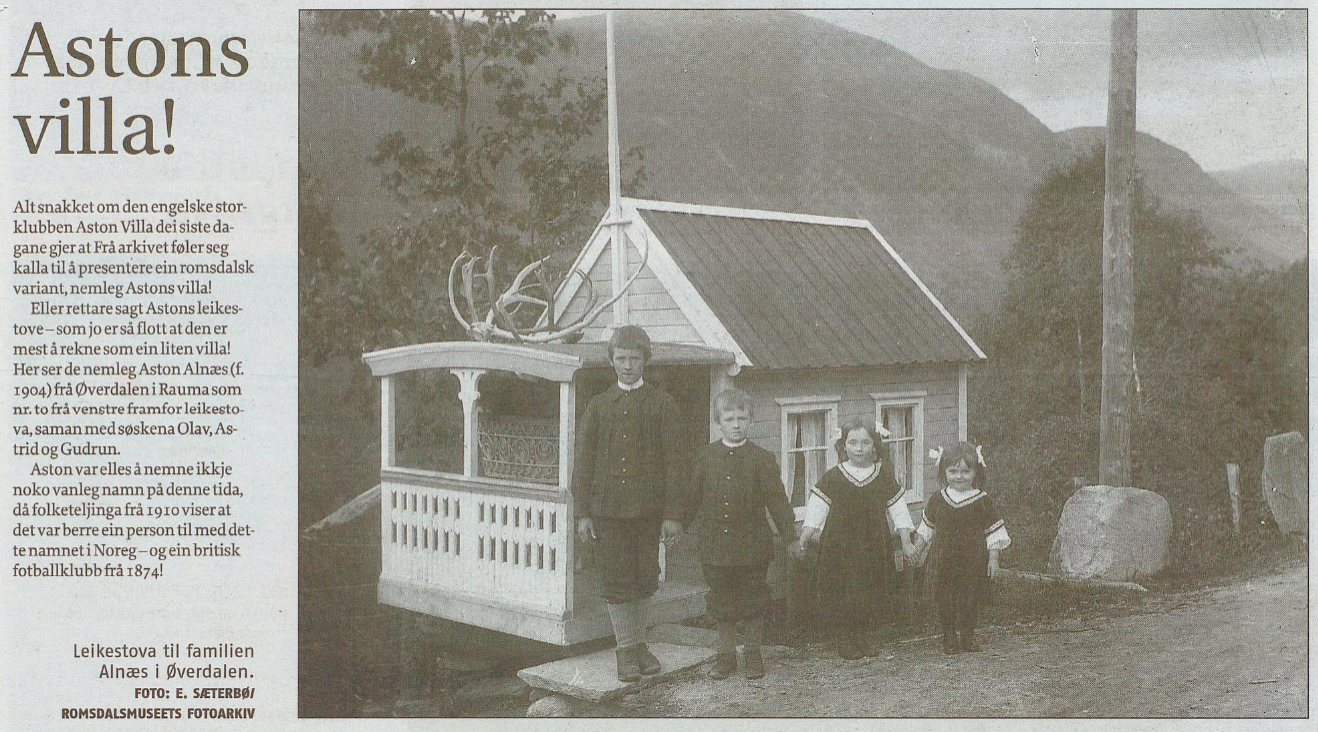
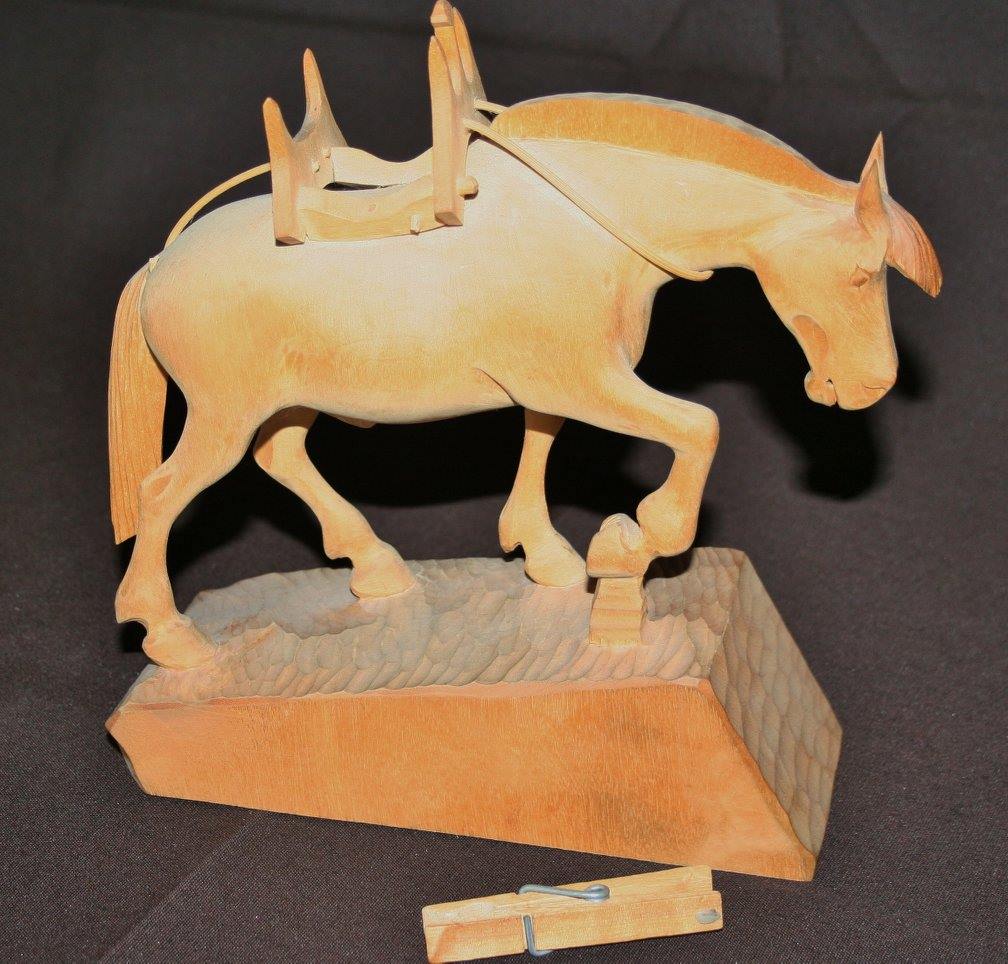
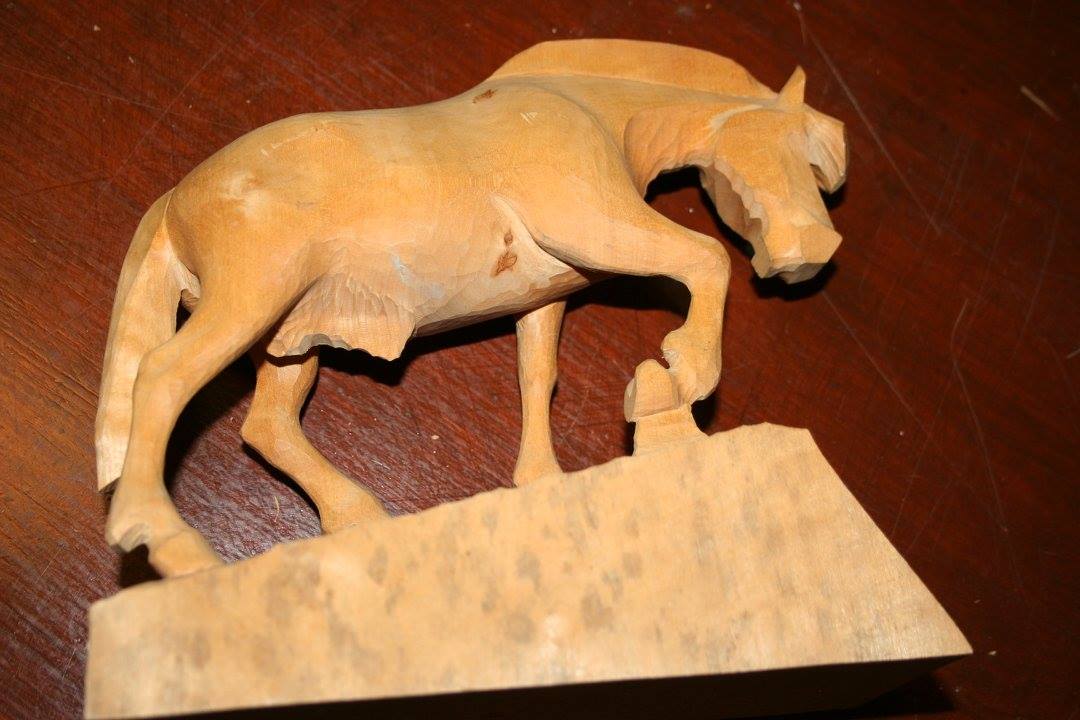
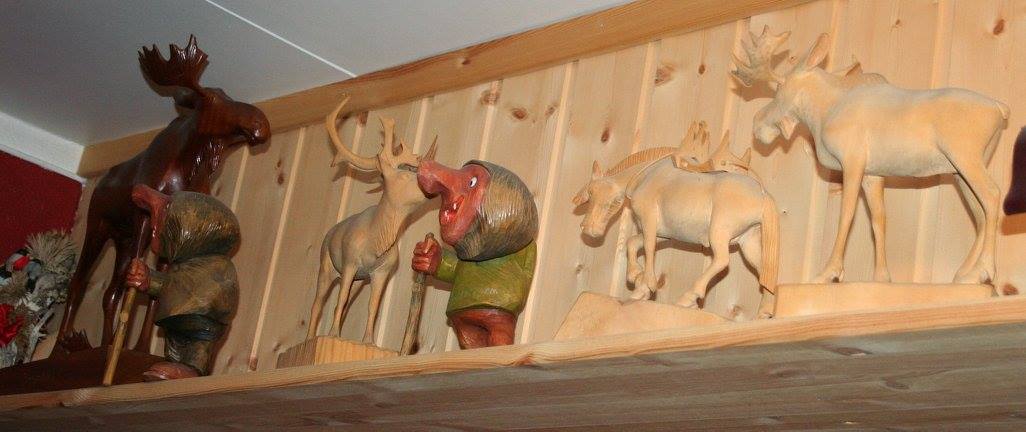
Alnæs had artistic talent, something evident in his work. He was a master at carving animals, and one of his creations, a moose, was once gifted to King Haakon by the Foreningen til dyrenes beskyttelse (Society for the Protection of Animals). Many of his works can also be found abroad (Source: Åndalsnes Avis, torsdag 7 October 1965, page 2).
He mostly focused on creating decorative wood carvings with a strong influence from Norwegian folk art and traditional motifs. His works typically included the following:
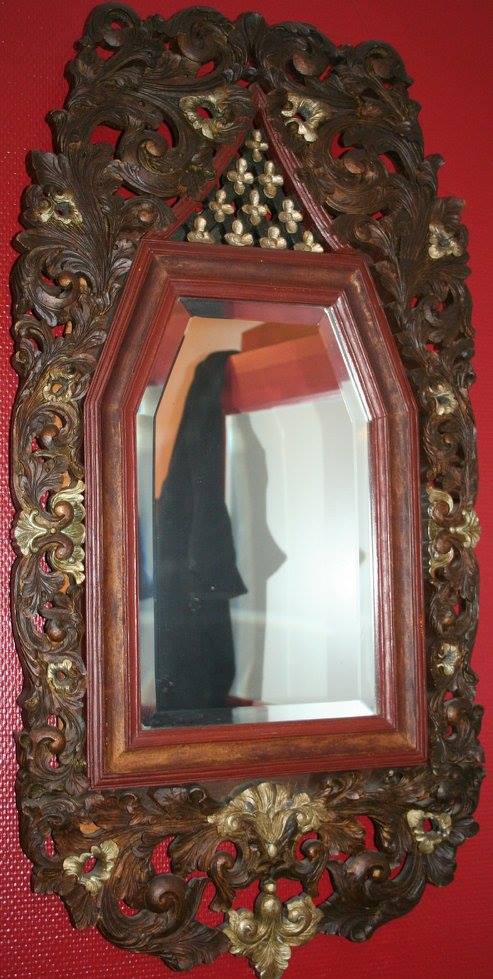
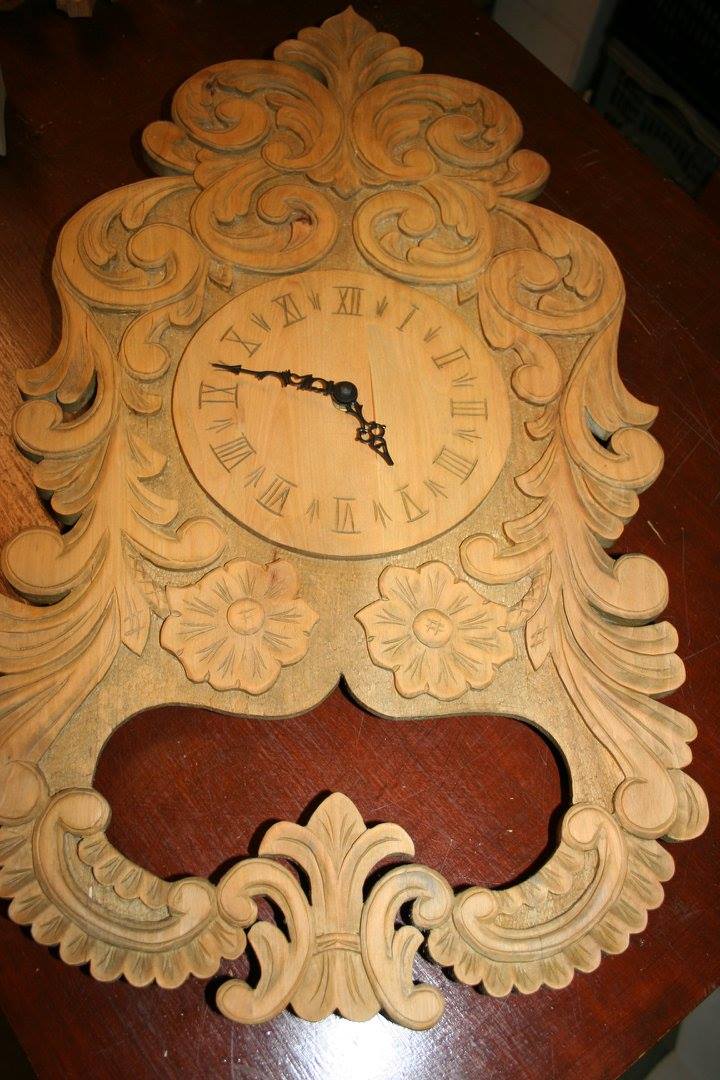
- Chairs, tables, cabinets, chests, mirrors, & clocks: He created intricately carved pieces of furniture, adorning them with detailed motifs inspired by nature, like vines, flowers, and leaves. Making them not only functional but also beautiful art pieces.
- Small figurines and relief carvings: He made small decorative objects, such as wooden sculptures of animals, mythological creatures (especially trolls), and scenes from nature or folklore.
- Acanthus carving: This was a signature decorative style used in Norwegian woodcarving, with swirling, leaf-like patterns that he likely applied to both furniture and smaller wooden objects.
His pieces combined functionality with artistic expression, making them valuable in homes, churches, and public buildings. Alnæs’s work celebrated the traditions of Norwegian craftsmanship while also infusing personal style into each carved detail.
Church woodcarving
In 1955, Aston Alnæs carried out the woodcarving work on the frame of the altarpiece and two bridal chairs at Øverdalen chapel. Above the baptismal font hangs a gilded dove, crafted by Alnæs in the 1960s.
A keen shot
Aston Alnæs was a member of Raumadalen shooting club for many years. He was a class 3. Form shooter. Active since 1920. Participated in 2 national championships and in club championships. In 1955 he held 4 team championship medals, 2 territorial championships, 5th place in the combined championship, 1 Stang trophy and 1 field shooting trophy, and 2 shares in club trophies. Achieved 13 hits in Stang shooting. Best result: 30 hits on 30 shots in field shooting.

“I started hunting when I was 13 years old and participated, among other things, with my father in a bear hunts, where he took down two bears. It was probably through hunting that I developed an interest in trying my hand at the range. Of my achievements, I value the championship star the most. As for training, I consistently practice dry firing, both with click exercises and sight exercises.“
Aston Alnæs trolls
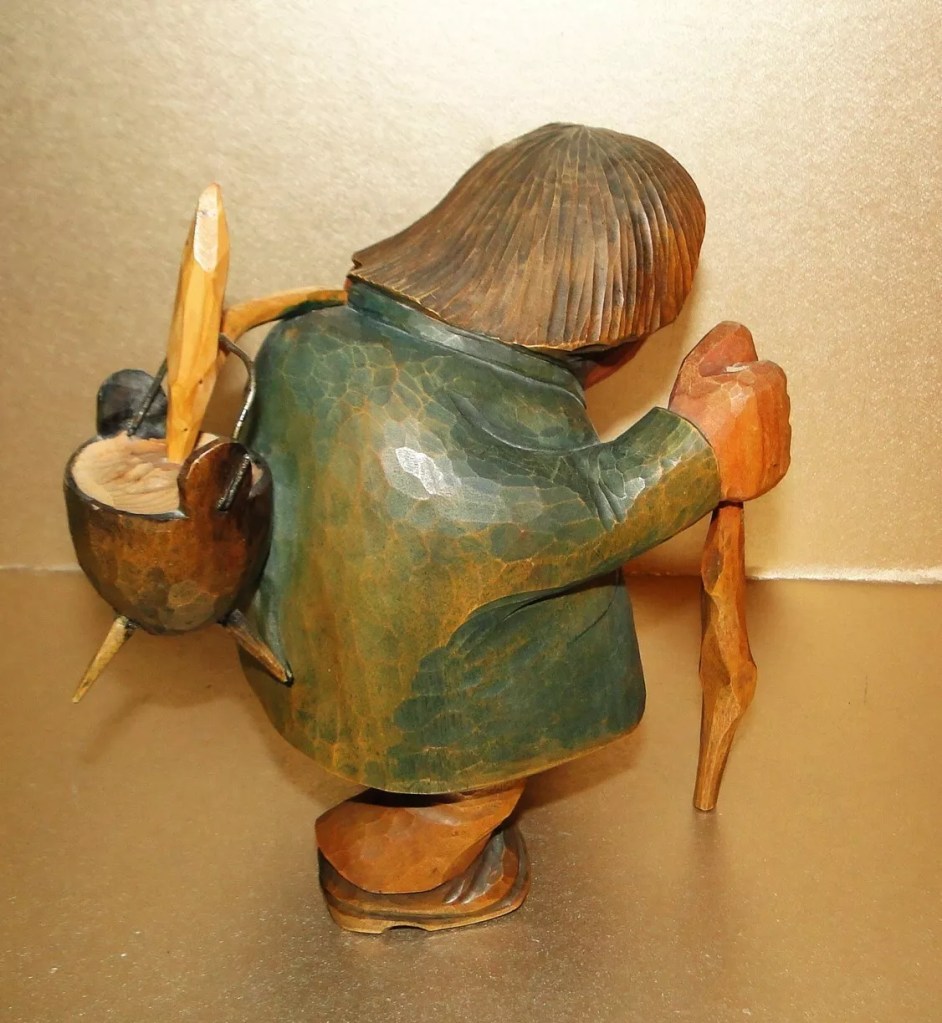
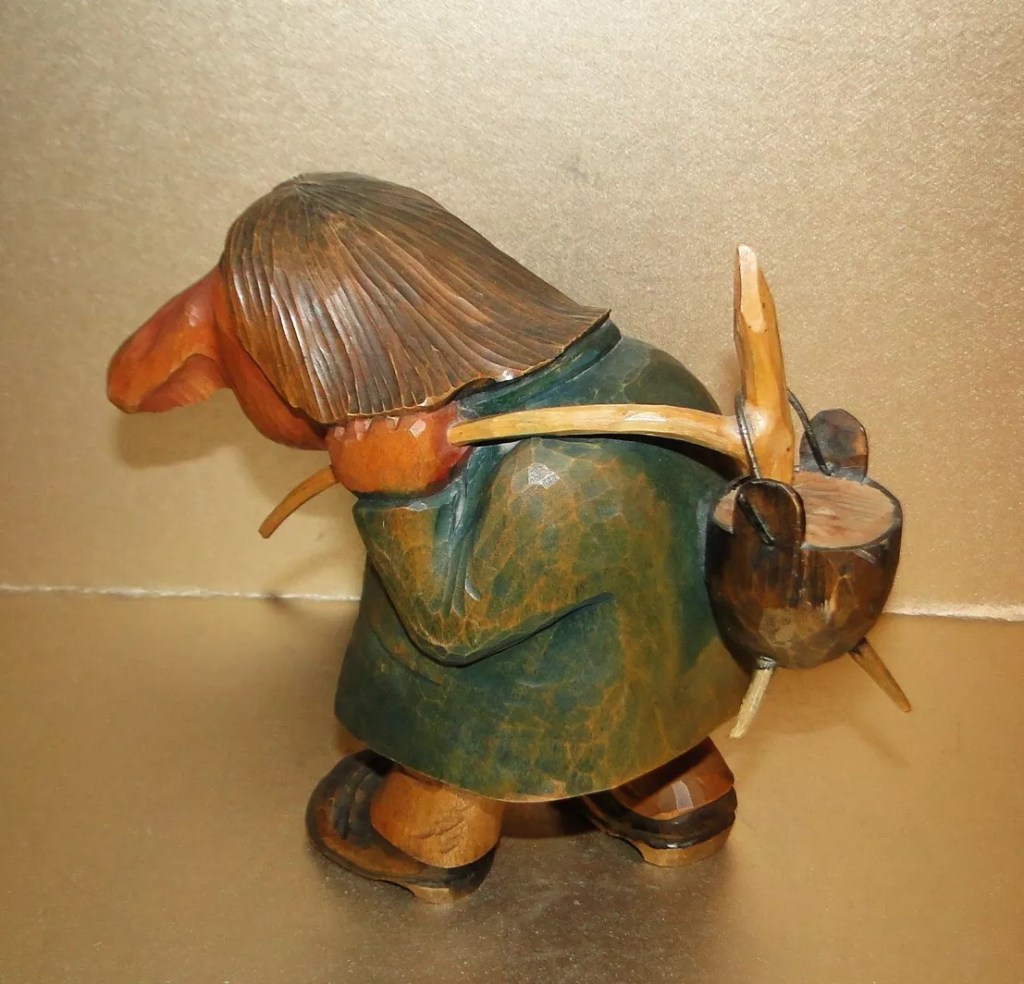
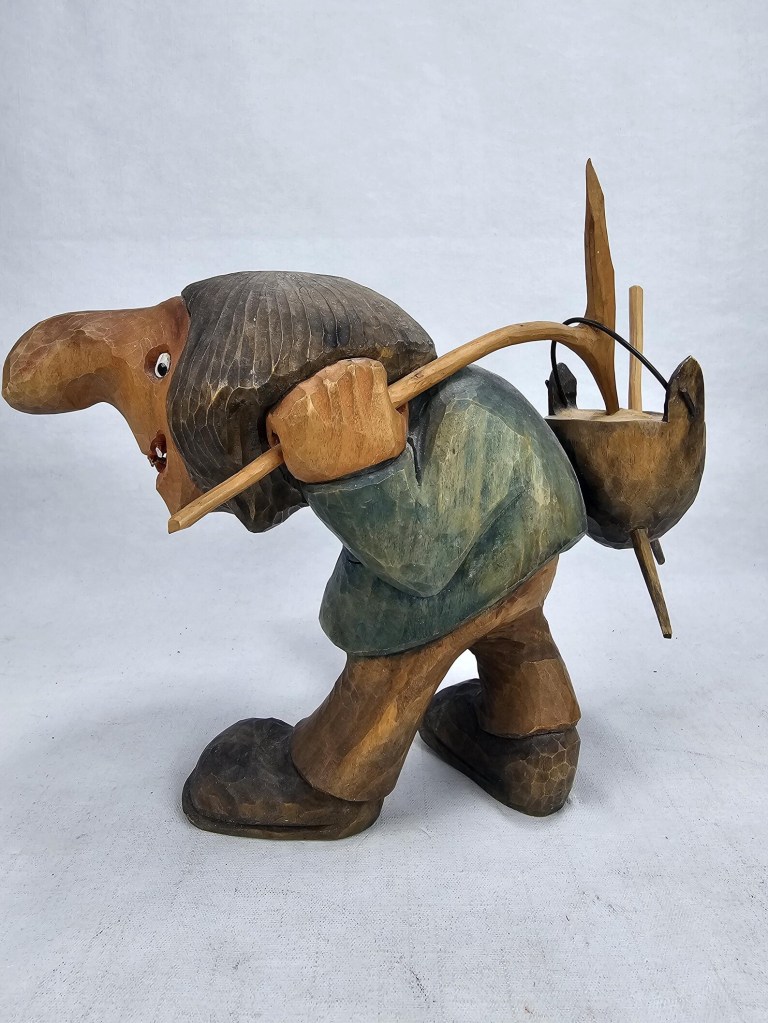
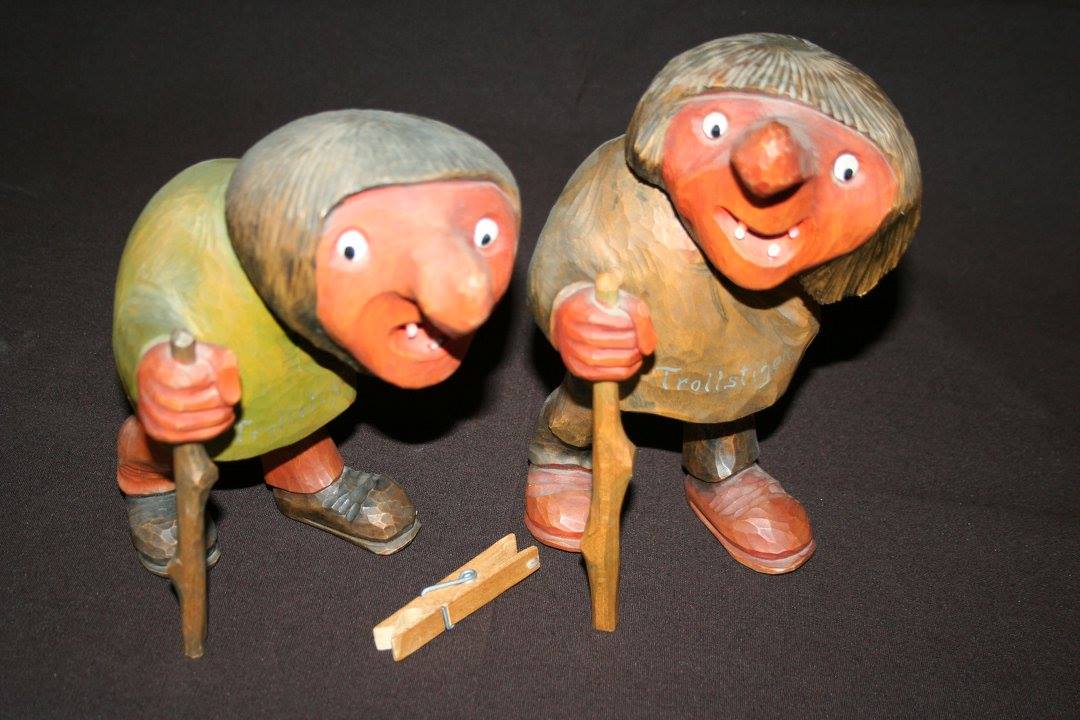
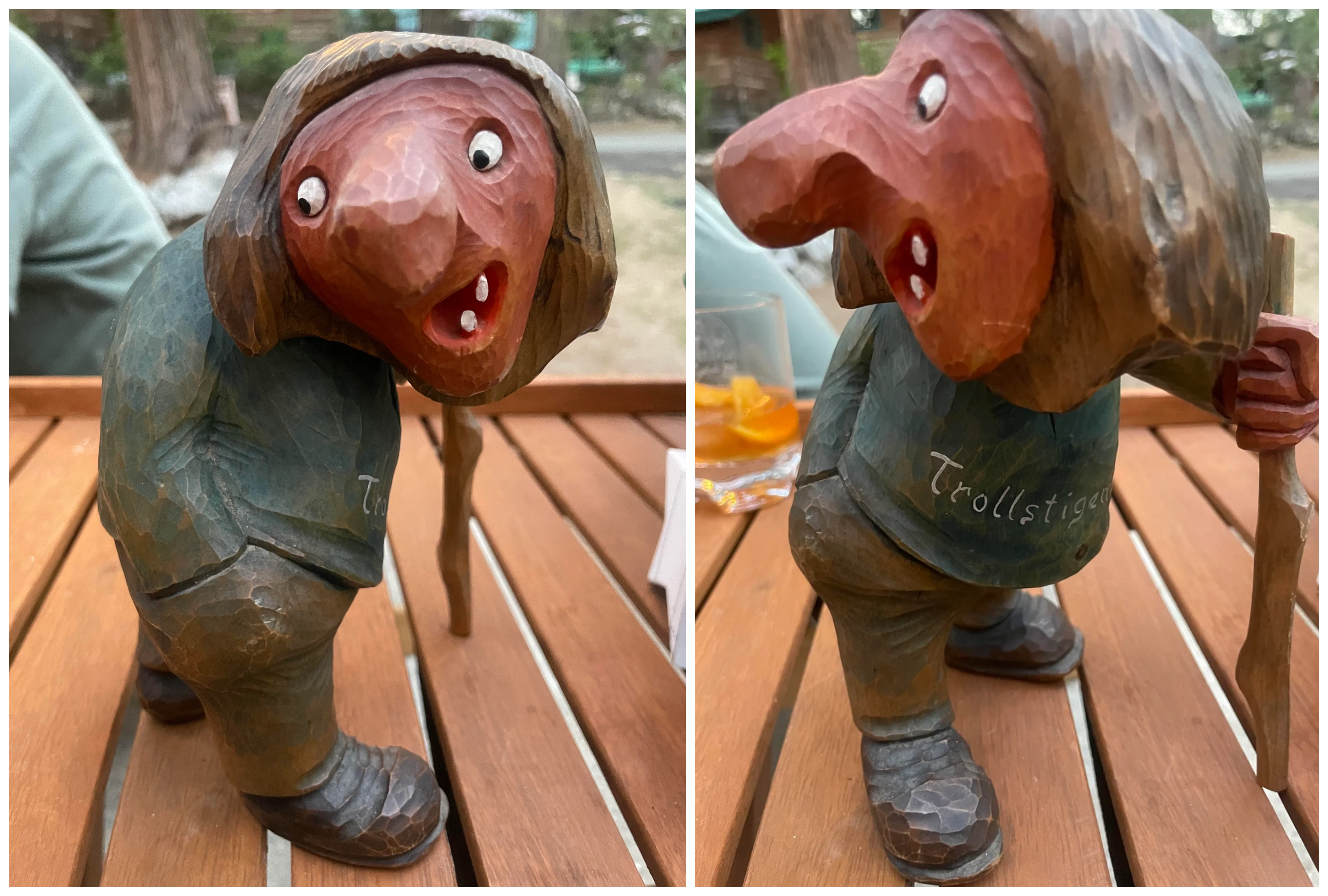
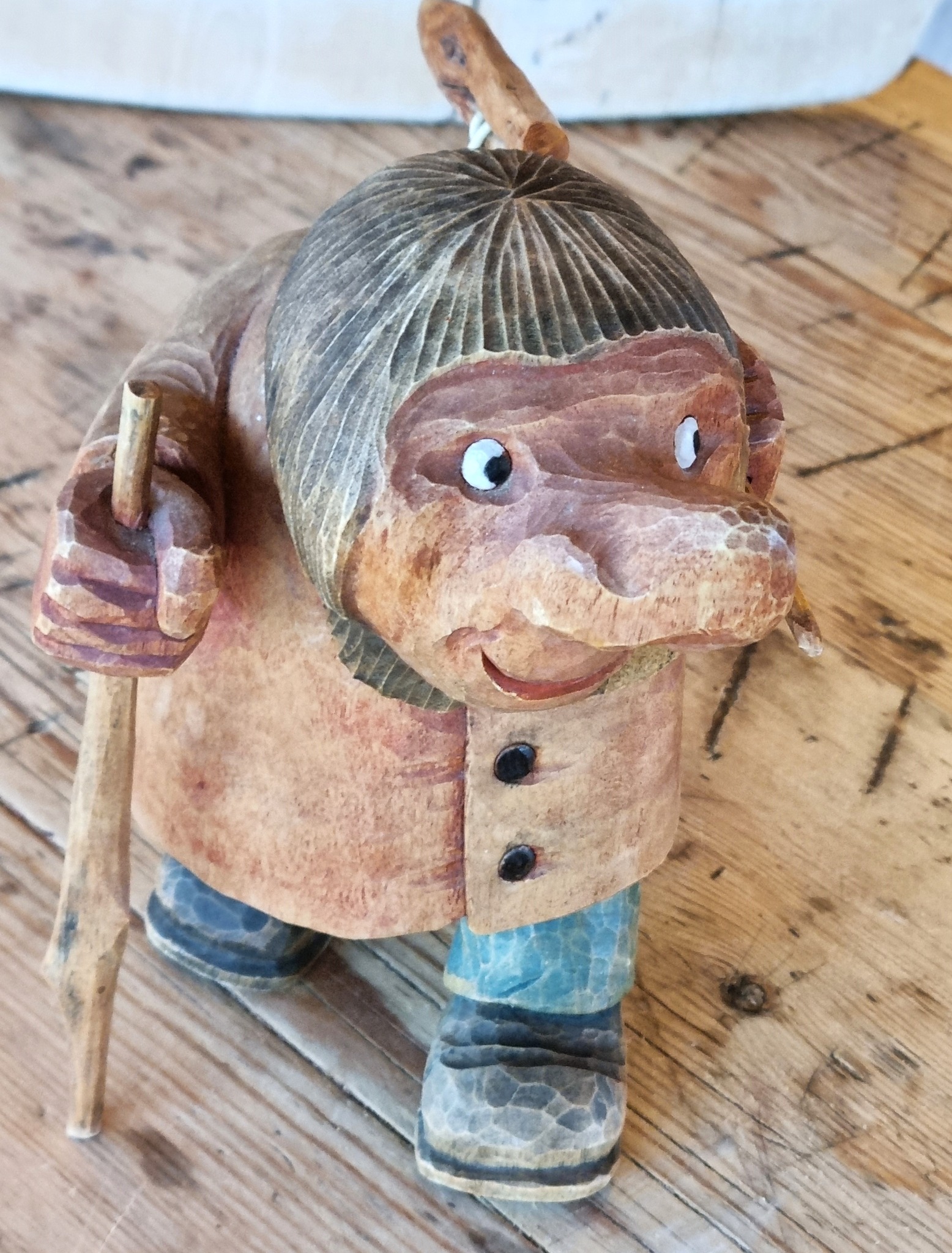
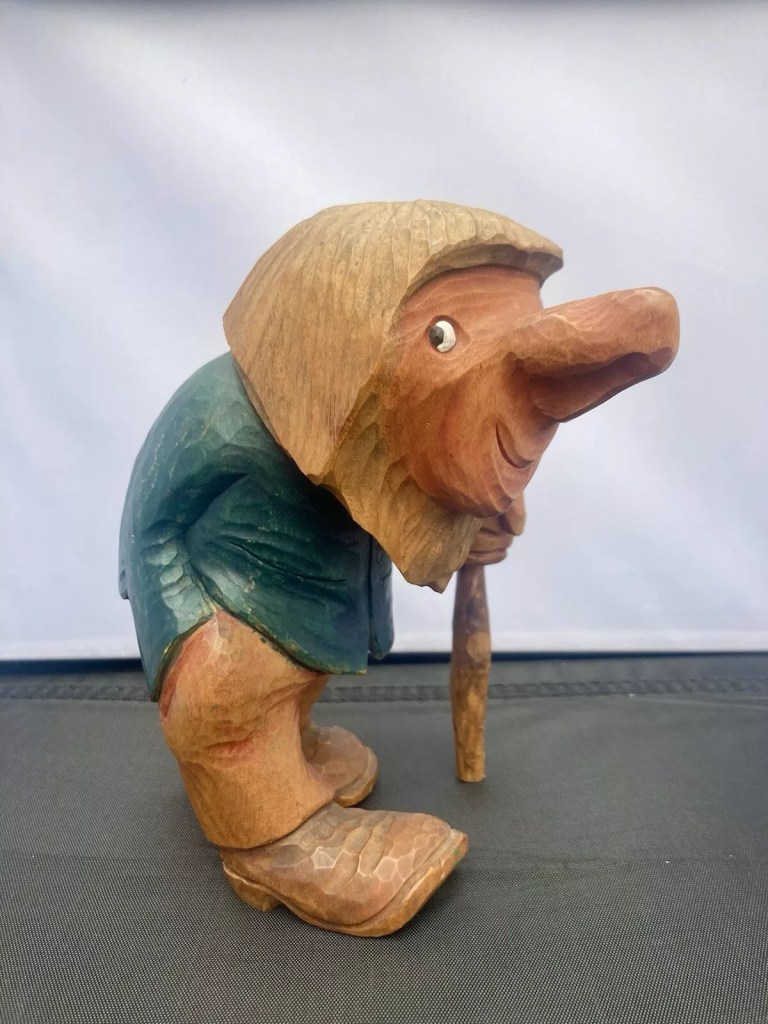
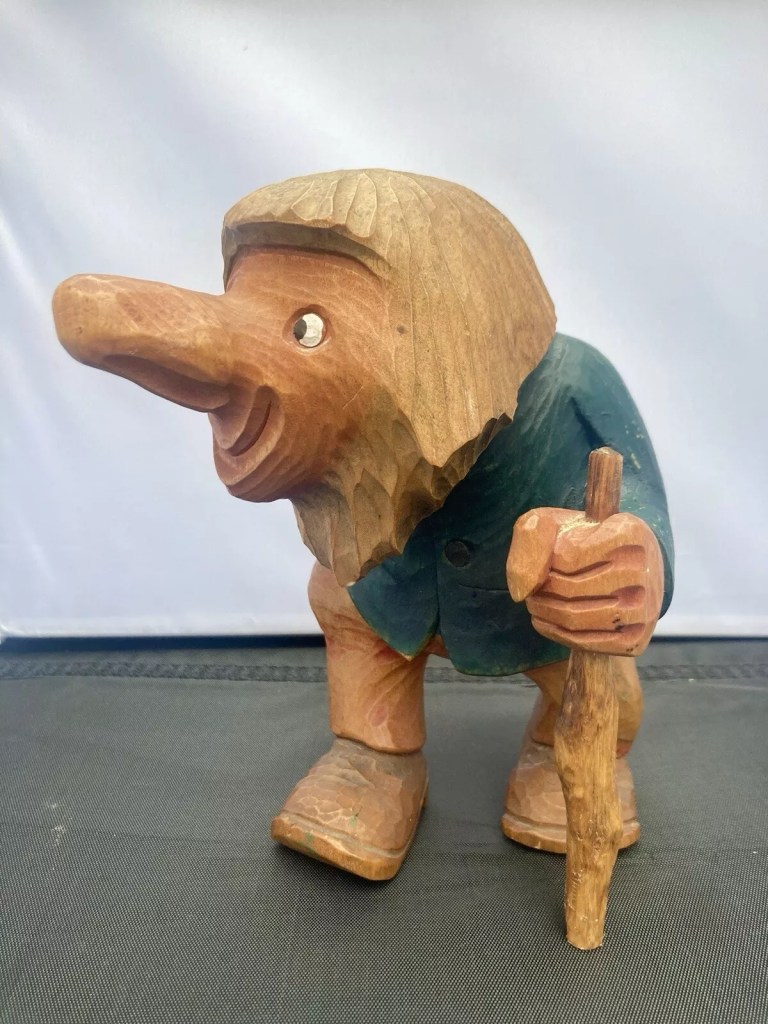
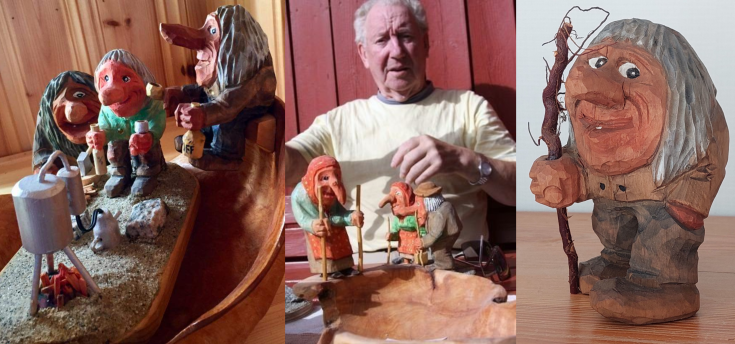
Aston Alnæs trolls are characterised by their happy faces, curious eyes and toothy smiles (usually with only a few spaced out pearly white teeth in their mouth). His trolls often carry a pot over their shoulder. Trolls are frequently associated with cooking and brewing, and three-legged pots were common in traditional Nordic households for cooking over an open fire.
With a mischievous smile, the troll carries a three legged pot over his shoulder, plotting to lure unsuspecting travelers closer with the aroma of his deceptive stew, ready to play tricks or make a meal out of anyone who gets too curious.
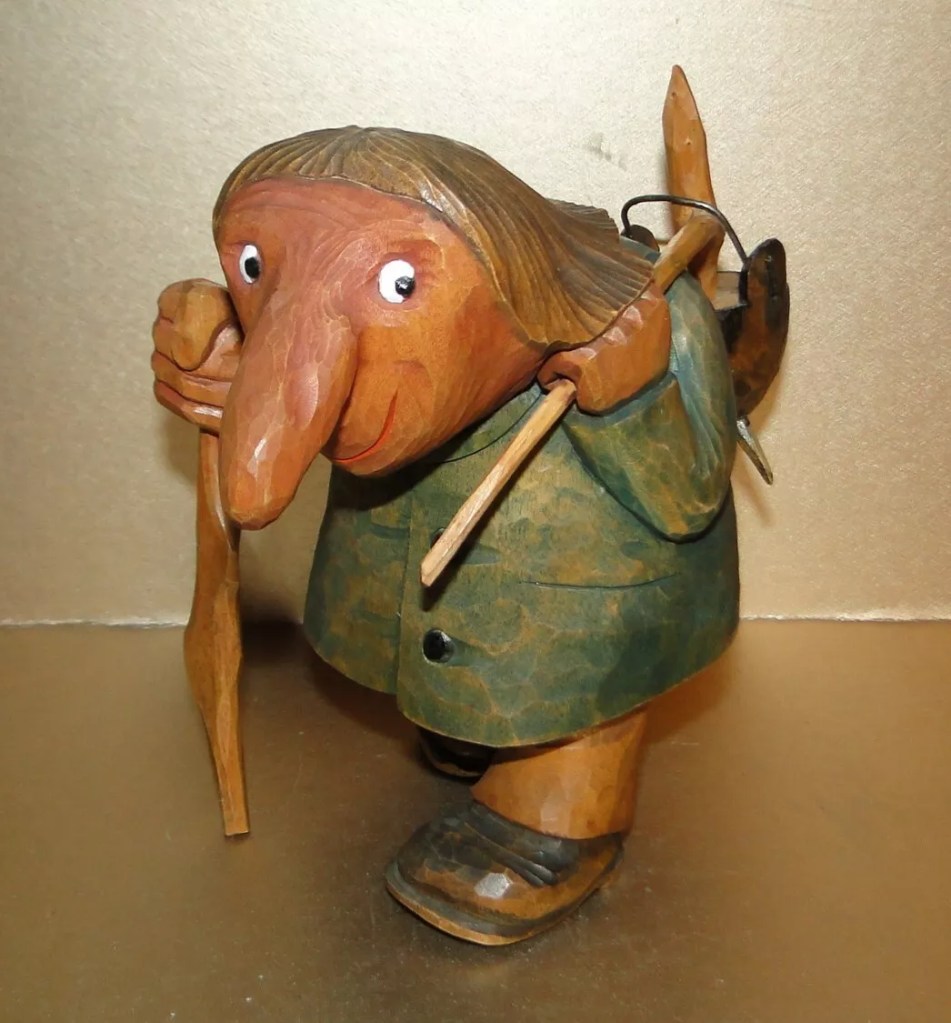
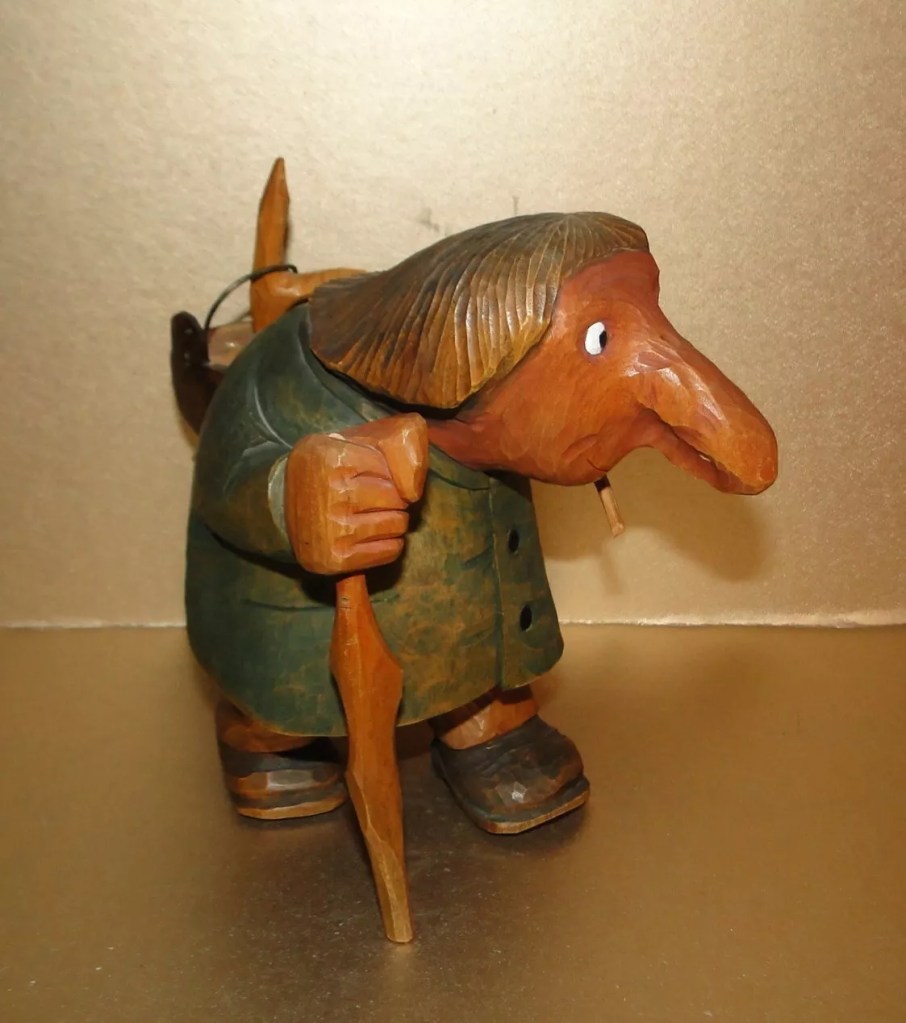
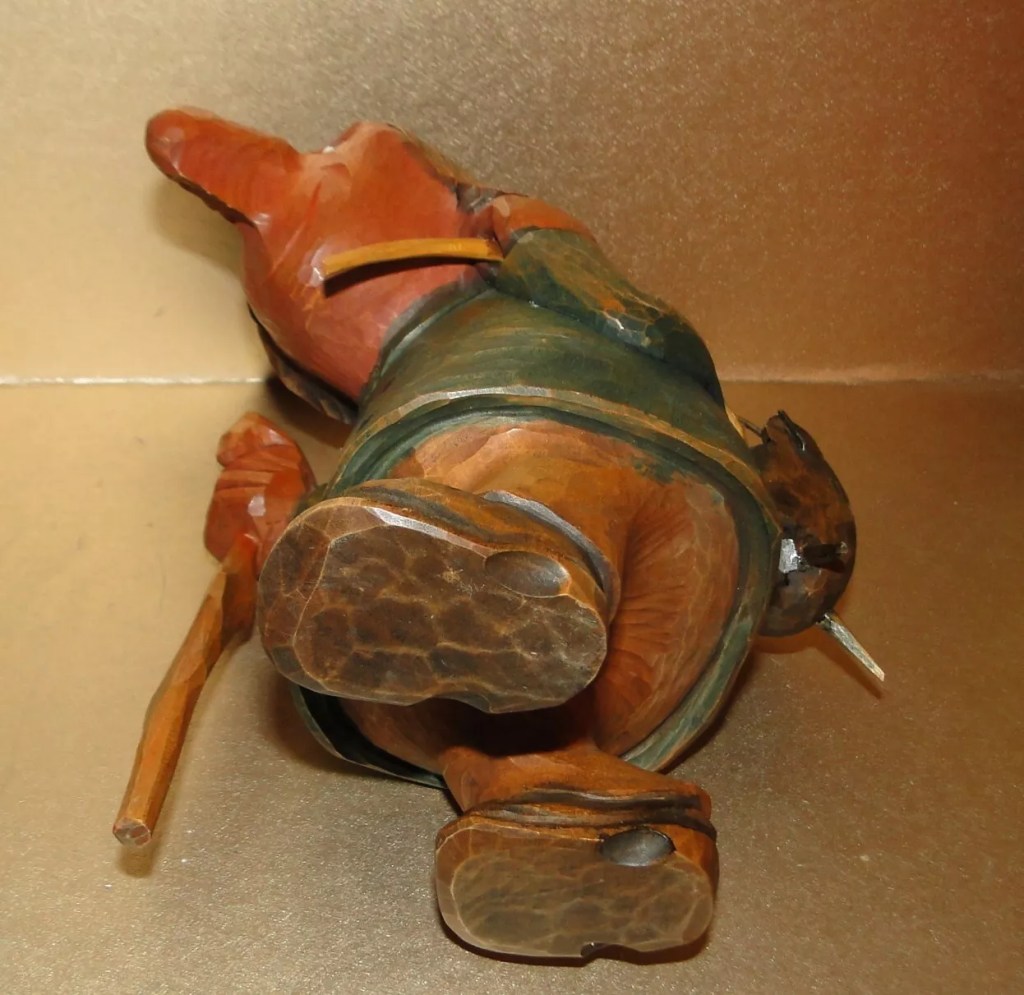


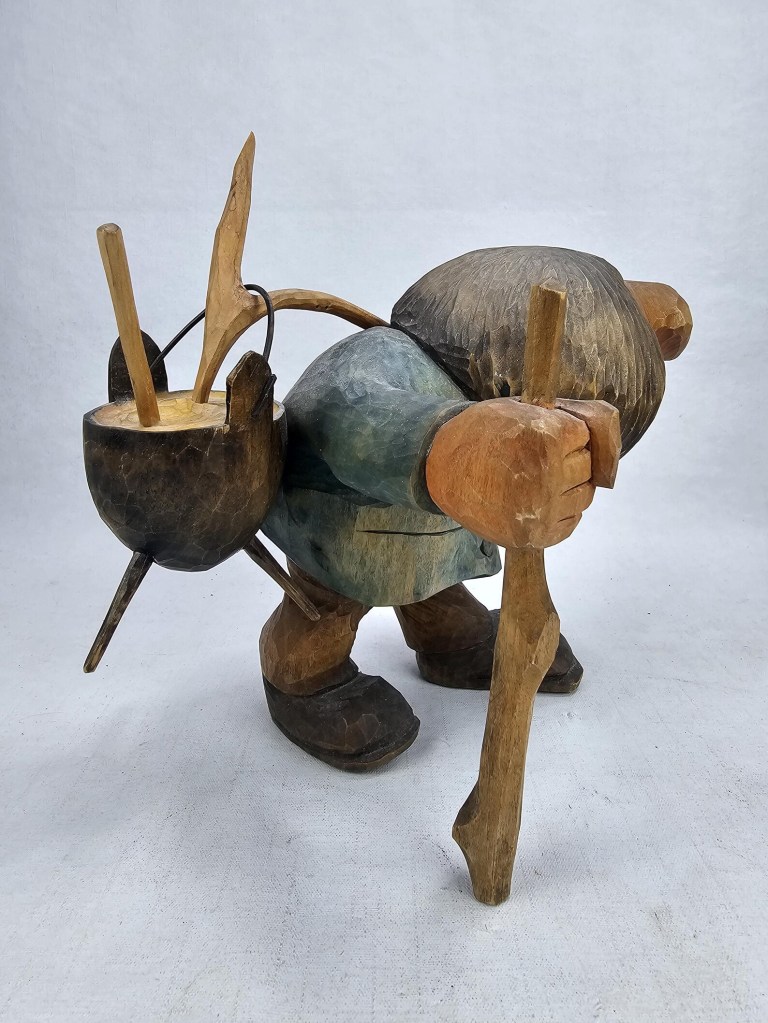
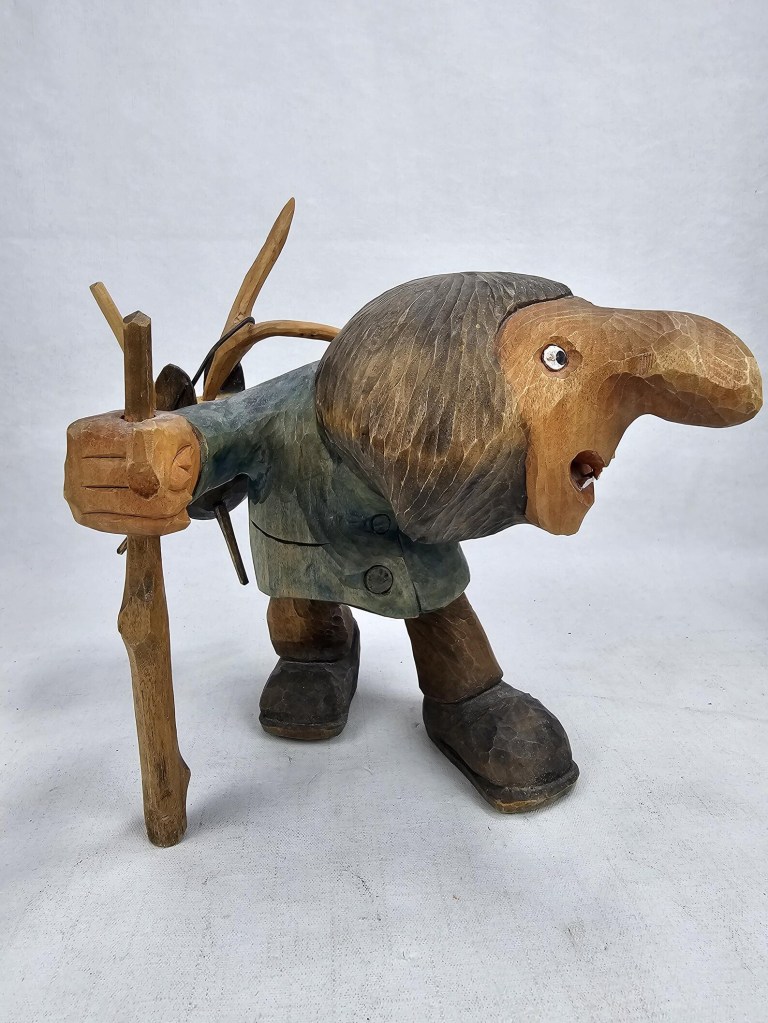
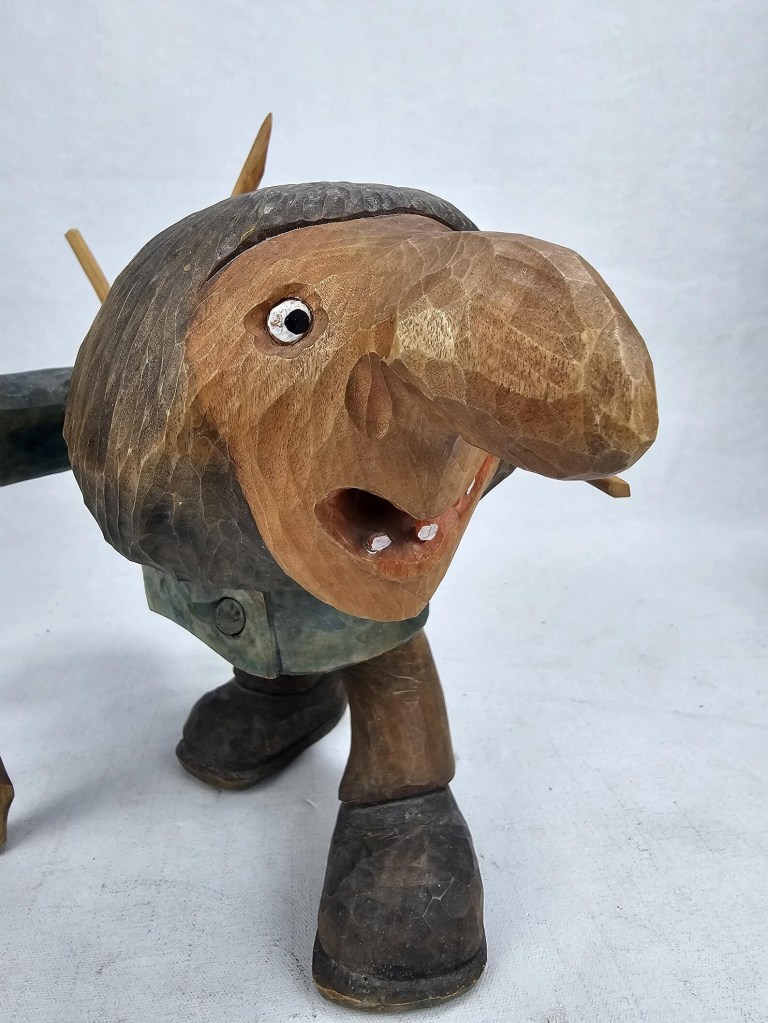


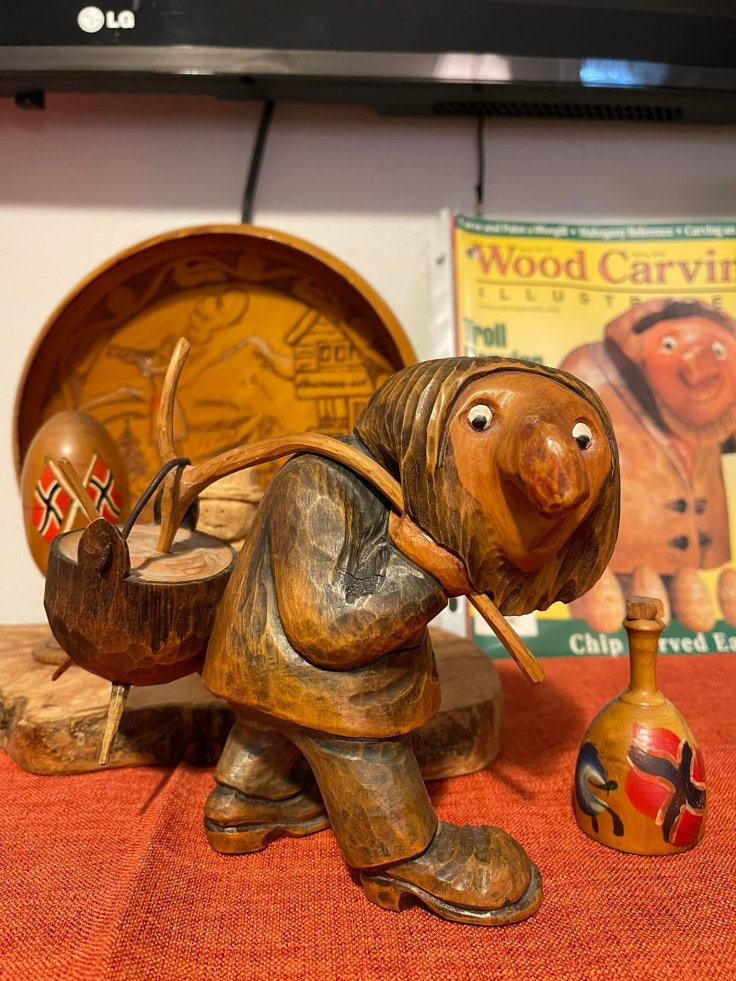
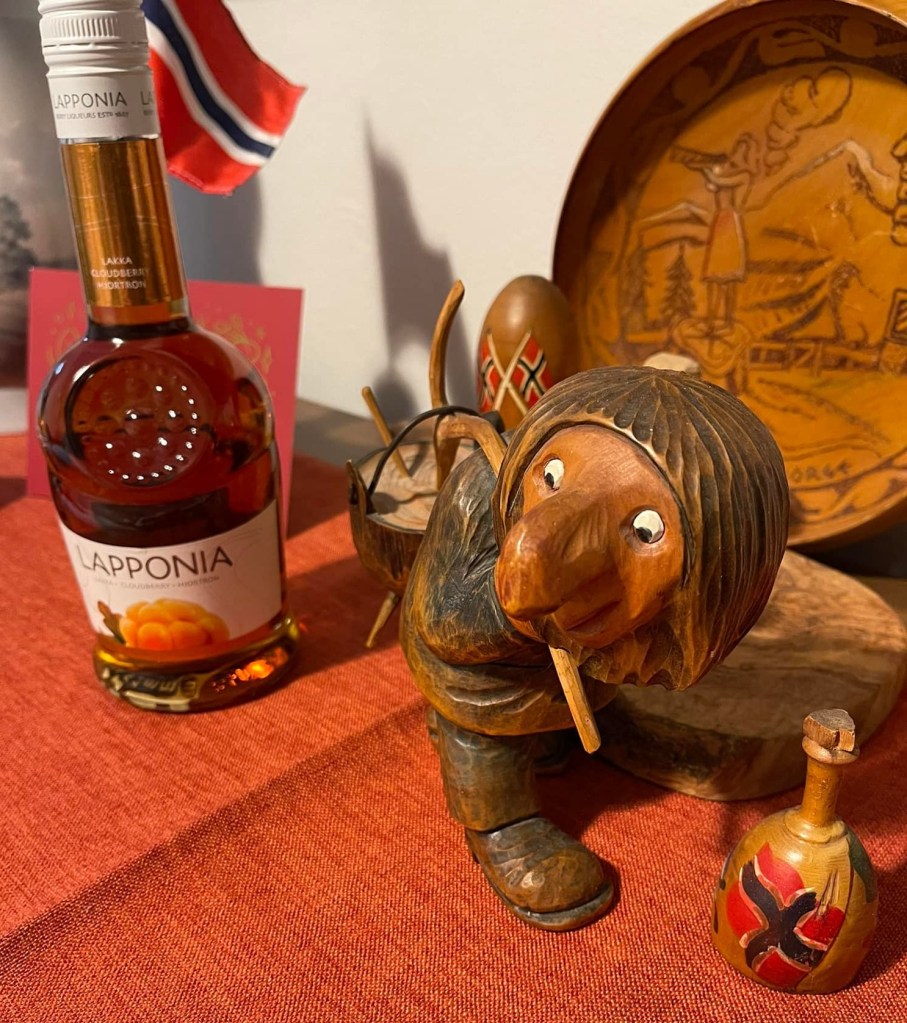

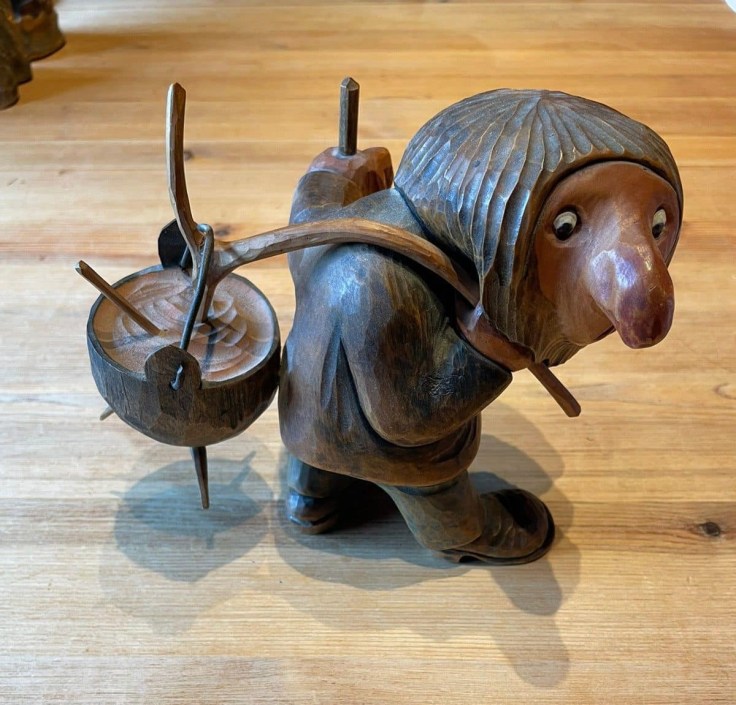

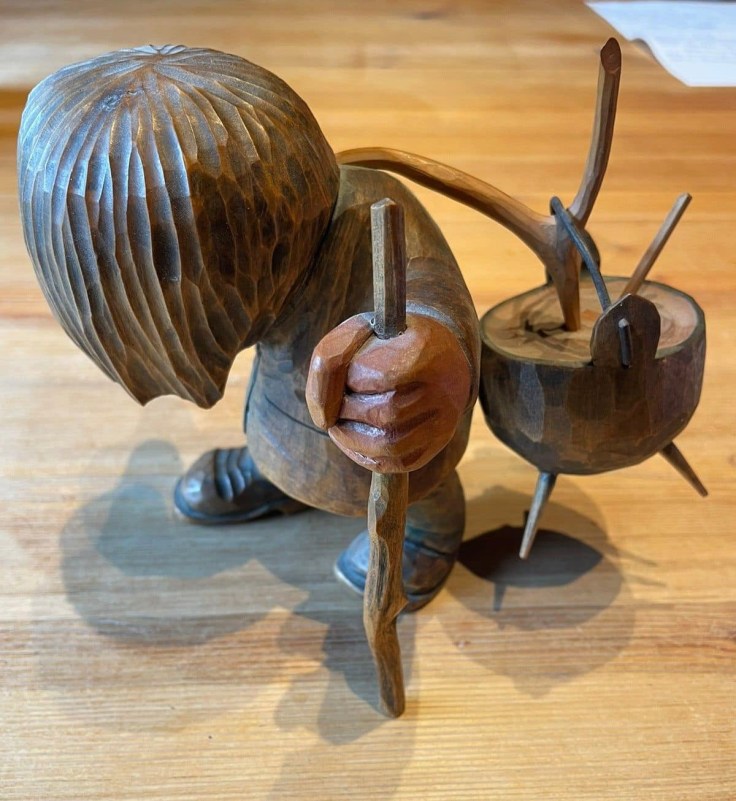
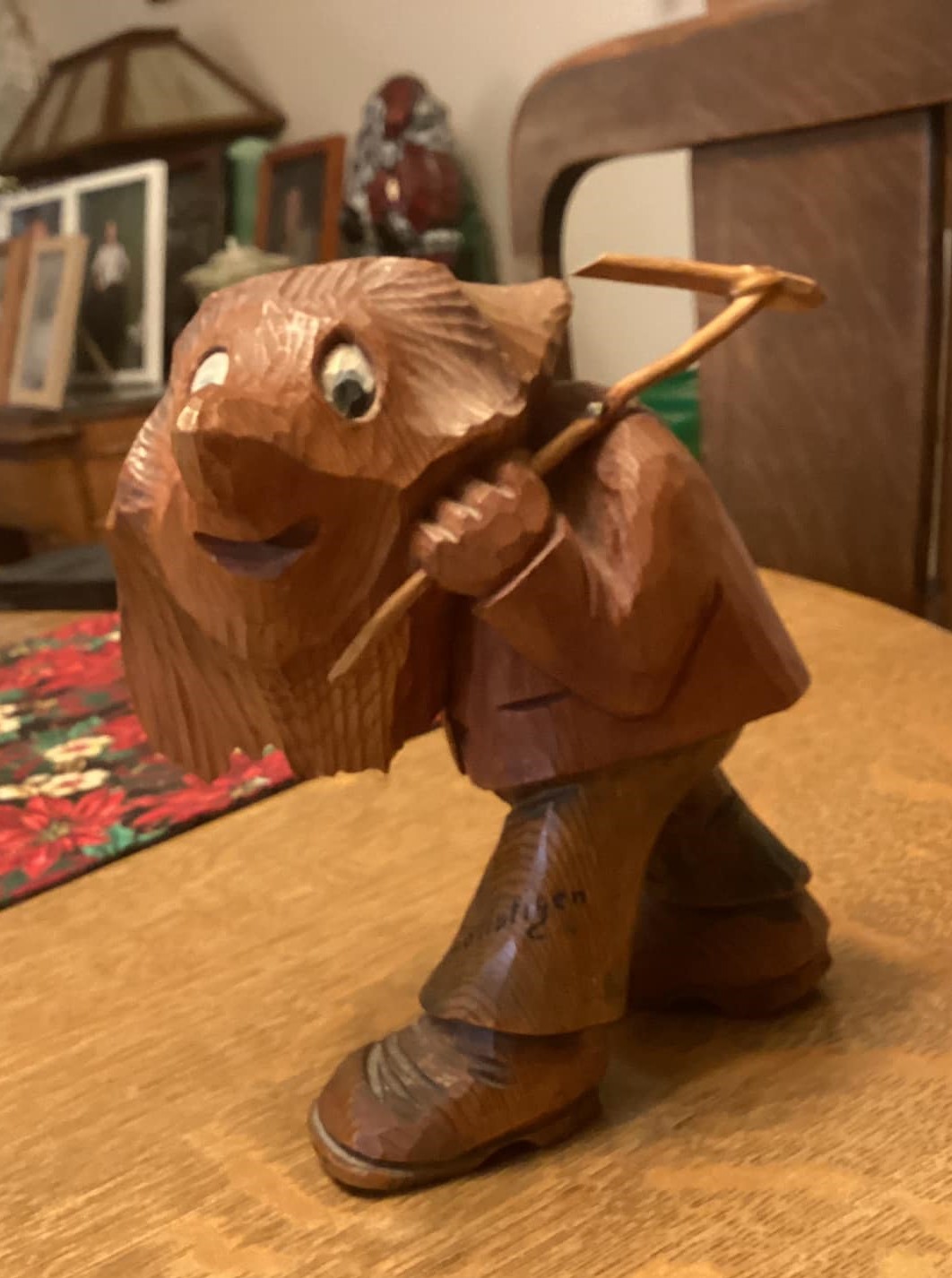
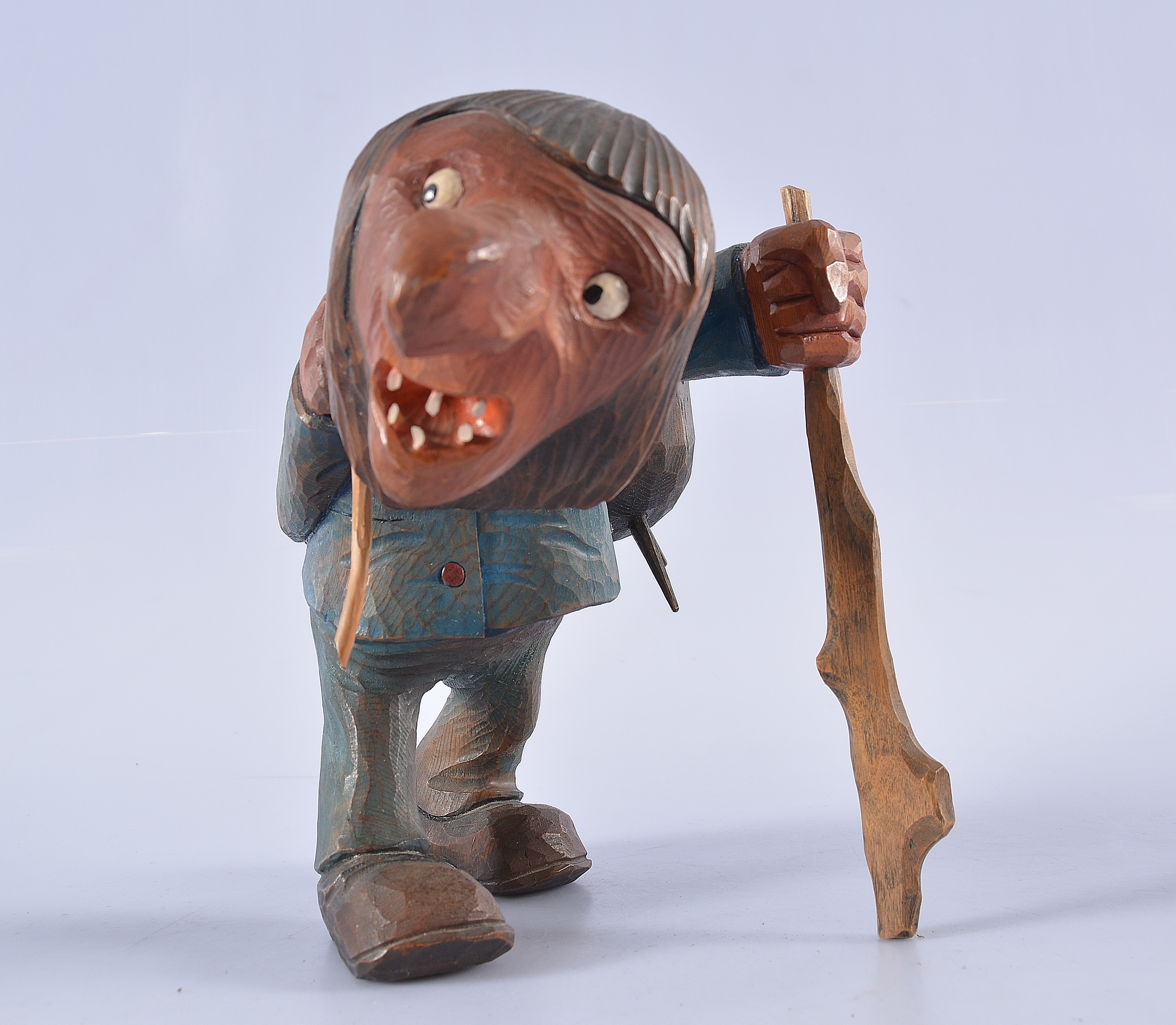
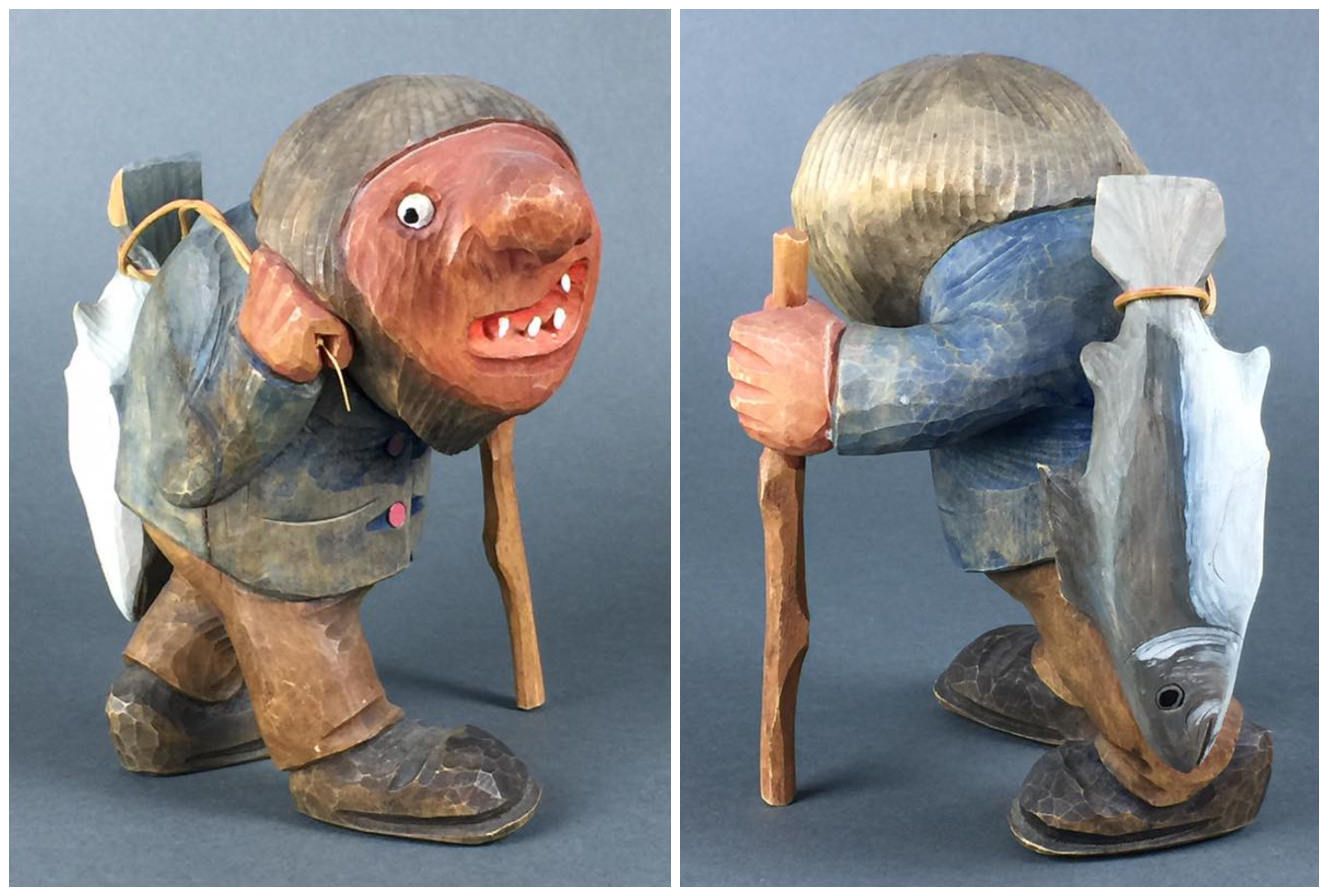


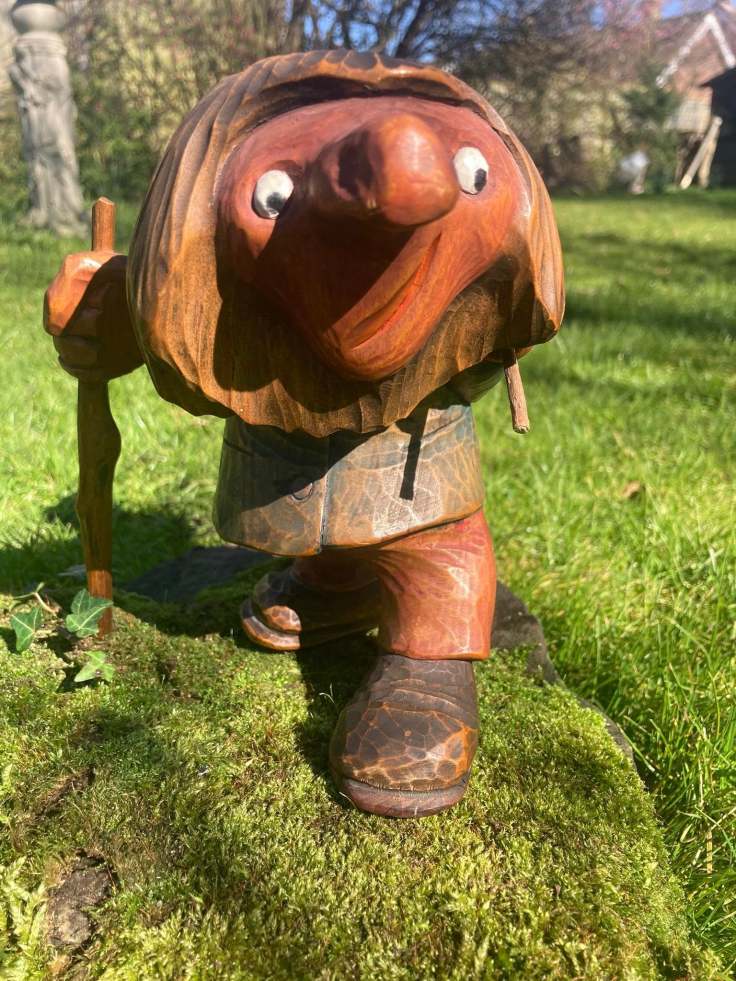
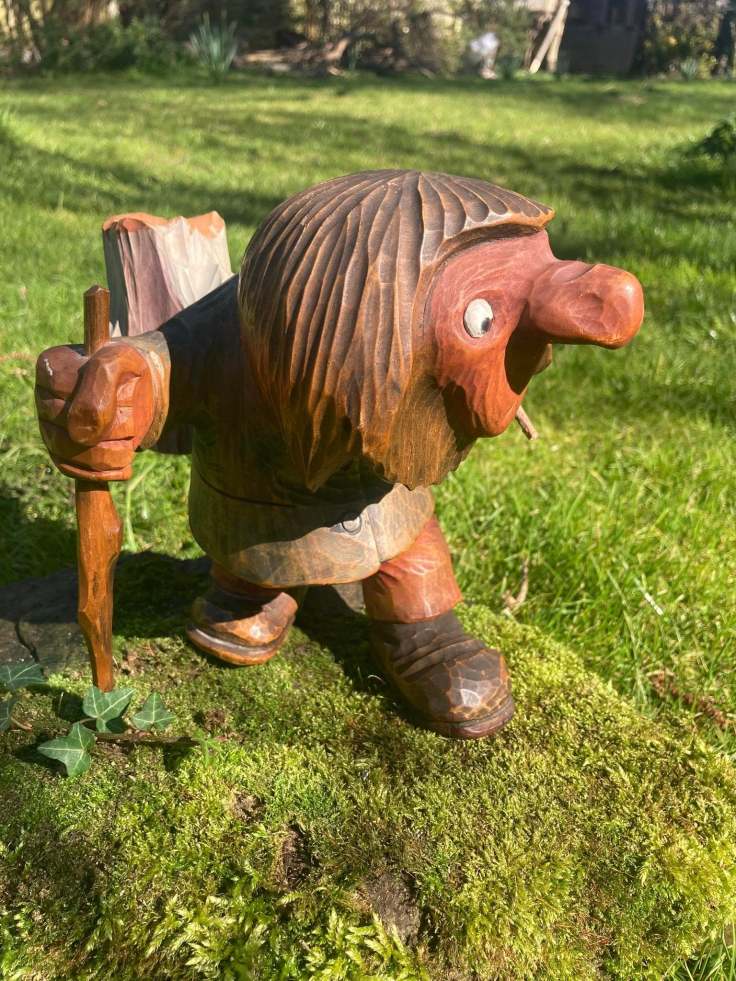


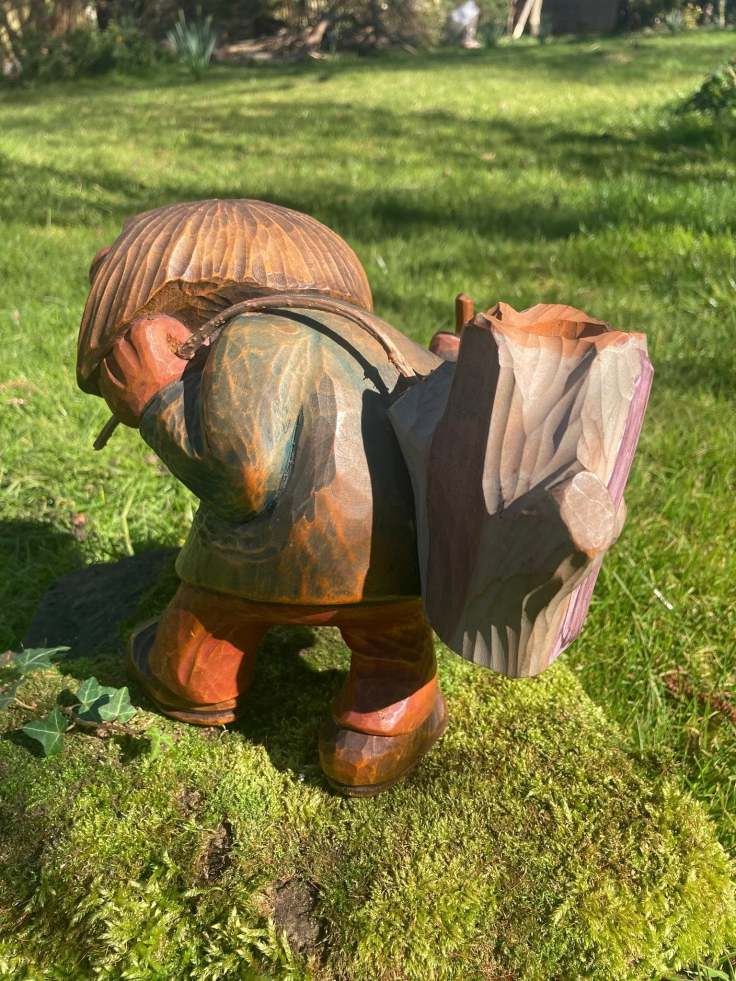
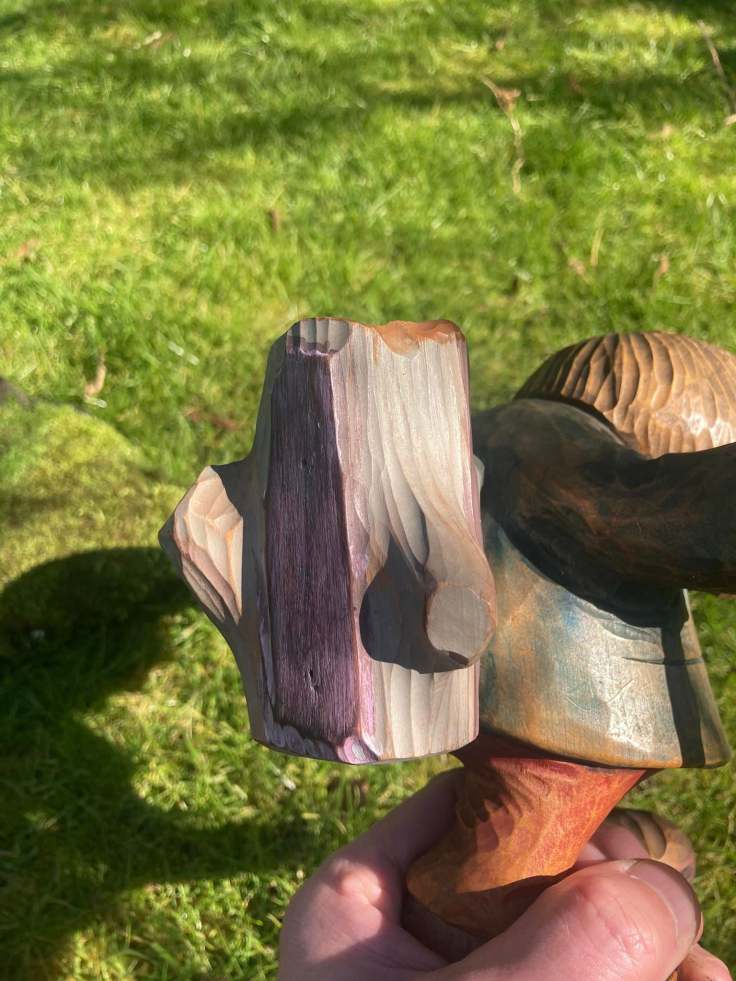


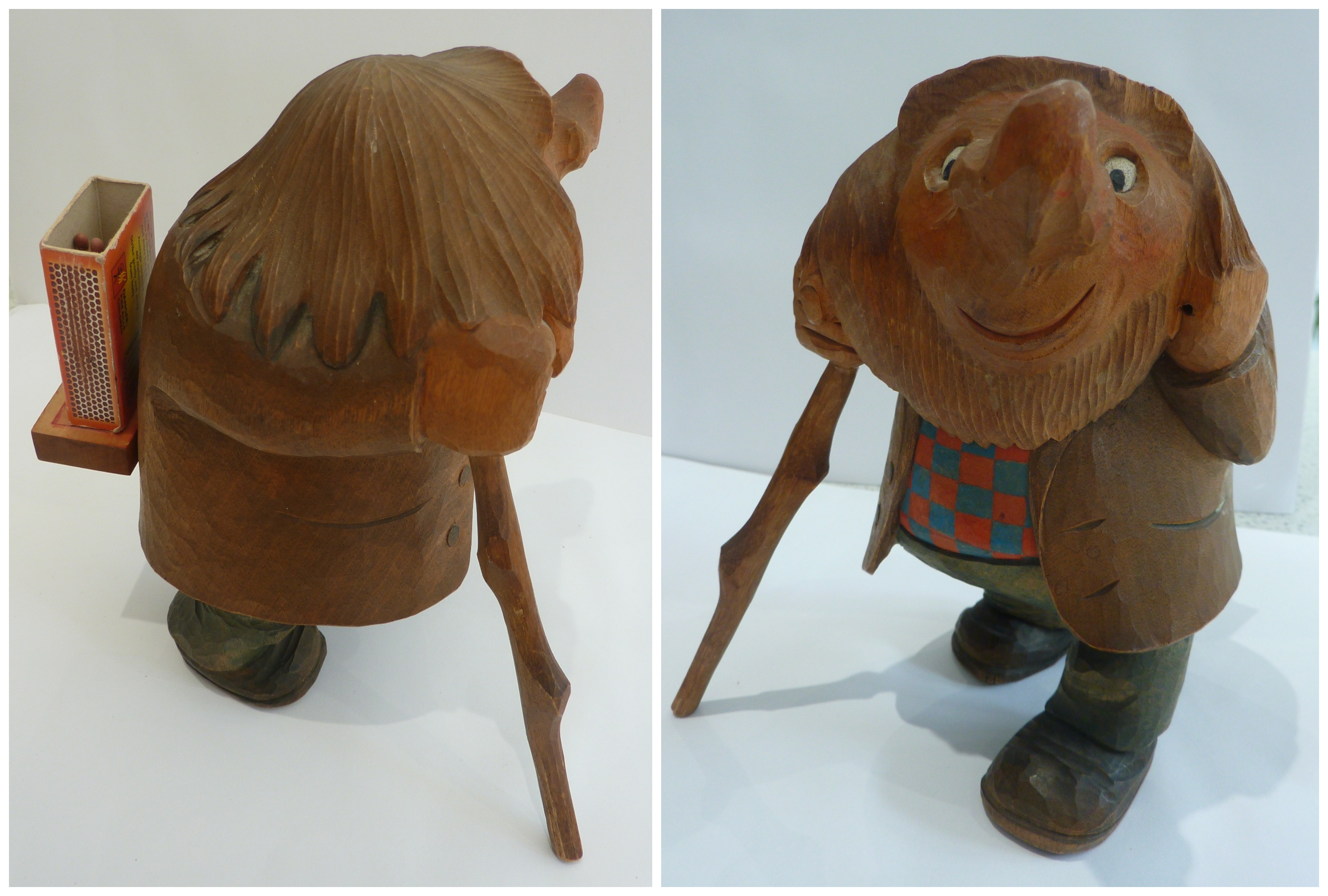

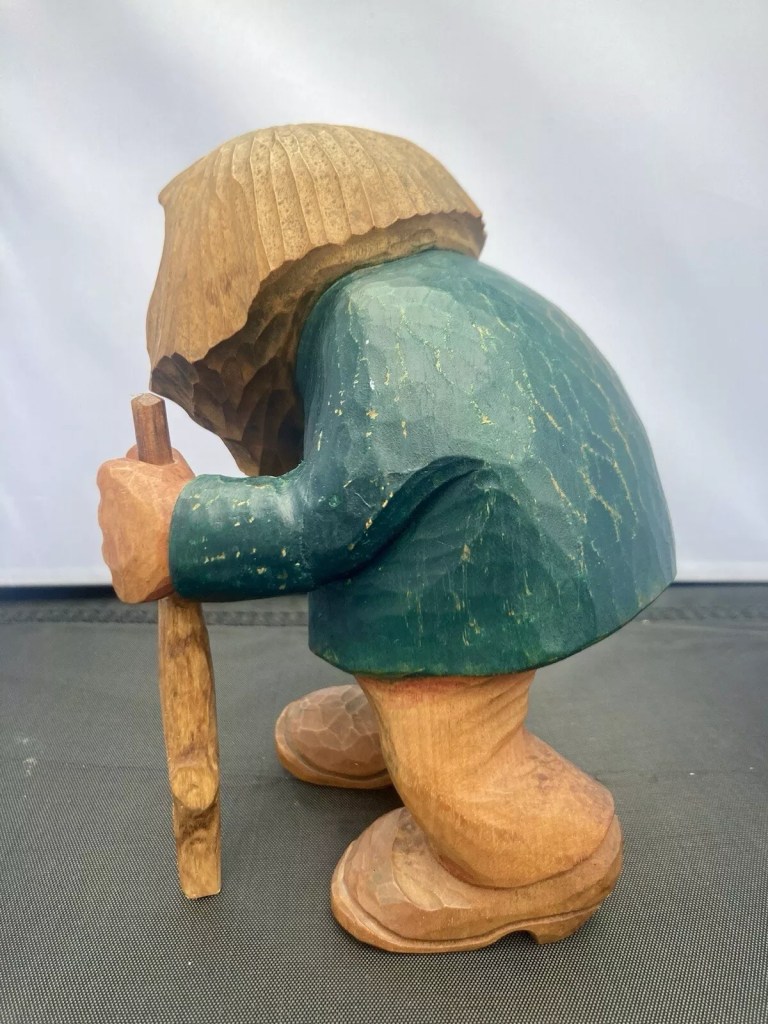

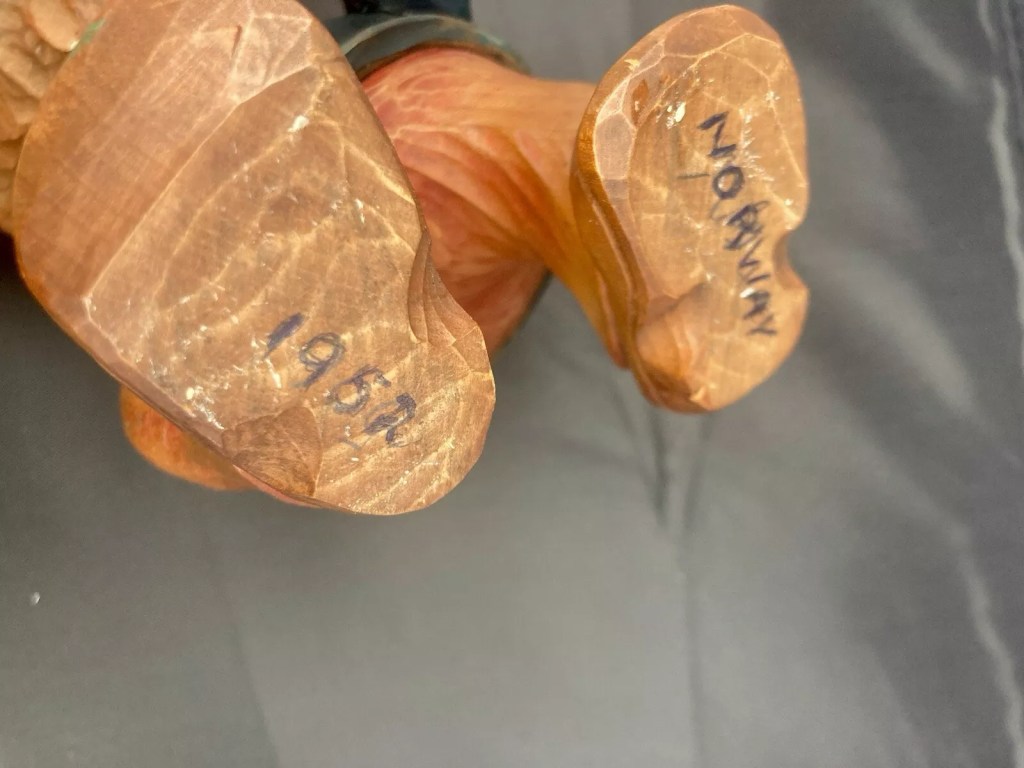

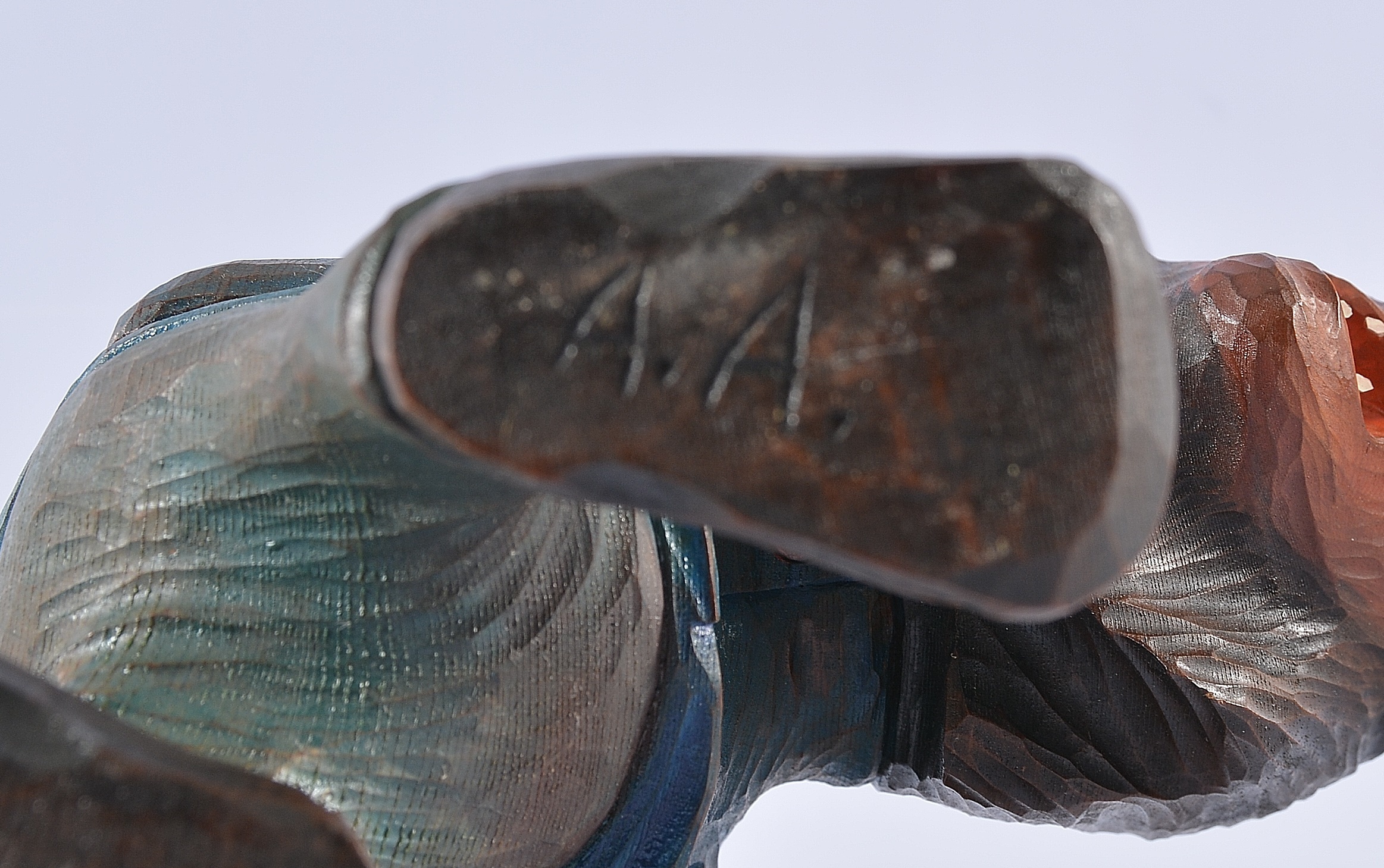
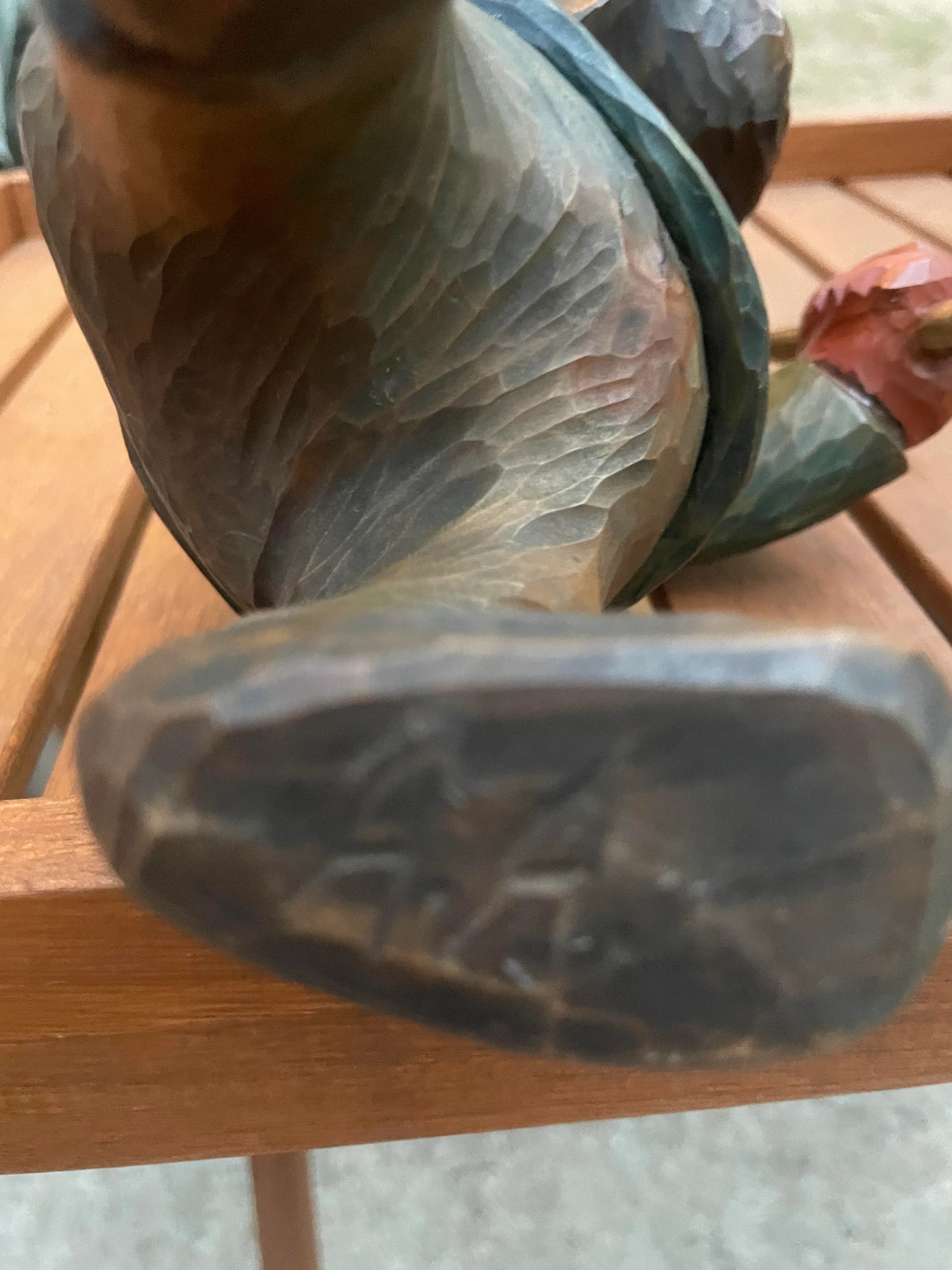
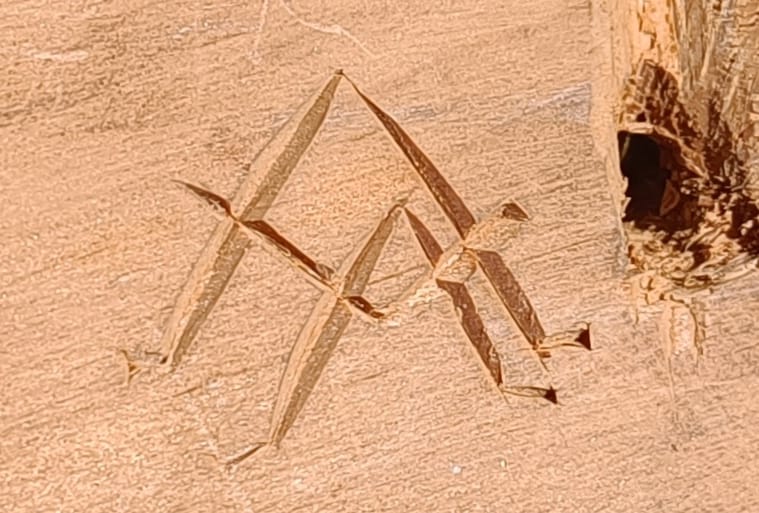
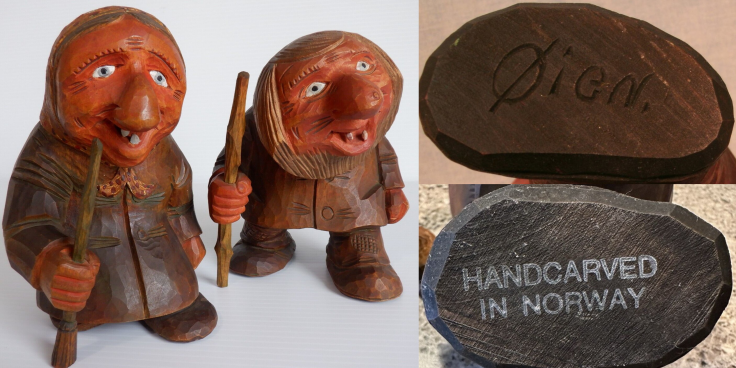
His trolls are typically signed A.A. under the feet. There is another signature variation where a large A is placed over a smaller one. Both can be seen below. It must also be noted that not all of his trolls were signed.
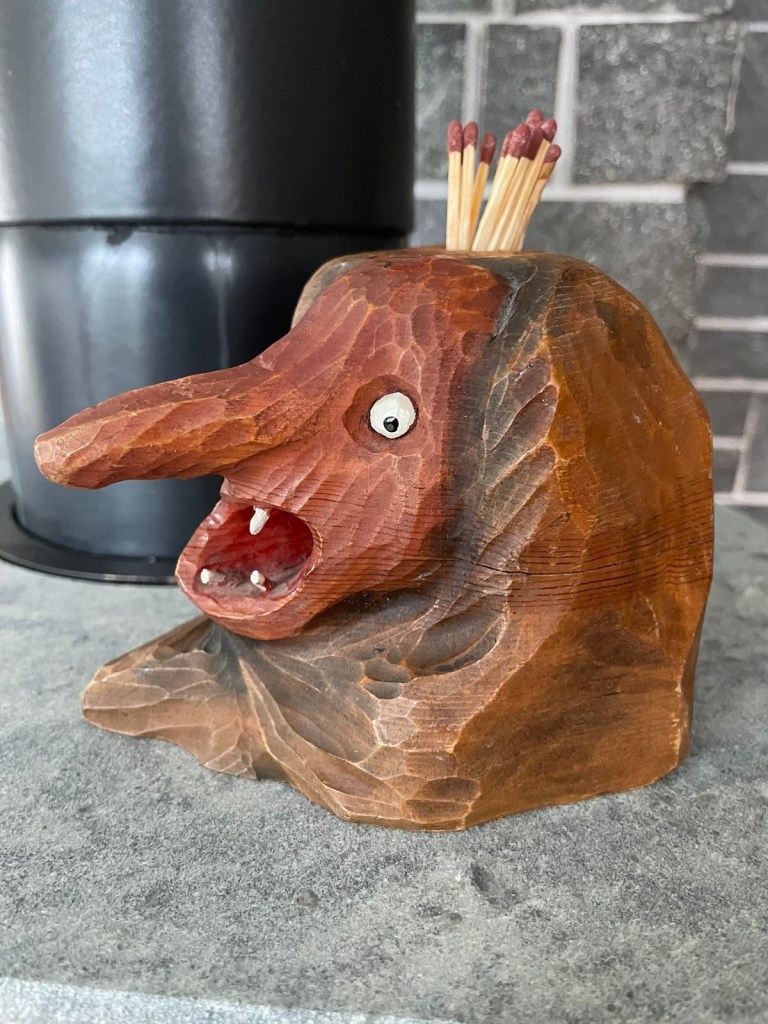
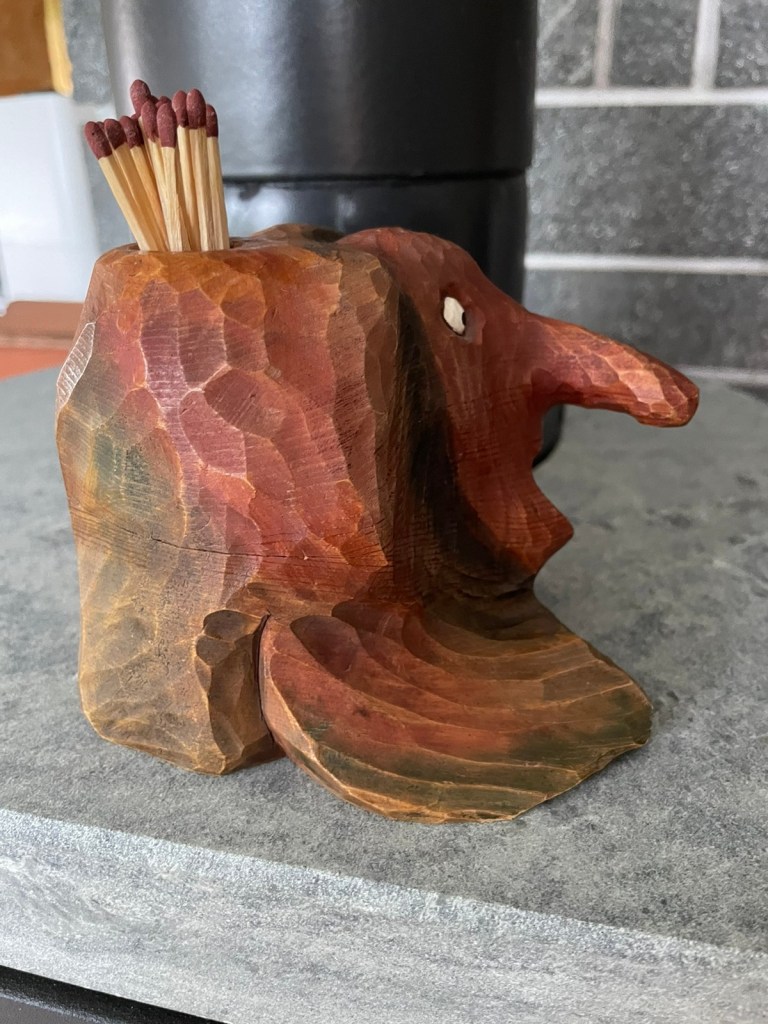
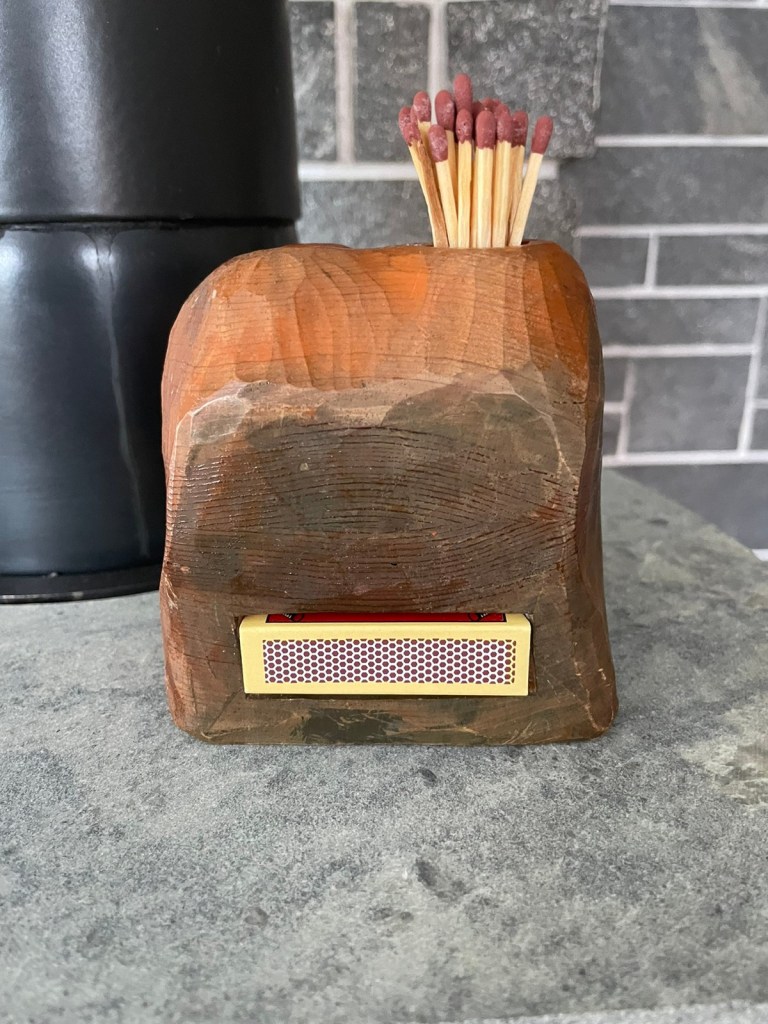
Aston Alnæs also made his own version of the match stick holder trolls:

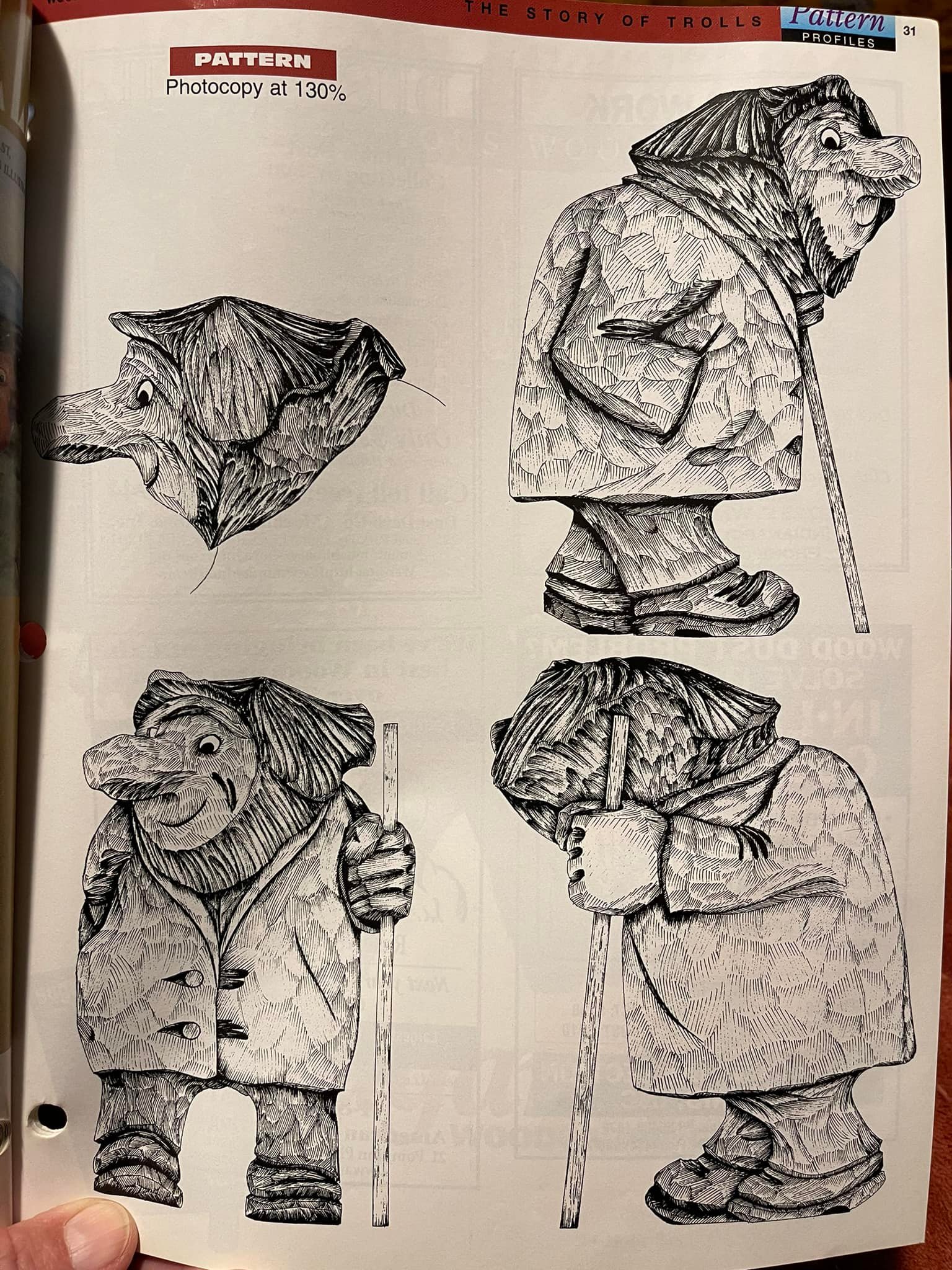
An Aston Alnæs troll was featured on the cover of Wood Carving Illustrated, Issue No.10, 2000:


Trollstigen
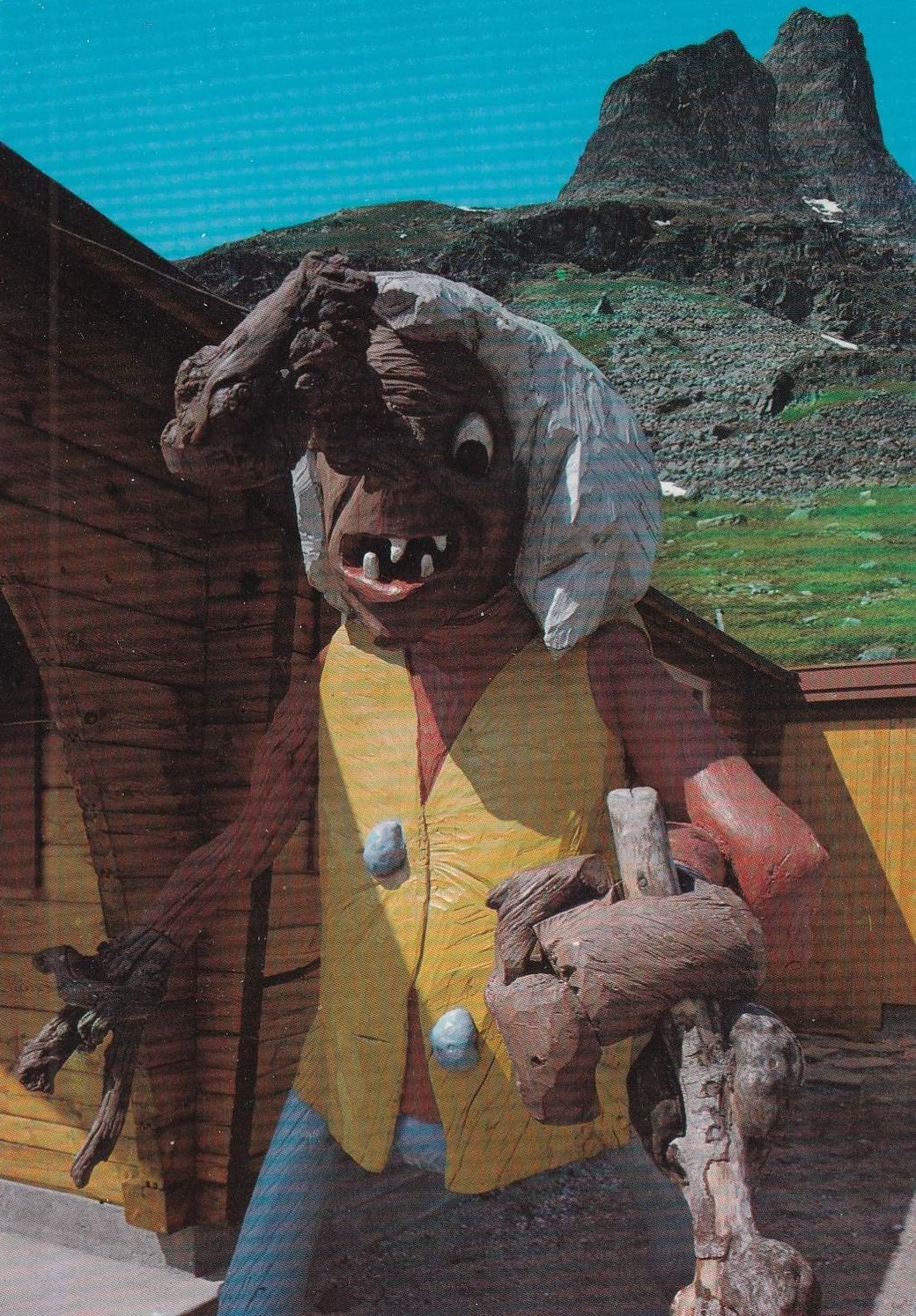
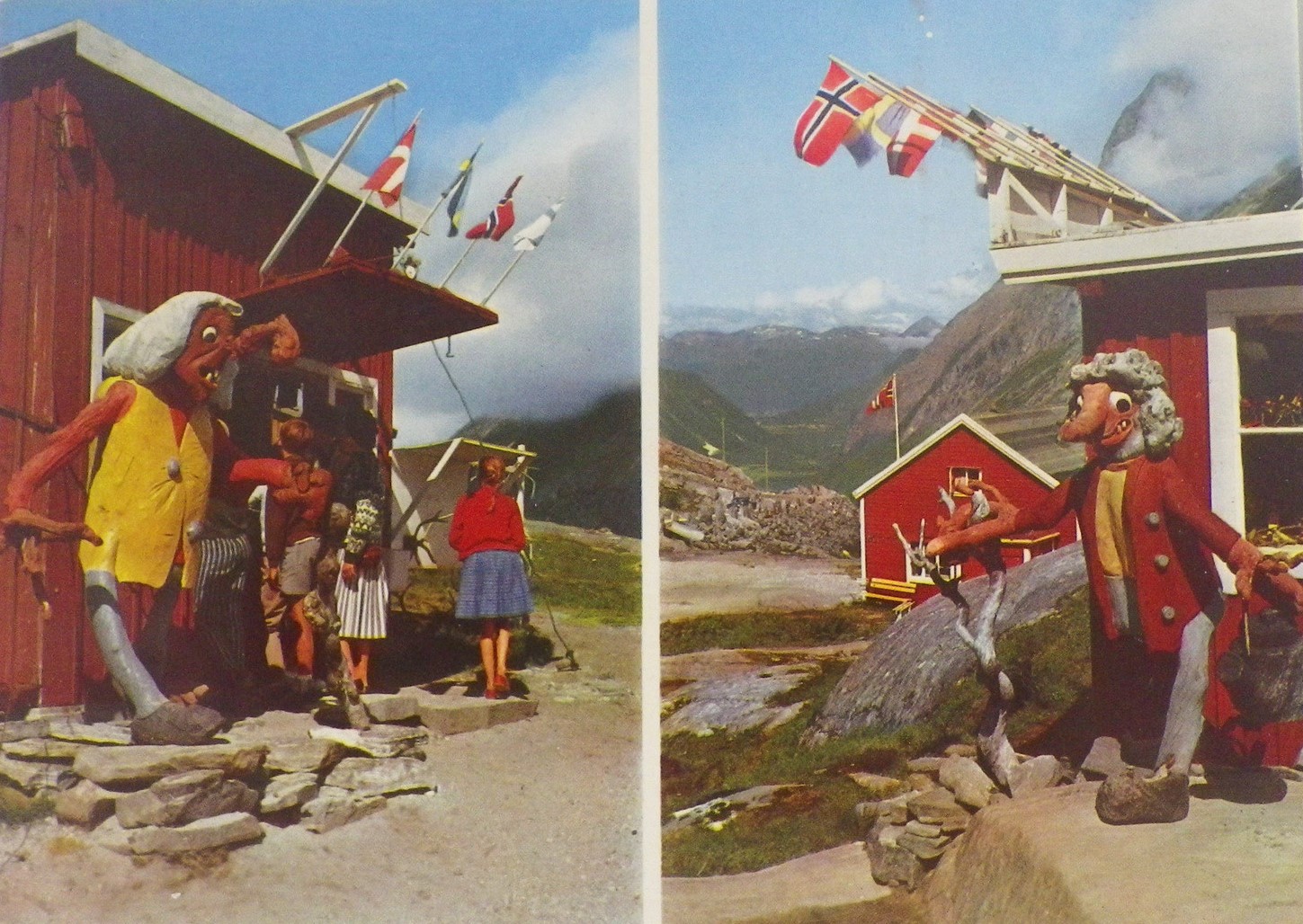
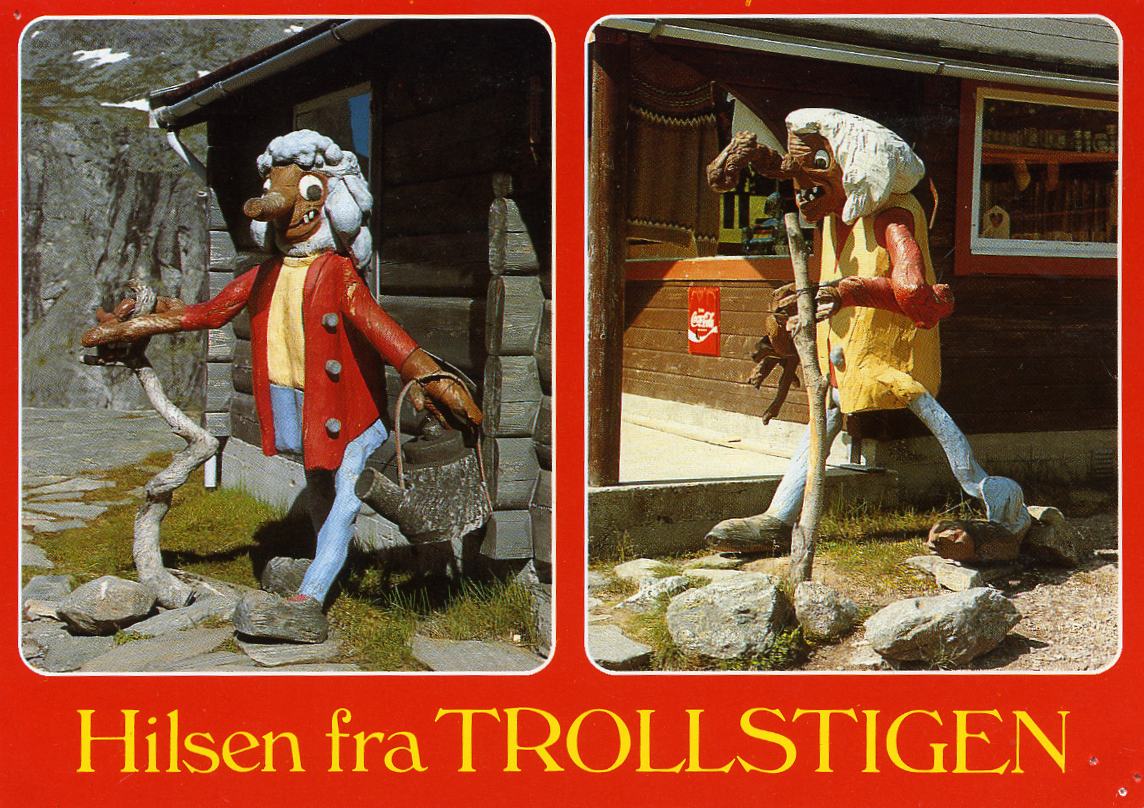
On some Aston Alnæs trolls you will find the word “Trollstigen” written on them. They were sold from the kiosks at this beautiful location where the real trolls are said to come from. In fact, there are two large trolls outside the kiosks that were either made by Aston Alnæs or inspired by his trolls.
“I worked one summer in the kiosk in Trollstigen and sold several of the nice hand made trolls. Johan Alnes from Verma in Romsdalen ran two kiosks on Trollstigen for many years. The photo below shows the “Upper” kiosk – the one that lay along the trail to the lookout” (Lars Gunnar Sæther, 2022):

In 1957, Aston Alnæs was commissioned by Romsdals Bookstore to create a large “miniature” sculpture of the top tourist attraction in the area: Trollstigen Road.

Trollstigen road was completed in 1936 after about eight years of construction. It was inaugurated by King Haakon VII on July 31 of that year. The impressive road construction, carved into and built up on the mountainside, quickly became a significant tourist attraction due to its dramatic mountain views, steep inclines, and hairpin bends as it ascends through the mountains of Isterdalen in the Romsdalen valley.
It took Aston Alnæs one month to make it. Weighing between 150 and 200 kilograms, the sculpture measured approximately 1.5 meters wide and over 1 meter tall. Since it was displayed outdoors, special attention was given to both the wood finishing and the paint.
Alnæs carved the lower section of the Isterdalen valley, including 9 of Trollstigen’s 11 hairpin bends and the Stigfoss Bridge. The width of the carving spanned from the outermost bends before Tverelva to the Bispesvingen below “Bispen.” The road itself was prominently marked in the carving, featuring retaining walls, railings, and boundary stones. Cars and buses could be seen driving along the road. The Stigfoss Bridge is integrated into the sculpture, and “Kongens utsikt” (The King’s Viewpoint) were also included, complete with railings.
Alnæs succeeded in highlighting the depth effect of the impressive landscape, and the colours further bring the scene to life (Source: Åndalsnes Avis, tirsdag 4. juni 1957, page 2).
The sculpture was placed on the sidewalk outside the store in the town square during tourist season. This impressive work was studied and commented on daily by numerous tourists.
In 1962, another marketing related sculpture was created by Aston Alnæs which promoted Åndalsnes. The impressive wooden sculpture was 1.5-meter-wide, 70 cm tall, and 70 cm deep and depicted the Romsdal Alps. The piece specifically portrayed Romsdalshorn and Trolltindene with Romsdalen in between, as well as Kongen, Dronningen, and Bispen with Trollstigen. It was exhibited from 10 June 1962 in Bennetts’ display windows on Karl Johans Gate in Oslo and remained on display for some time during the summer. The thousands upon thousands of locals and tourists passing these windows got a taste of the beautiful landscape in Åndalsnes. There were also plans to later send it to Bennetts’ offices abroad. The initiative was led by the Tourism Association and funded by contributions from local businesses, hotels, and gas stations in Åndalsnes (Source: Åndalsnes Avis, 28 April 1962).
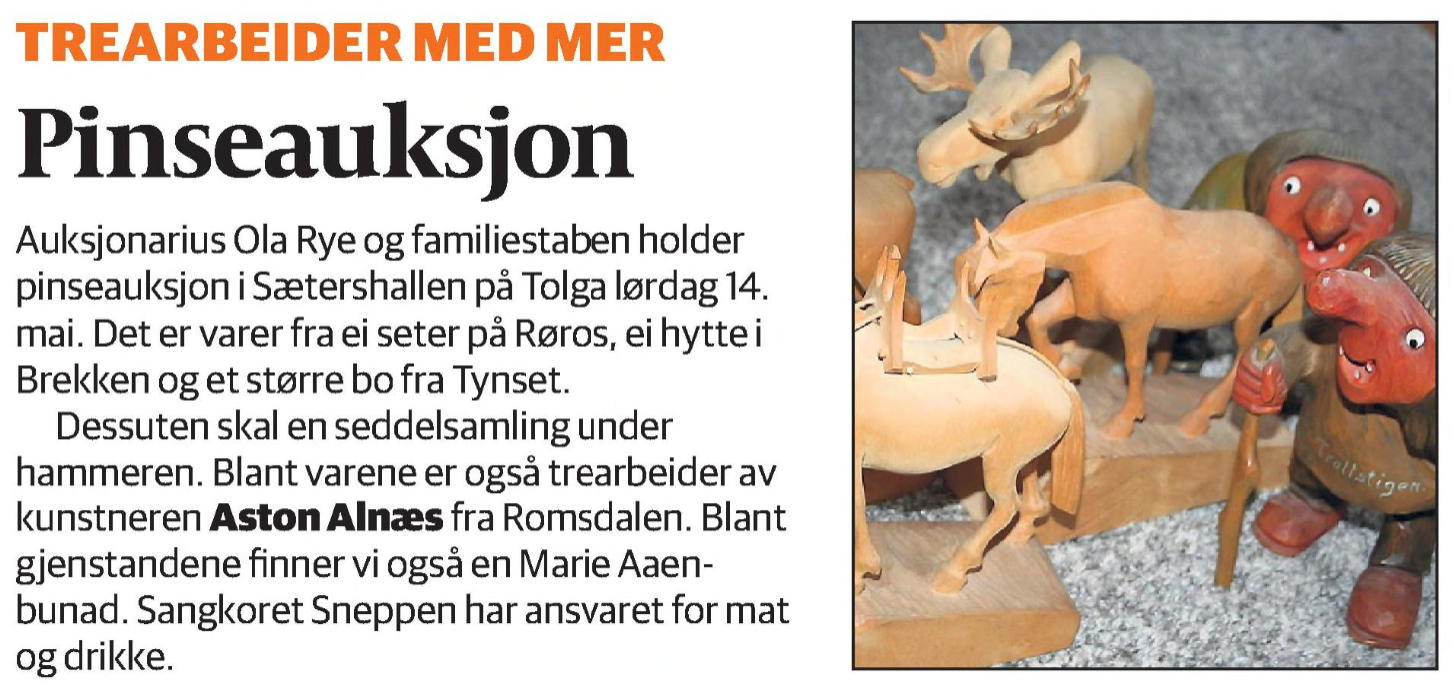
Noteworthy auction
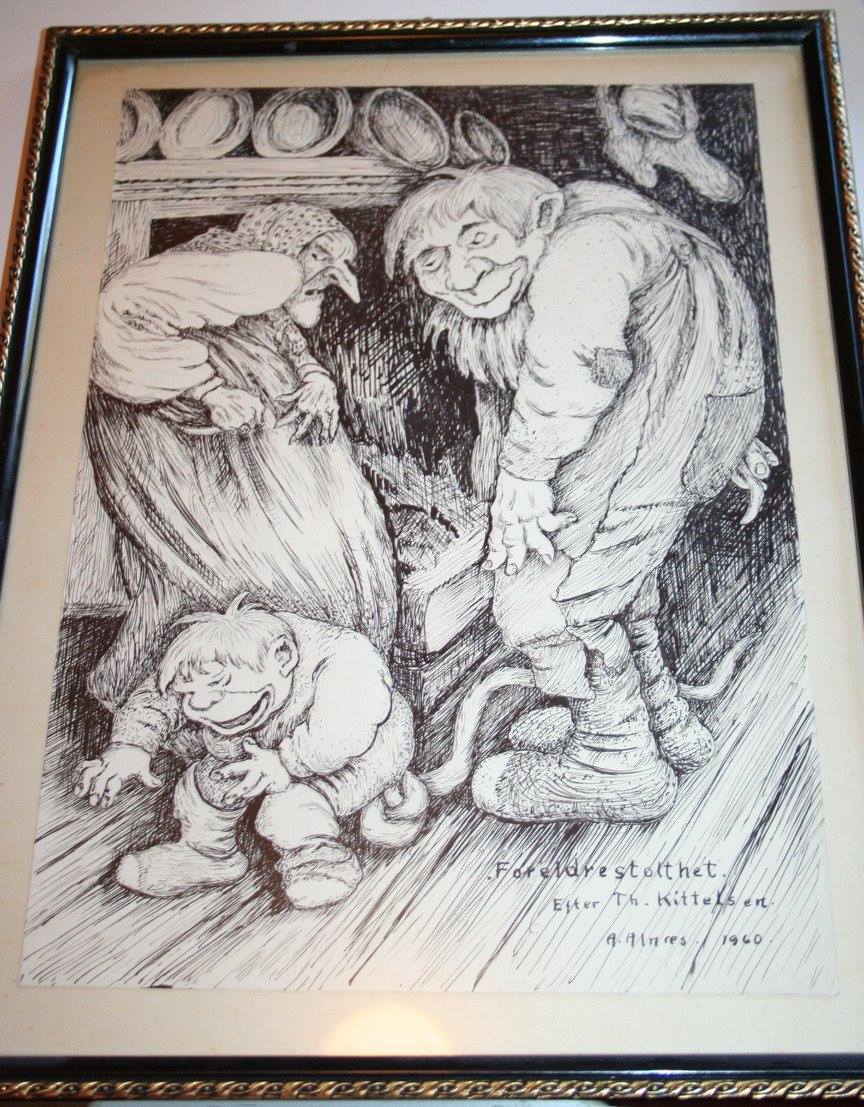
In May 2016 there was an auction of some of the finer woodcarvings made by Aston Alnæs:





He later married teacher Elsa Alma on 17 March 1951. The two shared many happy years together until 09 October 1965 when Aston Alnæs passed away at the age of 61 in Verma.
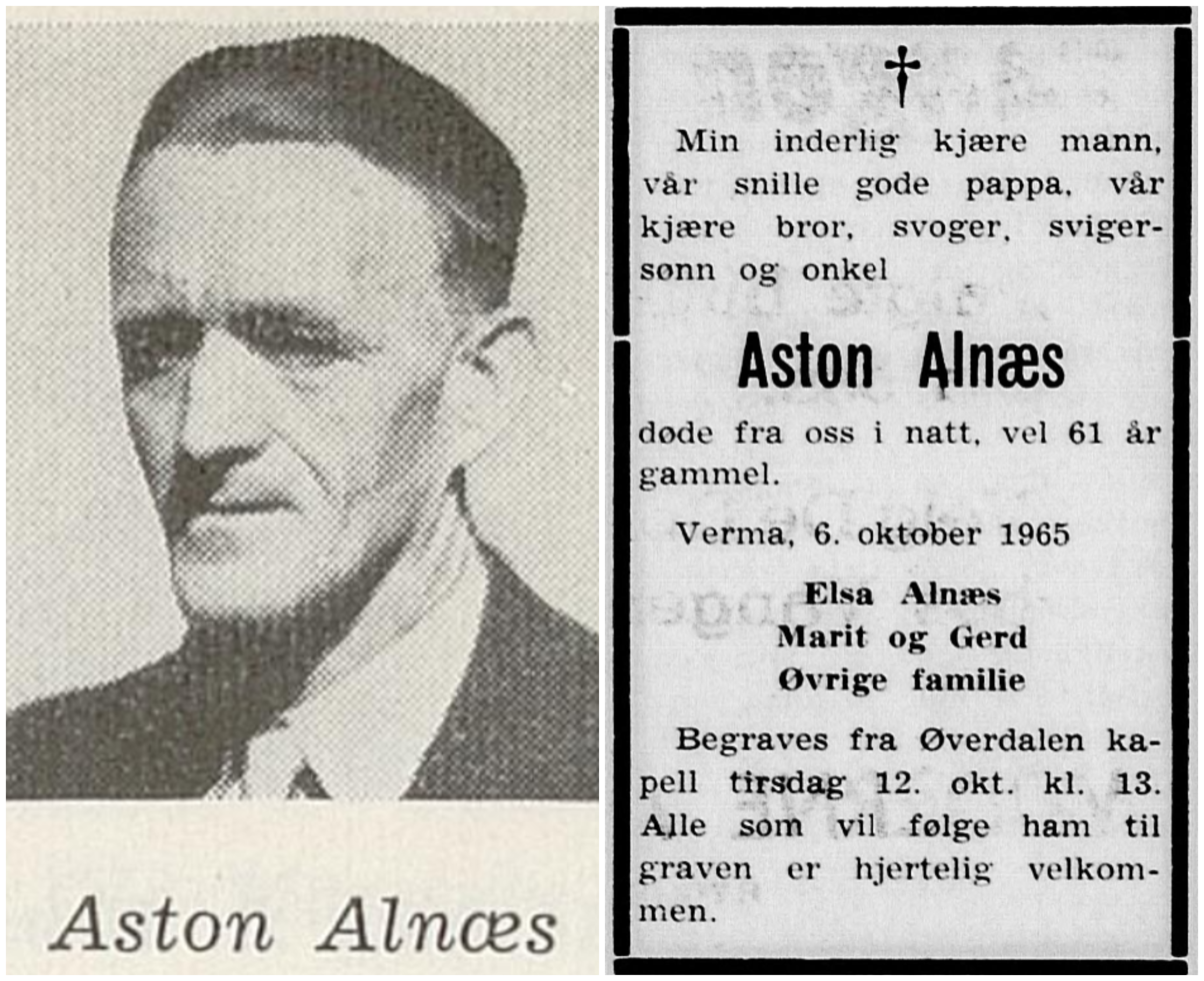
He was a keen hunter and outdoorsman, and as recently as the autumn preceding his death, he participated in reindeer hunting. He is remembered for his woodcarving work, most notably, his trolls. It is uncertain as to how many trolls he created, but those collectors that are lucky enough to get their hands on one find great joy in his happy troll carvings.
About the Author
For more articles visit Dayne’s Discoveries Blog, browse our online shop, join the HENNING – Norwegian Woodcarving Facebook group or contact us to share information, stories, or photographs relating to Aston Alnæs and his troll carvings.

 Dayne's Discoveries