
Harald Wiberg (1908-1986) was a renowned Swedish artist, illustrator and writer. He is known internationally for his illustrations of the Tomten from Scandinavian folklore, though the vast majority of his work primarily features animals, particularly those native to Scandinavia. He had a special talent for capturing the essence and behavior of animals in their natural habitats.
Early Life and Education
Harald Wiberg was born on 1 March 1908 in Ankarsrum, Sweden. His father was the rolling mill worker Karl Ferdinand Wiberg and his mother was Josefina Quarfoot. “The family, the parents and the seven children, lived in a worker’s flat in Ängelsberg by the railway. They had a room and kitchen. You didn’t get more in those days, no matter how big a family you had“, says Christina Wiberg – Harald’s widow (Source: Thomas Sjostrom, Västerviks-Tidningen, 2008).
It was in Koltorpet that Wiberg, as a 4-year-old, saw a Tomten, which he then drew and painted for the rest of his life. According to his widow, Christina Wiberg: “Harald was open to most things. He was convinced that he had seen a Tomten when he was little. He believed in the Tomten and was not ashamed of it. But he pointed out many times that the lack of electricity was a prerequisite. One night he discovered a ghost in our house. But when he turned on the light, he saw that it was only the back of a chair. That disappointed him!” (Source: Mats Å Johansson, Hemmets Journal, 2007).
Growing up in picturesque landscapes, Wiberg developed a deep connection with nature from a young age. “He was a real working boy who loved nature“, says Christina Wiberg. This bond only strengthened as he pursued his education in art. First training as a sign painter in Ankarsrum and then on to more formal training.
“In 1930-31 Harald studied at the Technical School (now Konstfack) in Stockholm. He could only afford to apply to the Royal Swedish Academy of Fine Arts once and then he was not accepted. But he attended the Academy’s evening courses in sketch drawing, where Albert Engström was his teacher” (Source: Mats Å Johansson, Hemmets Journal, 2007).
He furthered his education at Oller’s painting school in Stockholm 1931–1934. During this time he took study trips to France, Italy, the Netherlands, Ethiopia, Iceland and Finland, among others. This assisted Wiberg in honing his skills, mastering various mediums, including watercolor, oil, and pencil.
His meticulous attention to detail and profound understanding of animal anatomy set the foundation for his future works. Most of his illustrations show Scandinavian landscapes, animals and traditional mythological figures.
“What Harald did not know about animals and nature was not worth knowing. He could say: ‘Today we will take a look at a badger’. And then we went out and sat on each stump in the forest. And after a quarter of an hour there really was a badger. The forest was his world,” says Christina Wiberg (Source: Mats Å Johansson, Hemmets Journal, 2007).
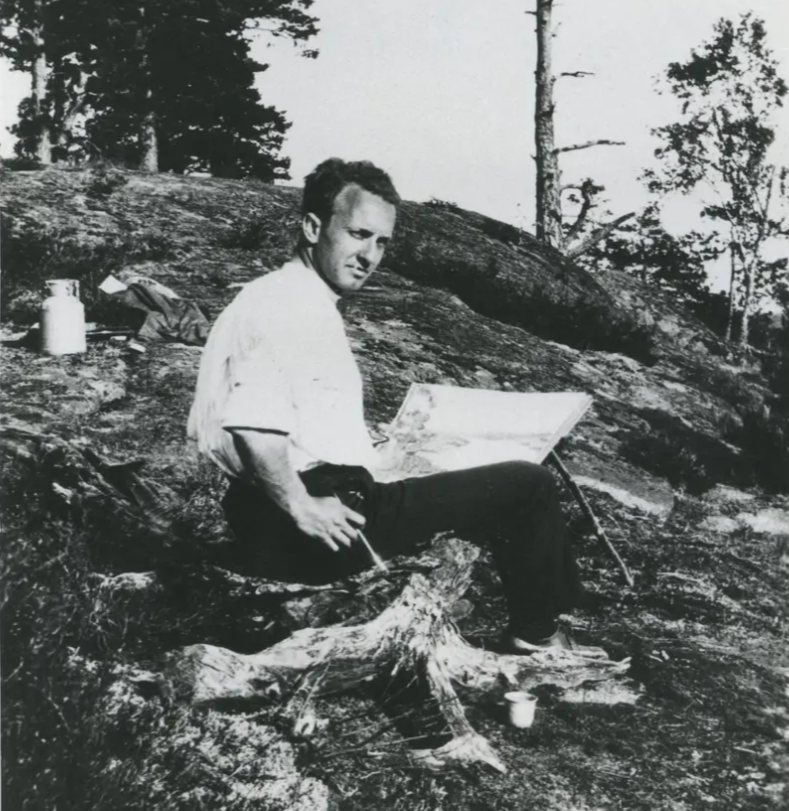
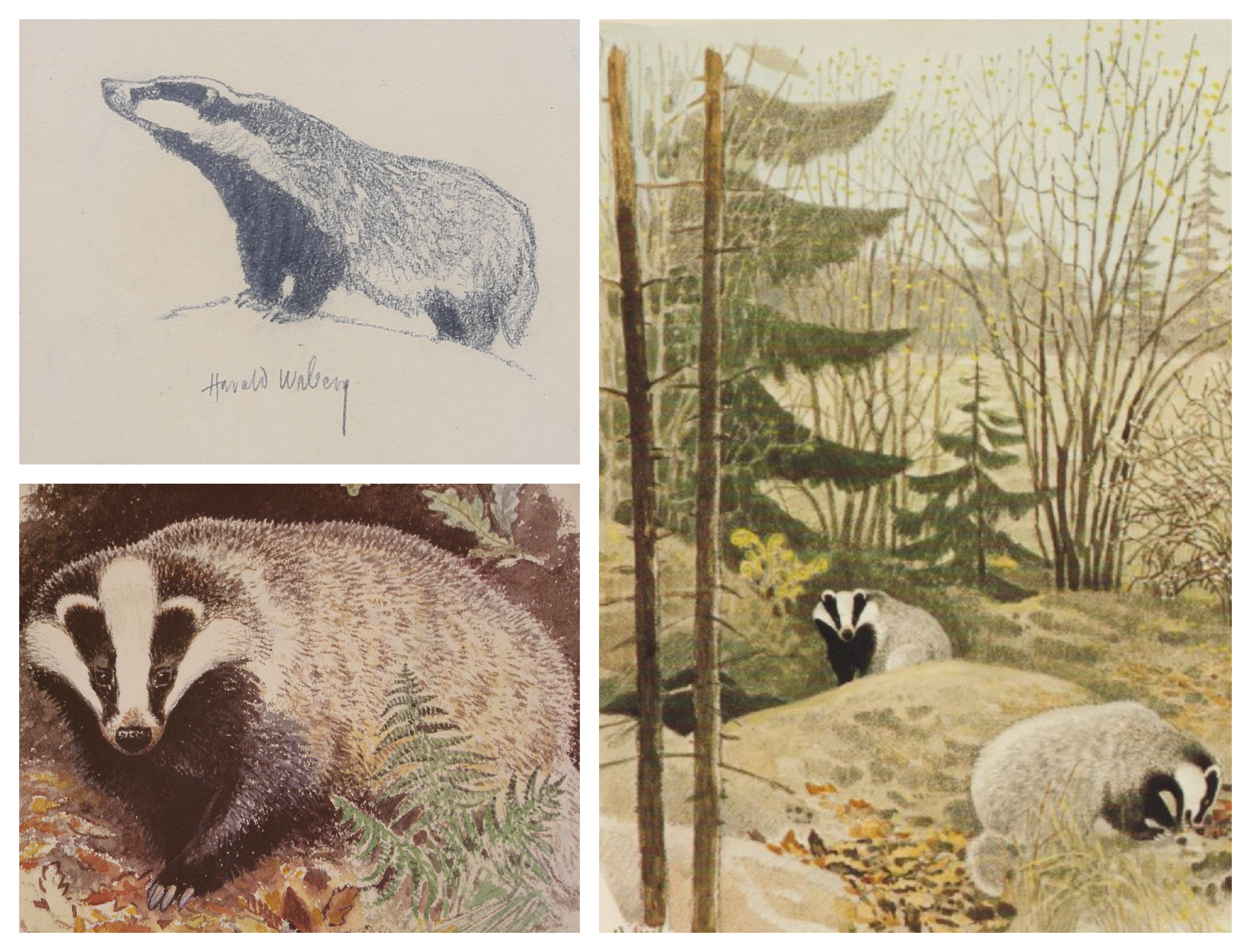
He showcased his work at prestigious venues such as Thurestam’s art salon in Stockholm in 1946 and 1947. Alongside H Hamilton and Ivar Morsing, he also exhibited in Skövde. He took part in numerous collective exhibitions, including those with Sweden’s general art association in Stockholm and an animal-themed exhibition in Düsseldorf, where he was awarded a bronze medal.
Wiberg specialized in animal and nature motifs executed in oil, watercolor or in the form of
ink and pencil drawings. He made a name for himself as an illustrator in a series of books on animals, hunting, fishing and outdoor life and has illustrated around 20 books on these subjects. He also illustrated many children’s books.
He became a well-known TV personality through the classic nature program Korsnäsgården, appearing on the show from 1960 to 1968. Additionally, he featured for several years in the nature magazine Just nu.
Artistic Style
“In the tradition of Bruno Liljefors, Harald Wiberg depicted animals and Swedish nature in primarily sensitive watercolors, with a clear eye for the animals’ behavior in their changing environments and during different seasons. Among other things, he published the lithographic portfolio “Djur i naturen” (Animals in nature) in 1948, with a foreword by Björn von Rosen. He also illustrated twenty or so children’s books, most with animal motifs. Wiberg’s picture book illustrations for Viktor Rydberg’s “Tomten” and “Lille Viggs äventyr” (Little Vigg’s adventures) have also achieved international success” (Source: Swedish National Museum)
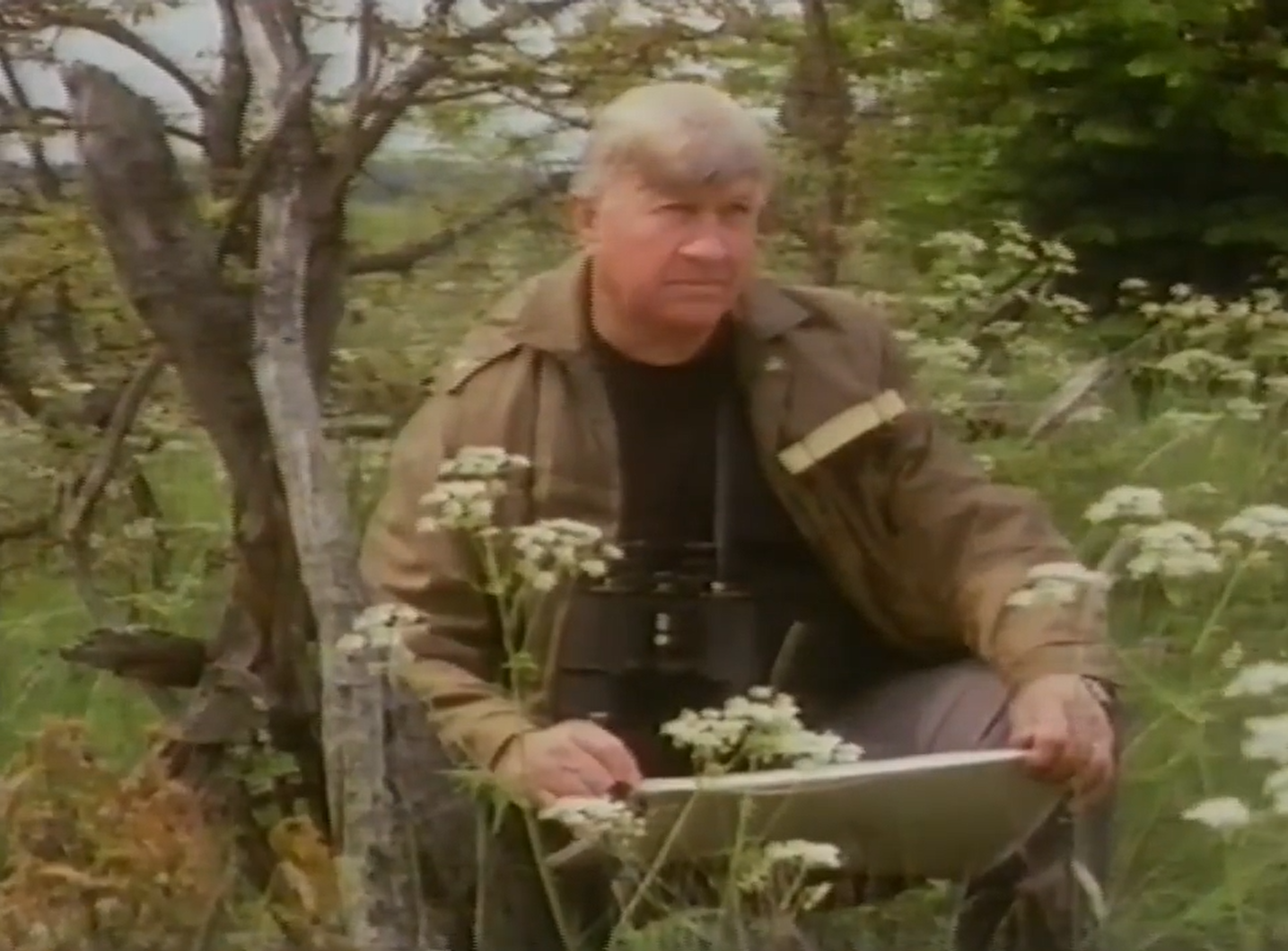
Wiberg’s art is characterized by its naturalistic style, with meticulous attention to detail and a deep understanding of animal anatomy and behavior. He combines technical precision with an emotional depth that resonates with viewers. His illustrations are not just depictions but intimate portraits of wildlife, capturing moments of quiet beauty and subtle drama. Whether it’s the cautious gaze of a fox or the serene presence of a deer in the forest, Wiberg’s work evokes a sense of wonder and respect for the natural world.
Art production
By far the most special and valued of Harald Wiberg’s art are his original paintings. As with many other artists, Wiberg’s most iconic originals were distributed as prints. Surprisingly, the prints can sometimes bring in a higher value than some of his originals depending on the subject and whether it is a hand signed, limited edition.
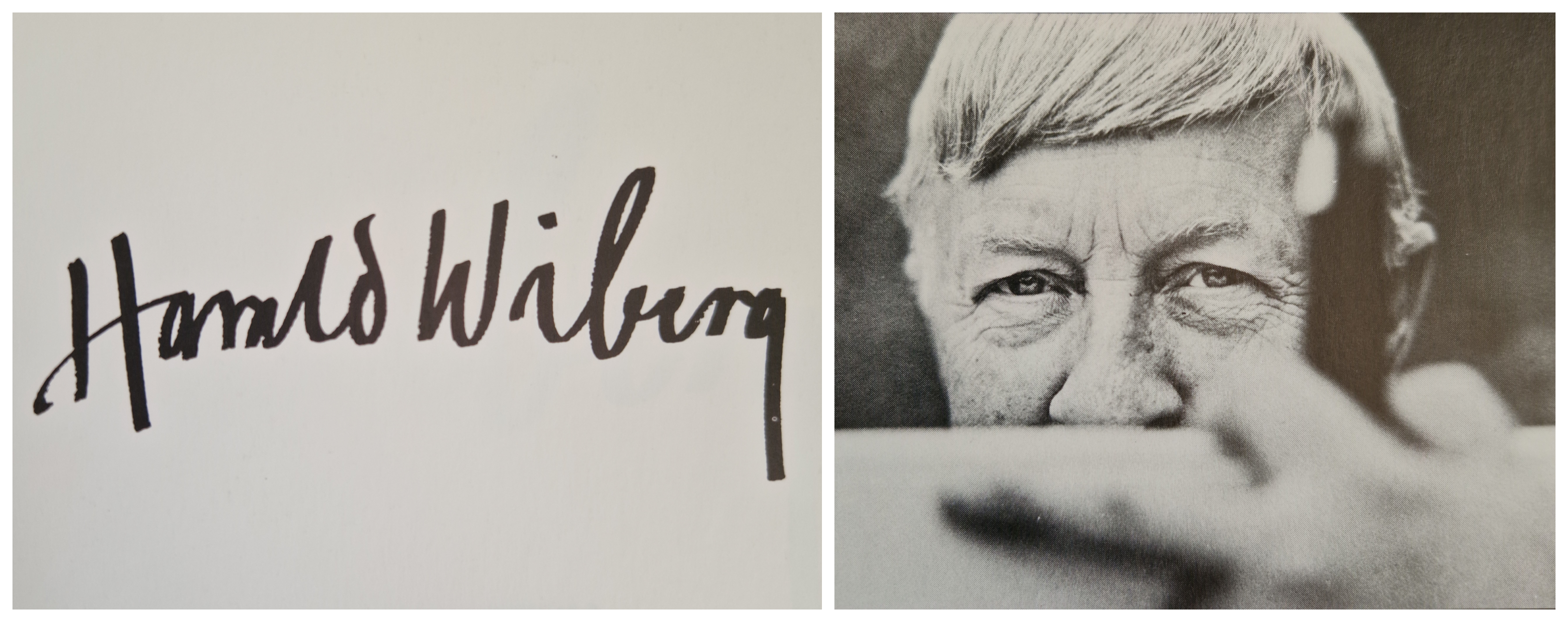
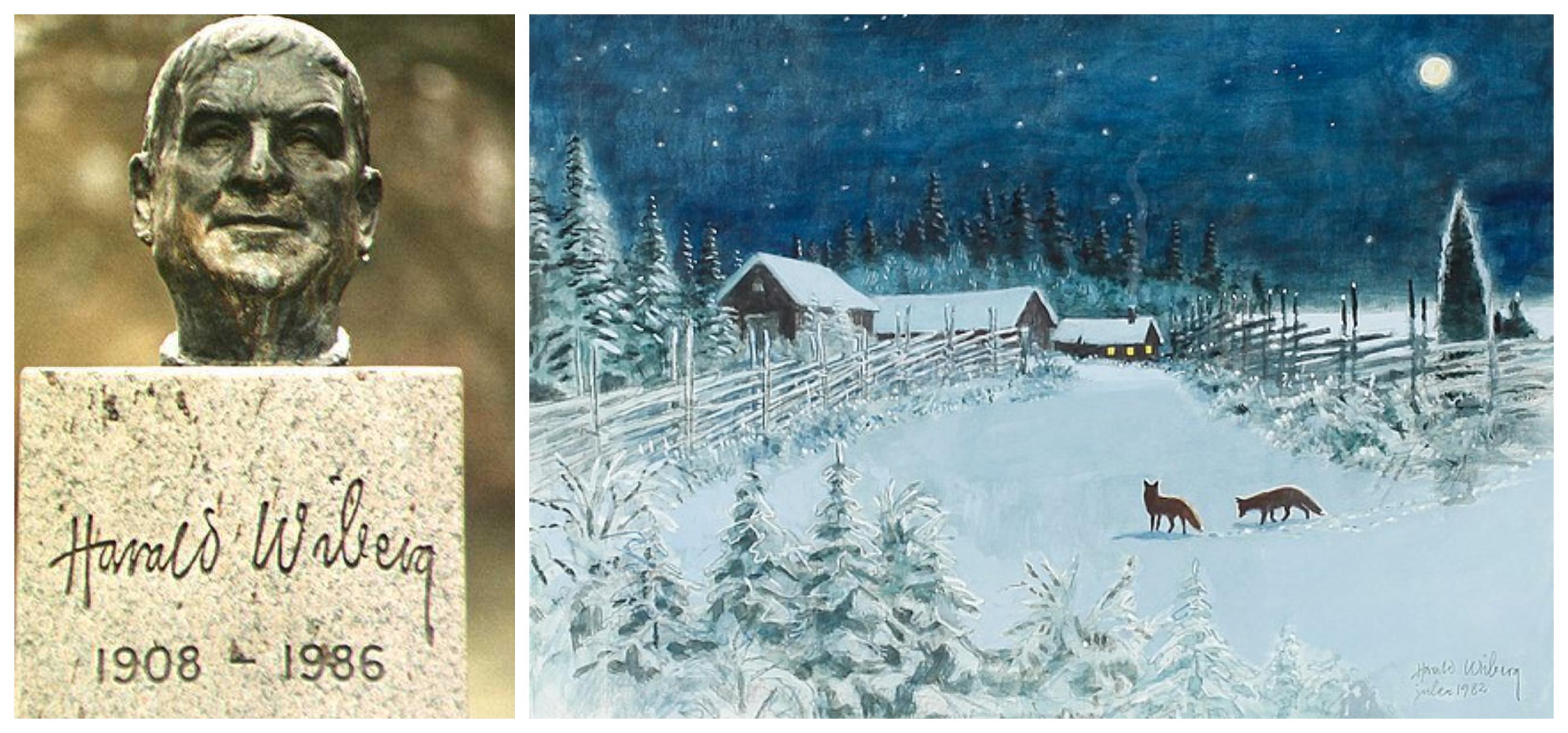
He worked with various mediums, including watercolor, oil, and pencil, but he is particularly known for his delicate and detailed watercolors. Below is an example of Wiberg’s signature:
Watercolour paintings
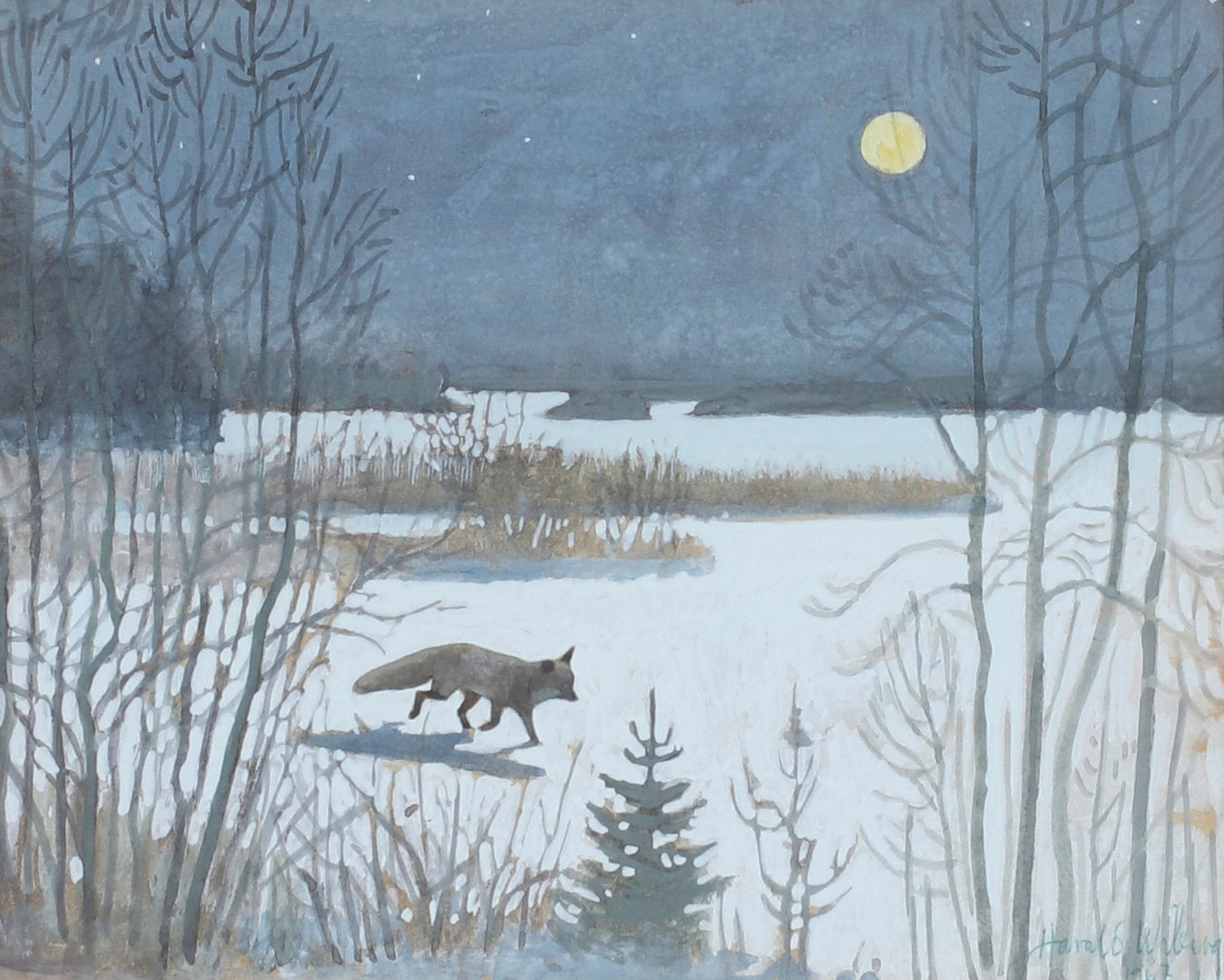
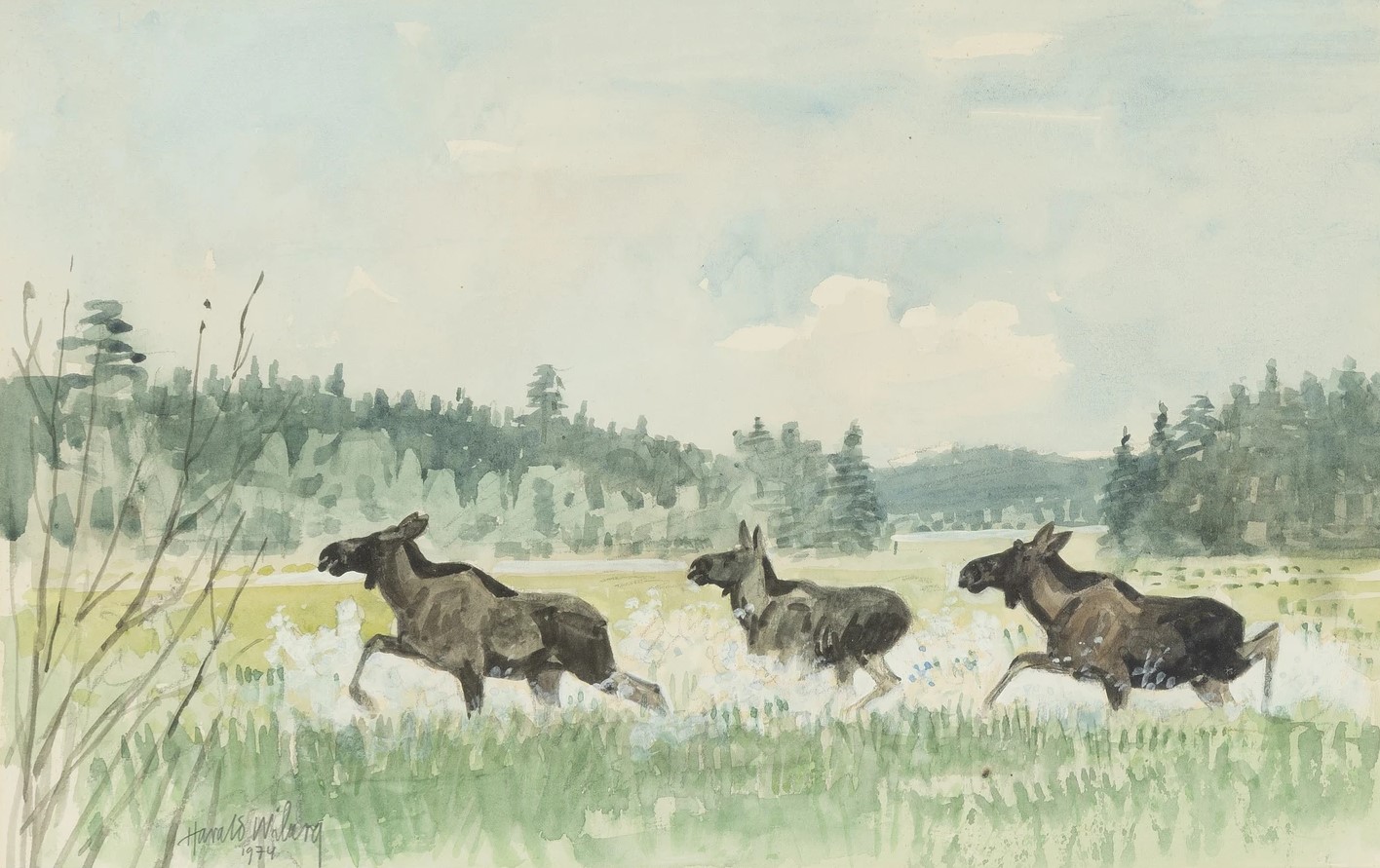
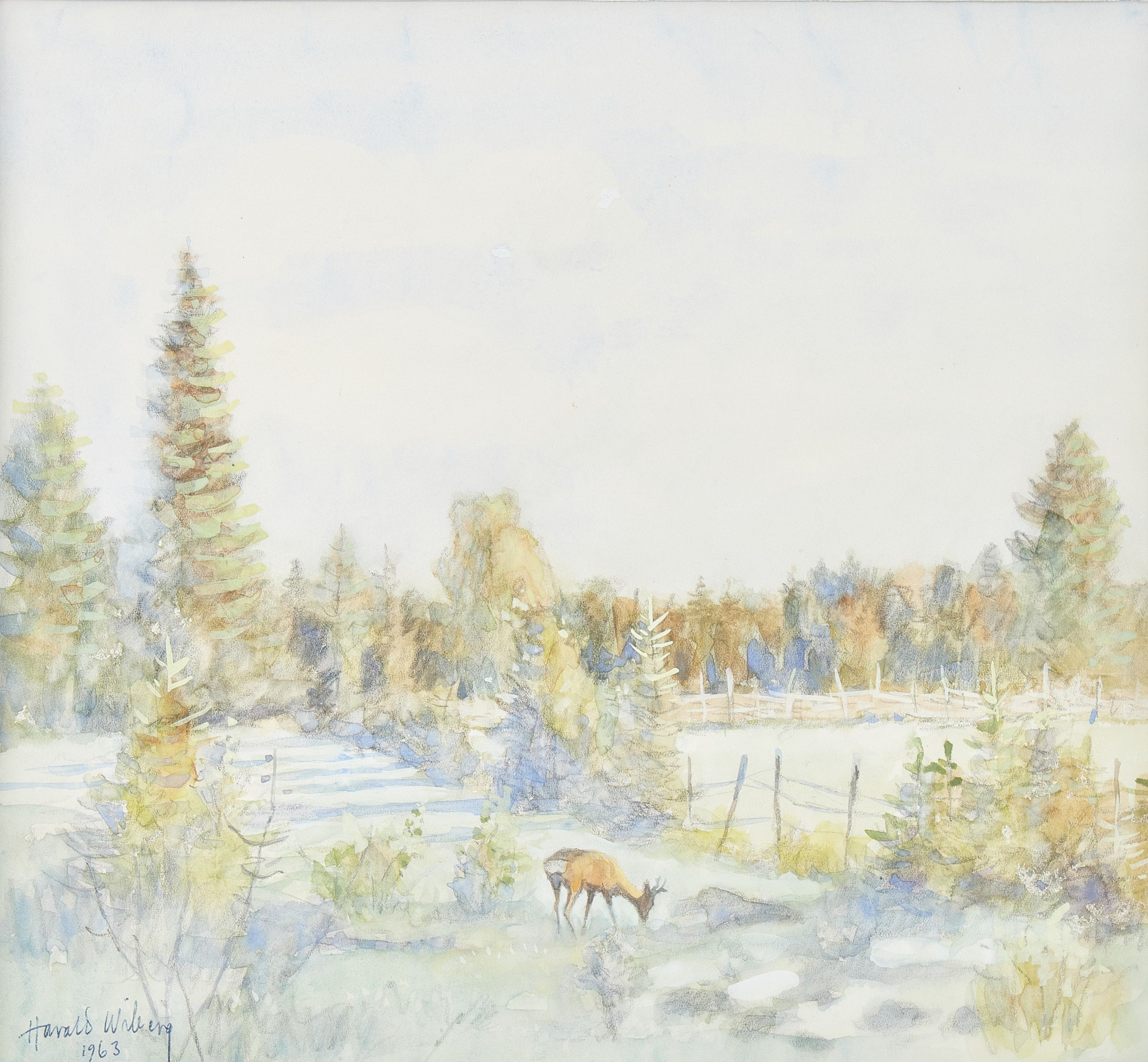
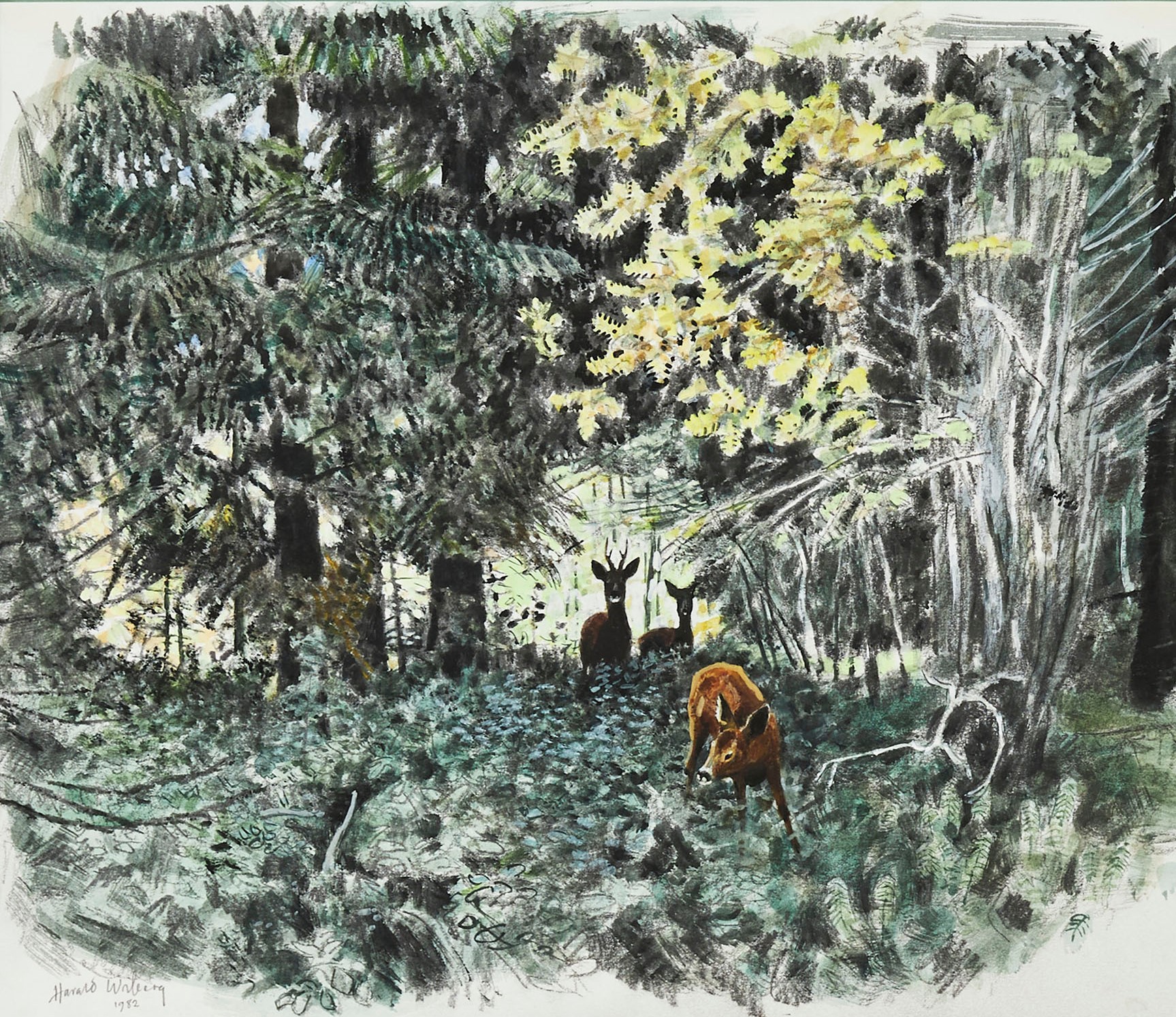
The majority of Harald Wiberg’s work is done in watercolour, mostly depicting animals in nature. He would venture out into nature with his sketchpad and capture the intricate details of wildlife in their natural habitats. Wiberg’s process involved patiently observing the behaviors and characteristics of various animals, often spending hours or even days in a single location to ensure he could accurately portray their essence.
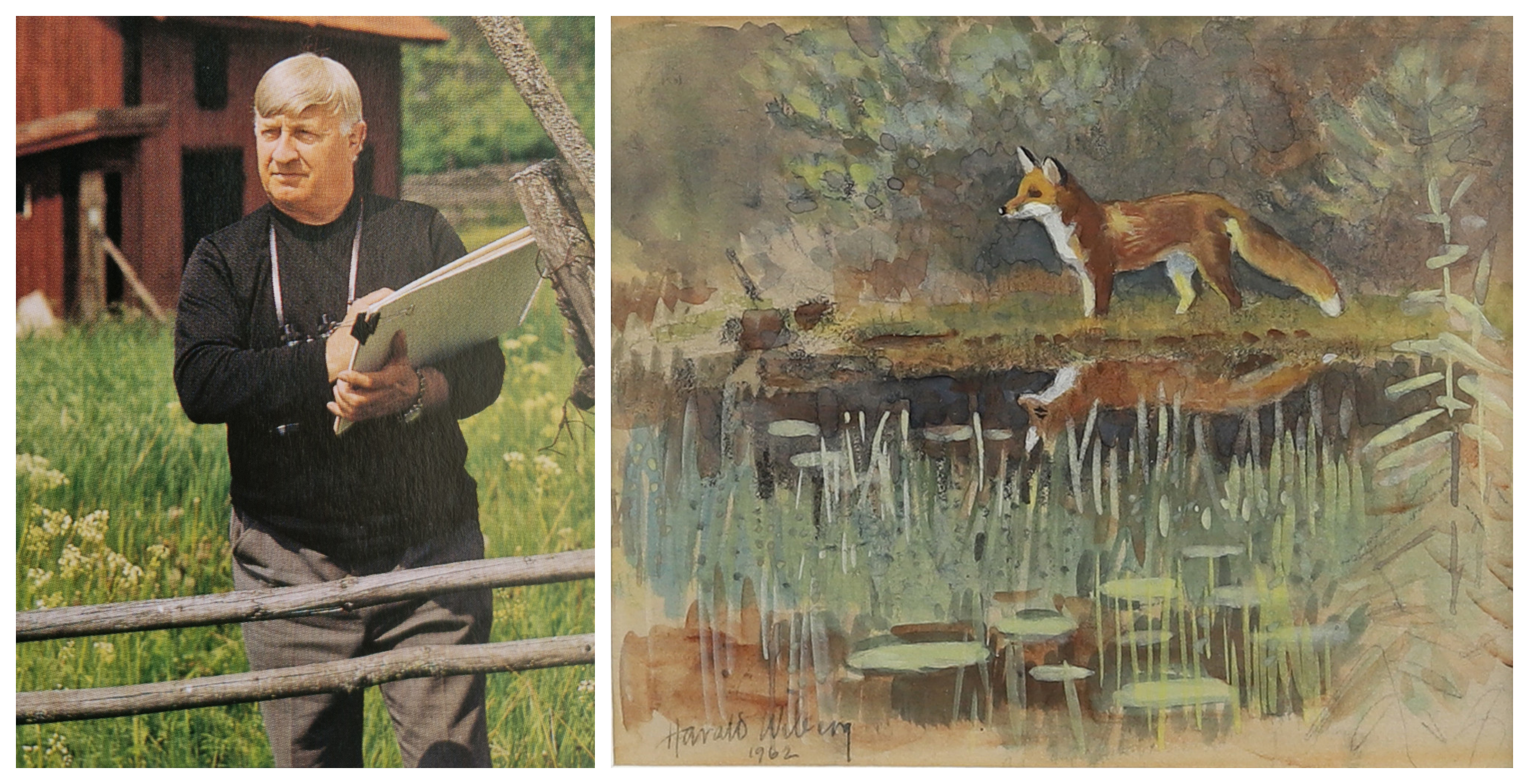
Back in his home studio, he transformed these sketches into detailed watercolour paintings, carefully layering pigments to bring life to the scenes he had witnessed. His deep understanding of animal anatomy and behavior, combined with his mastery of watercolour techniques, allowed him to create vibrant, realistic depictions that resonate with a sense of authenticity and reverence for the natural world.
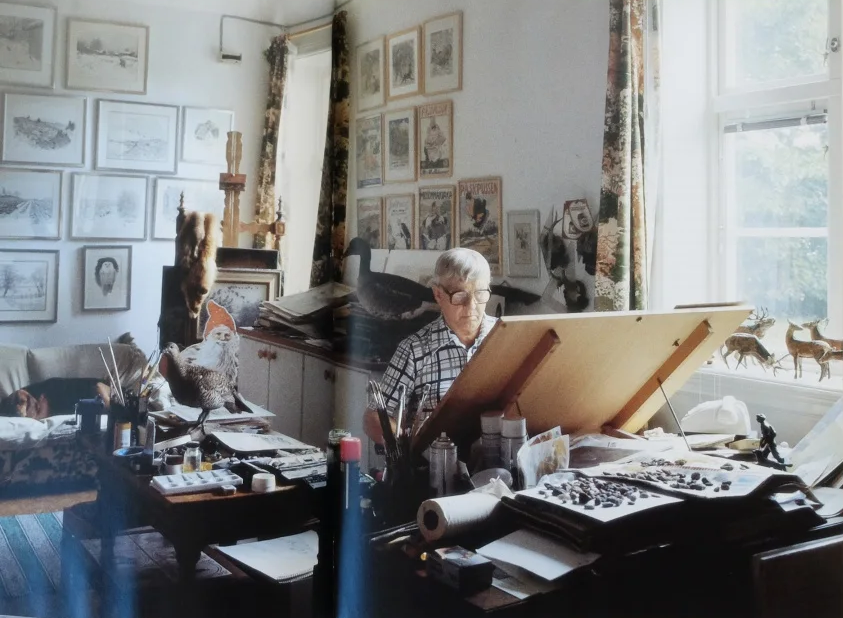
Discover Wiberg’s fantastic watercolours:
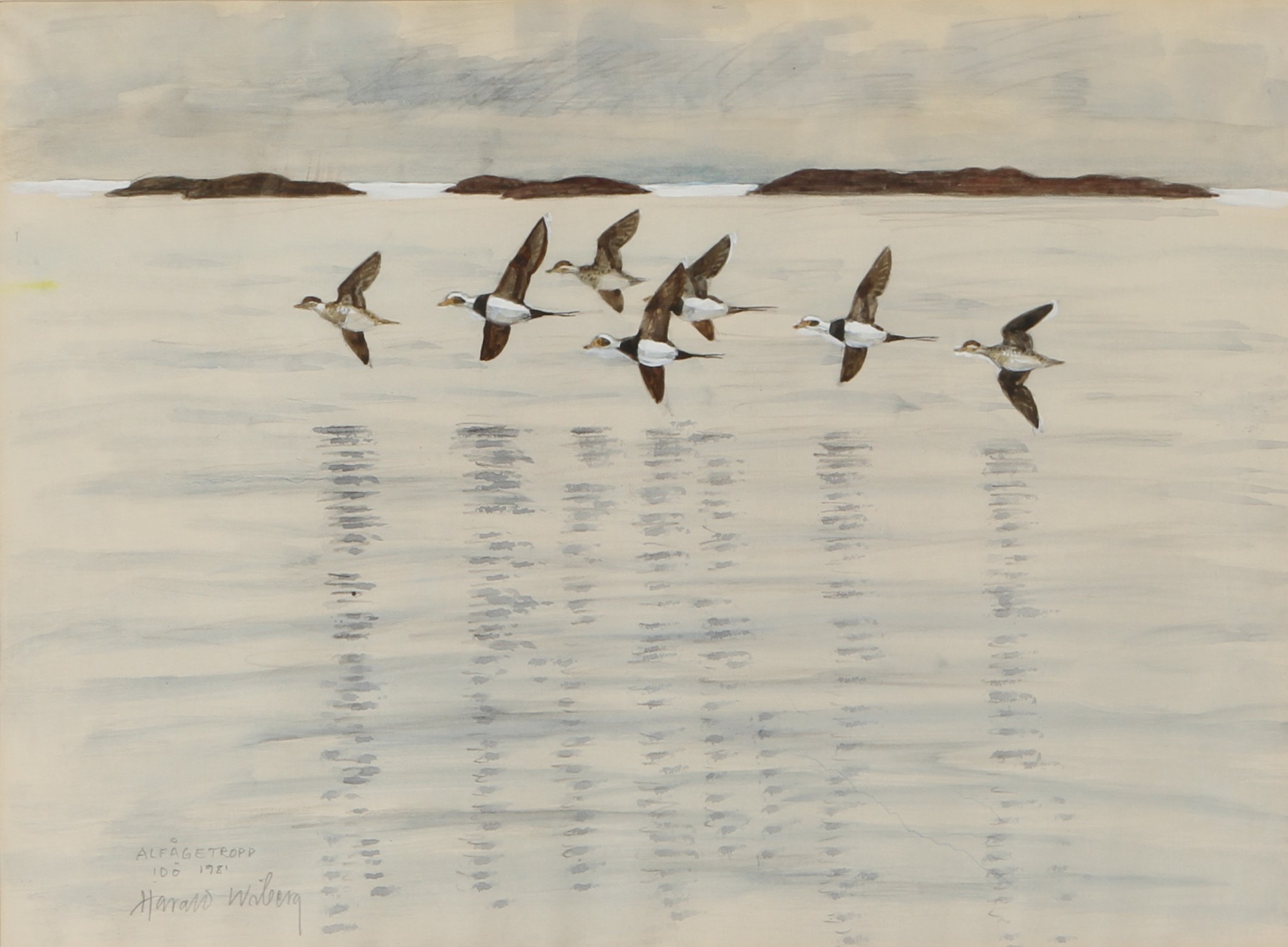
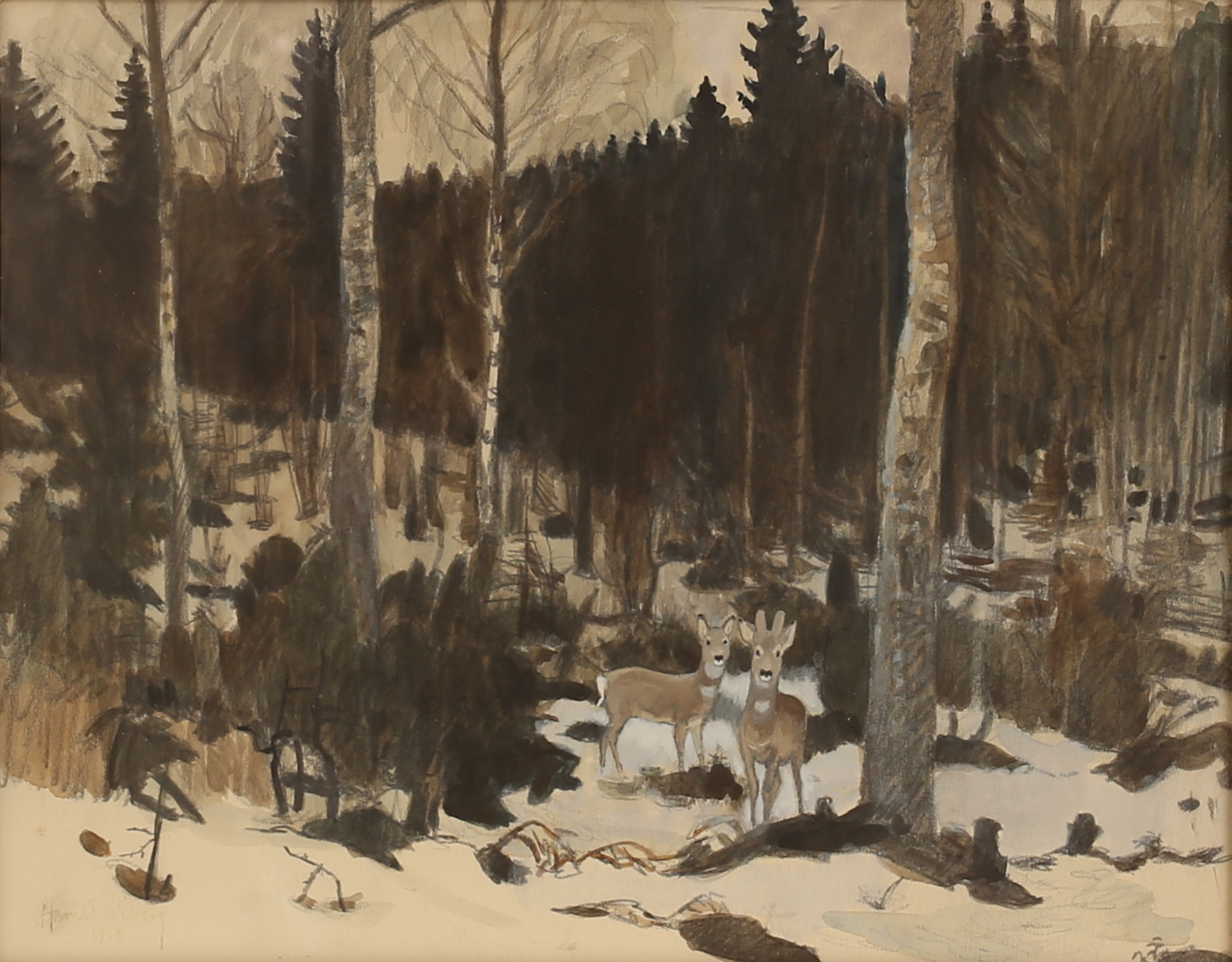
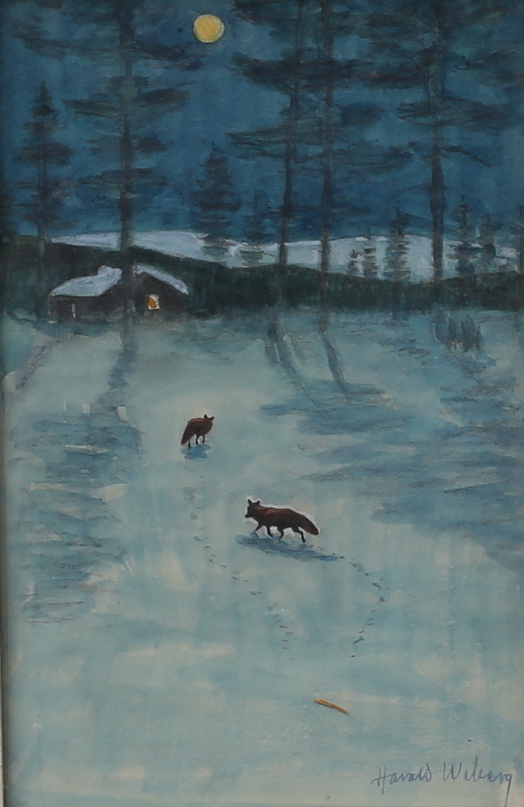
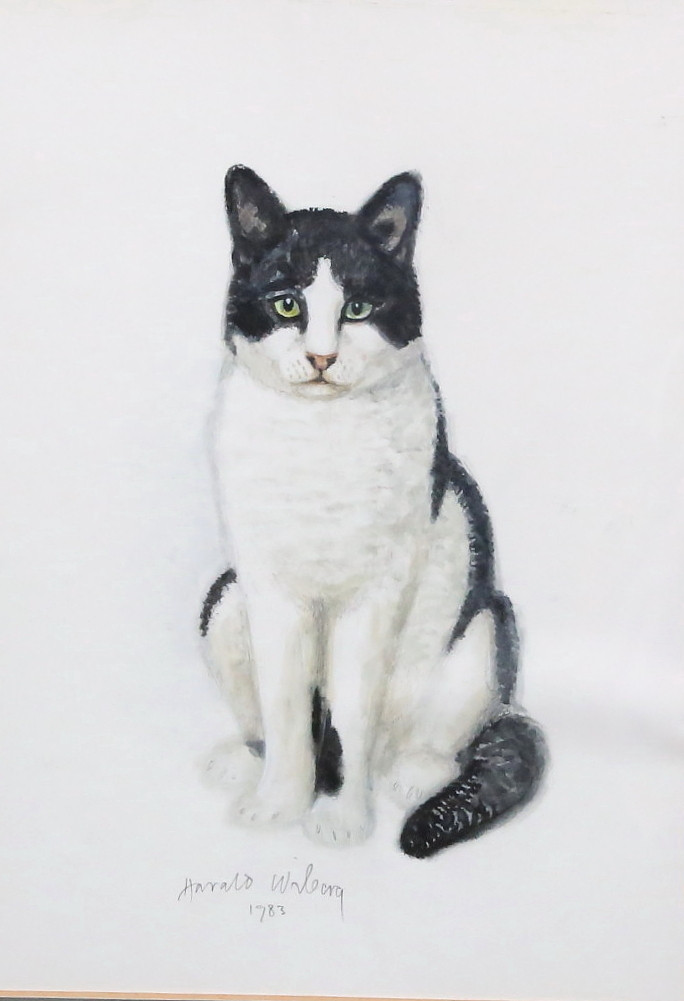
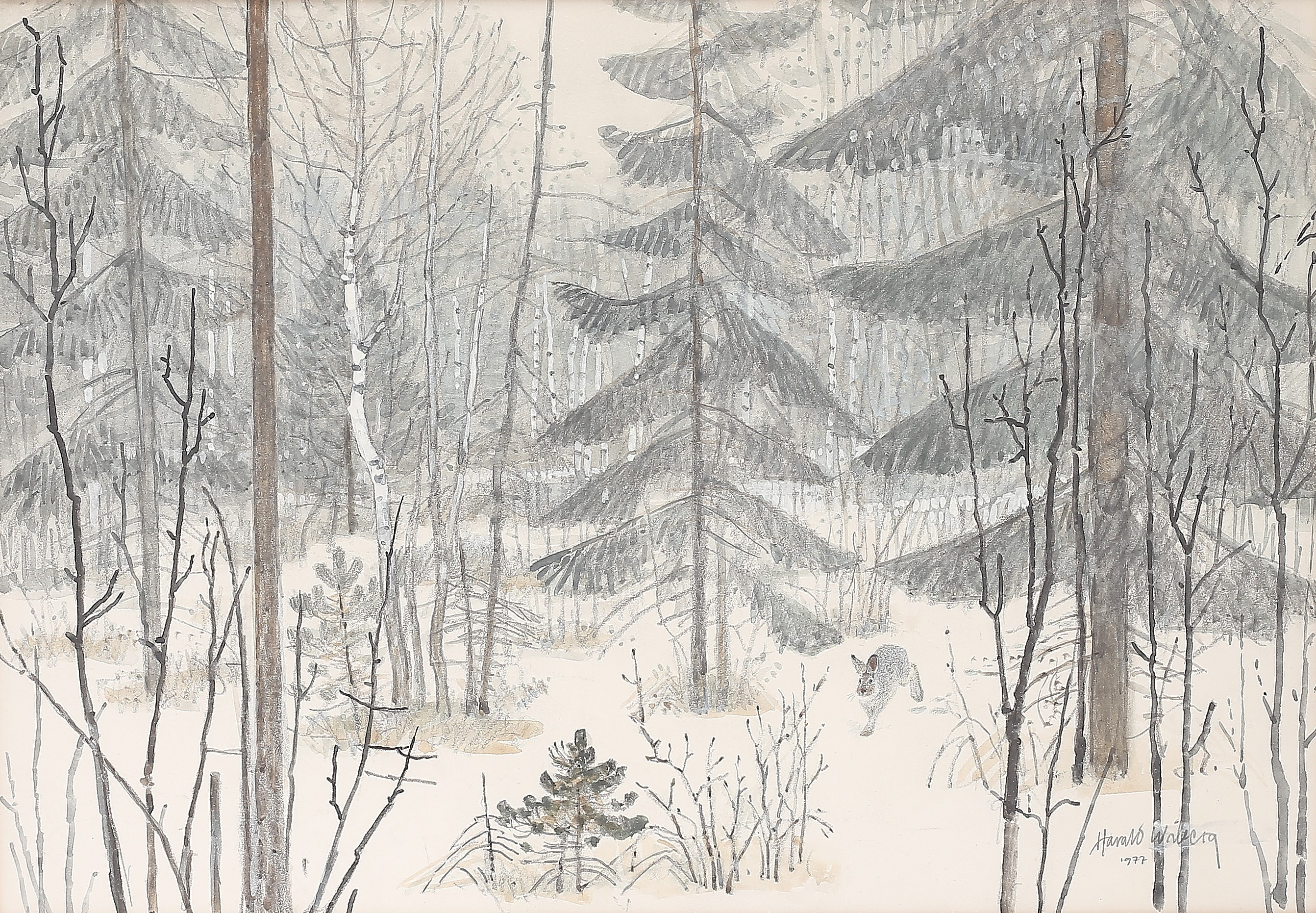
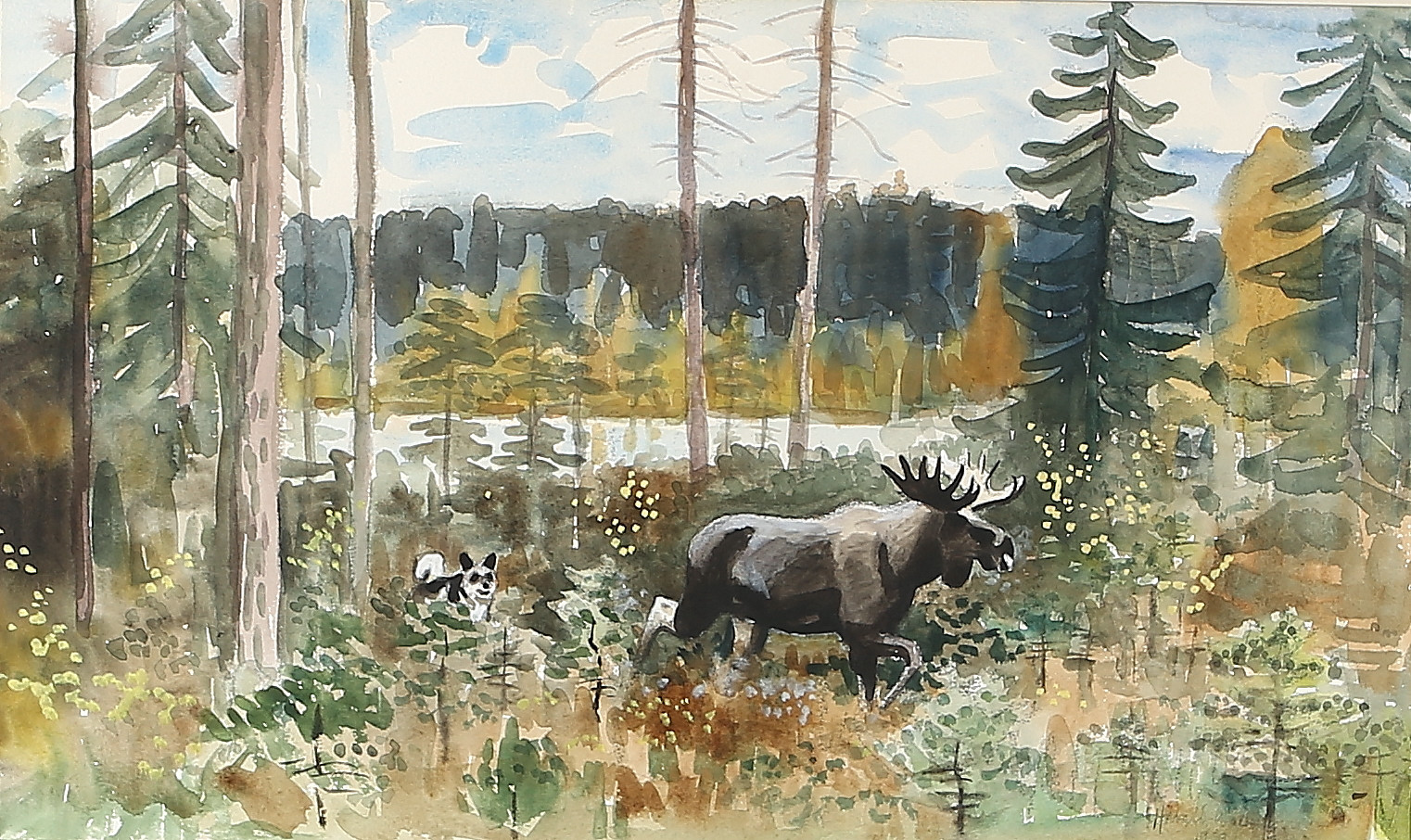
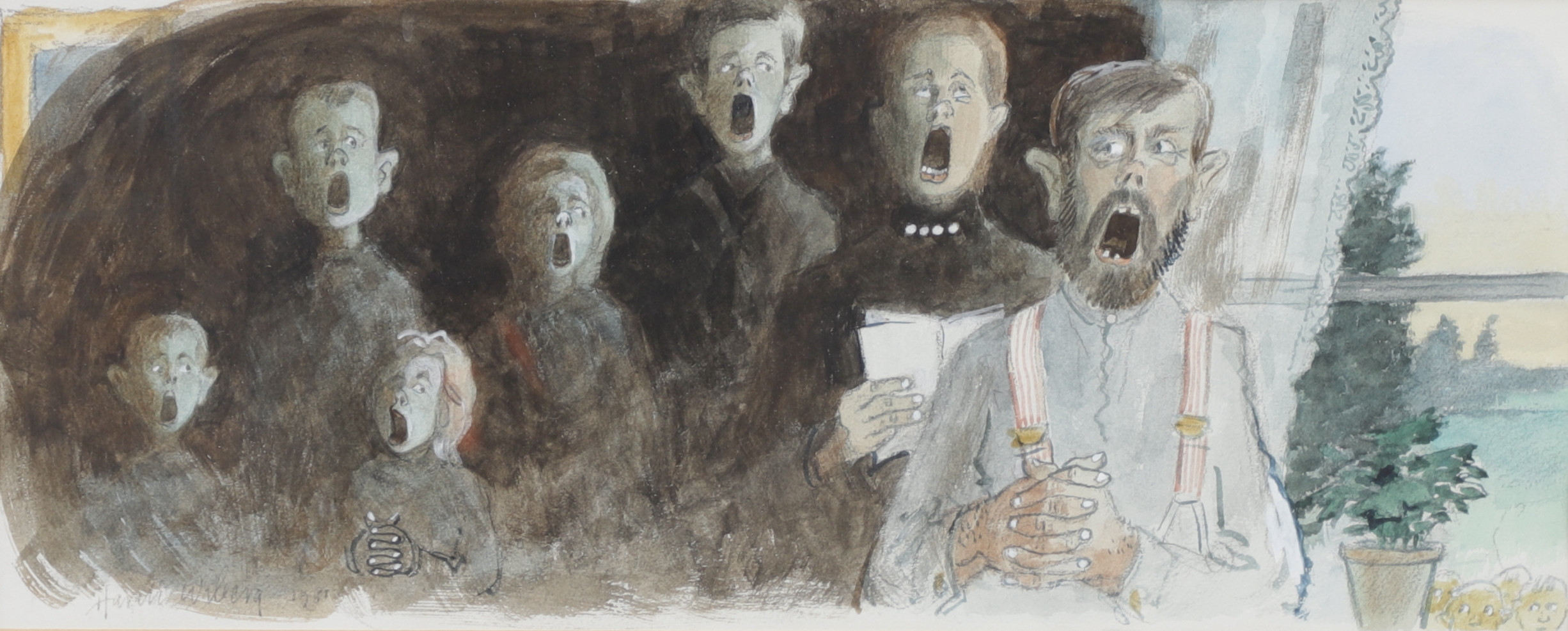
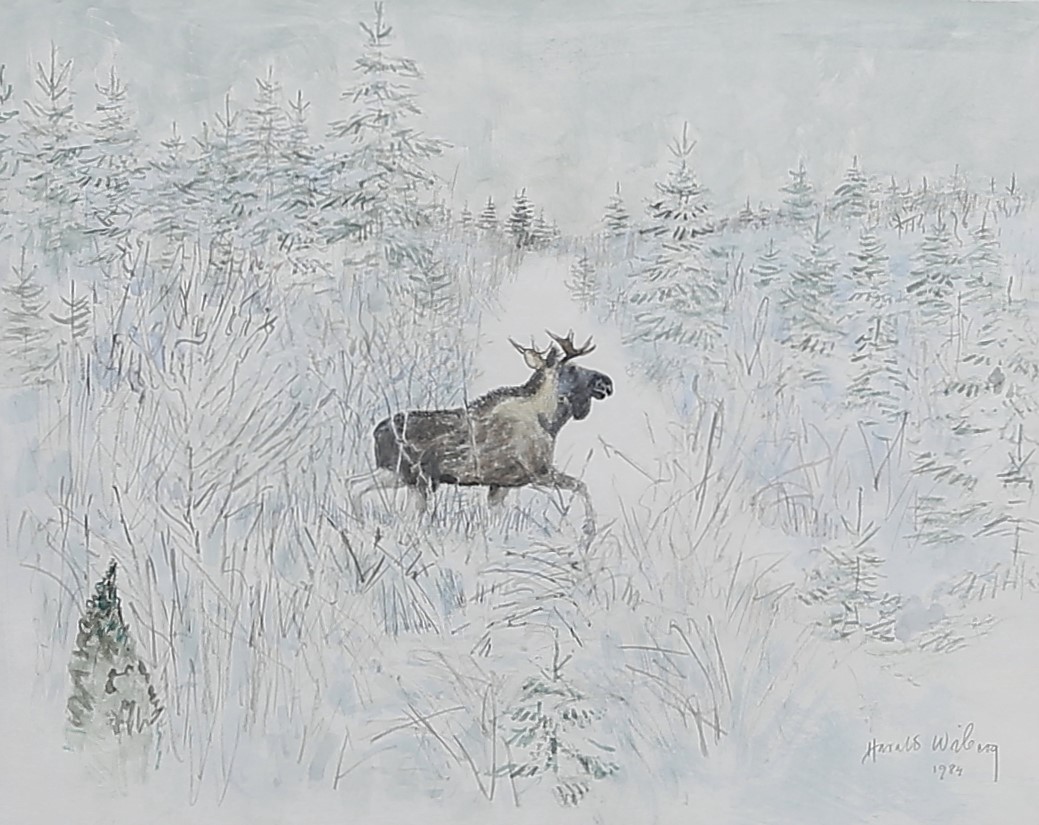
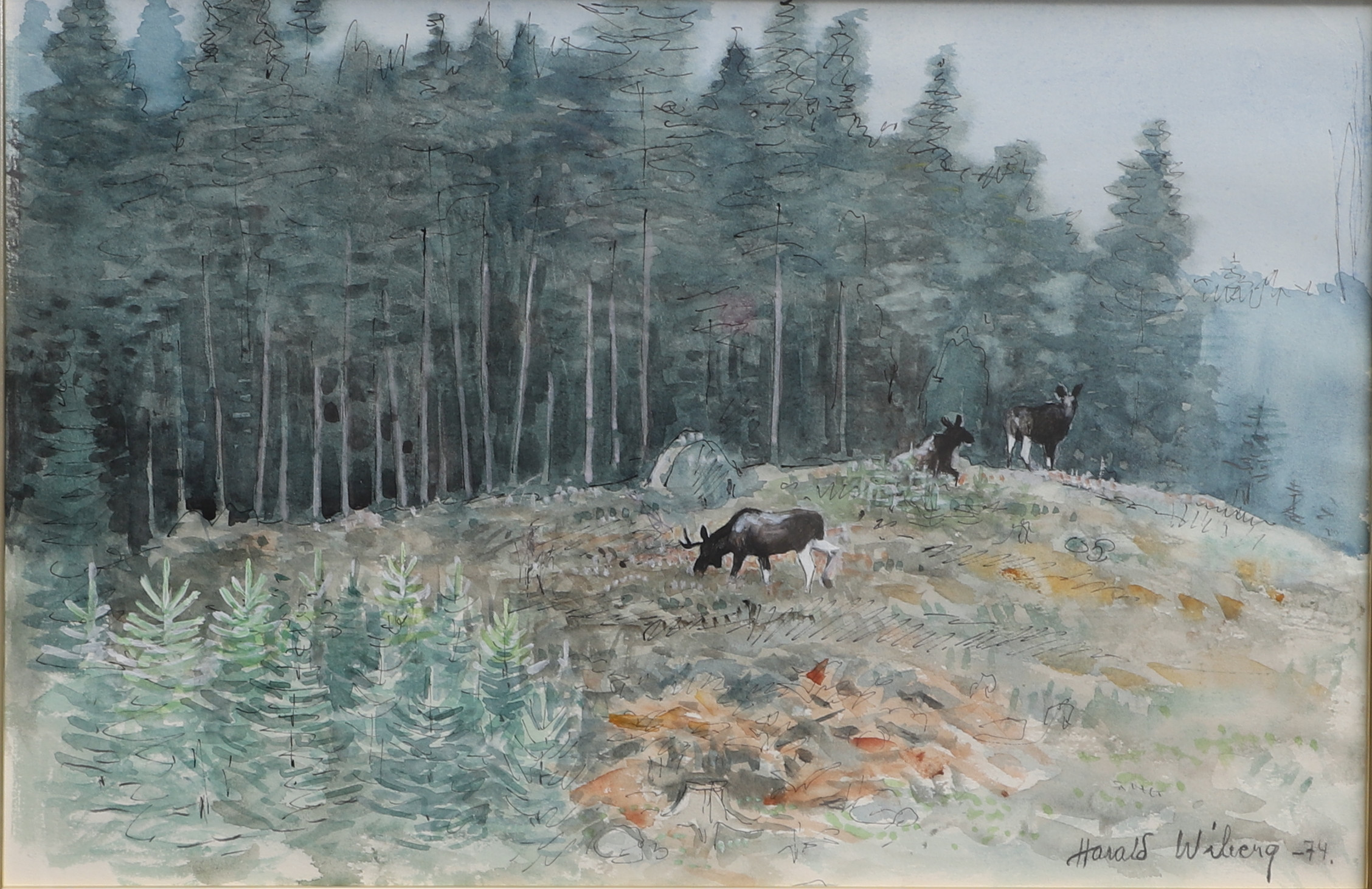
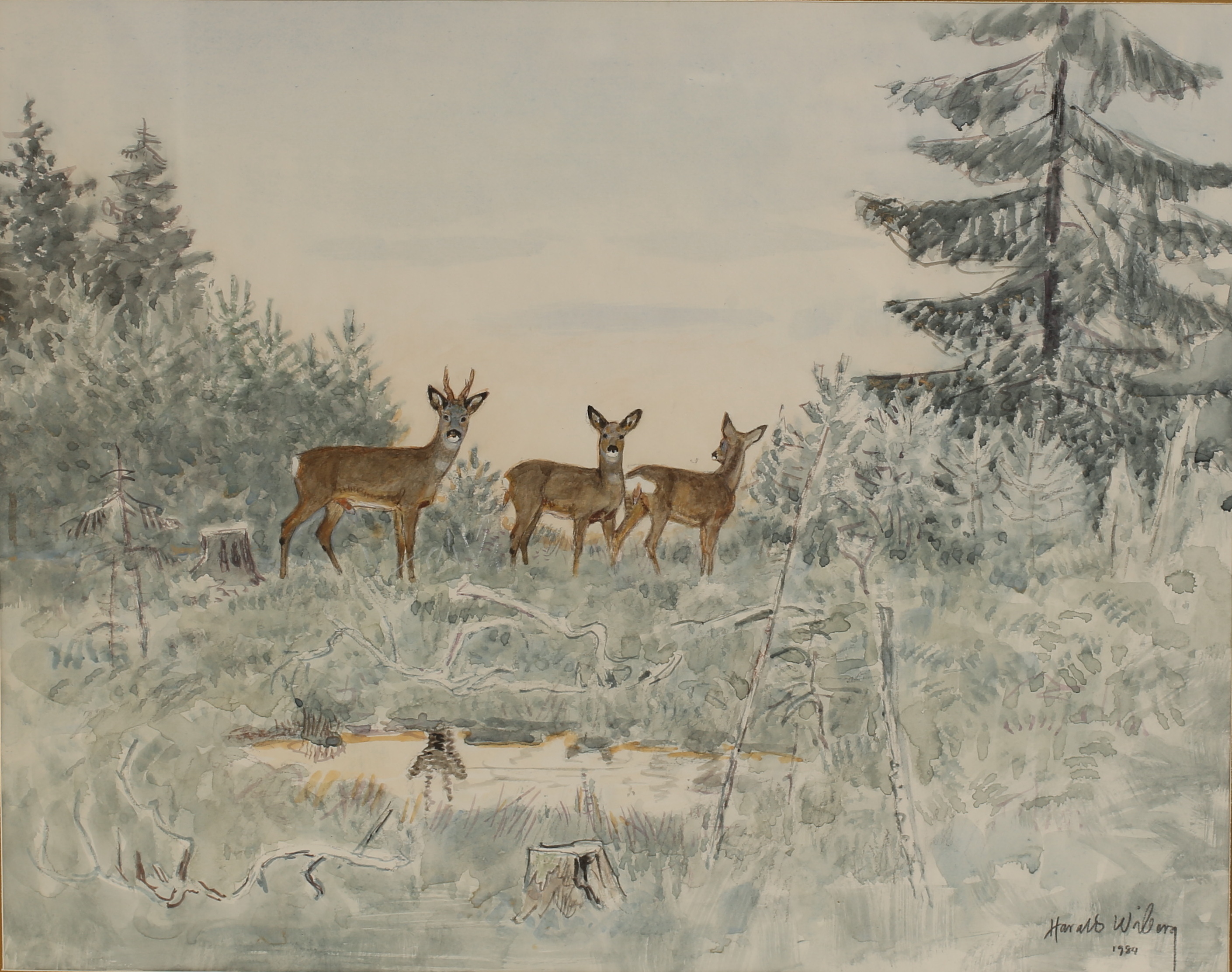
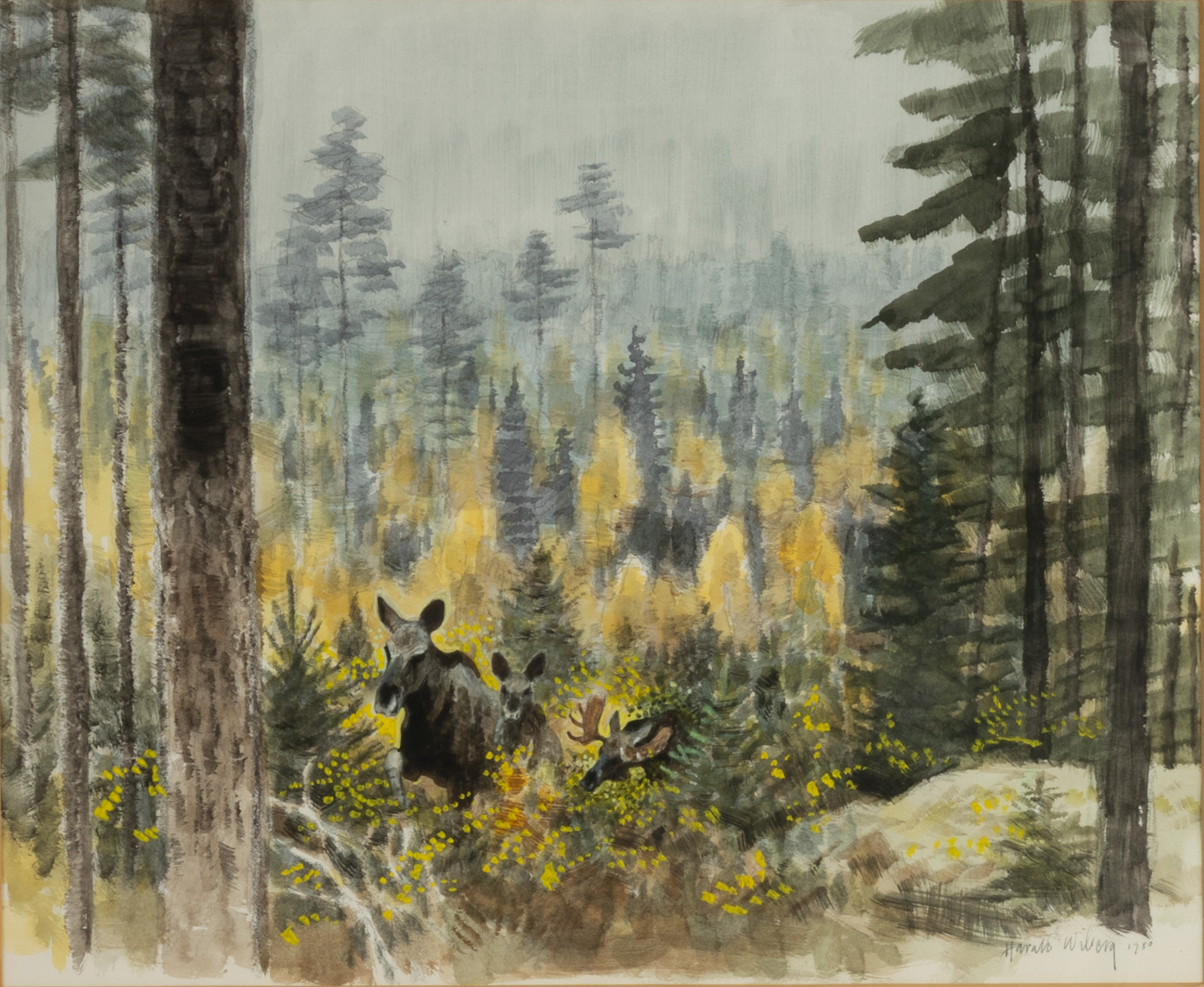
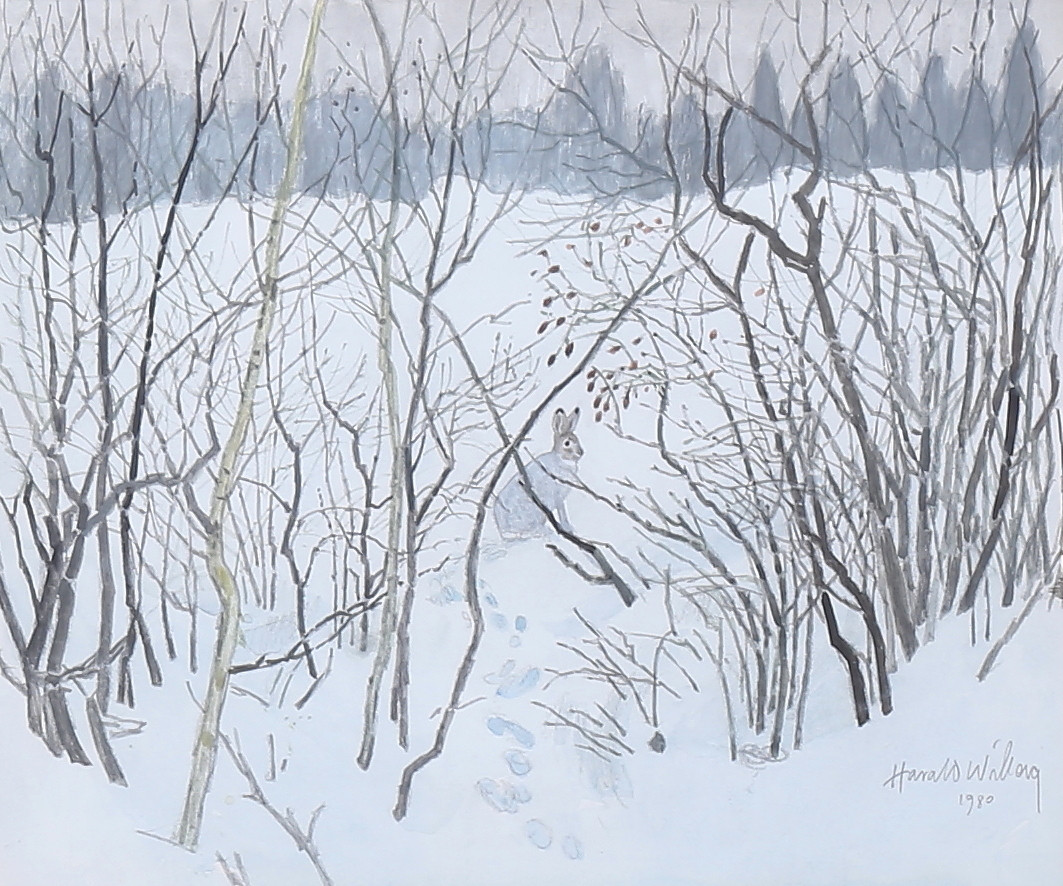
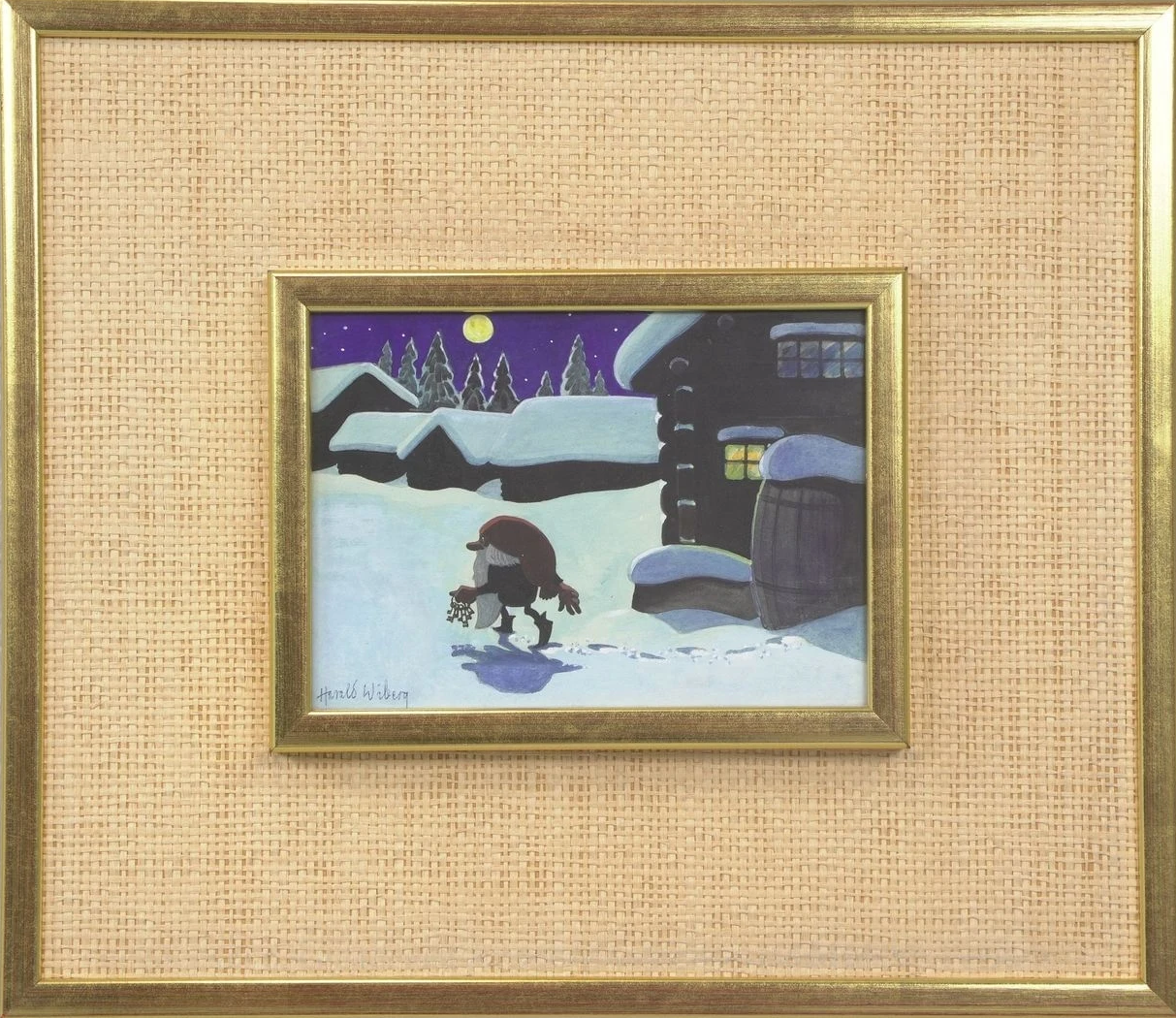
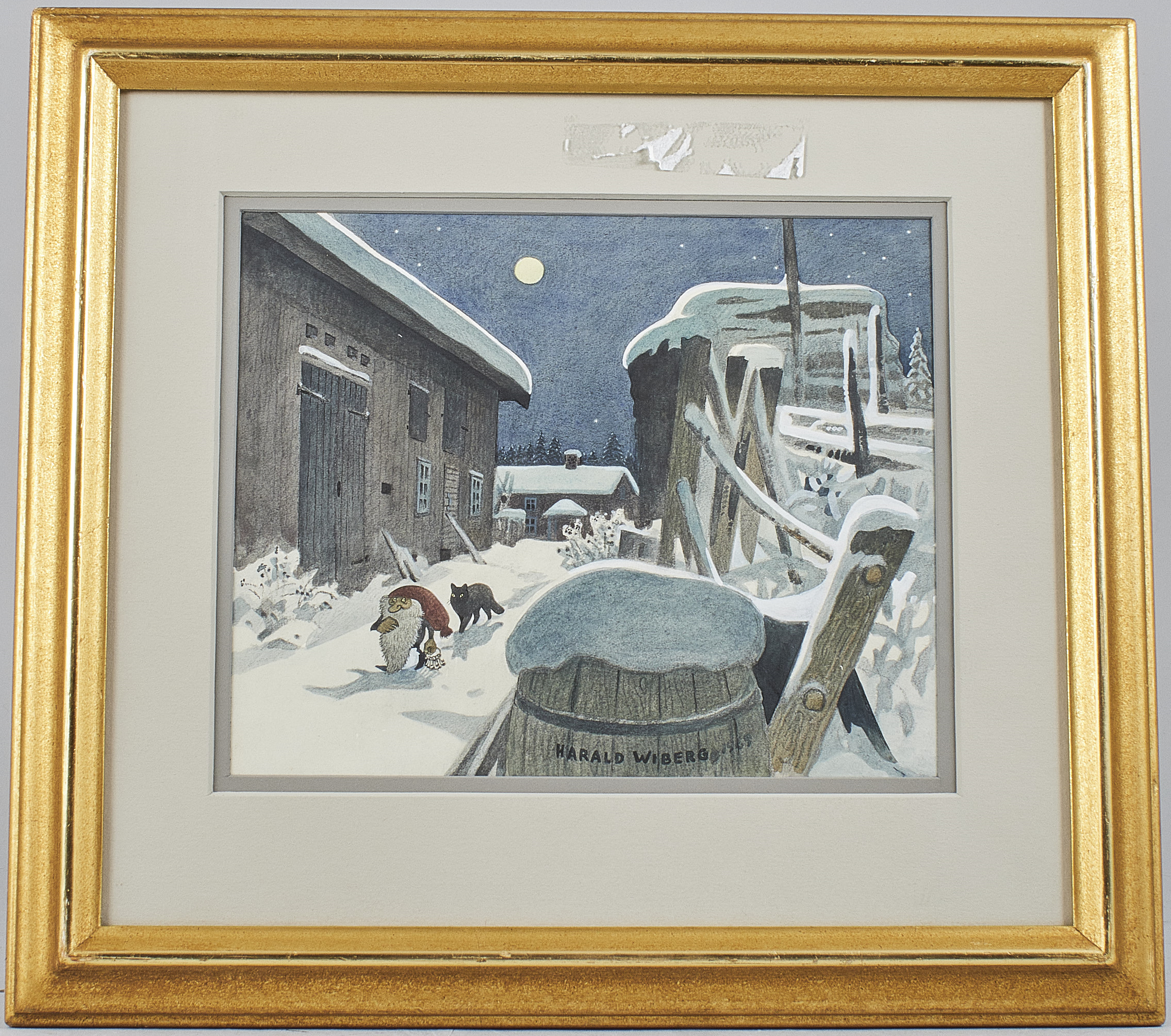
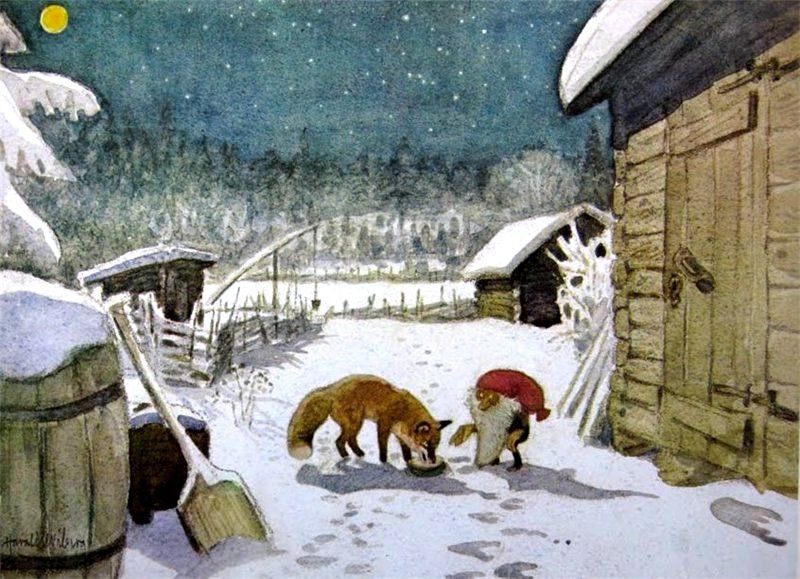
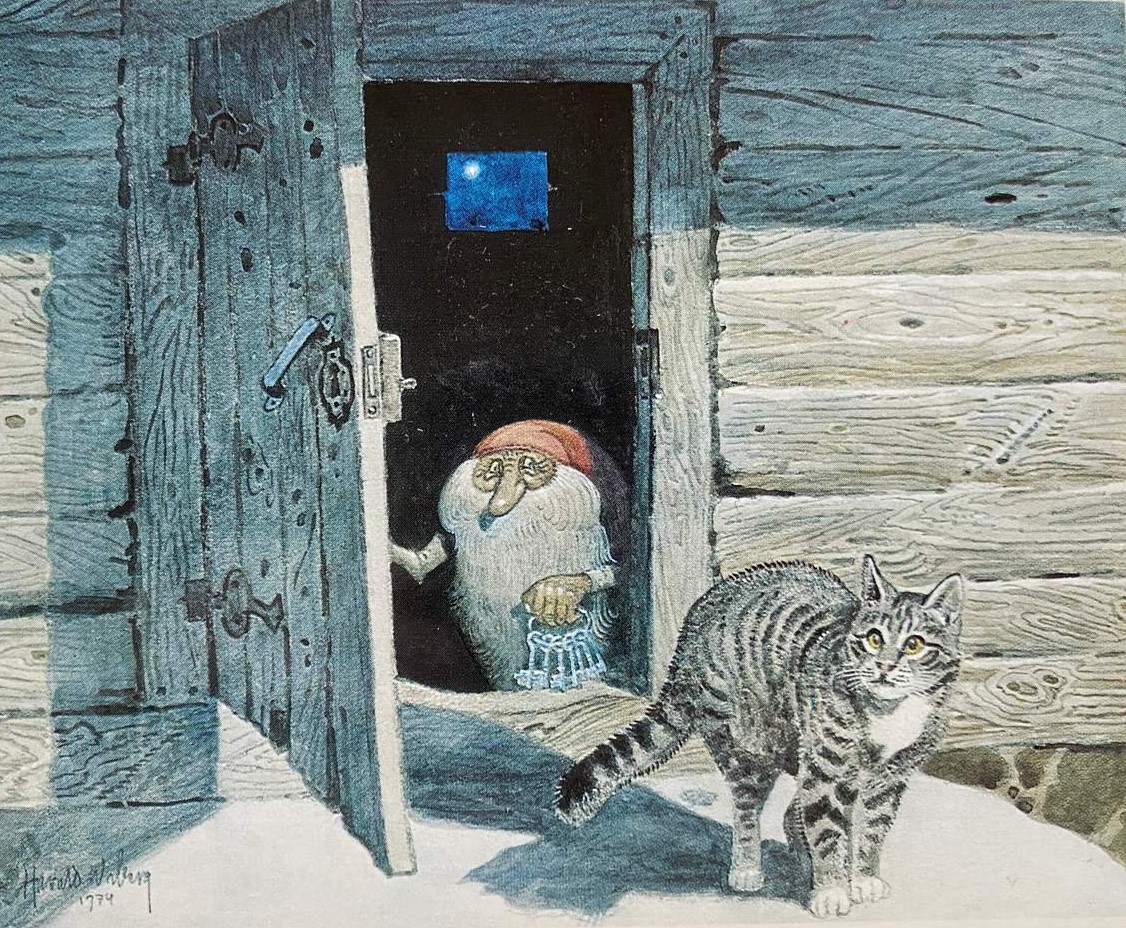
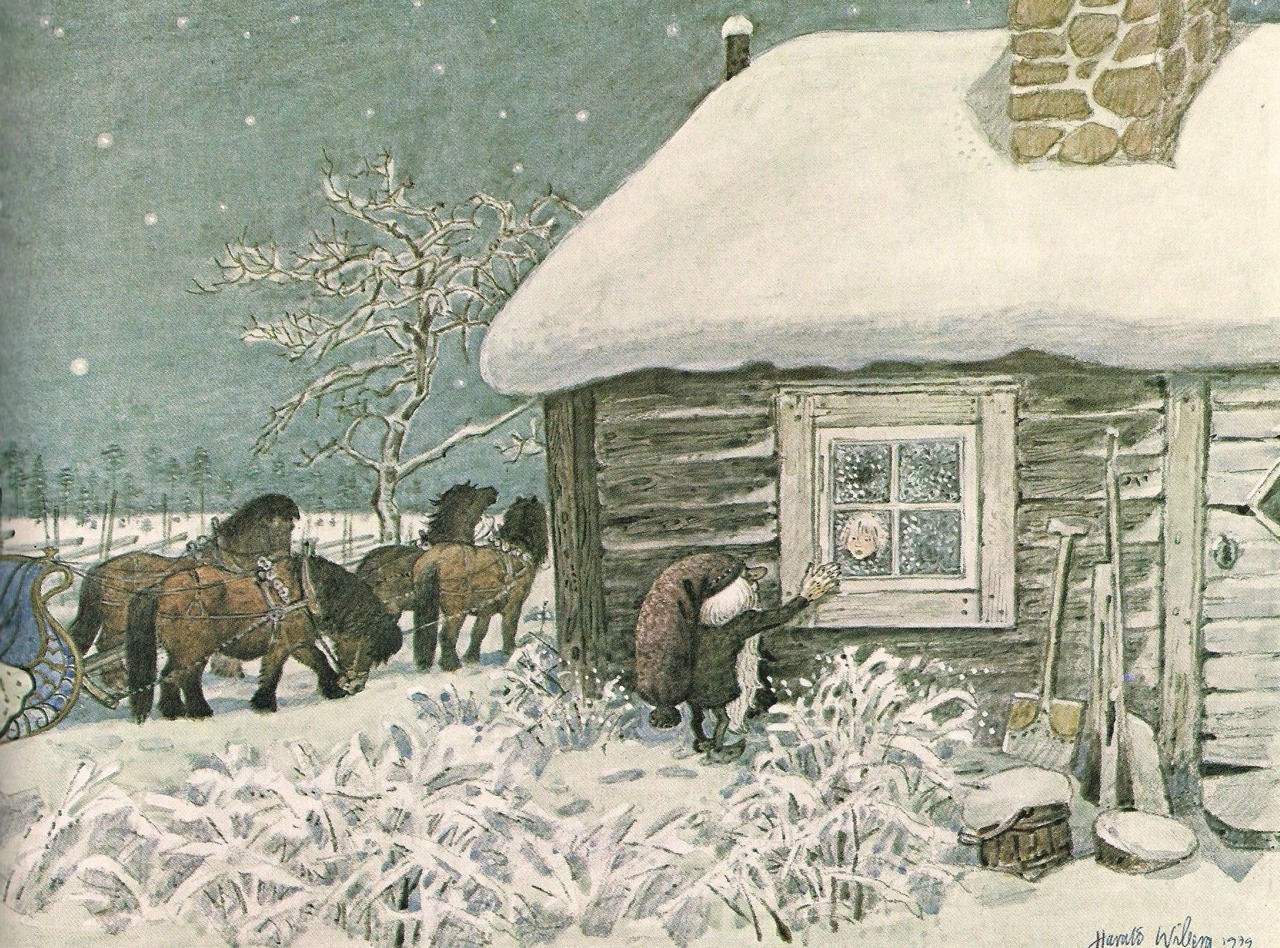
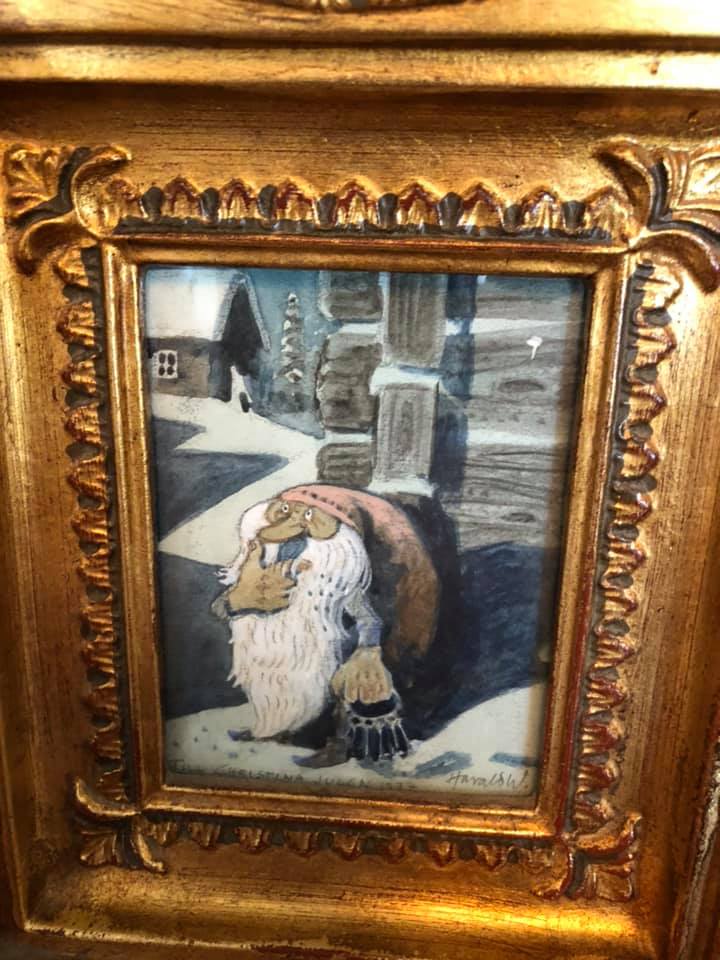
His original Tomten watercolours don’t come up for sale often, but when they do they are highly sought after and usually fetch a high price. As his primary art focus was nature and wildlife, it is uncertain how many Tomten watercolours Wiberg made. Most of them appear to be dated in the 1980s towards the end of his life.

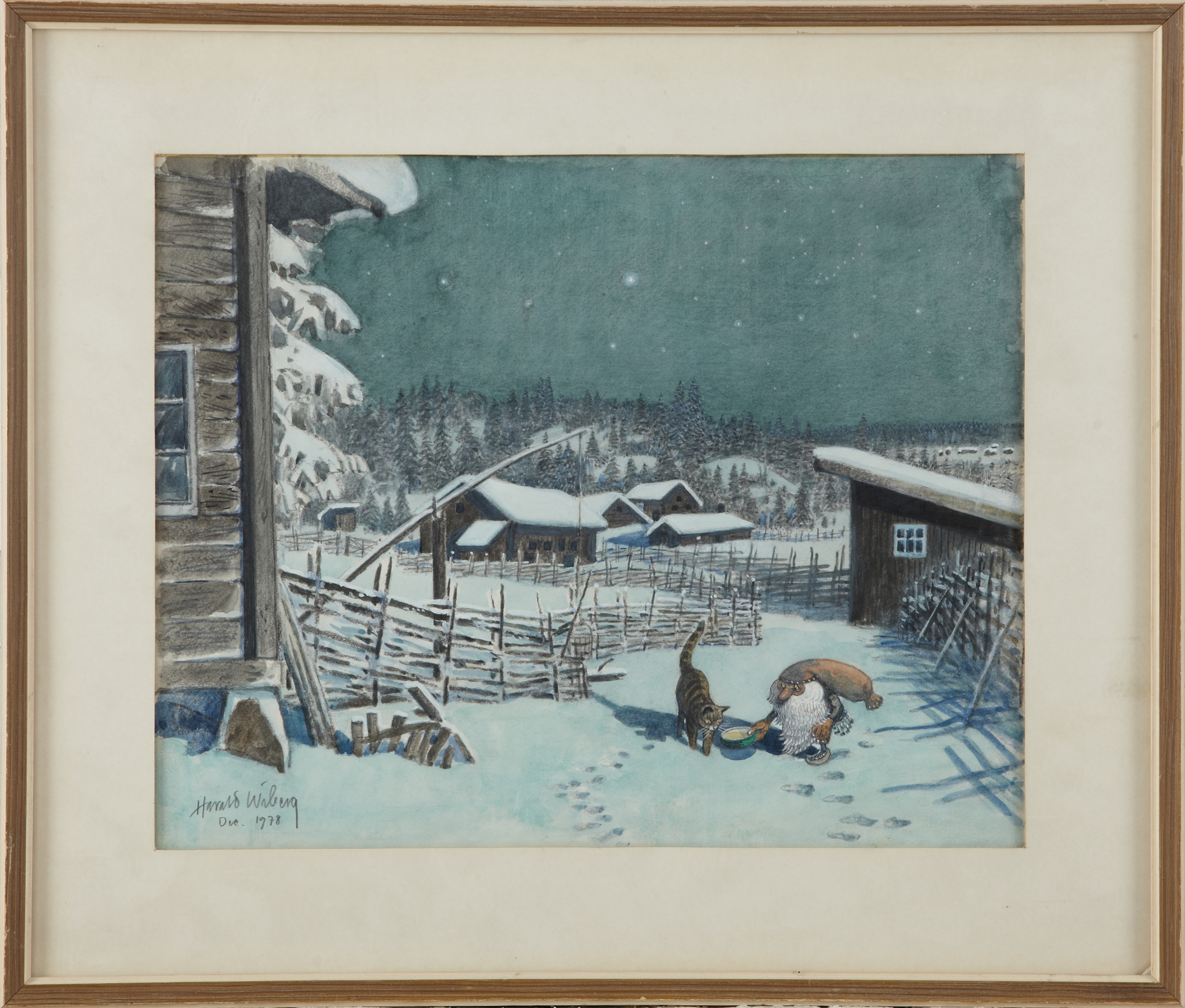
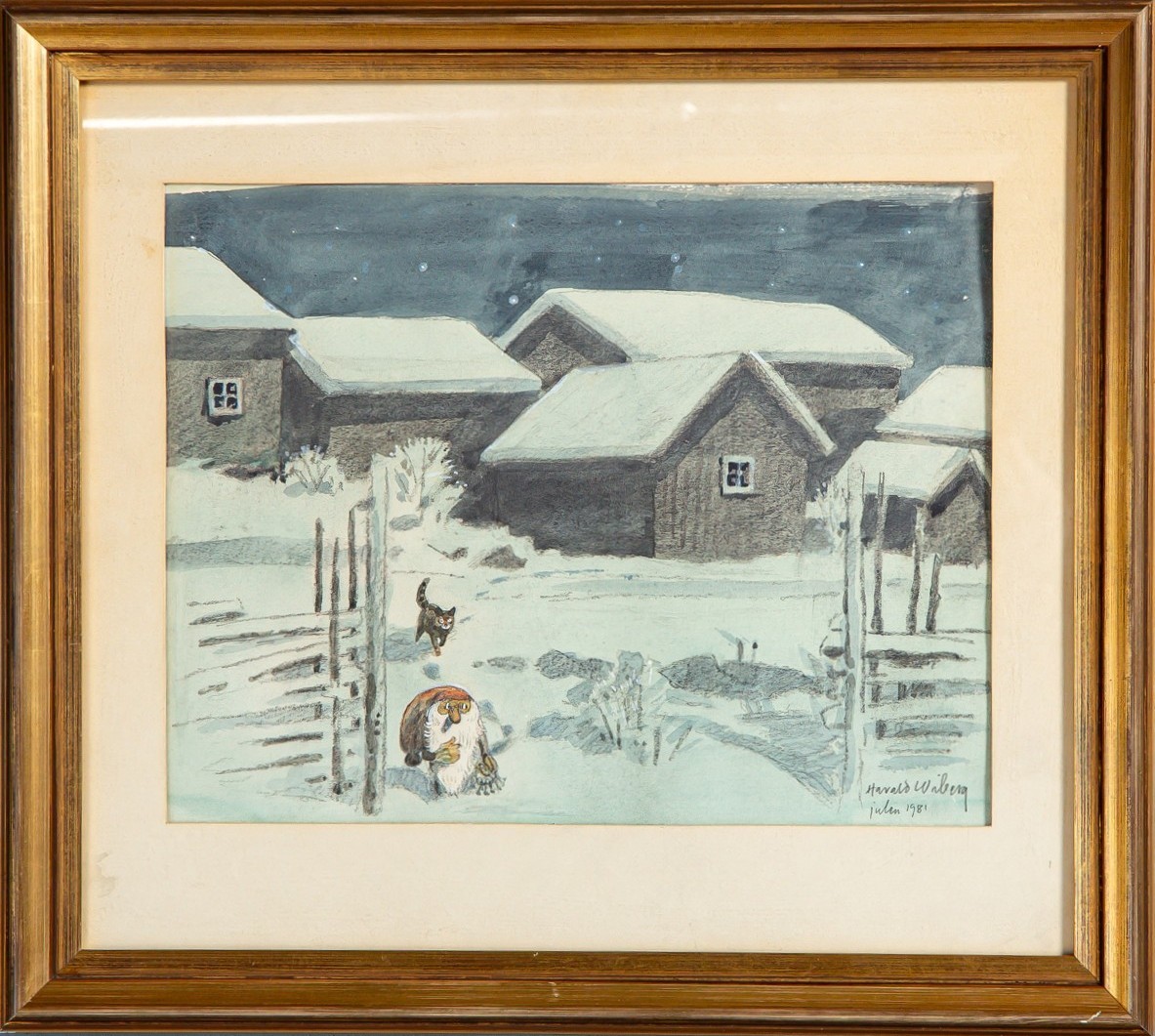
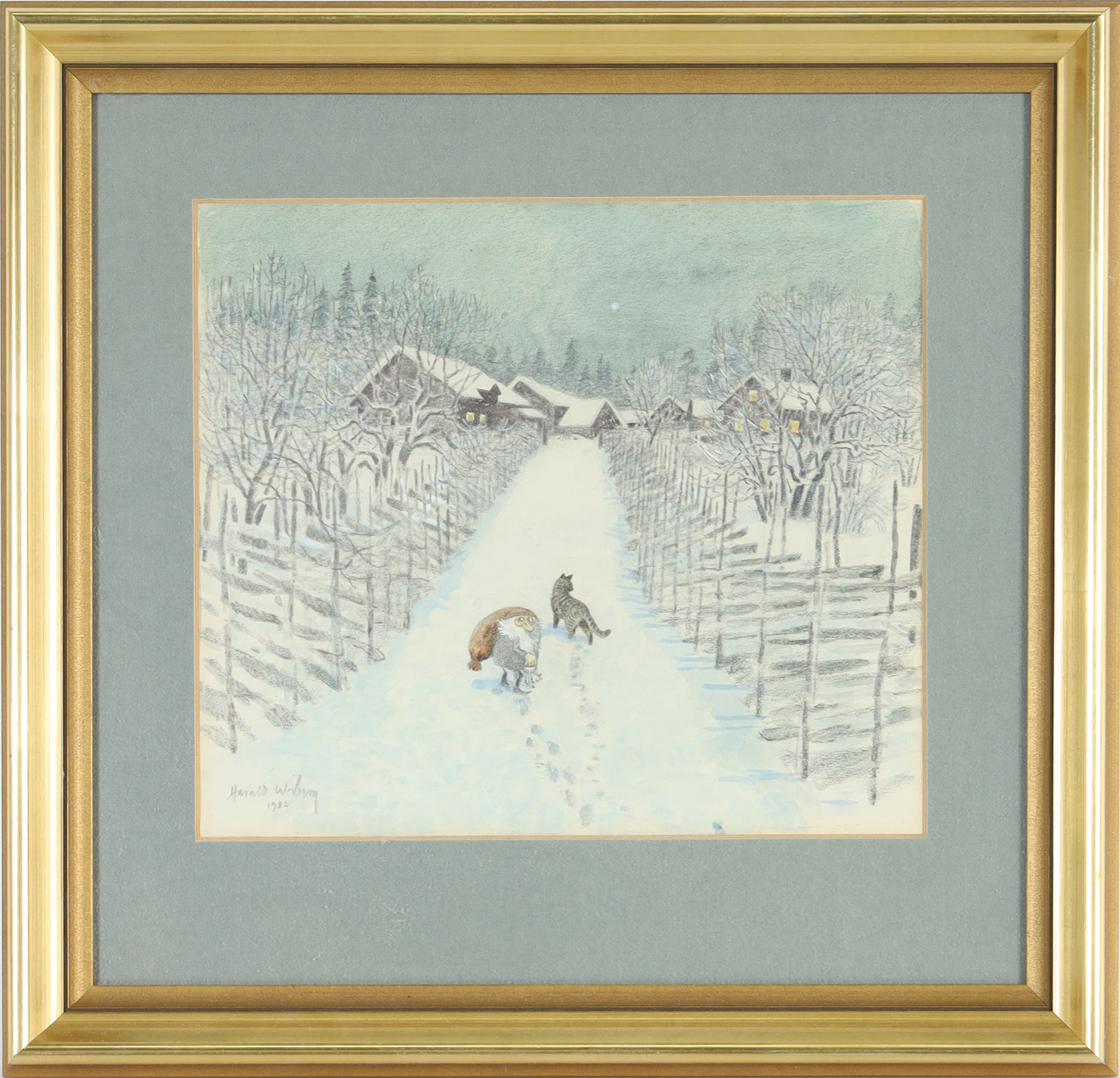

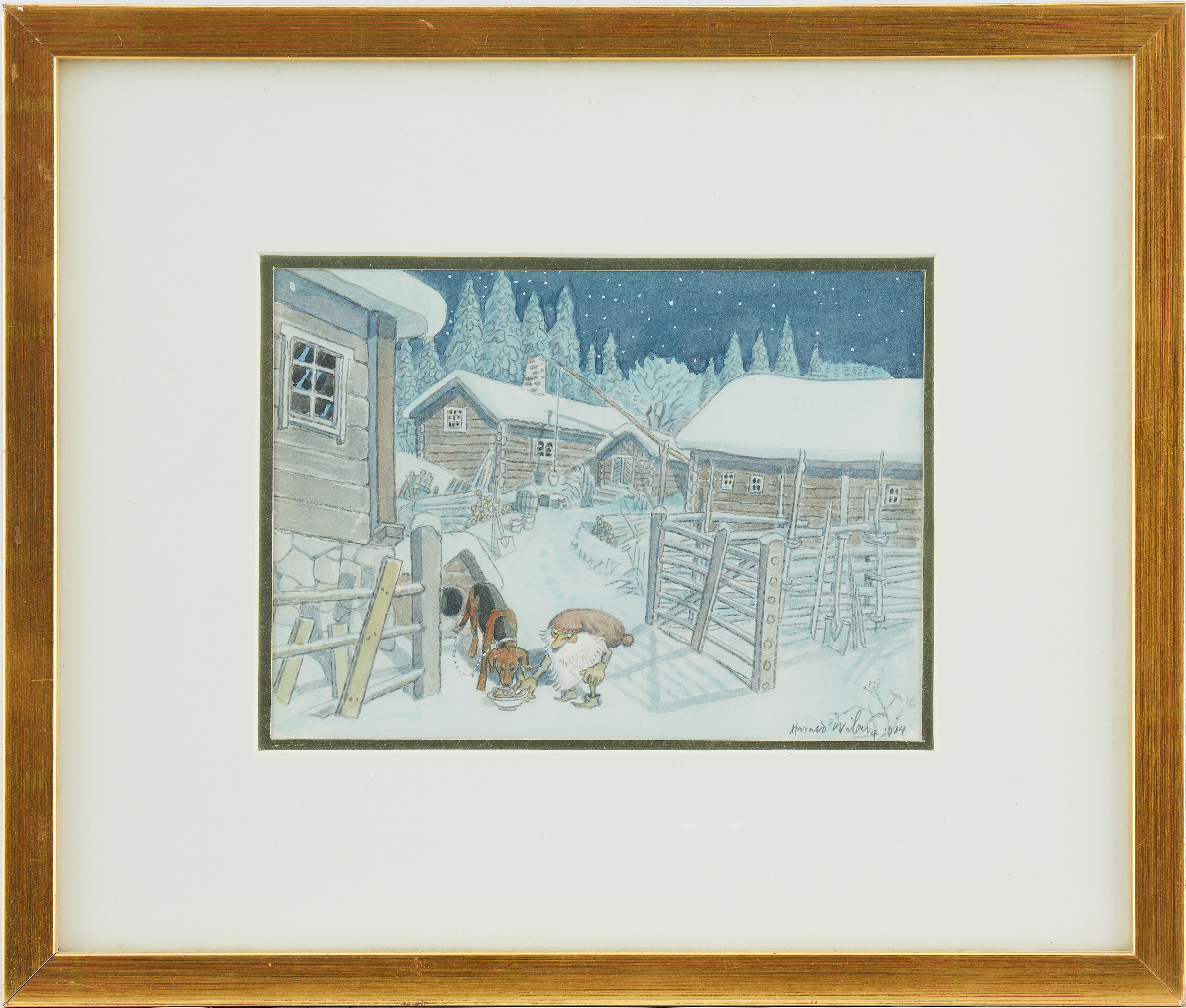
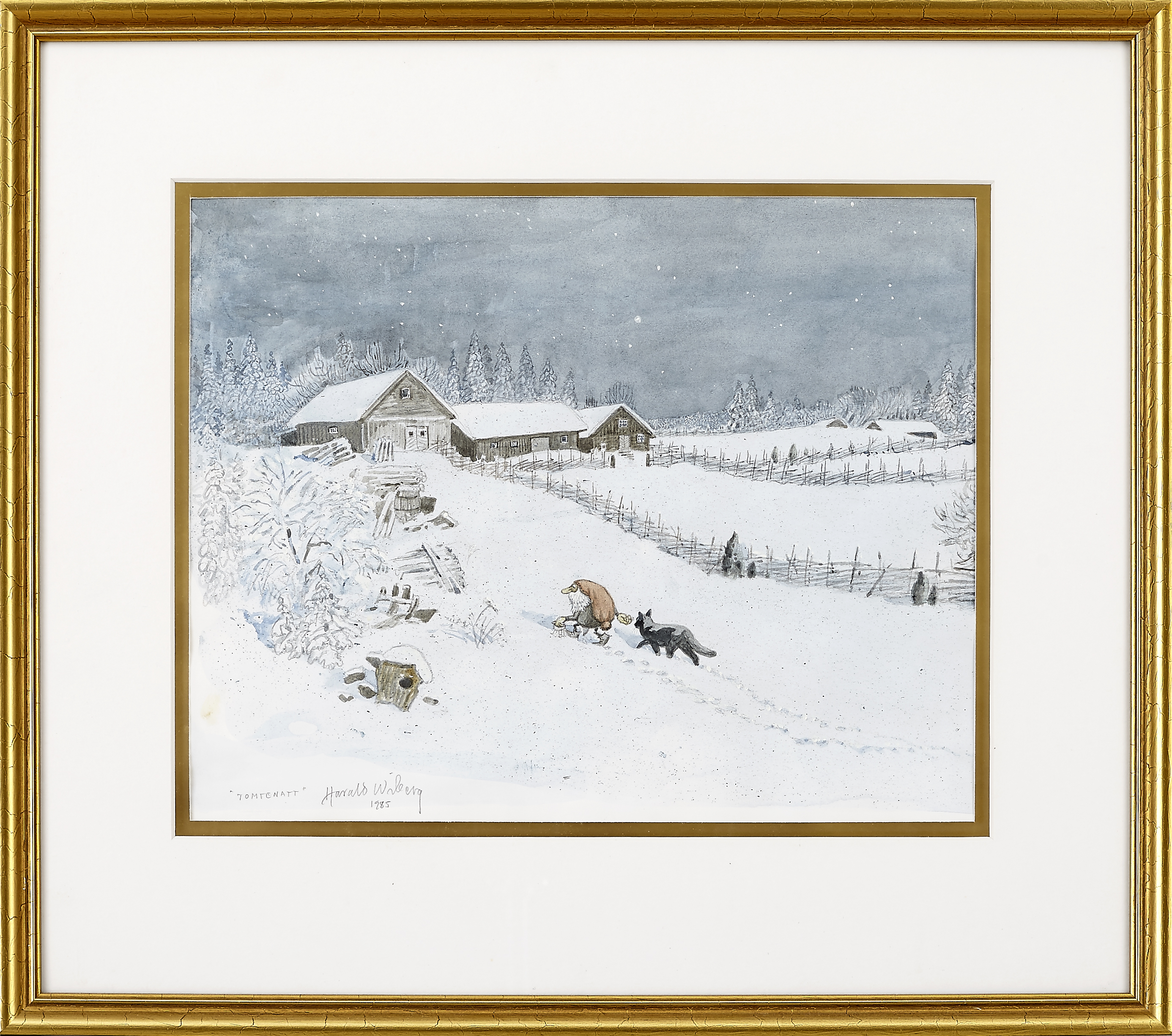
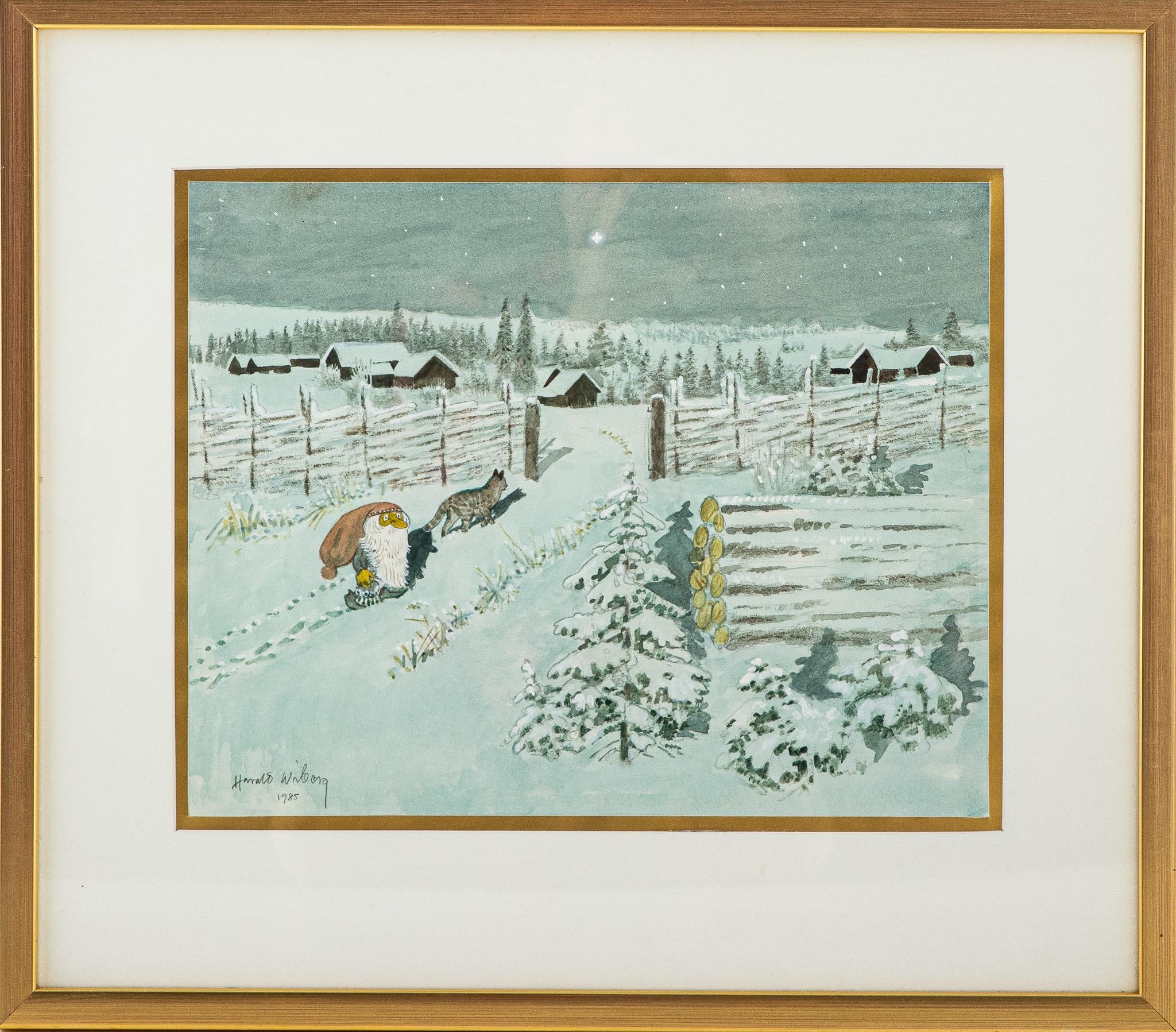
In addition to original watercolours, Wiberg also produced colour lithographs (prints) of his scenes with the Tomten. This type of printmaking process involves creating images on a flat stone or metal plate using a grease-based medium, then applying different colored inks and transferring them onto paper through multiple pressings. This technique allows for vibrant, multi-colored images with fine detail and rich textures.
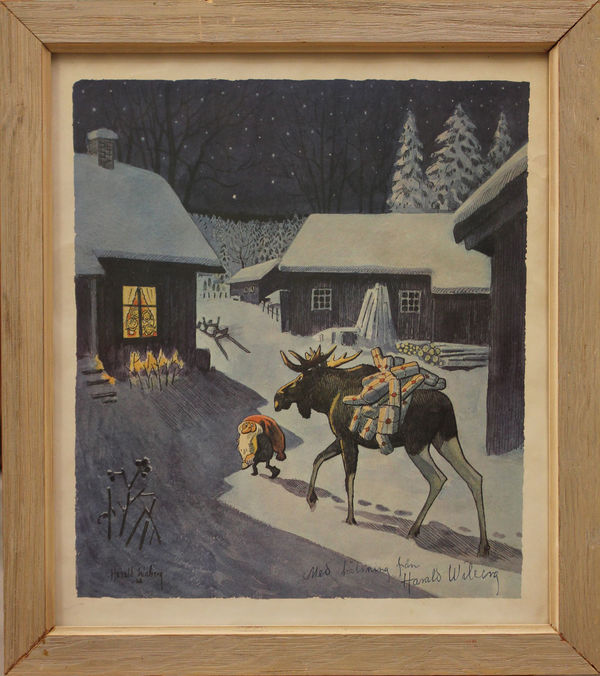
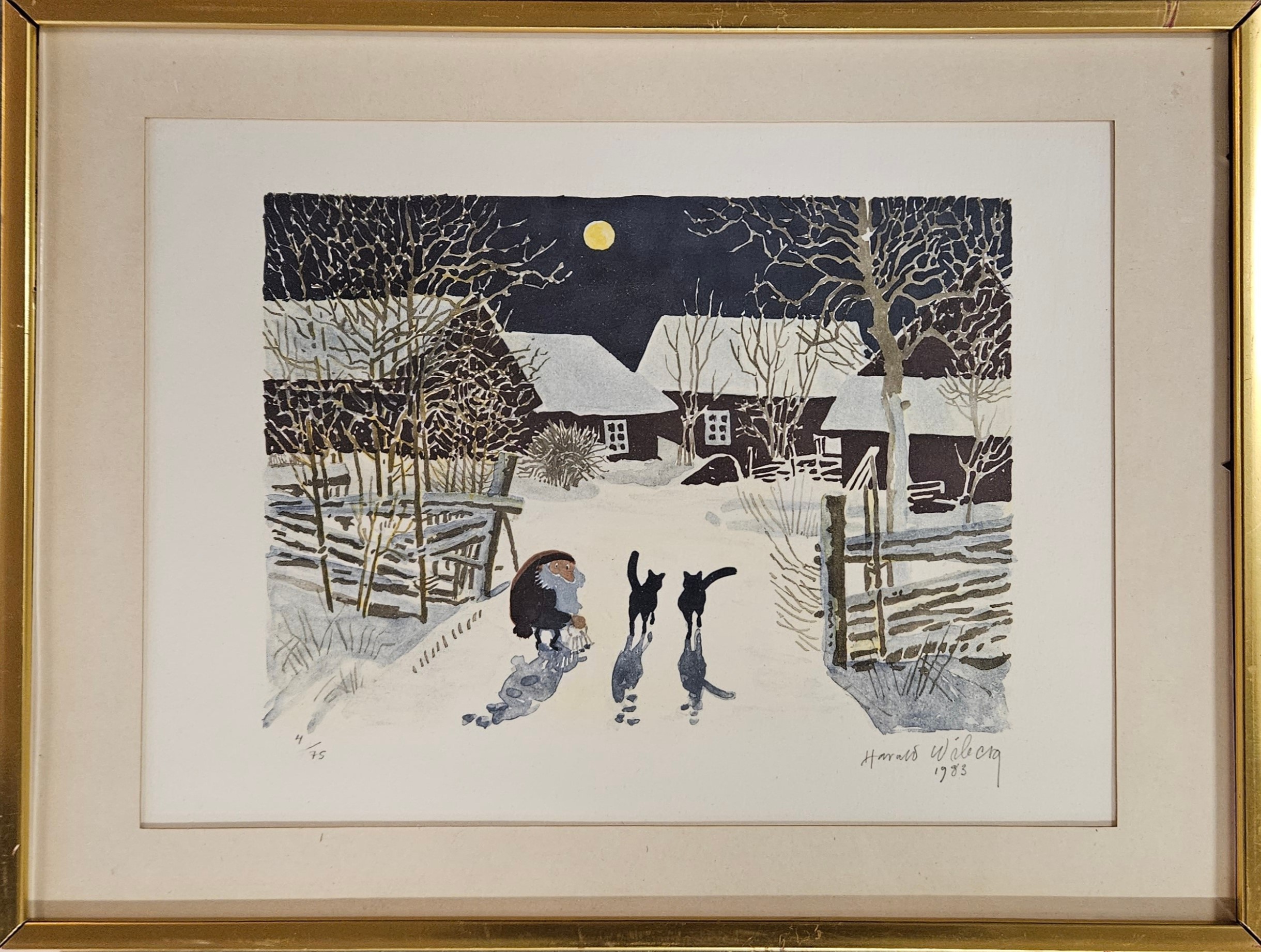


This limited edition colour lithograph was the most produced with a total of 320 made. Auction sold prices vary greatly:
- 150 SEK (Aug 2015)
- 350 SEK (Dec 2015)
- 600 SEK (Aug 2020)
- 1200 SEK (June 2020)
- 13524 SEK (Aug 2021)
- 3000 SEK (July 2024)
- 3500 SEK (Nov 2024)
- 4000 SEK (Dec 2024)

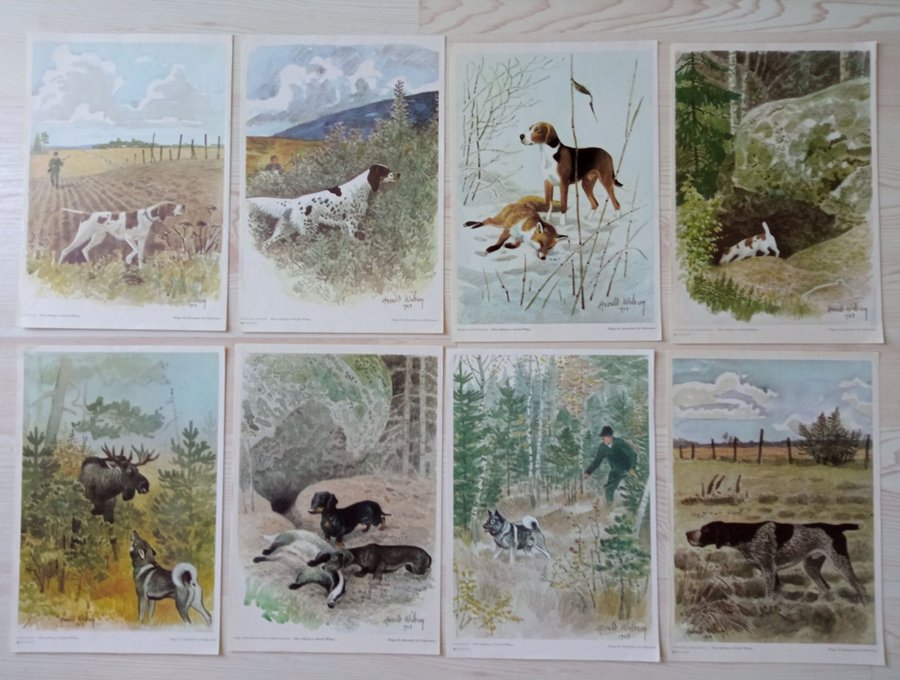
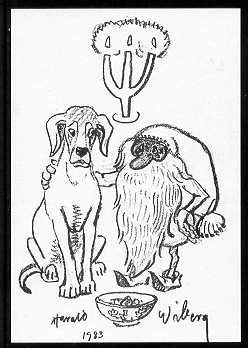
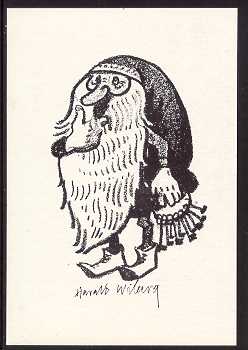
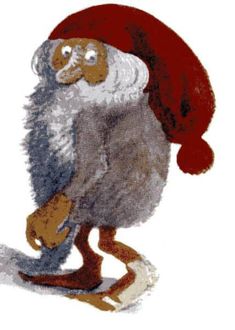
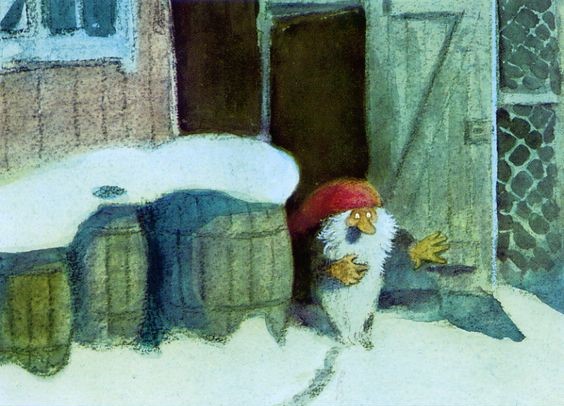
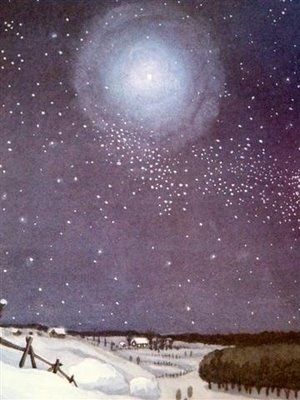
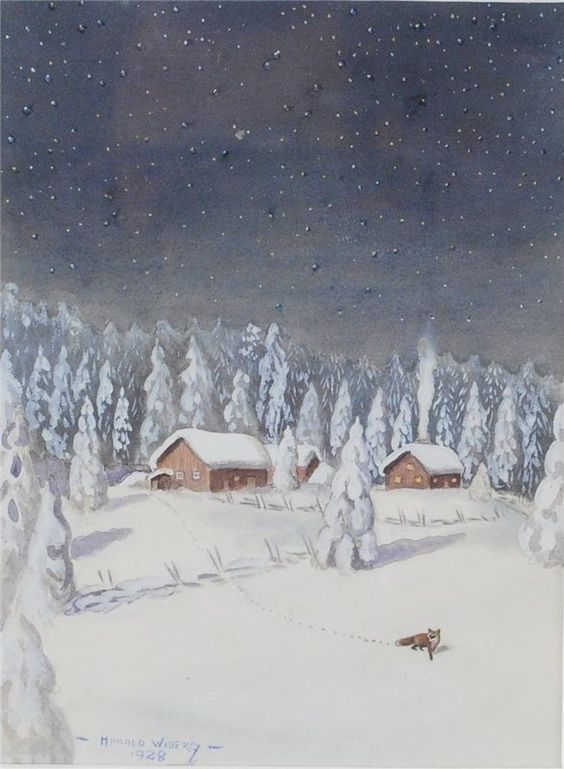
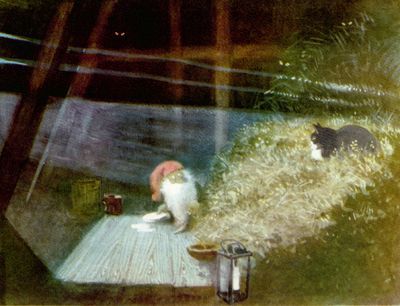
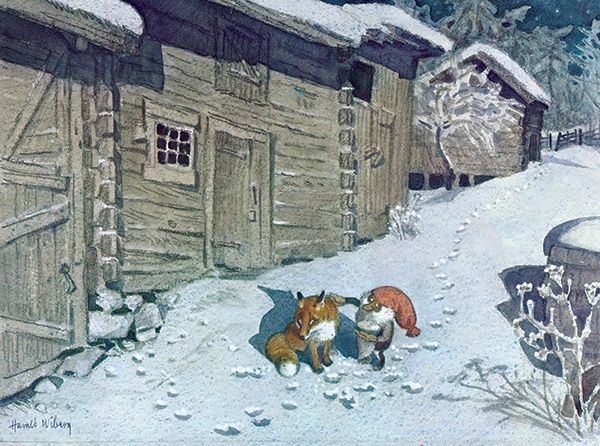
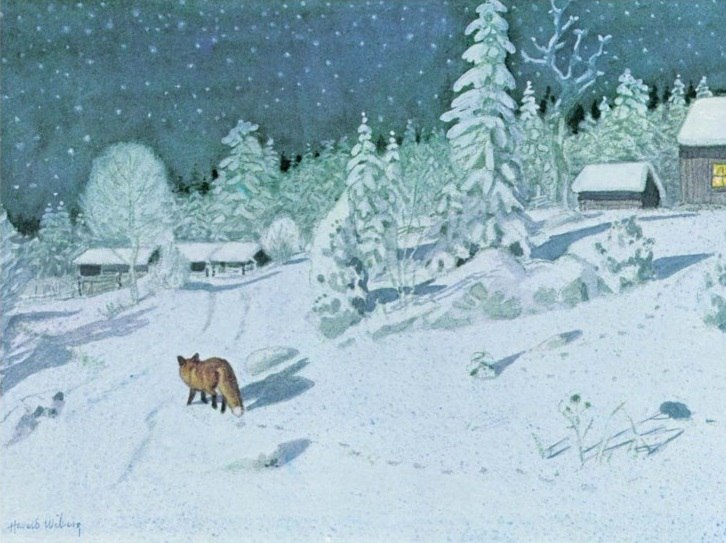
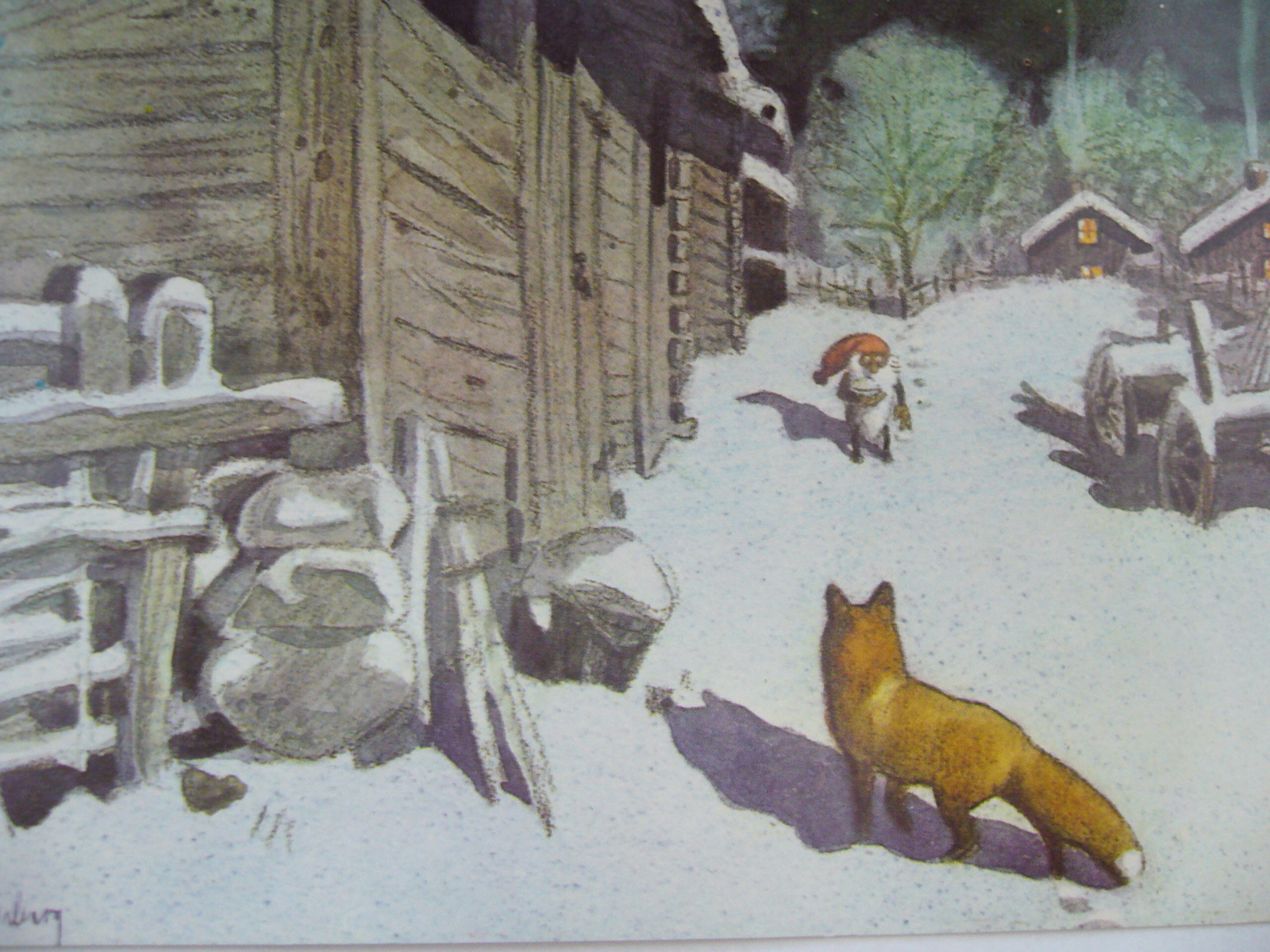
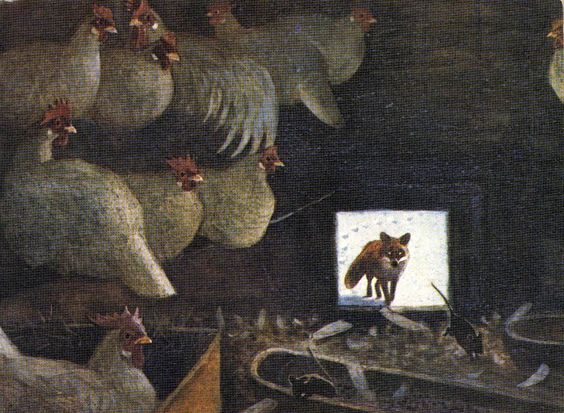
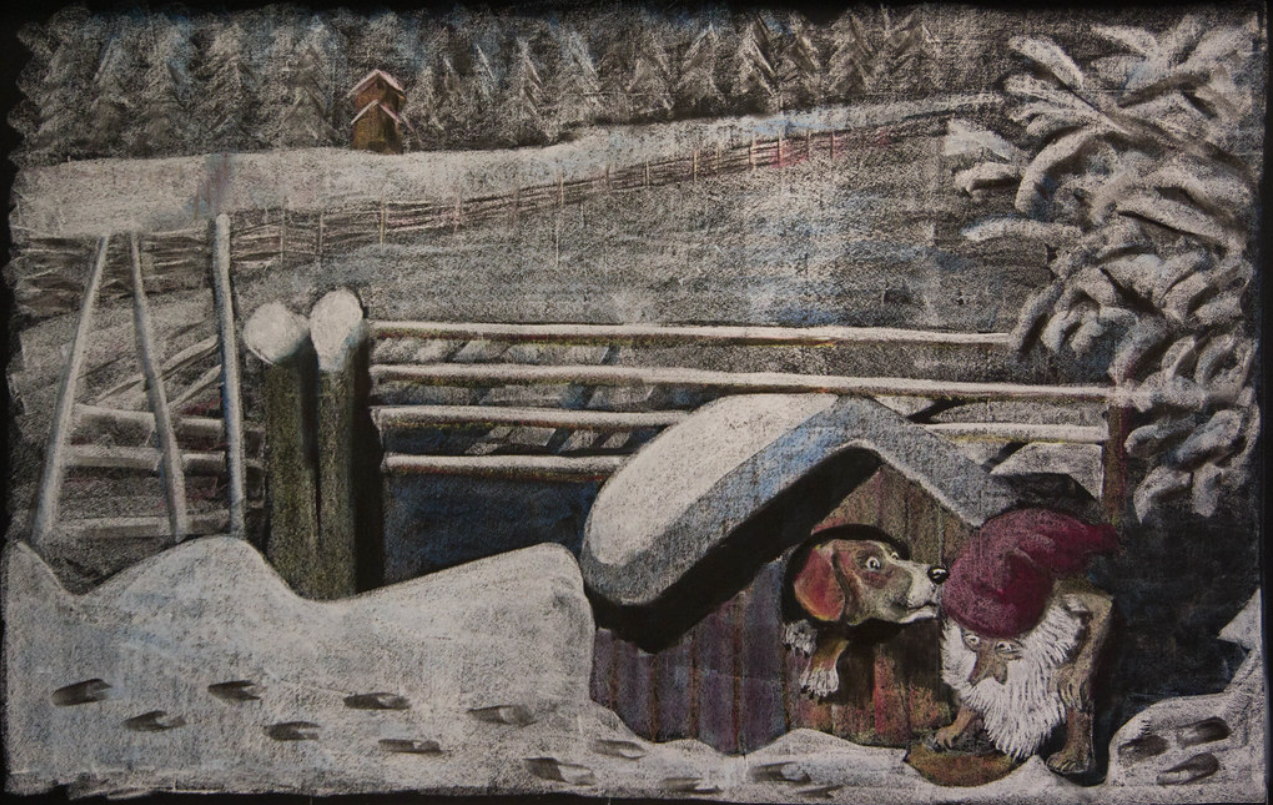
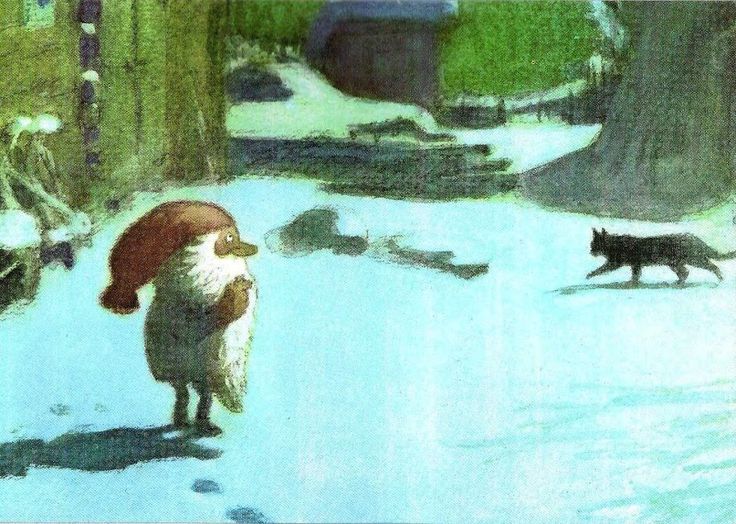
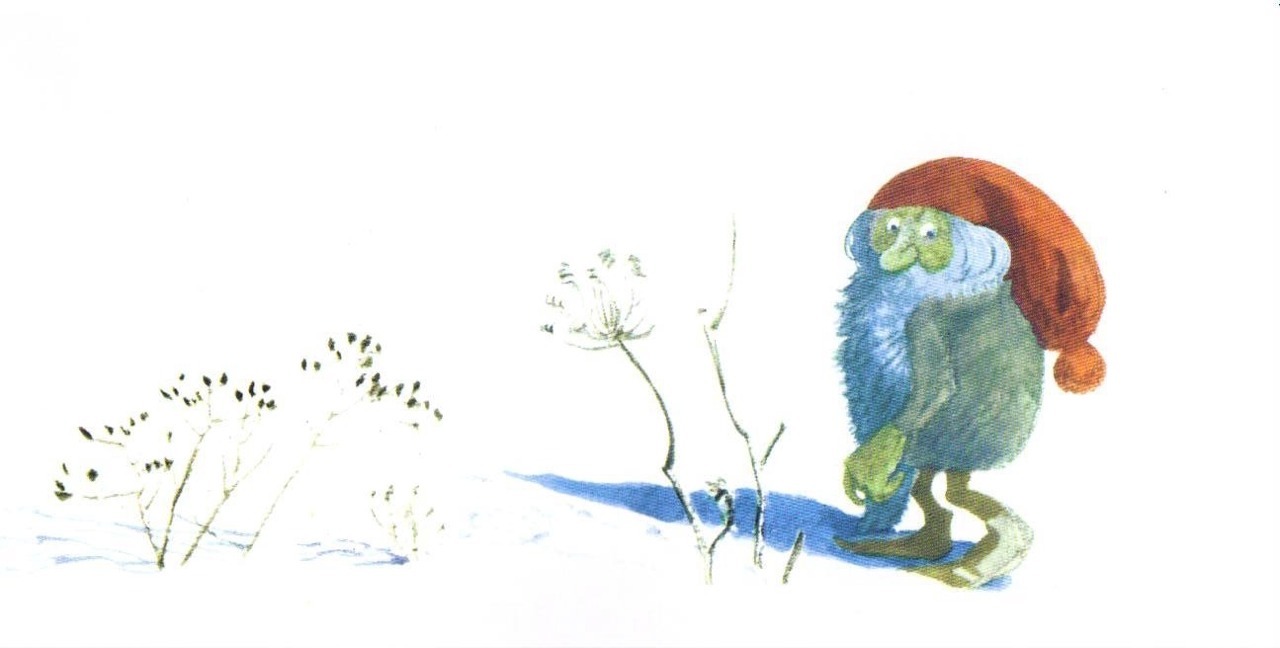
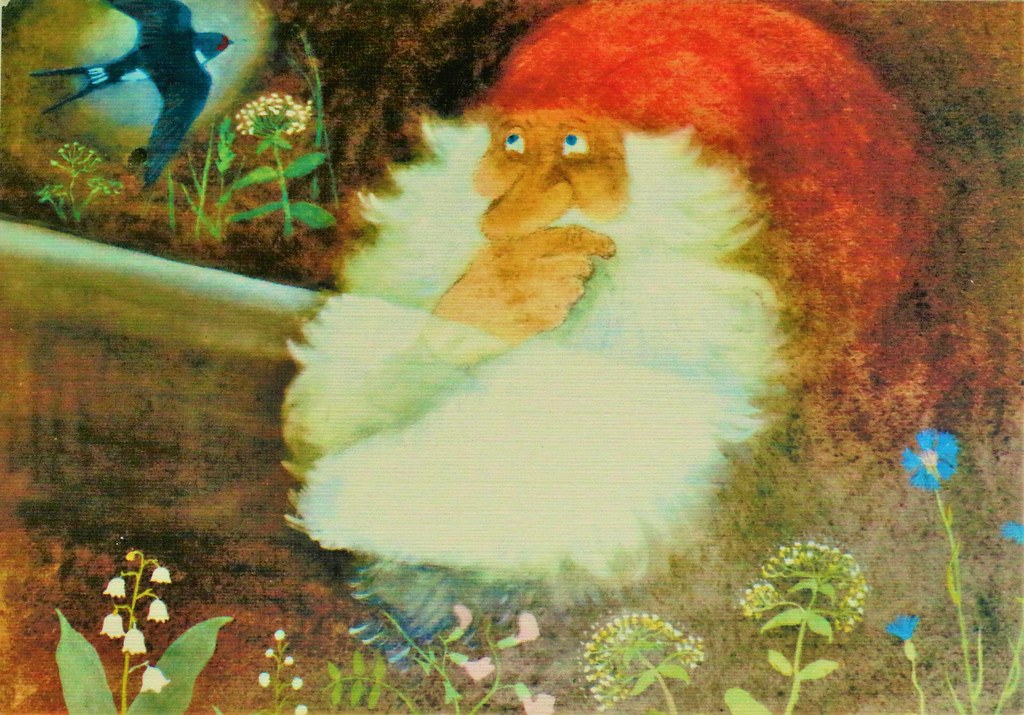
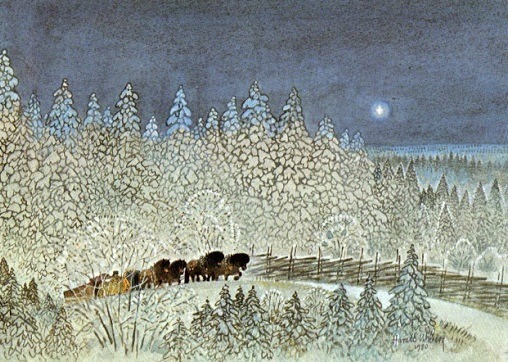
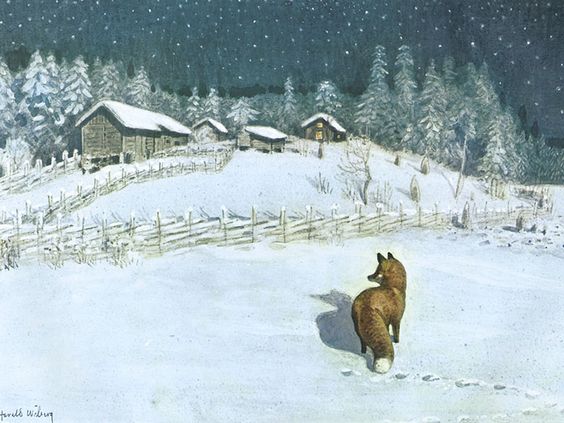
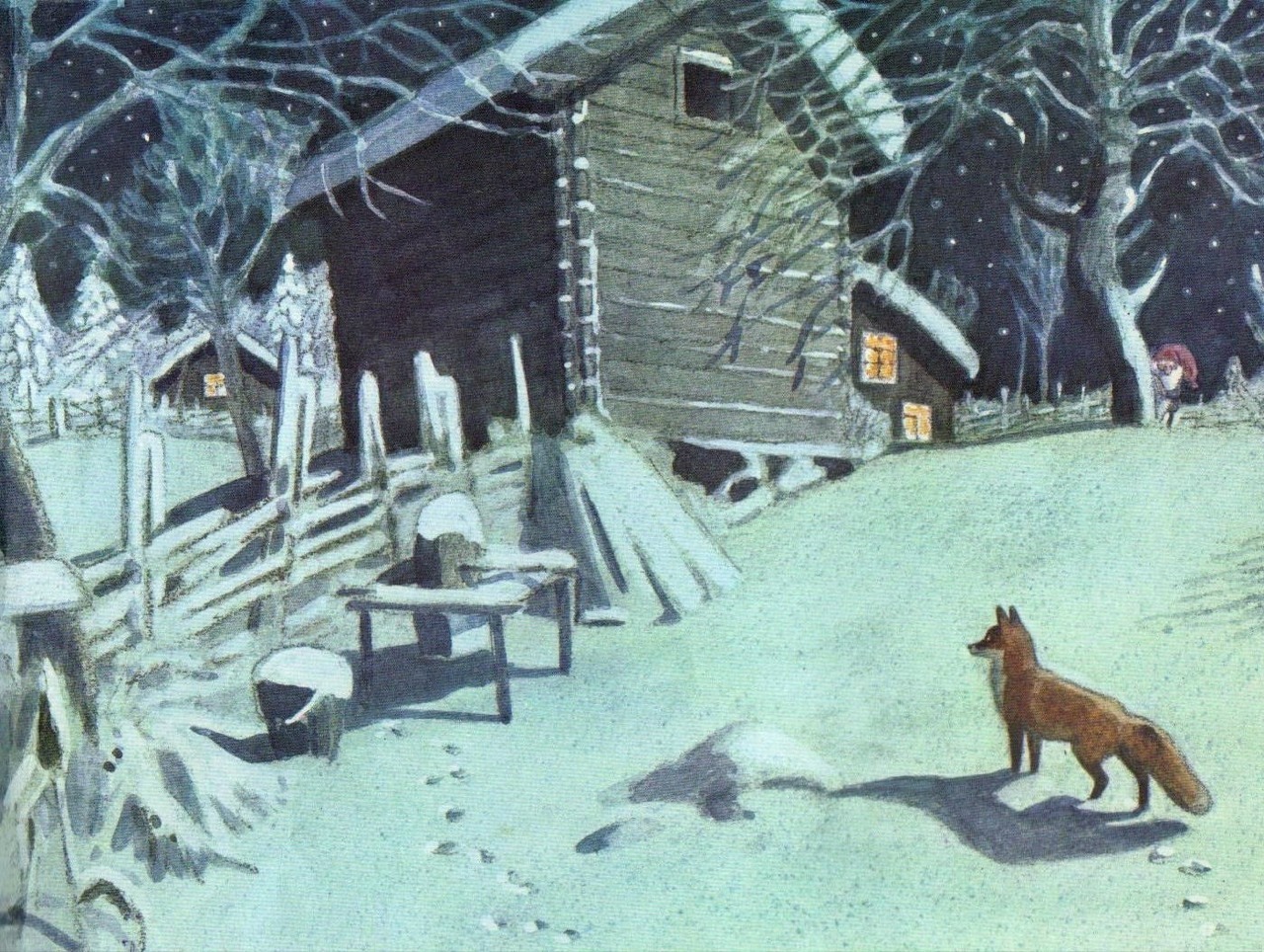
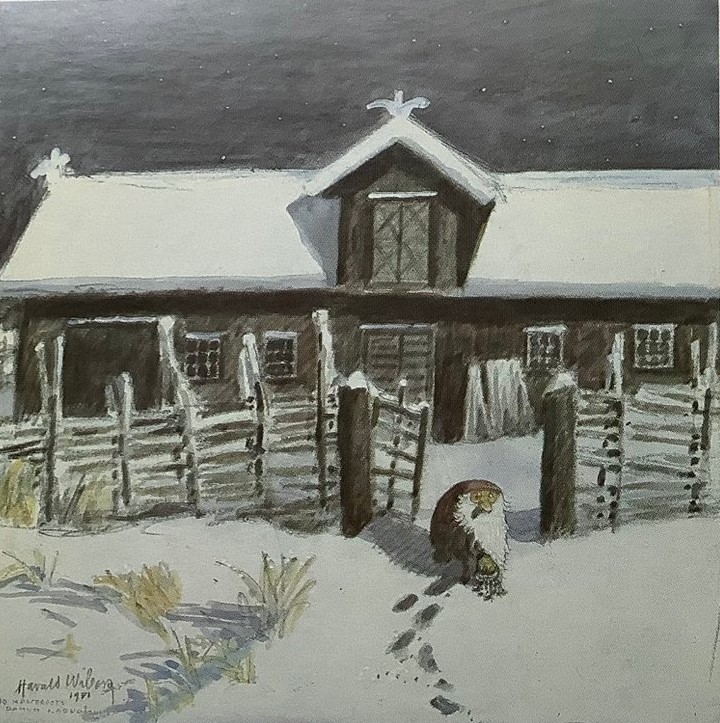
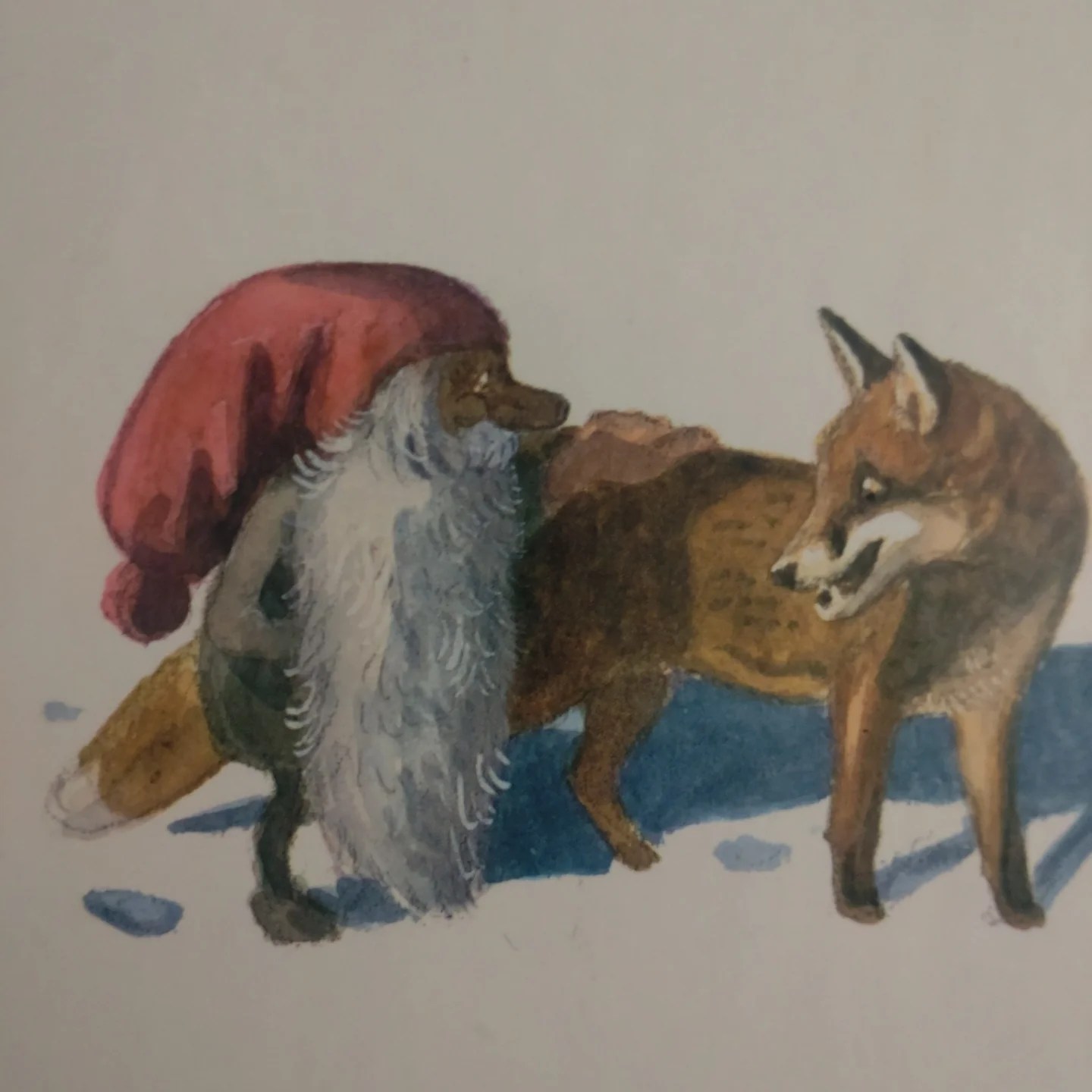
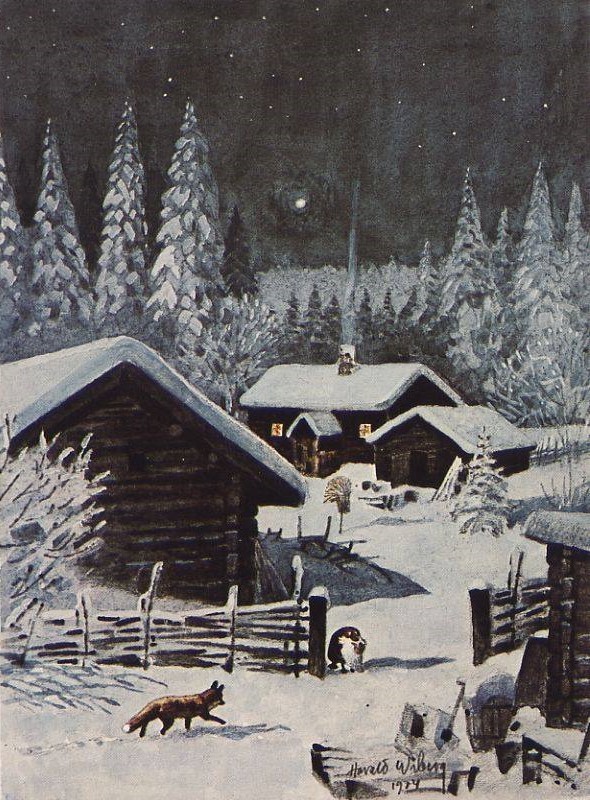
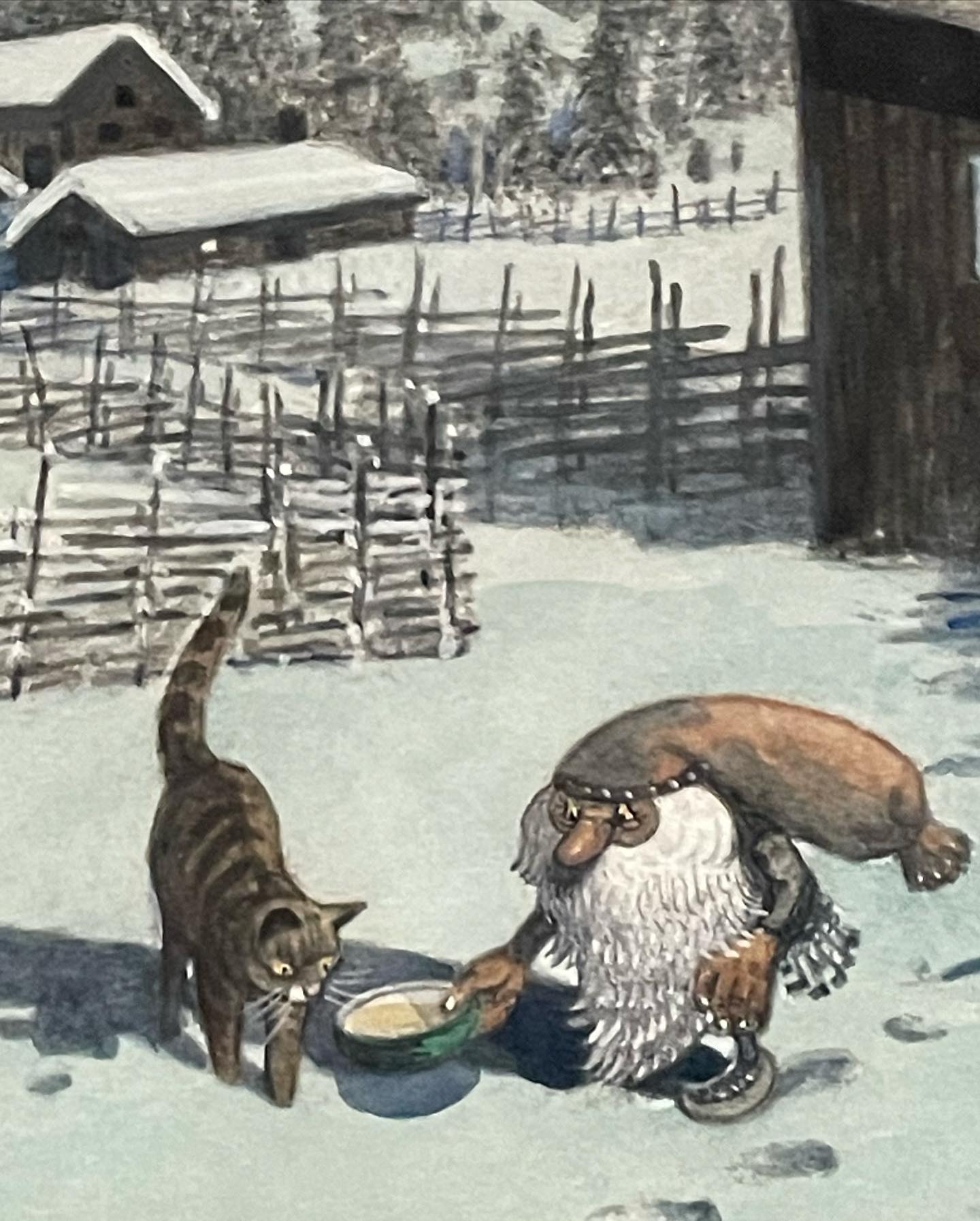
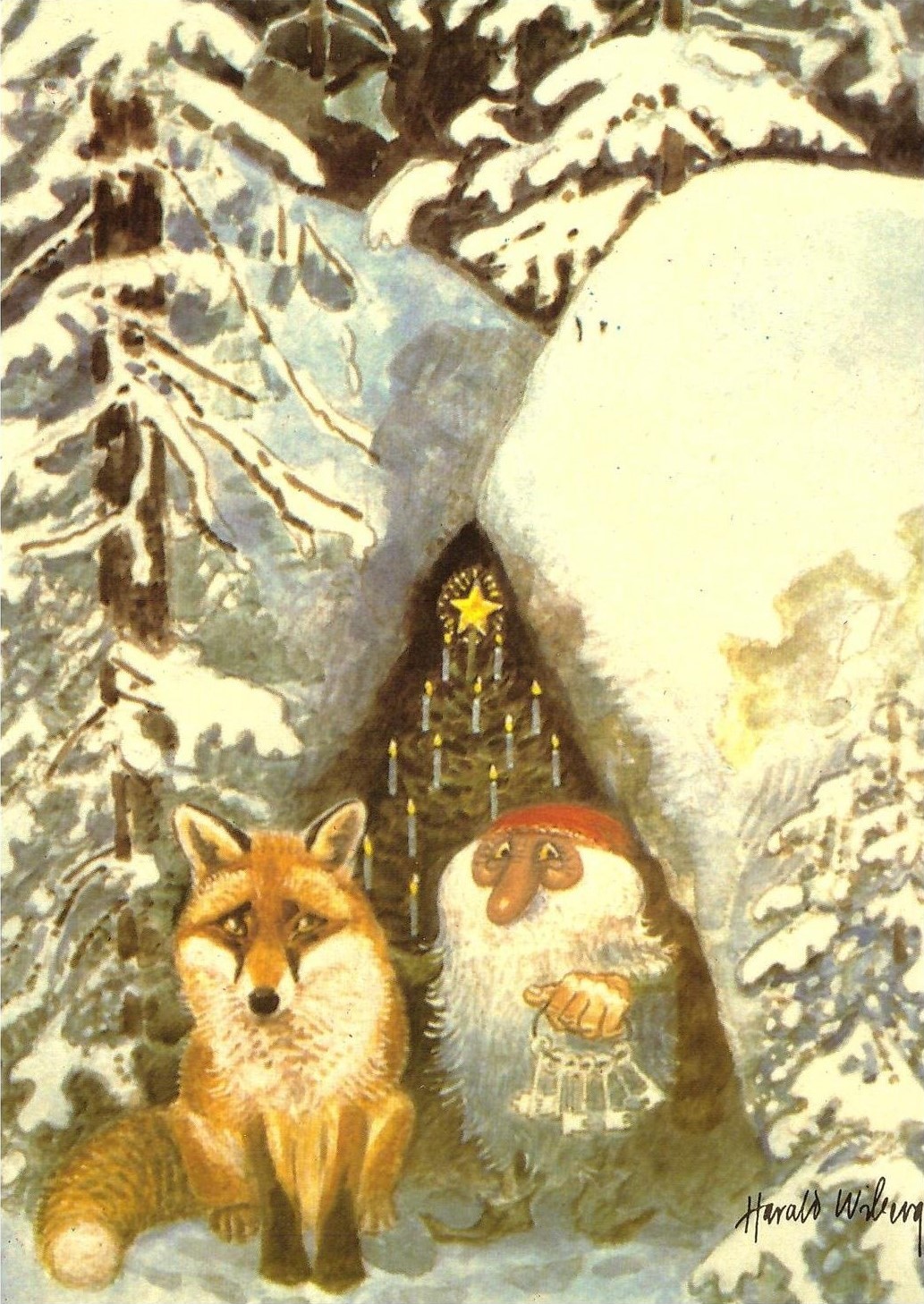
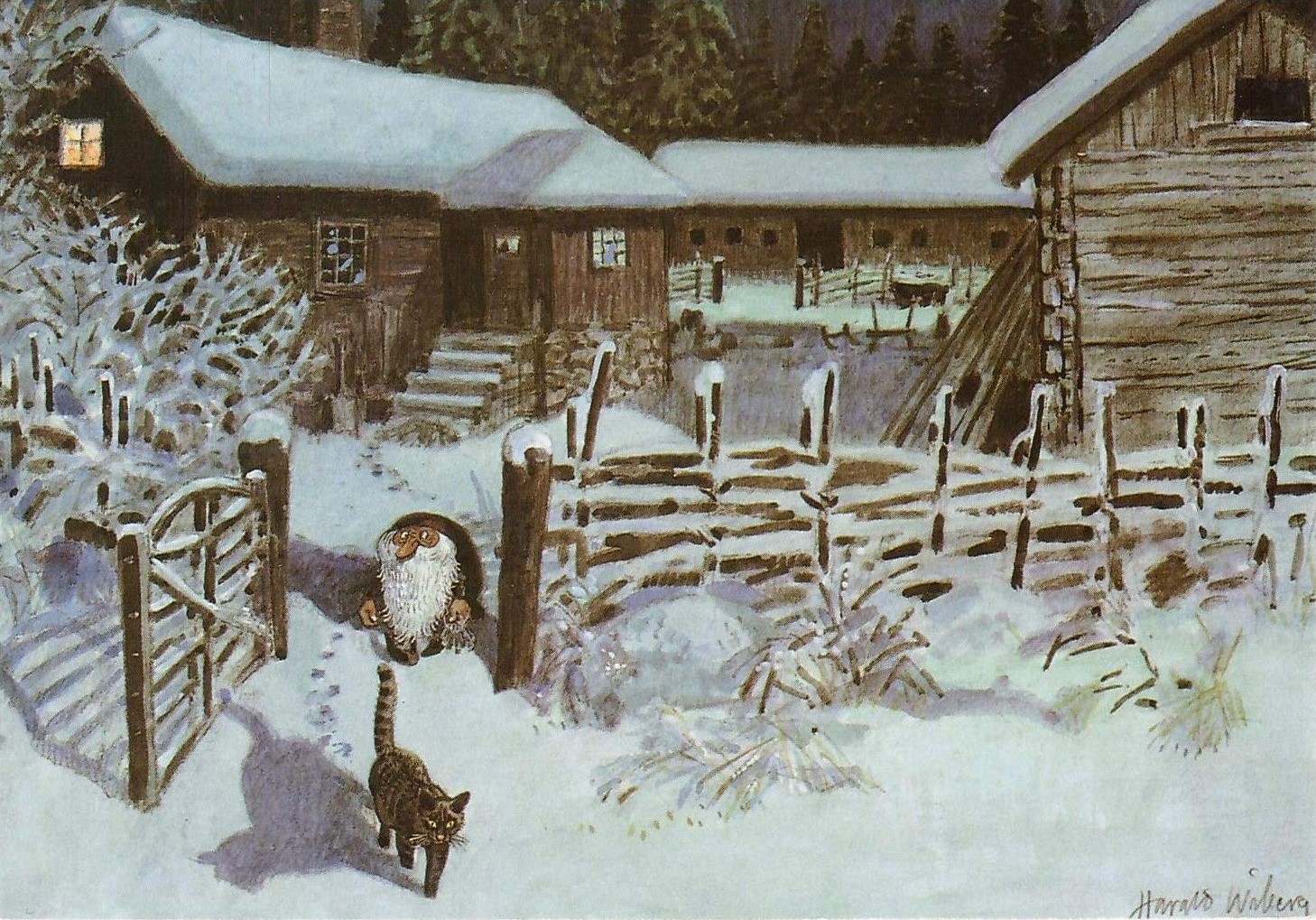
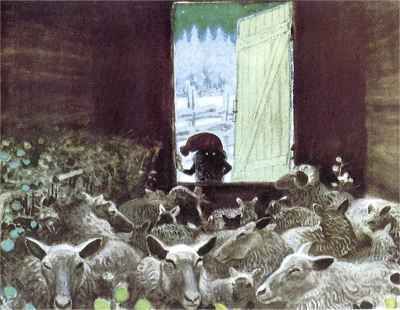
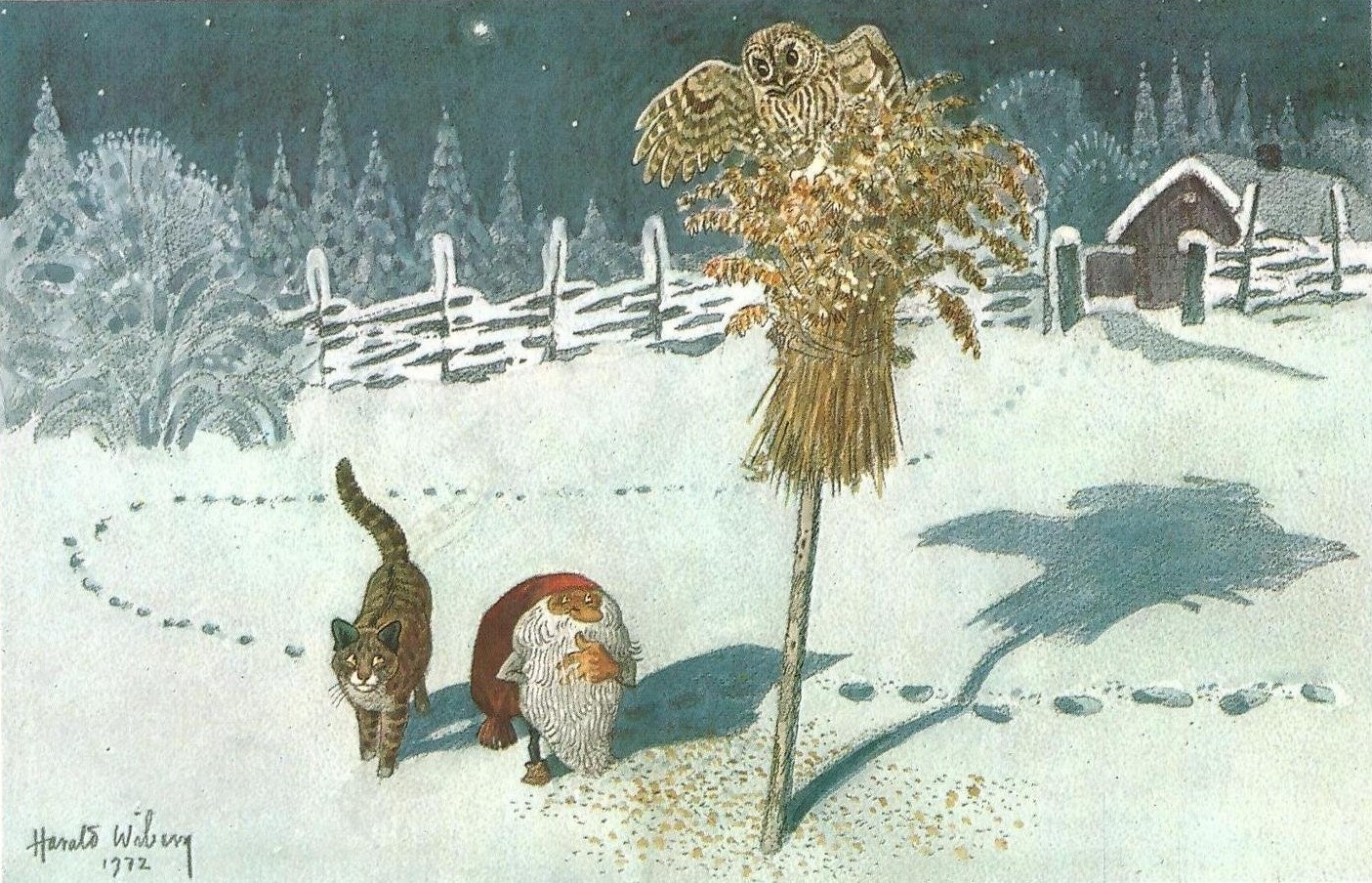
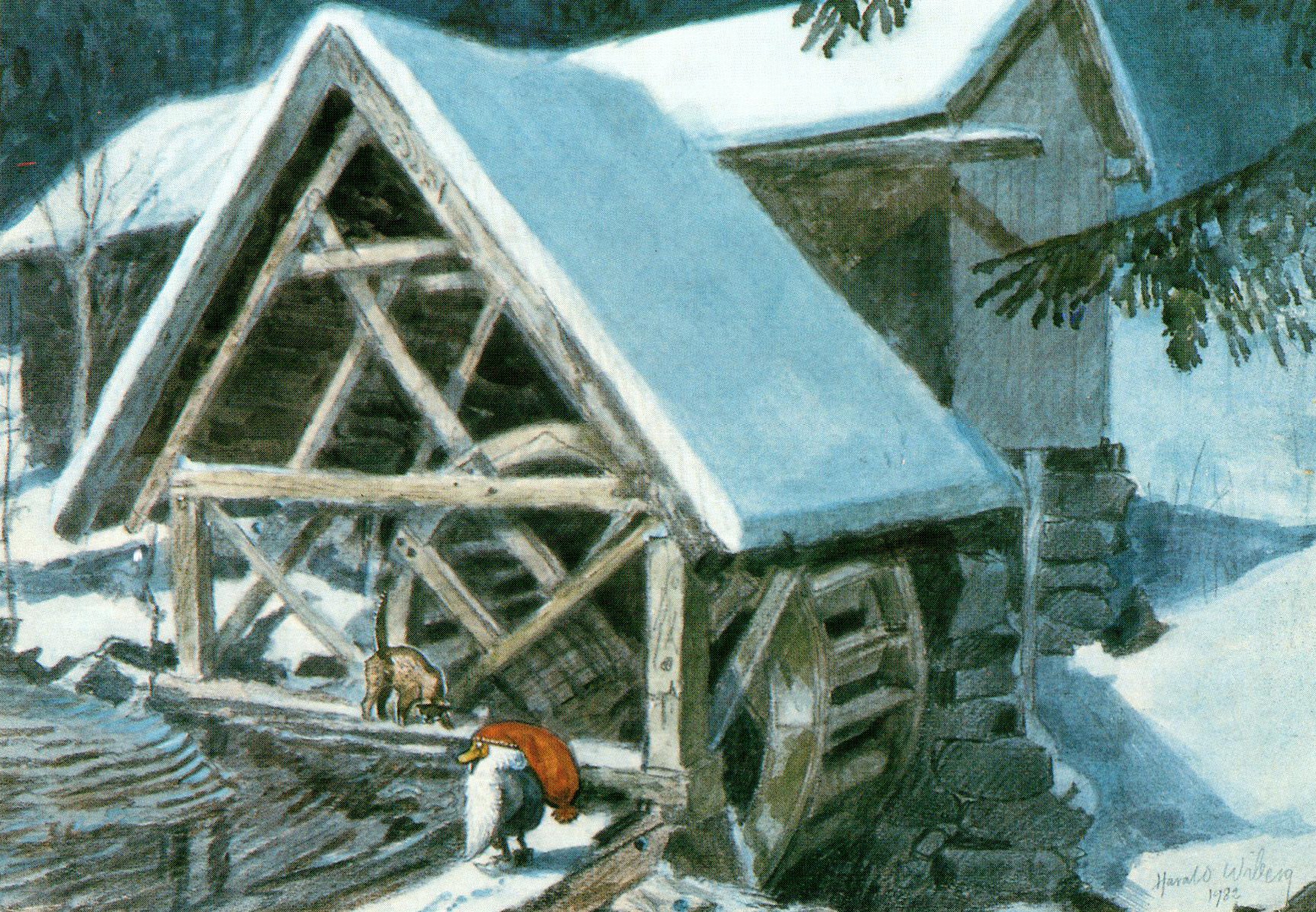
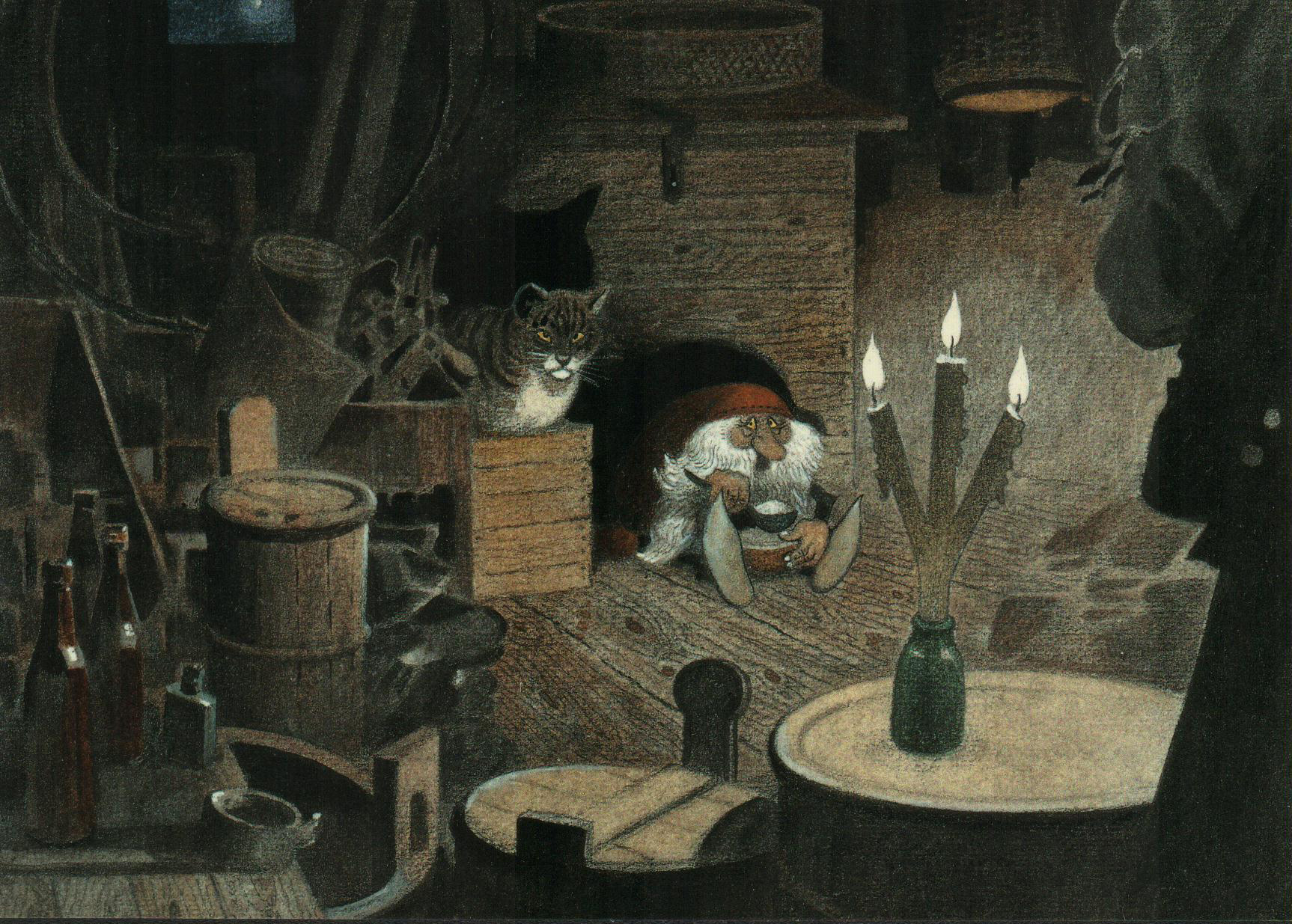
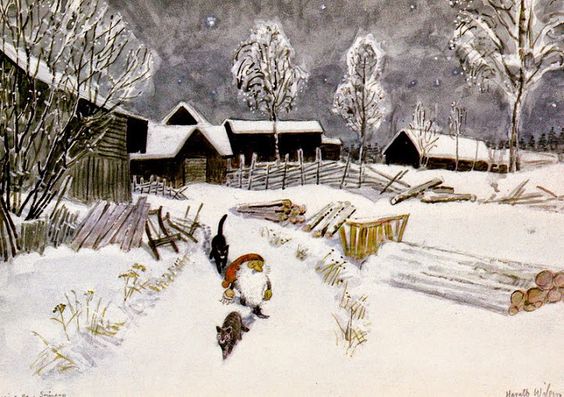
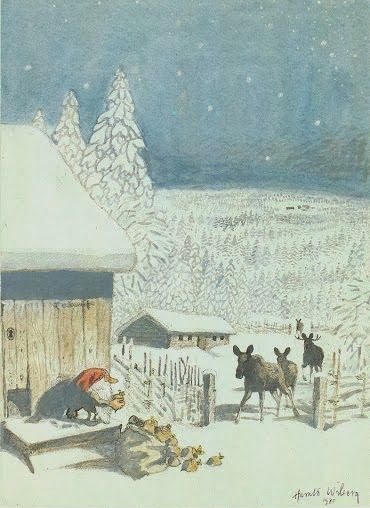
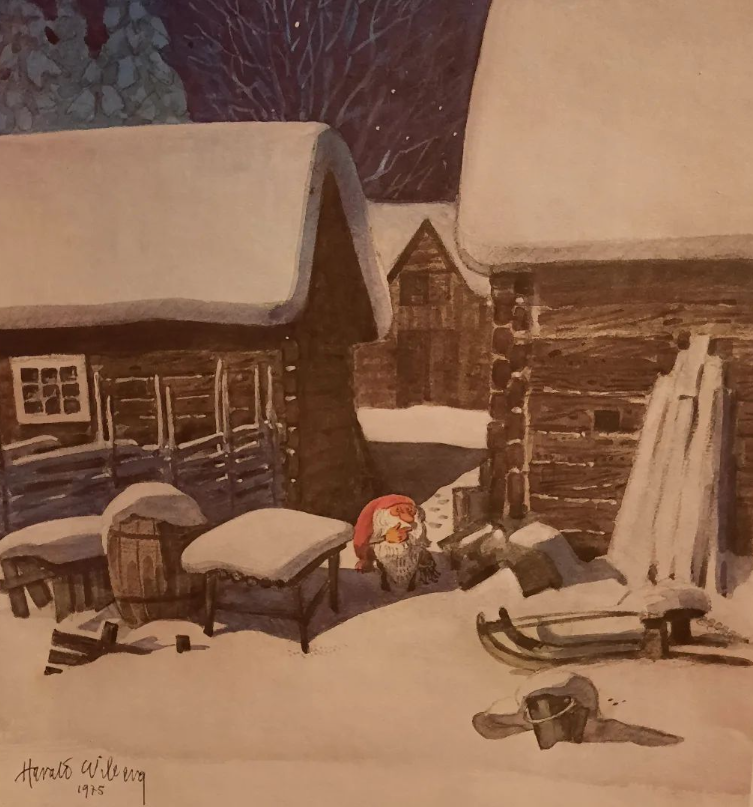
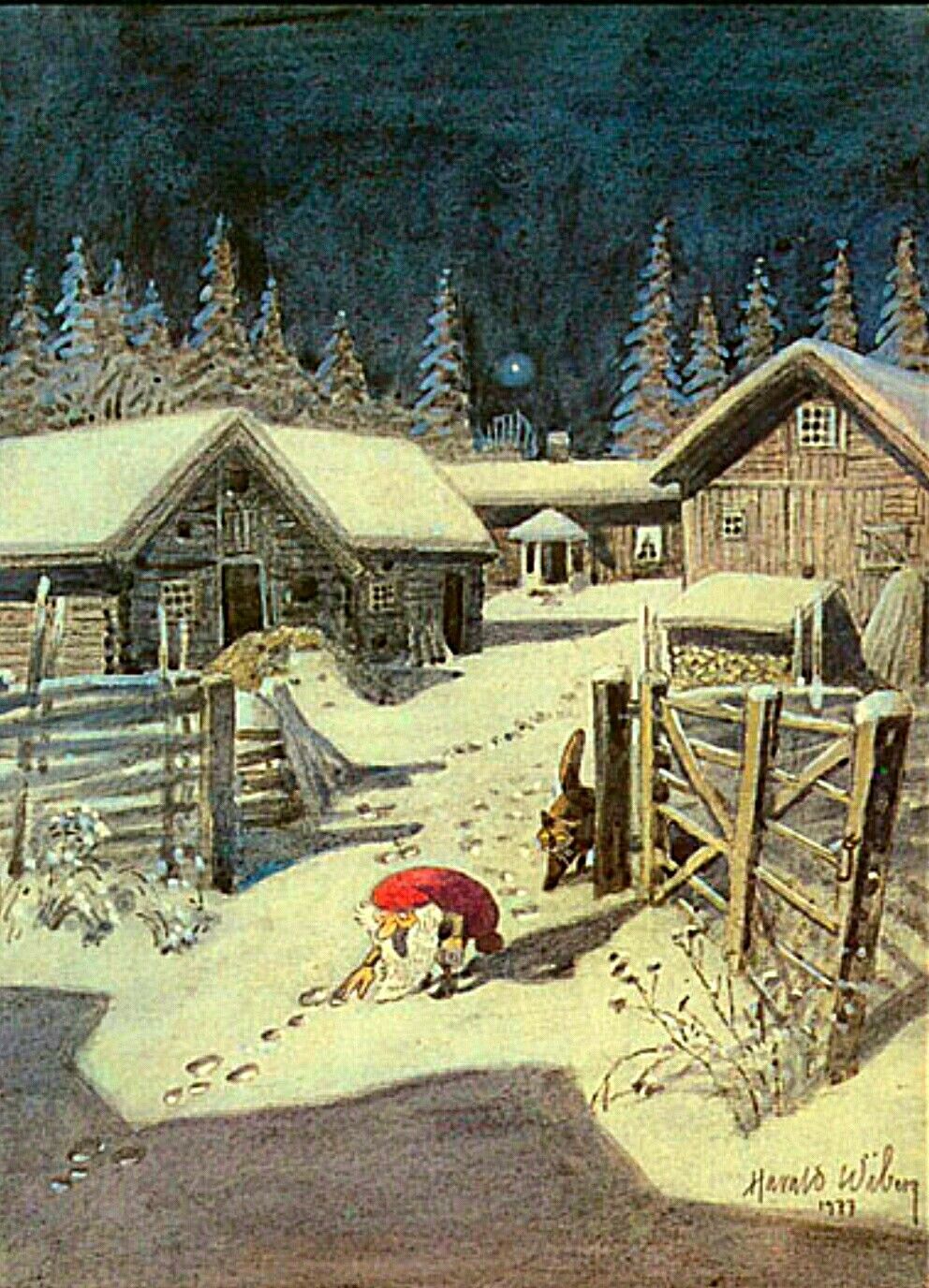
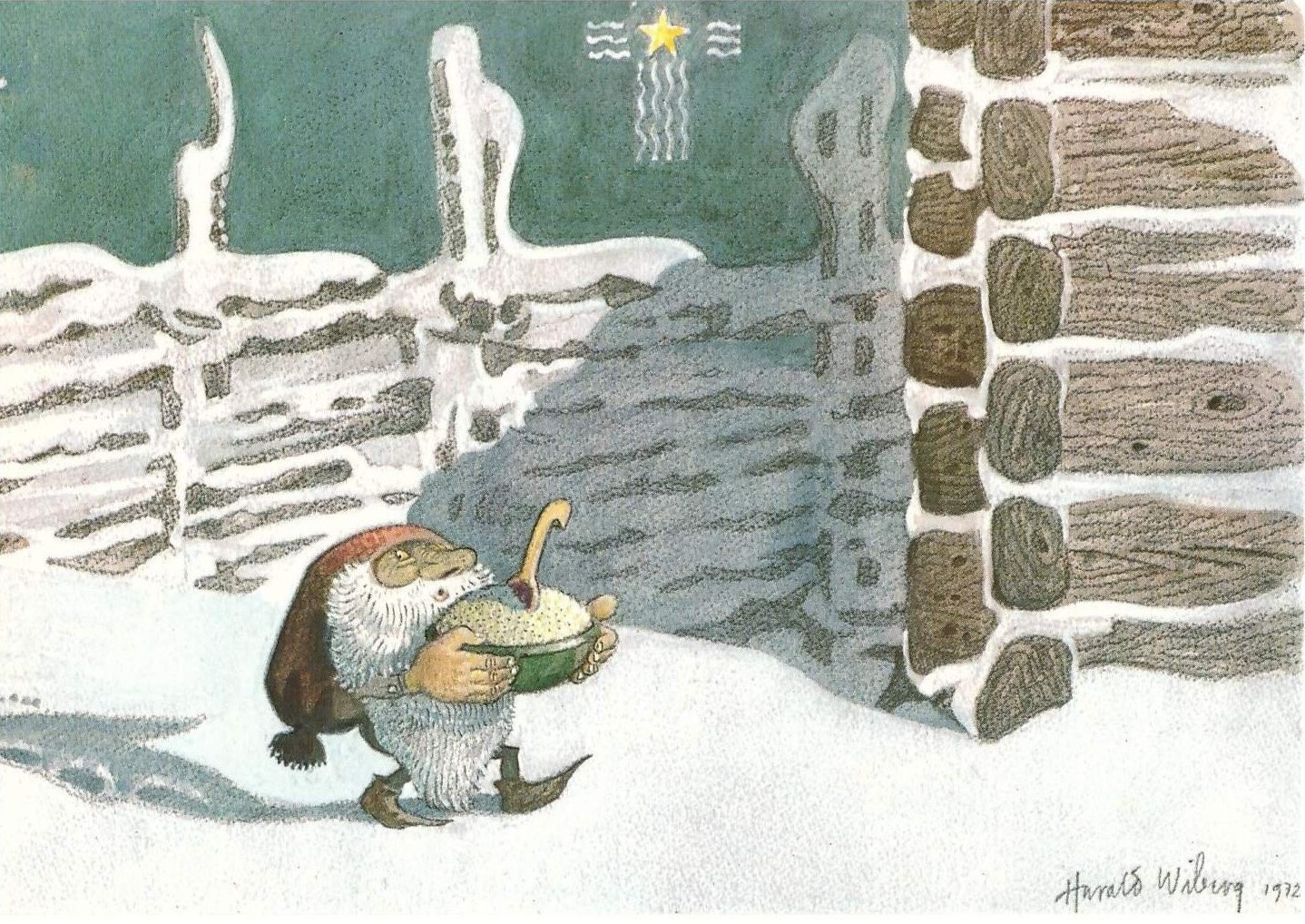
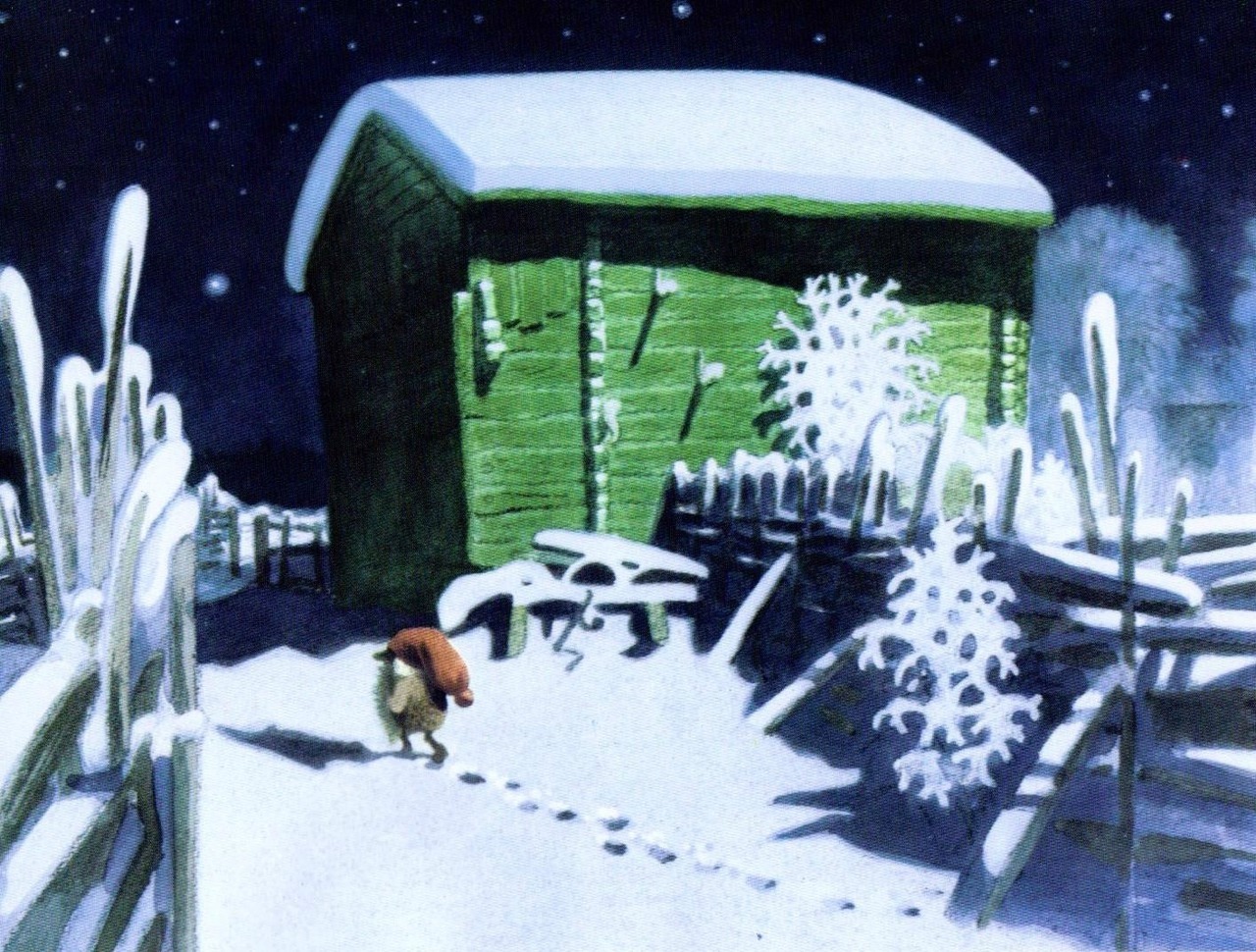
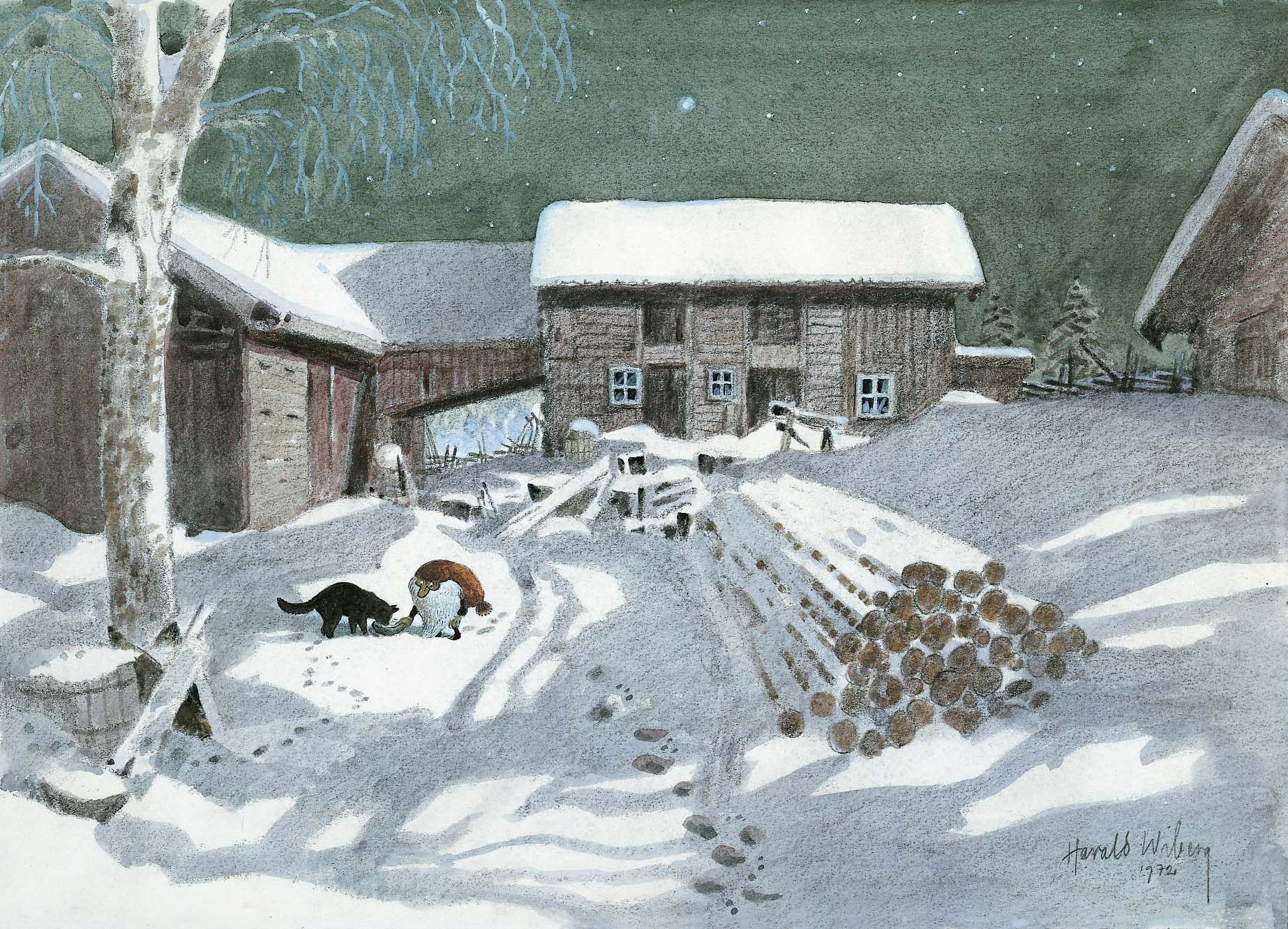
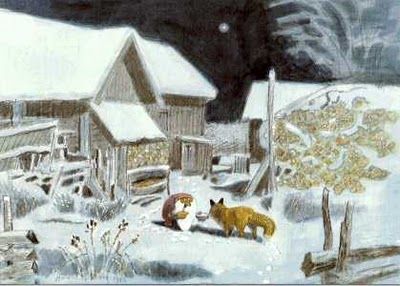
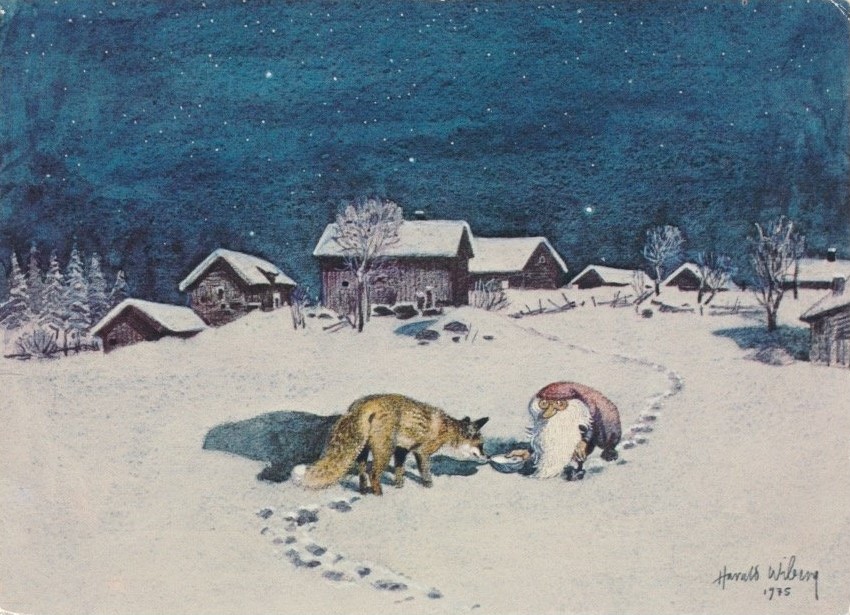
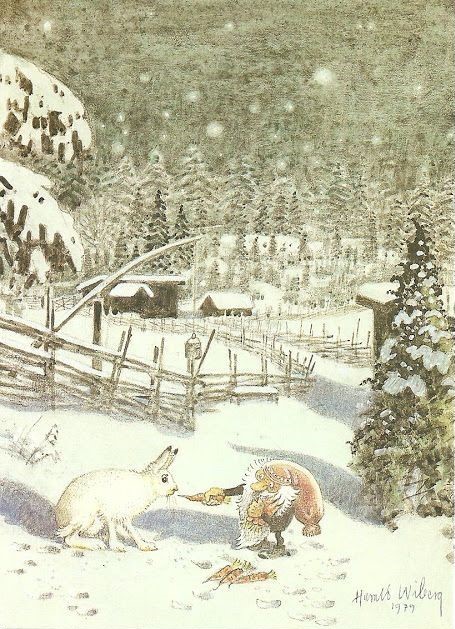
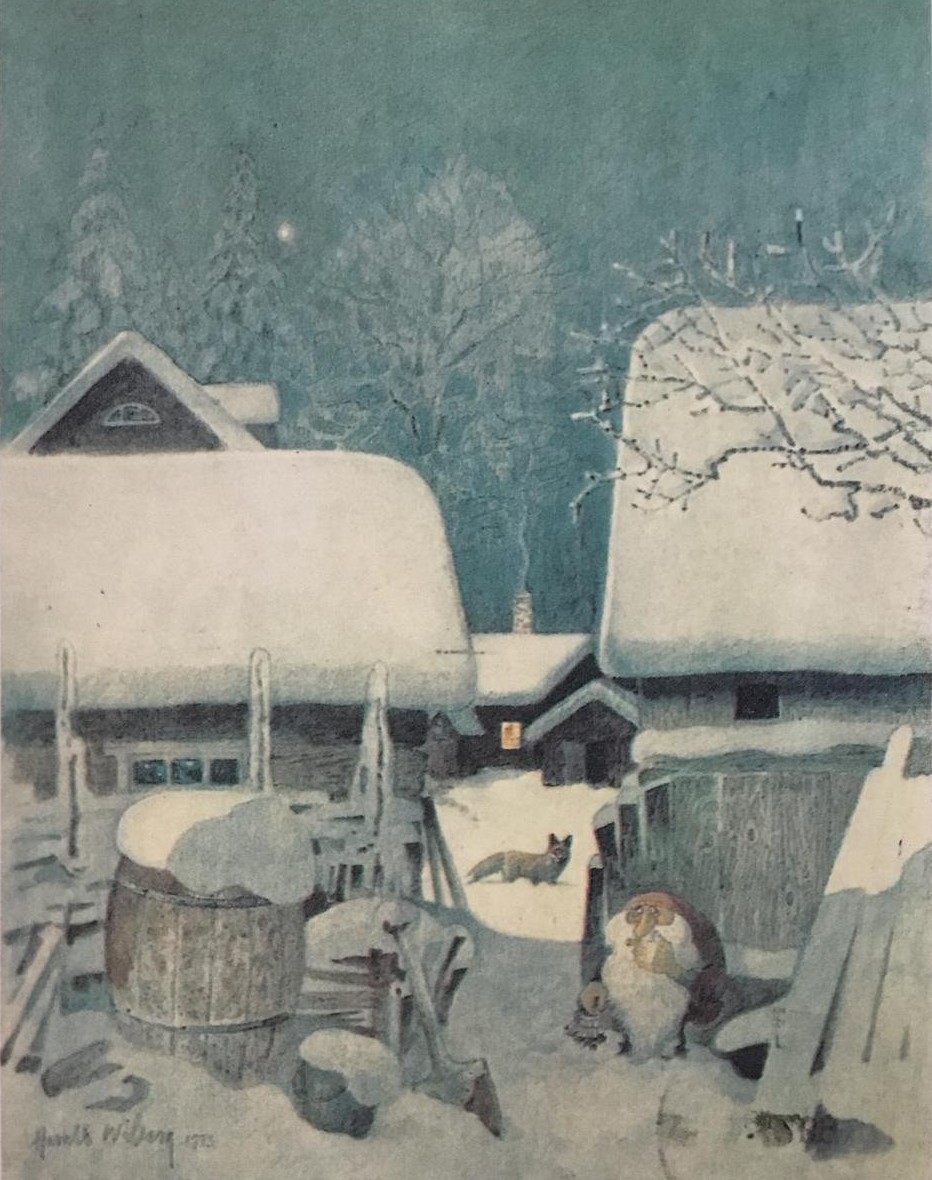
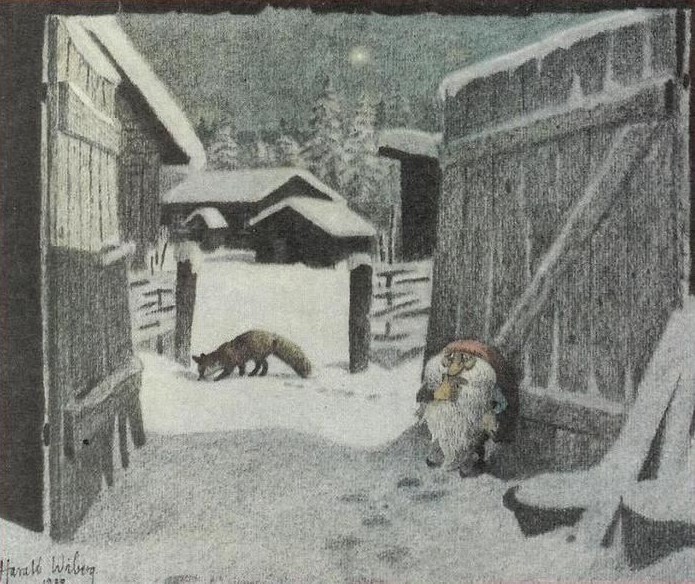
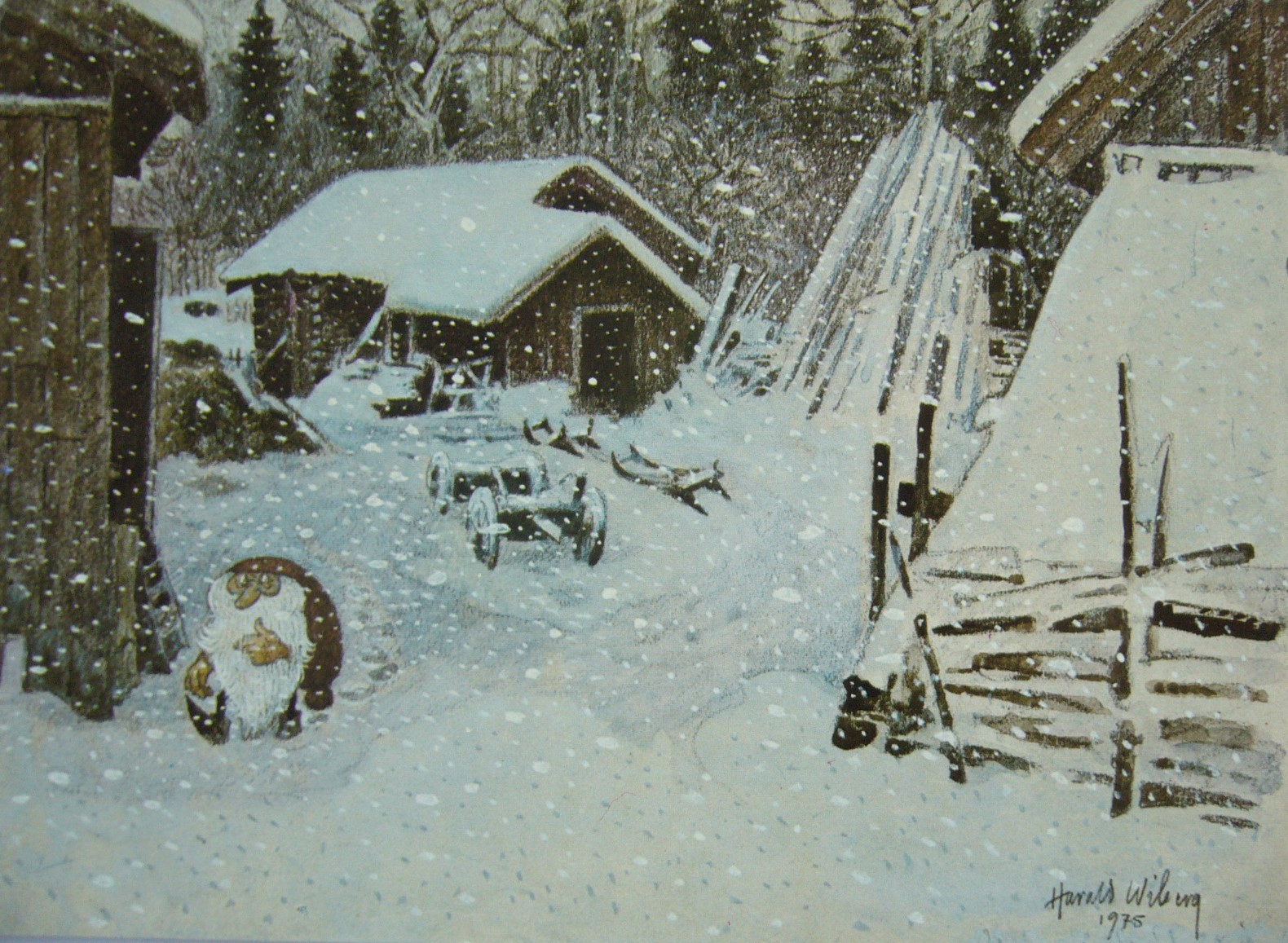
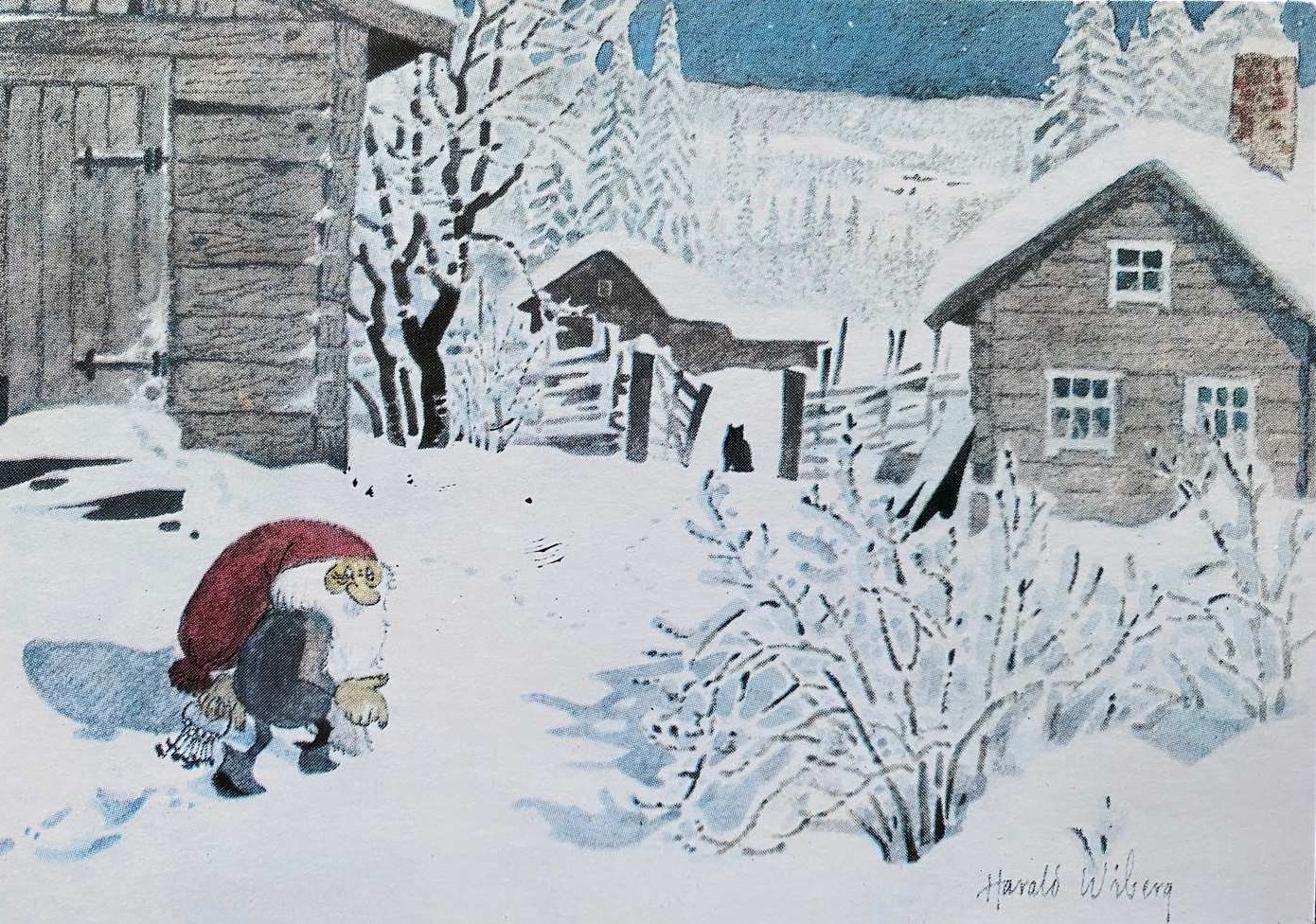
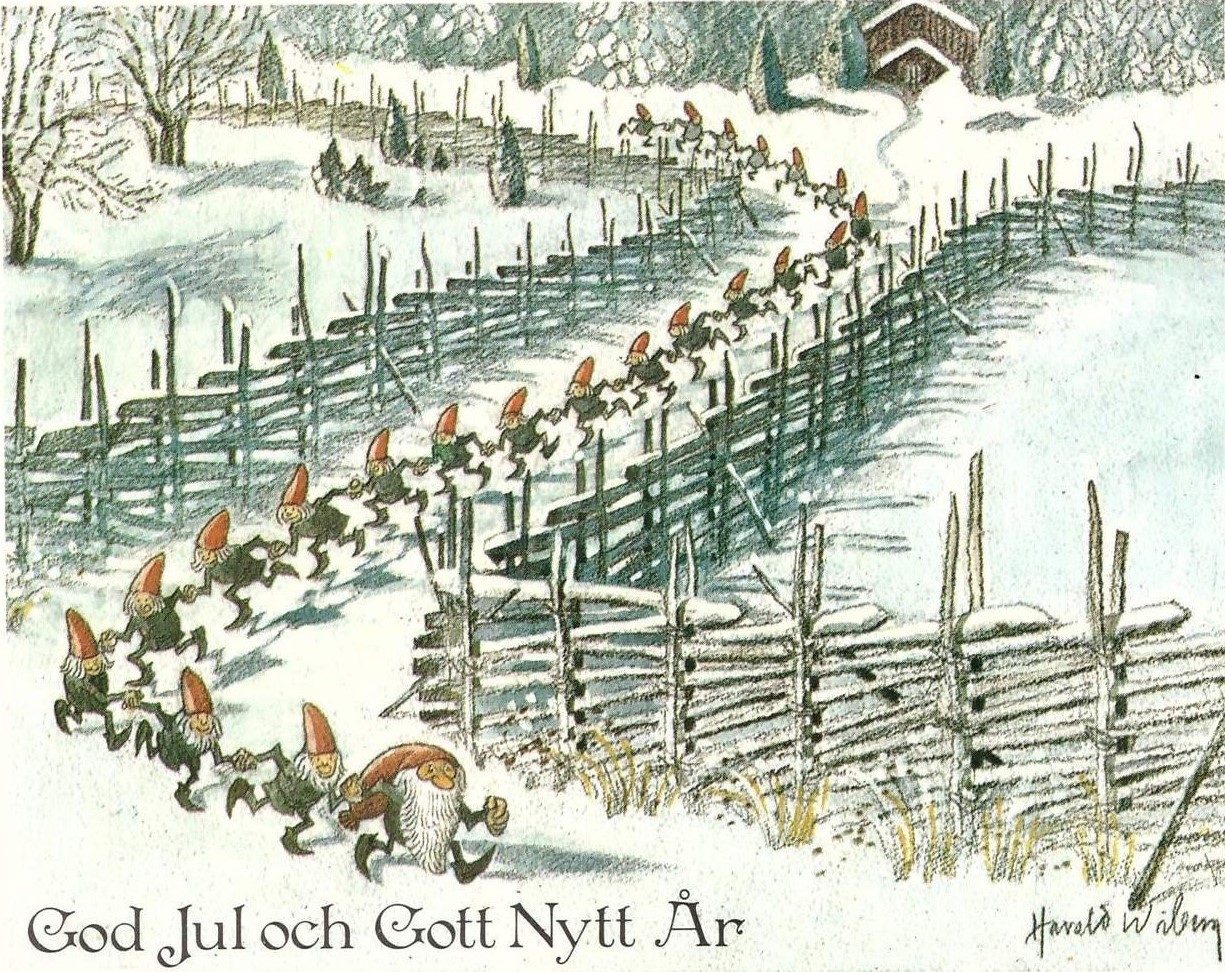
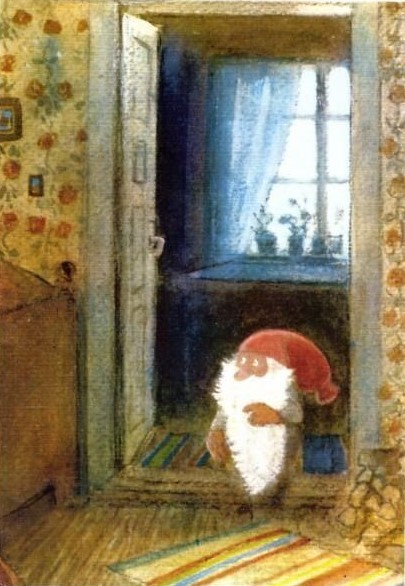
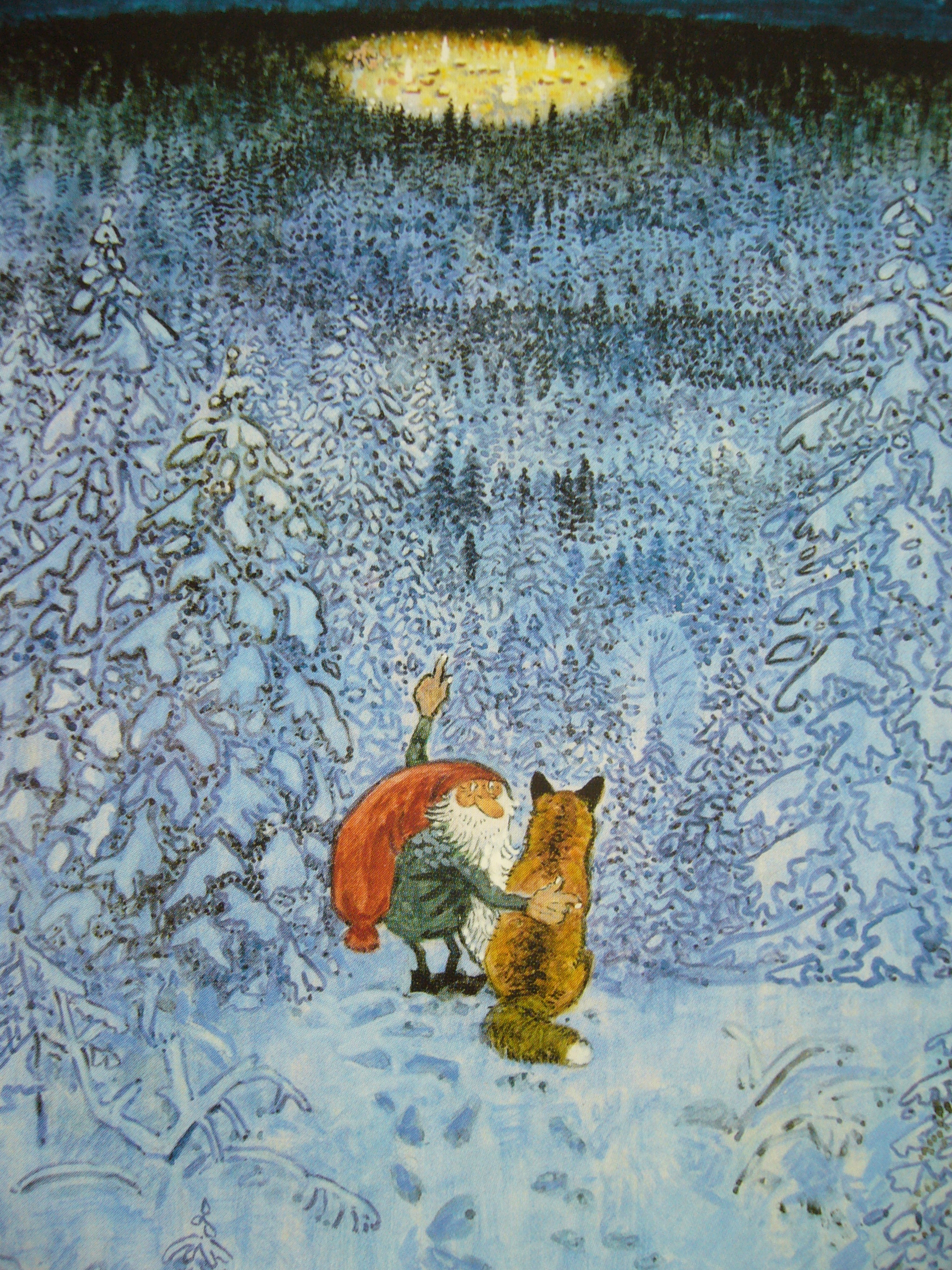
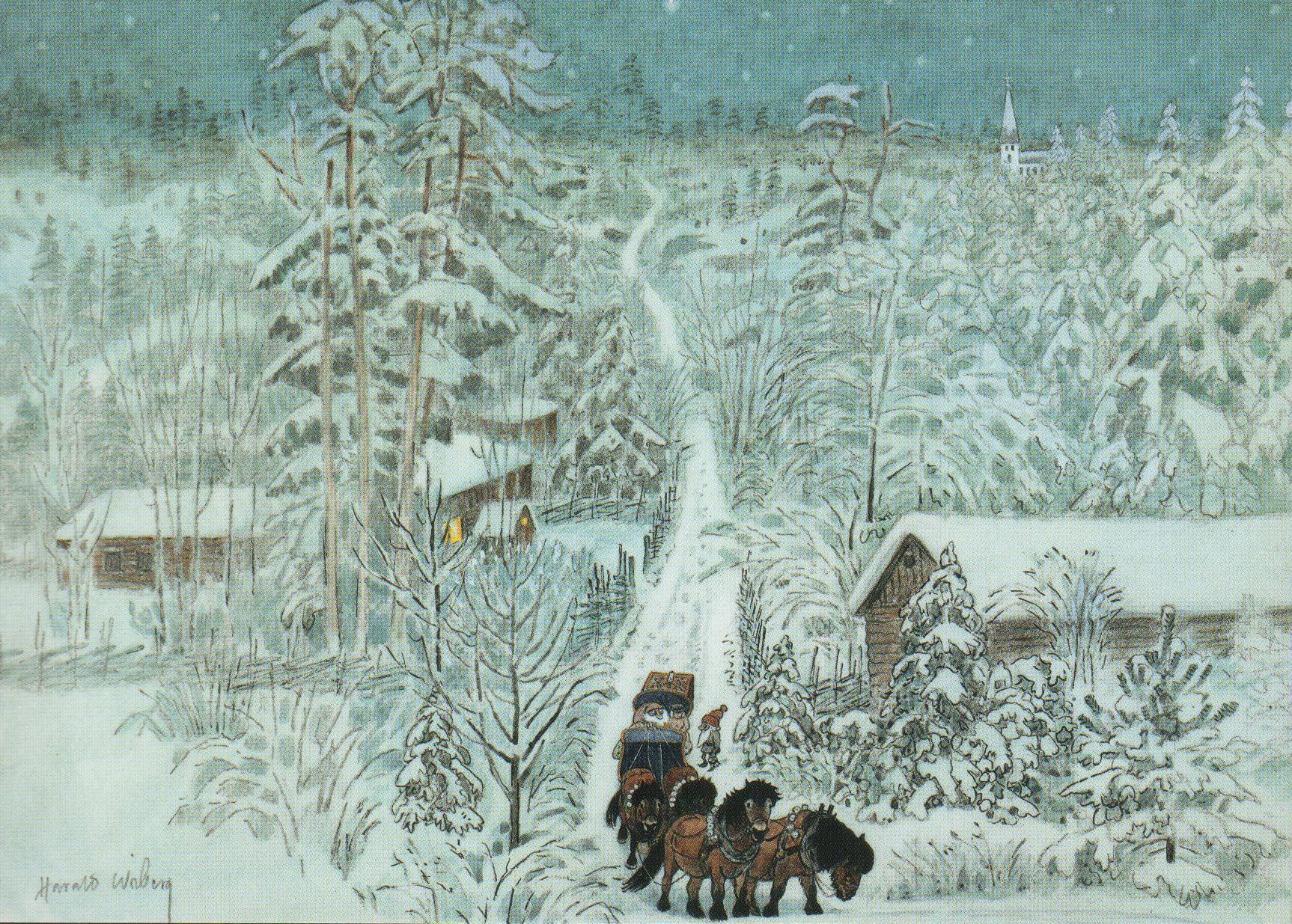
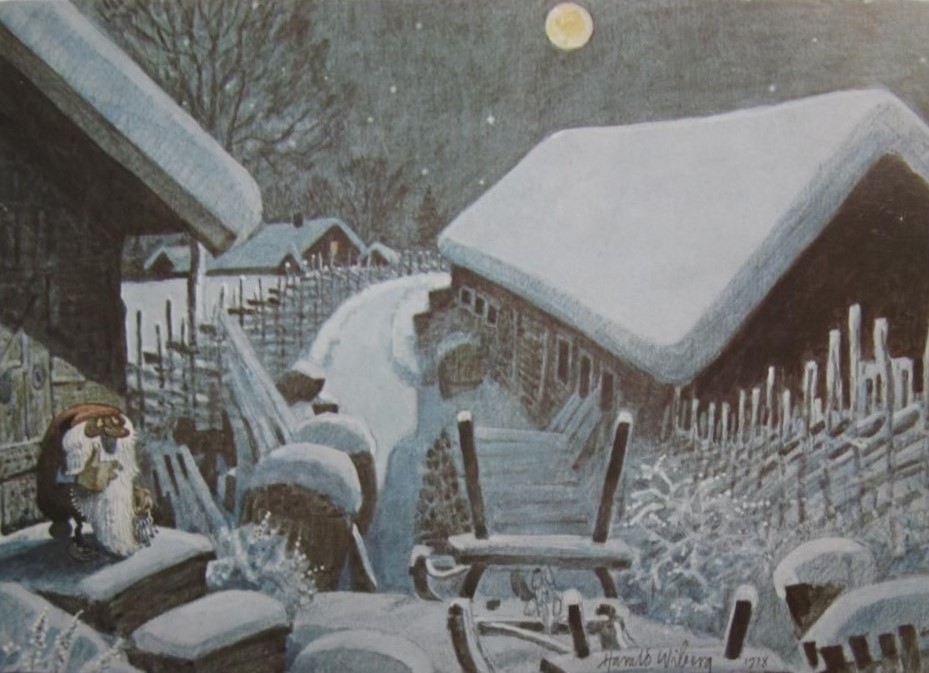
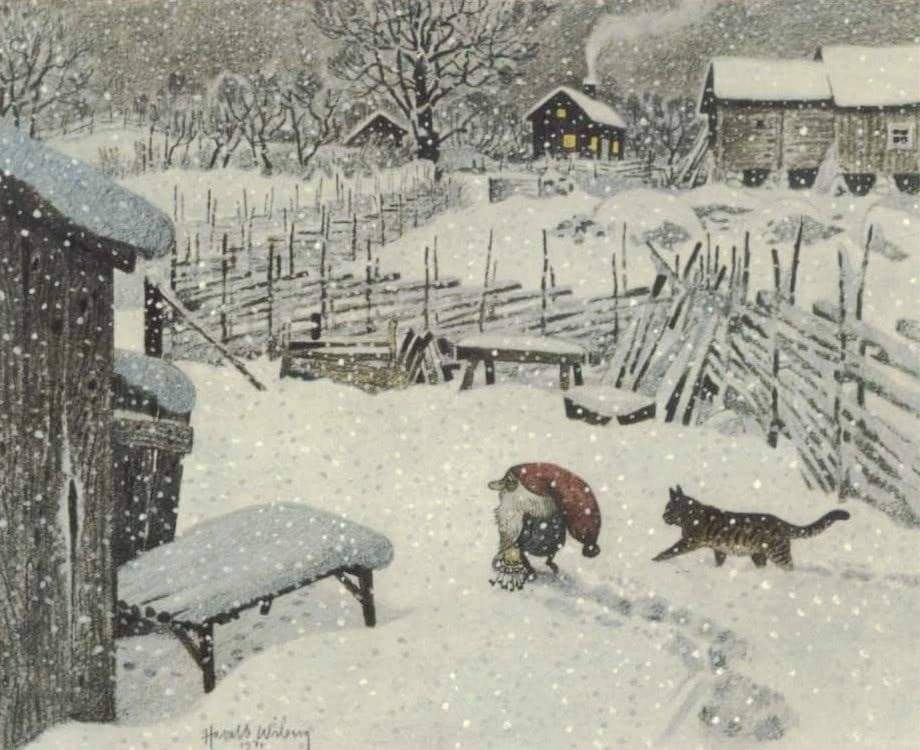
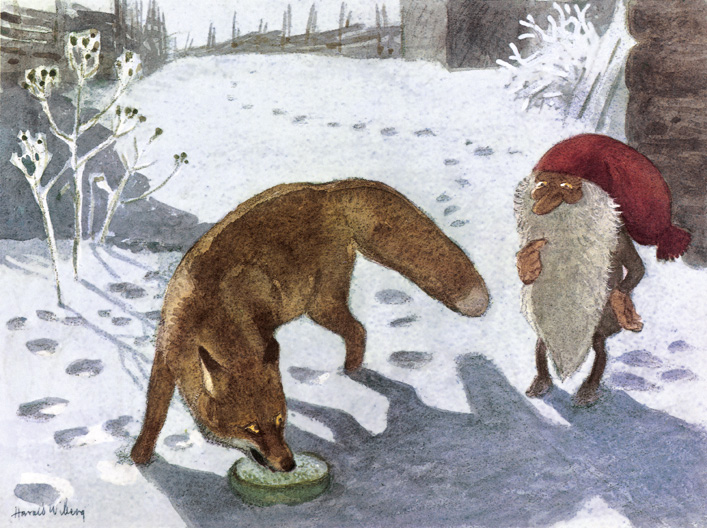
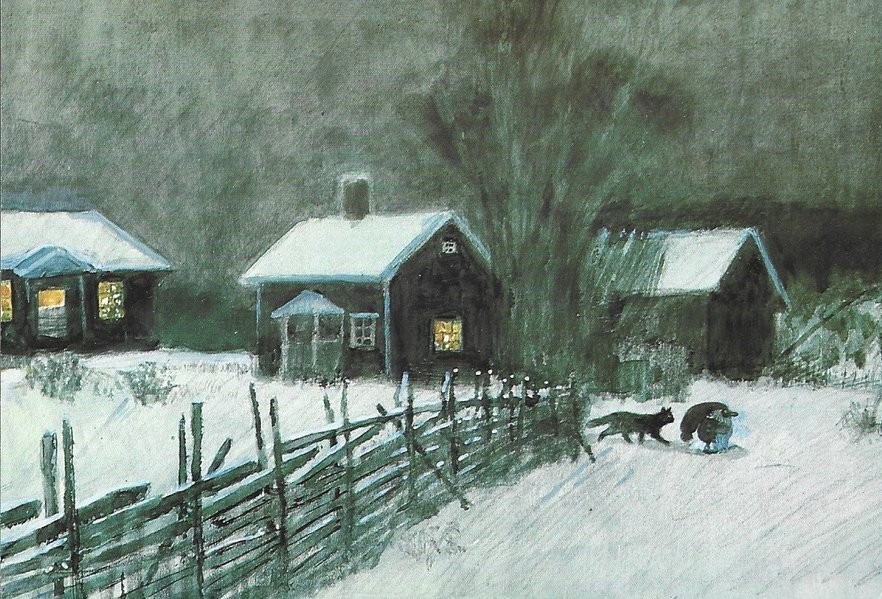
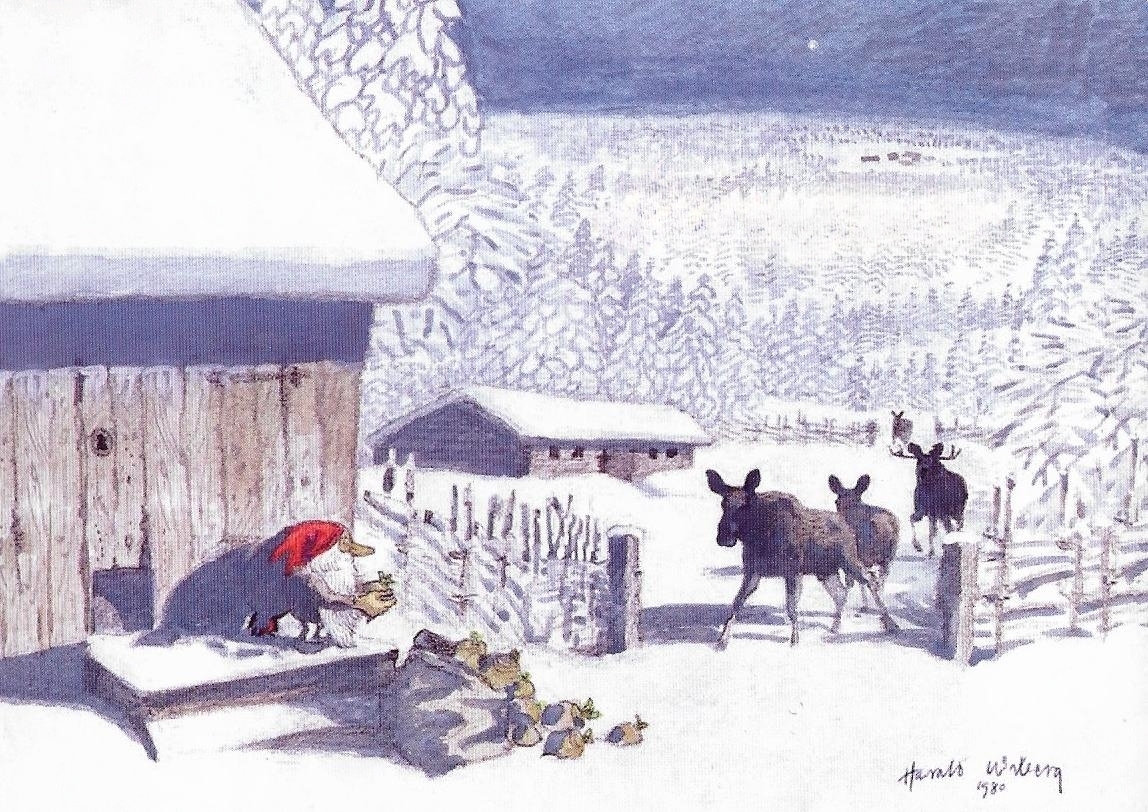
Postcards and Christmas cards based on his original watercolours were also produced, some of which were used in Wibergs Tomten book illustration:



Oil paintings
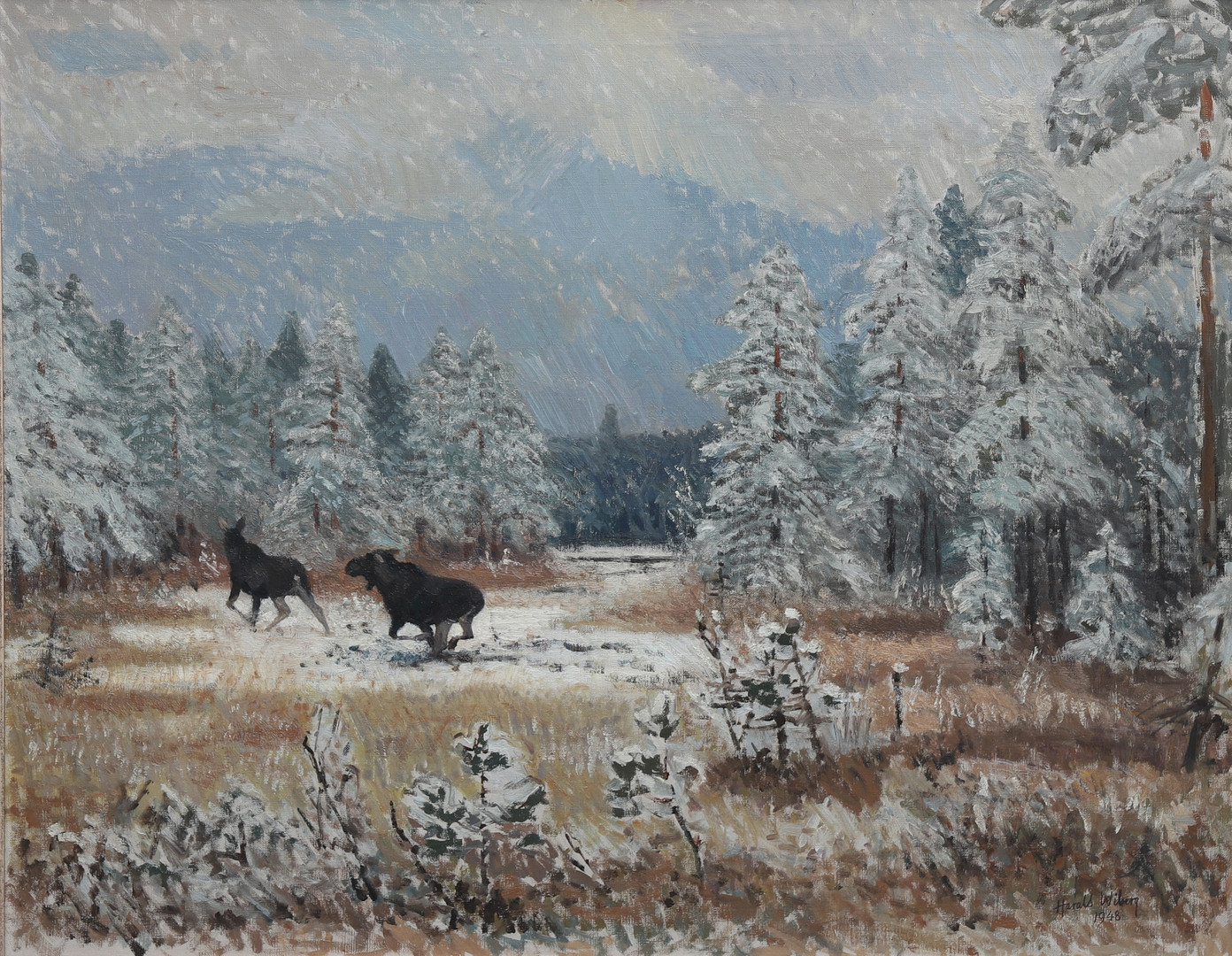
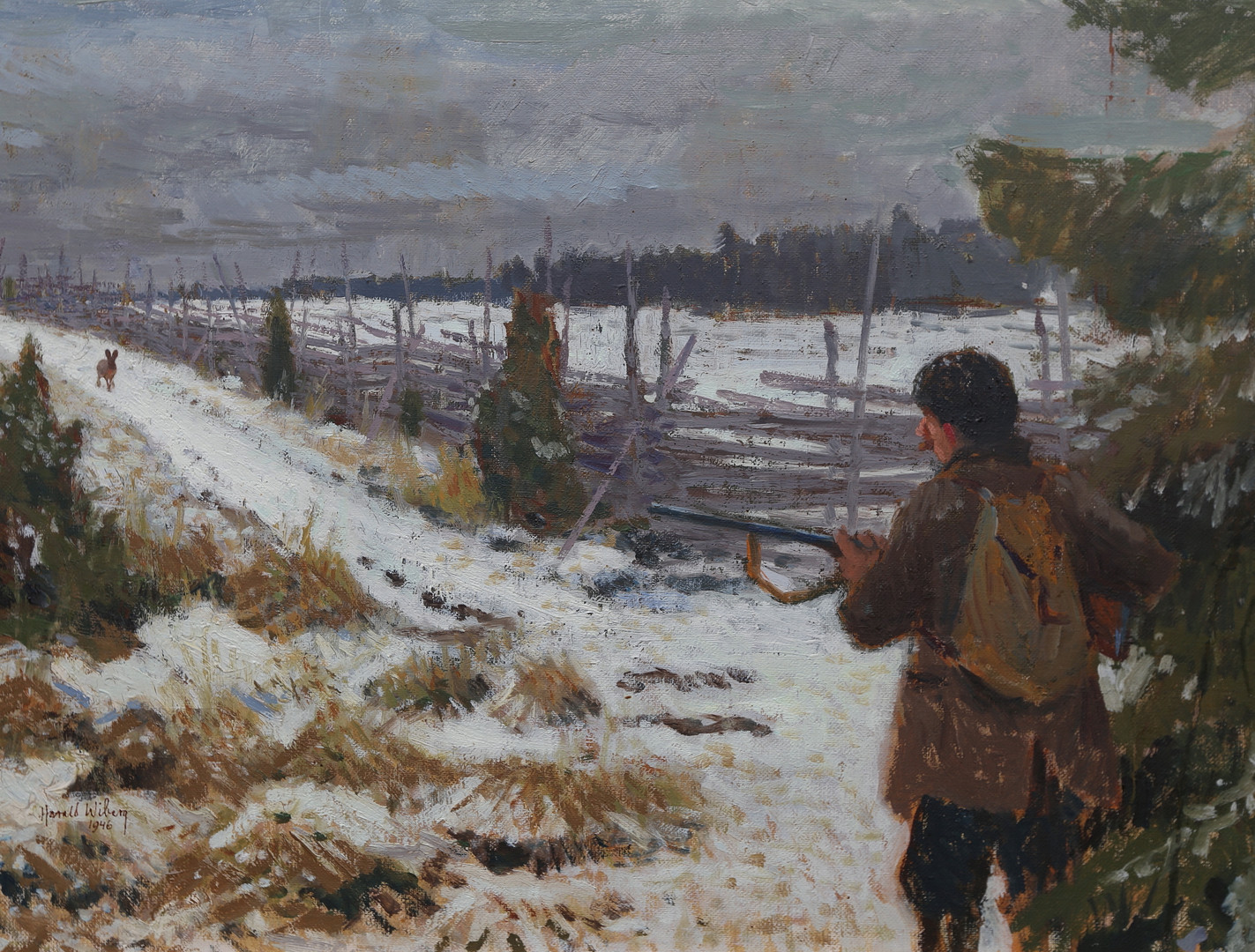
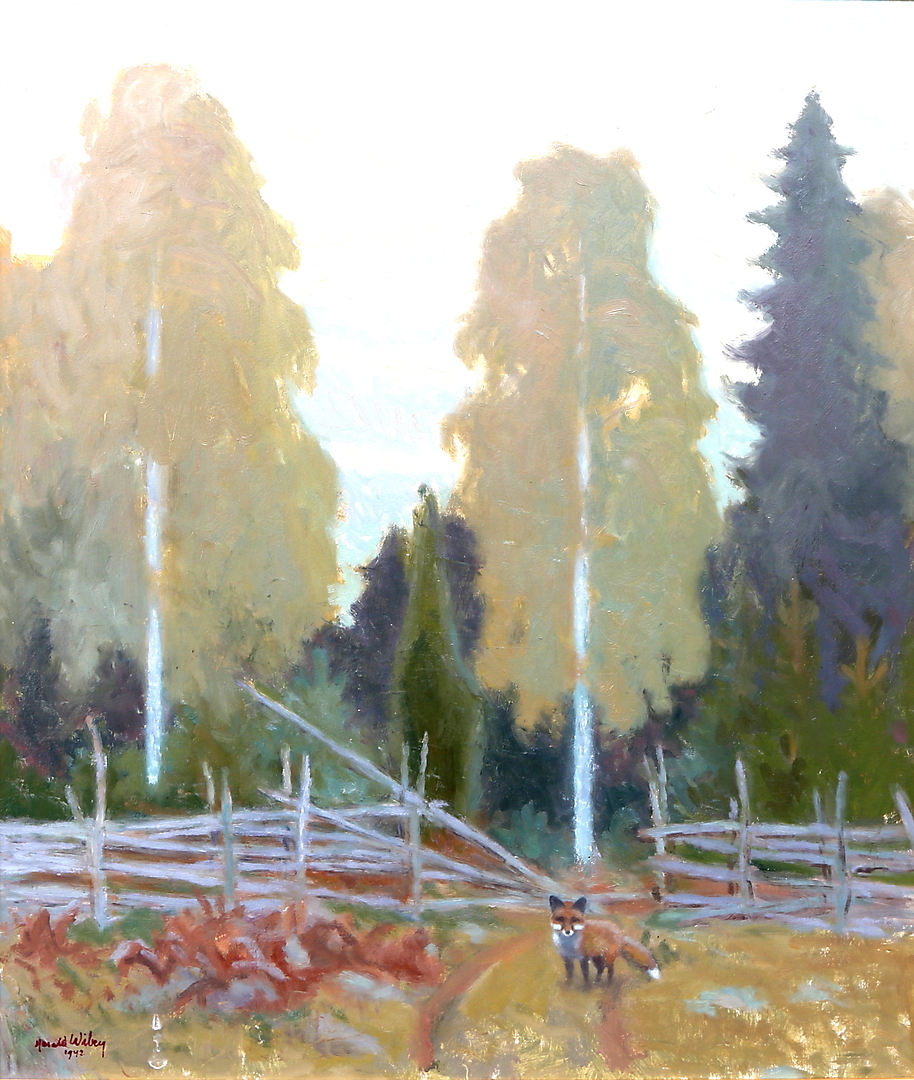
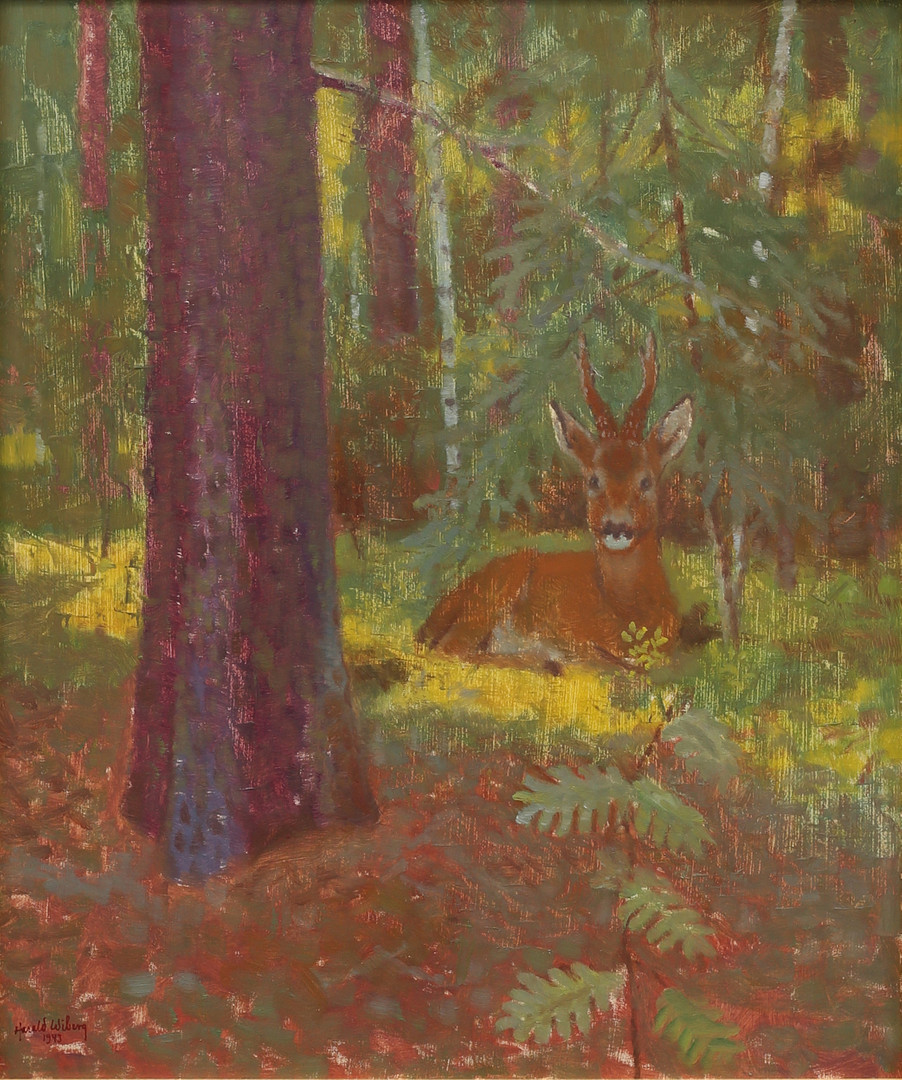
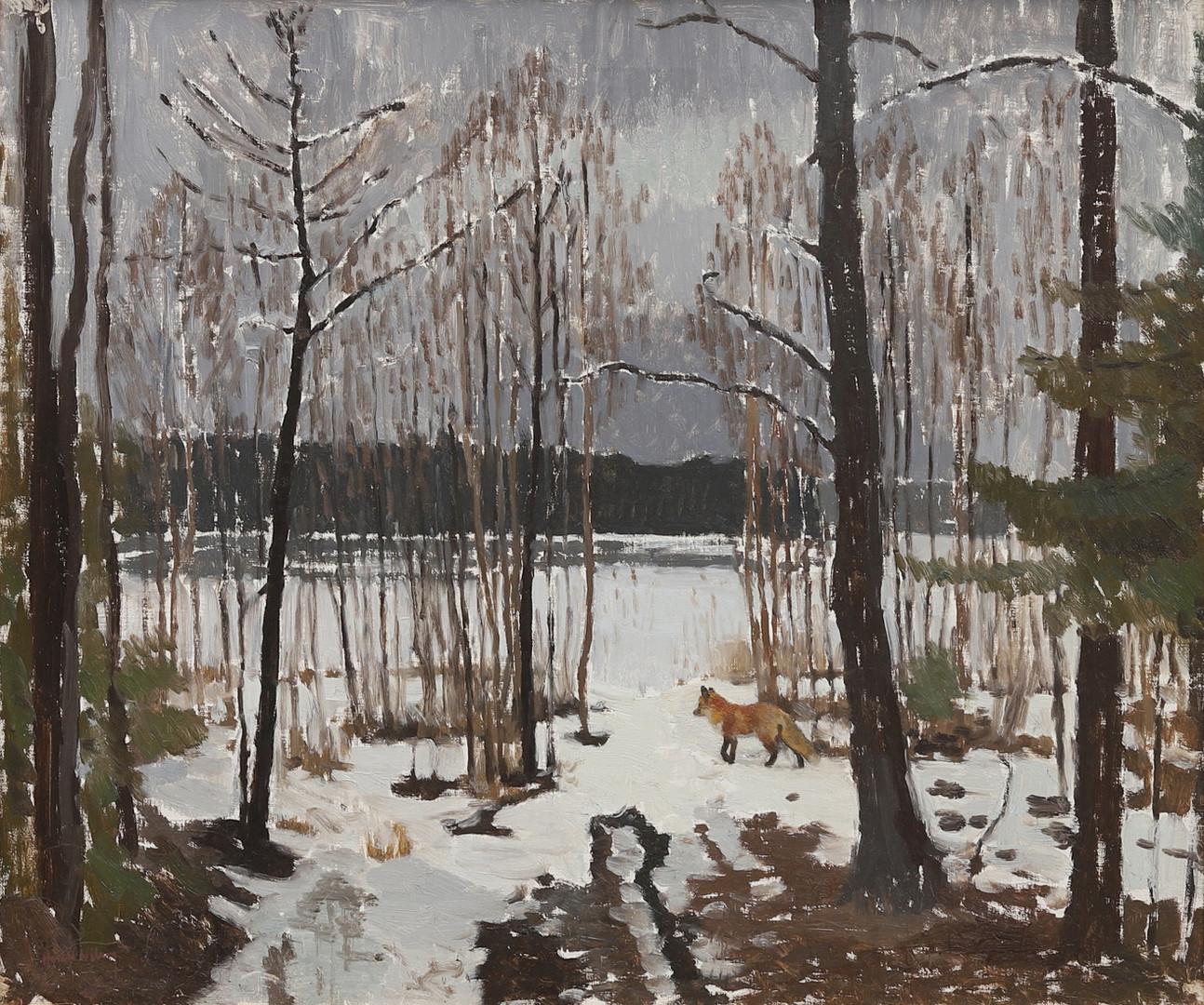
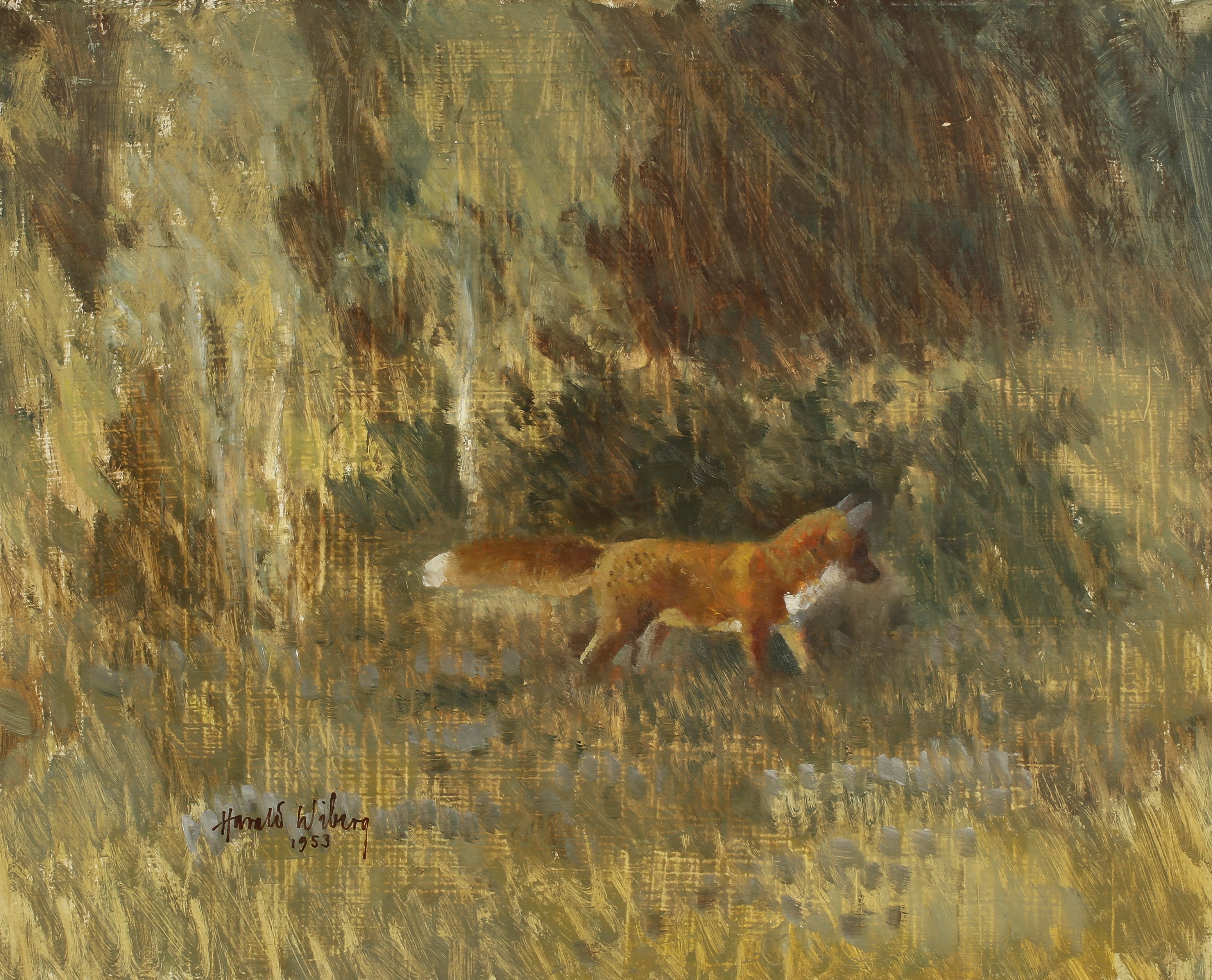
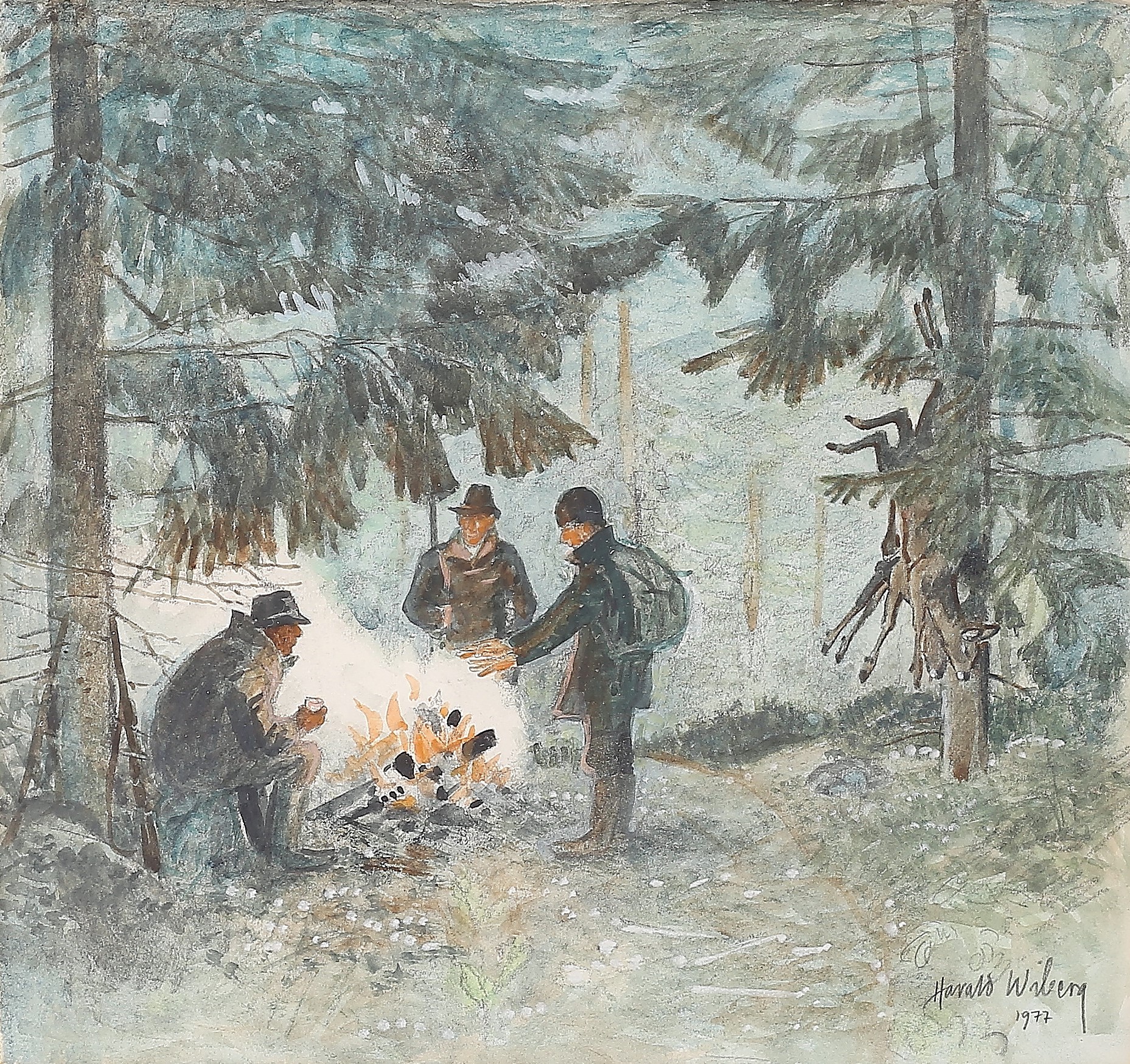
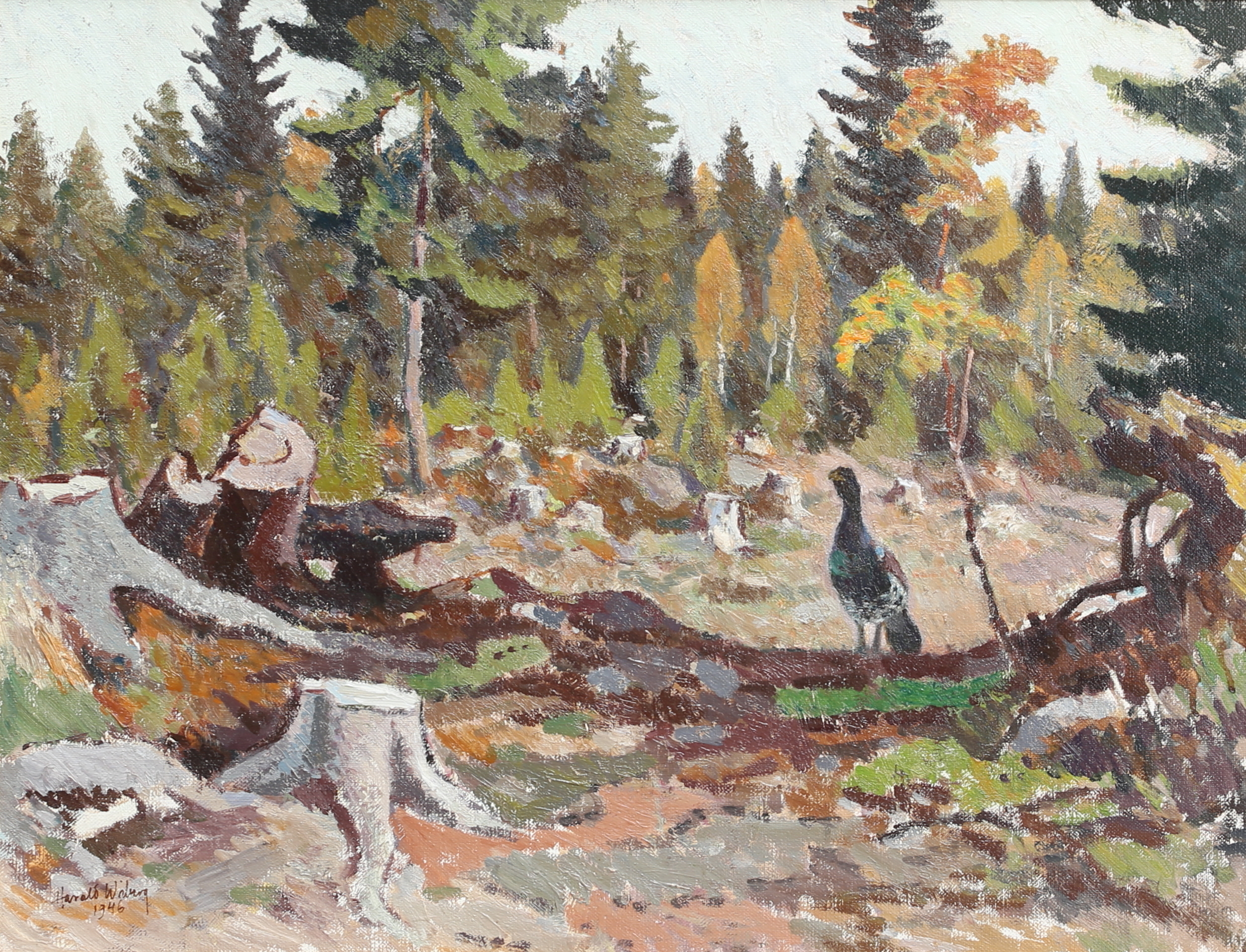
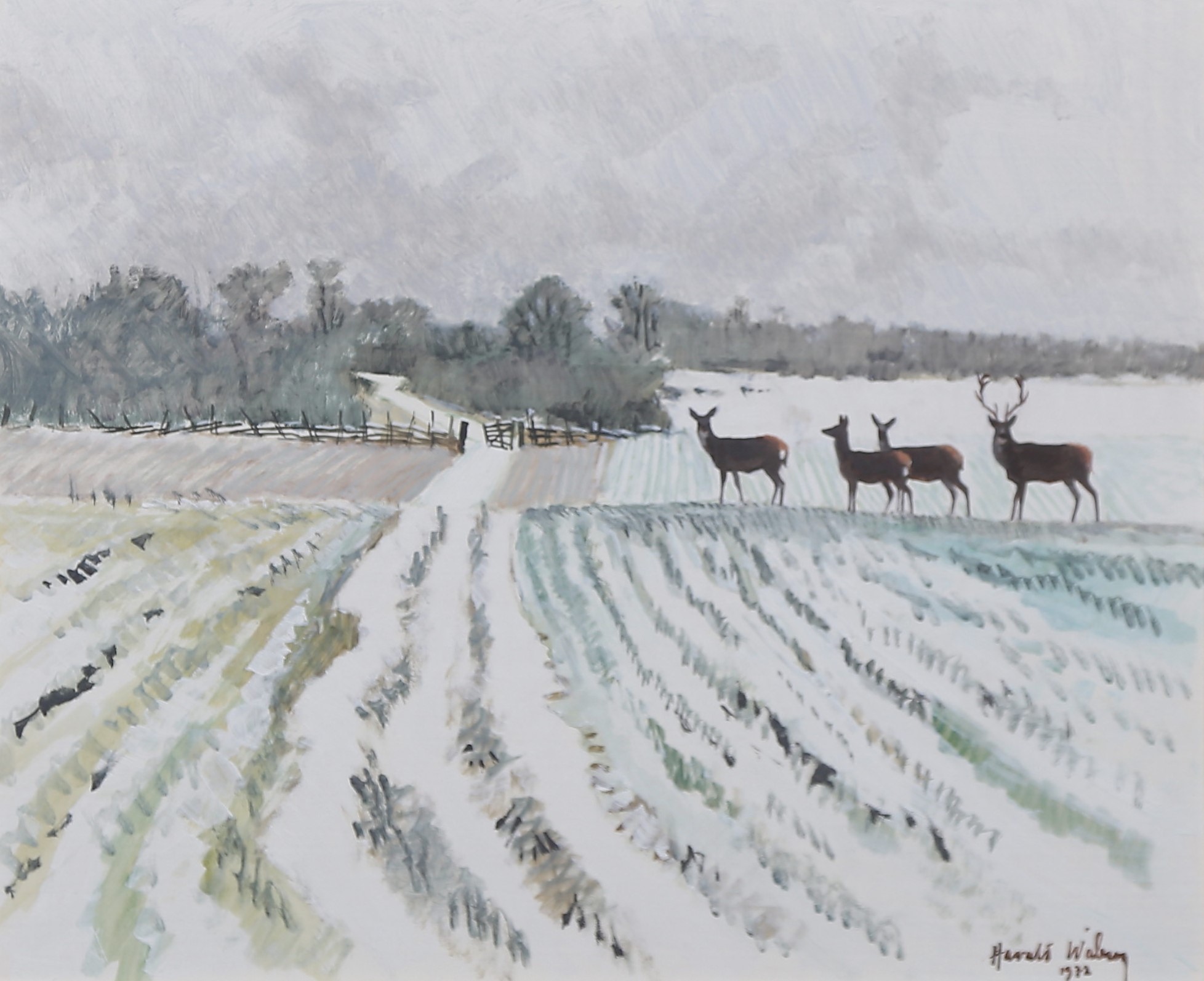
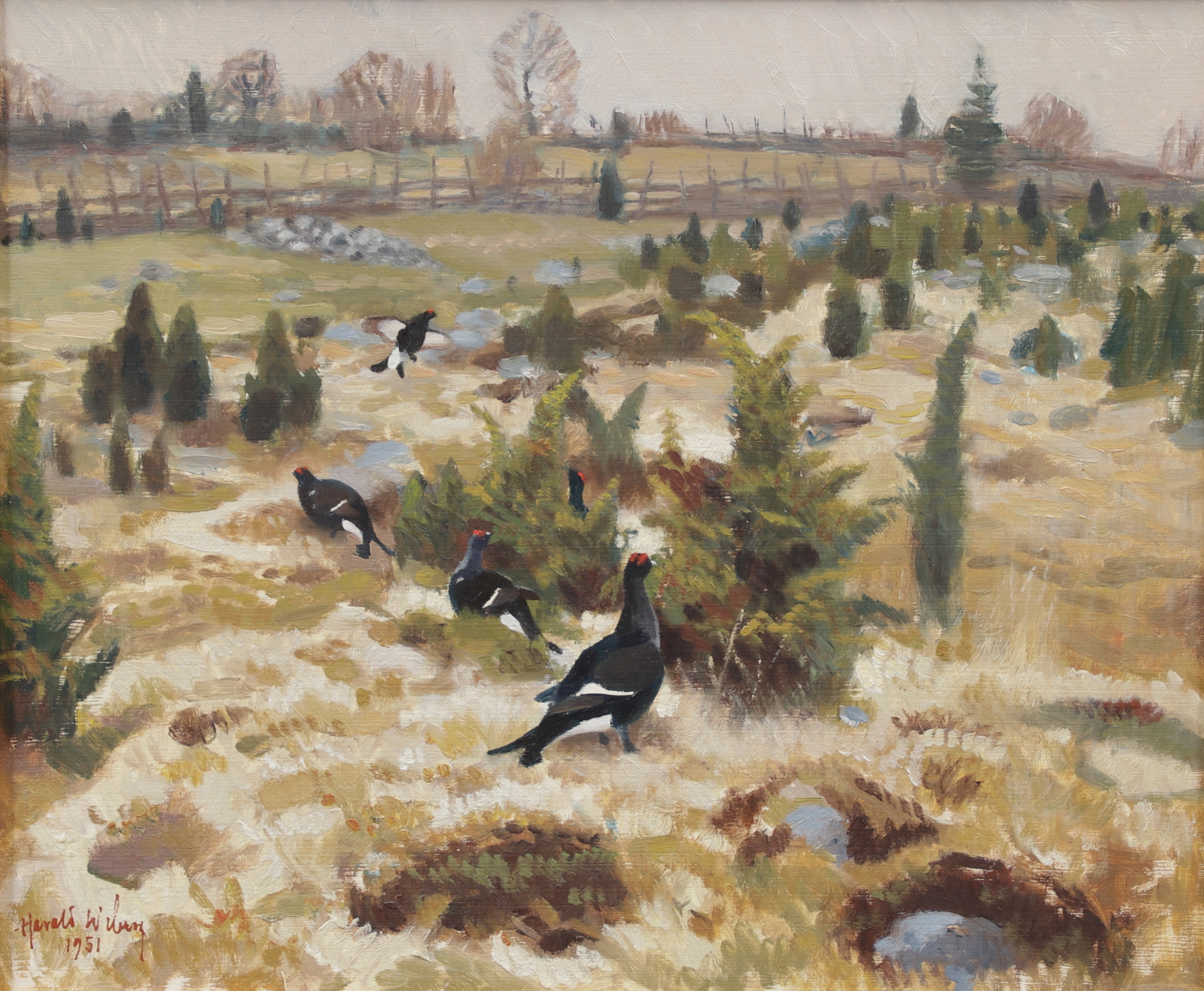
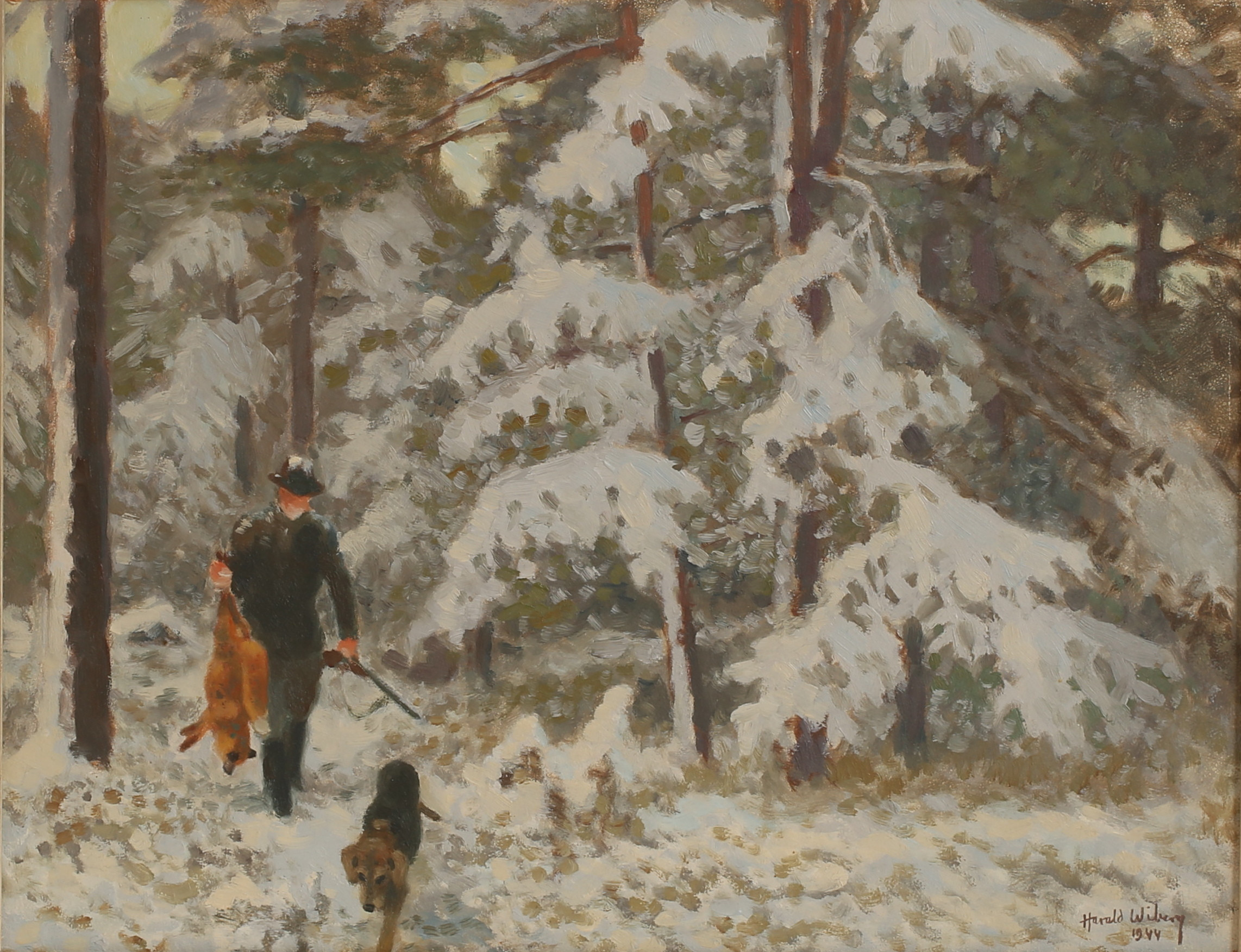
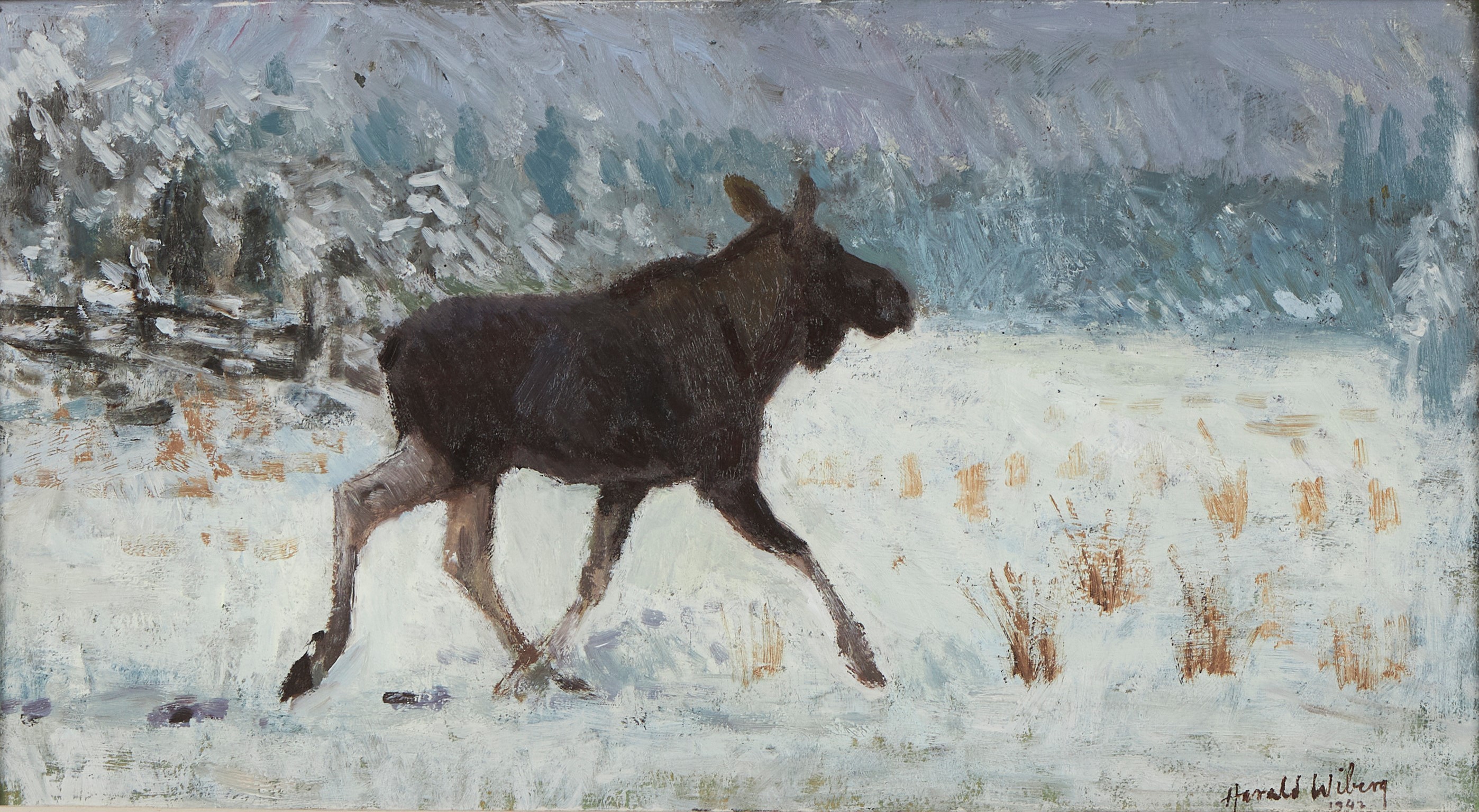
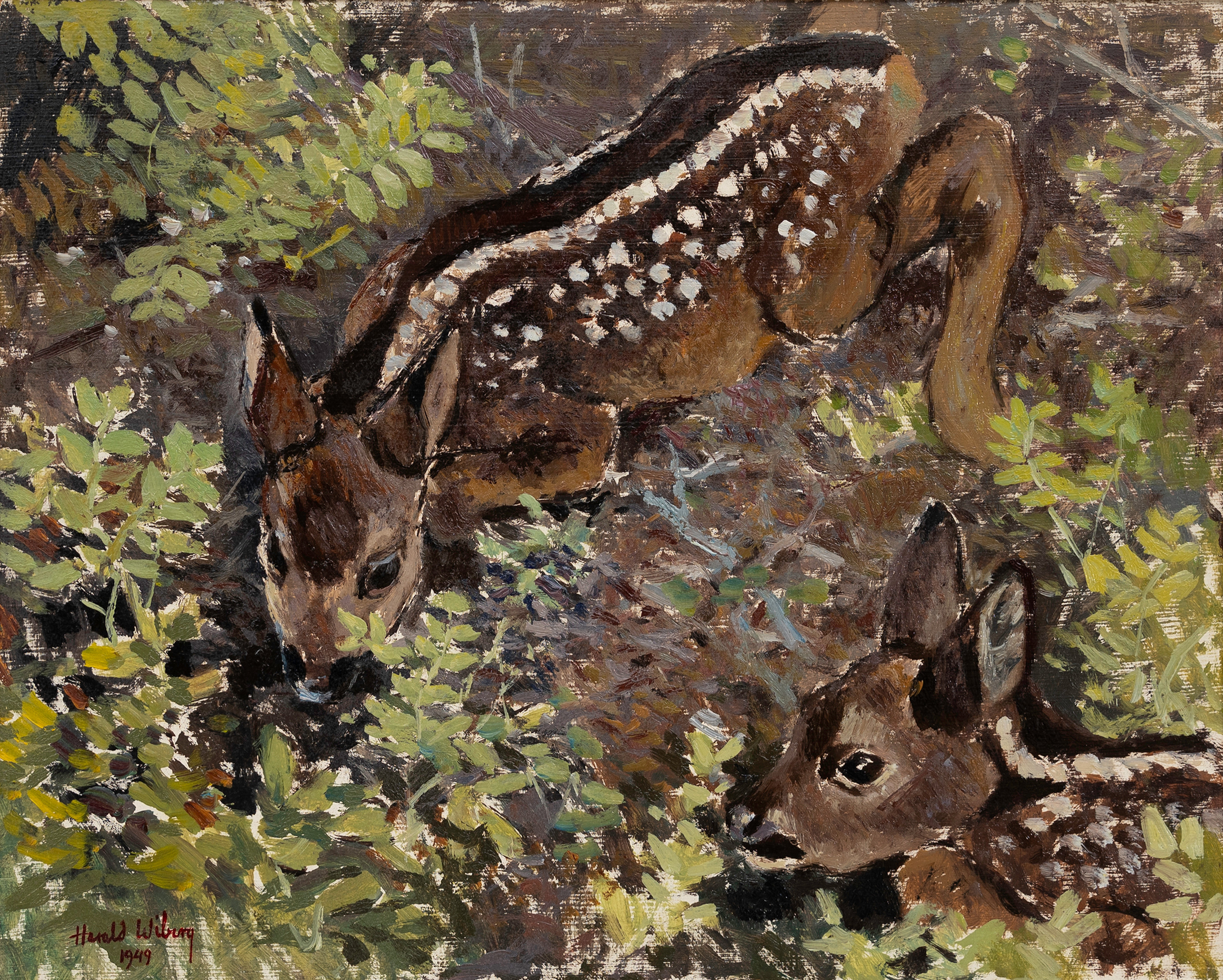
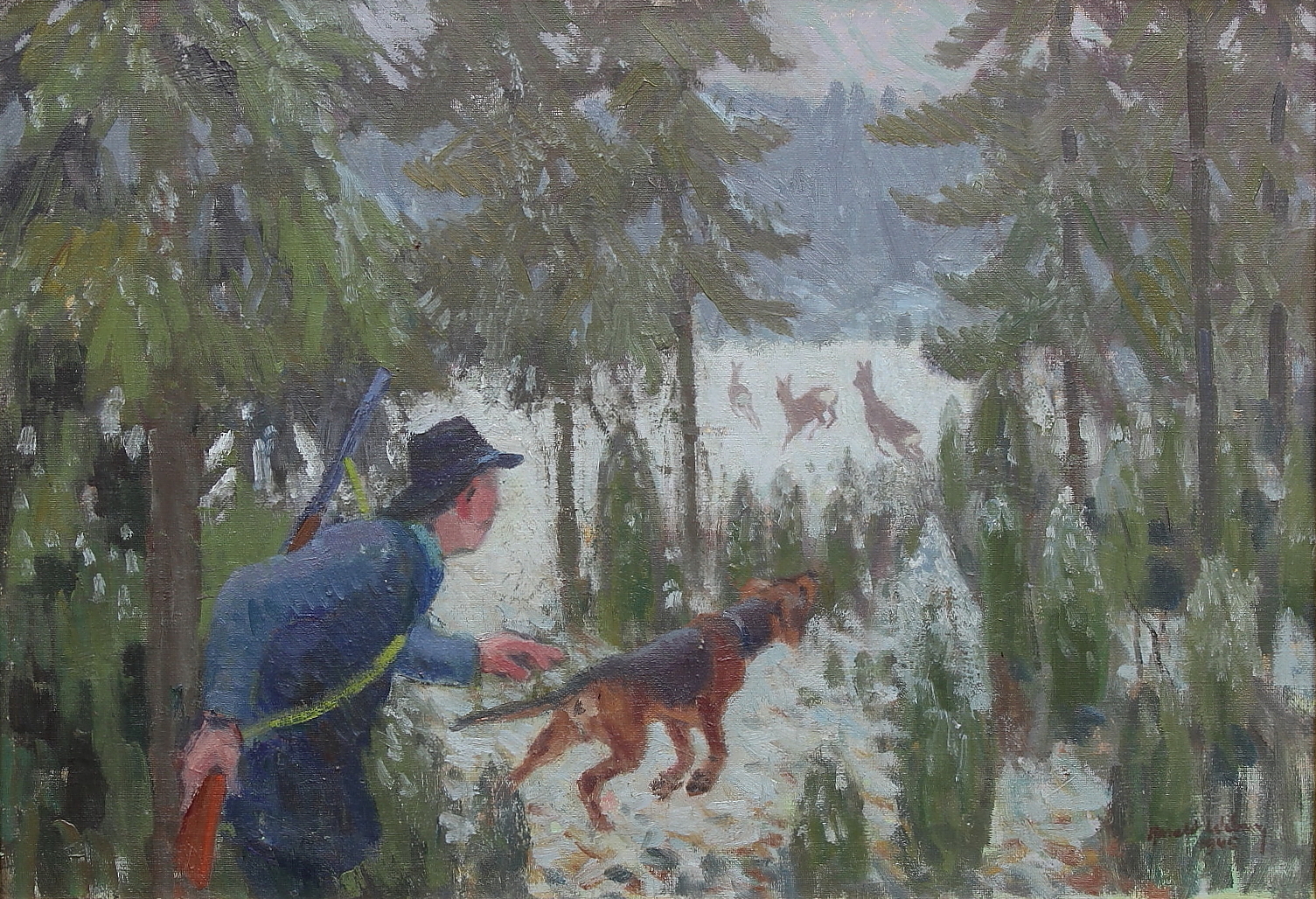
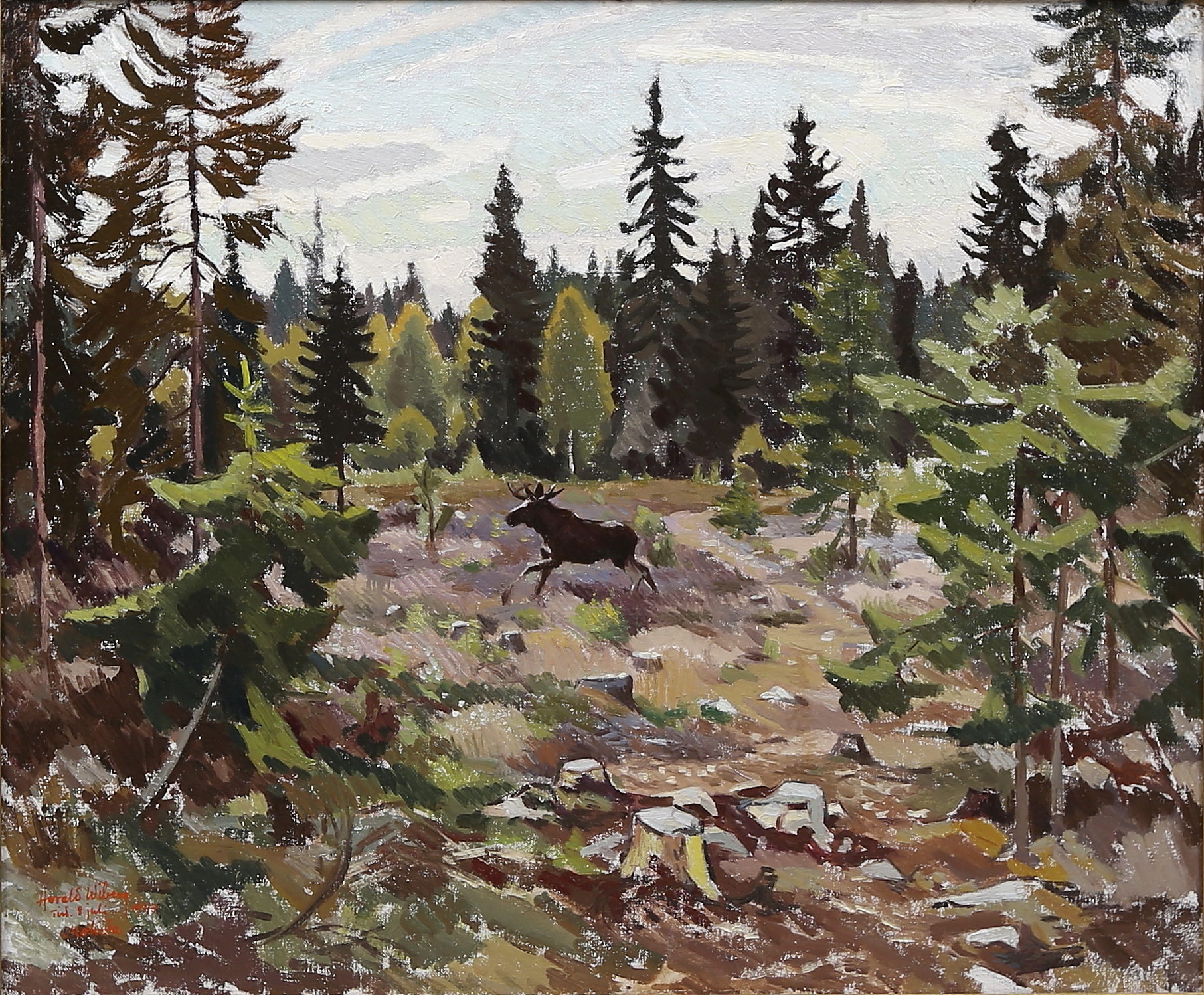
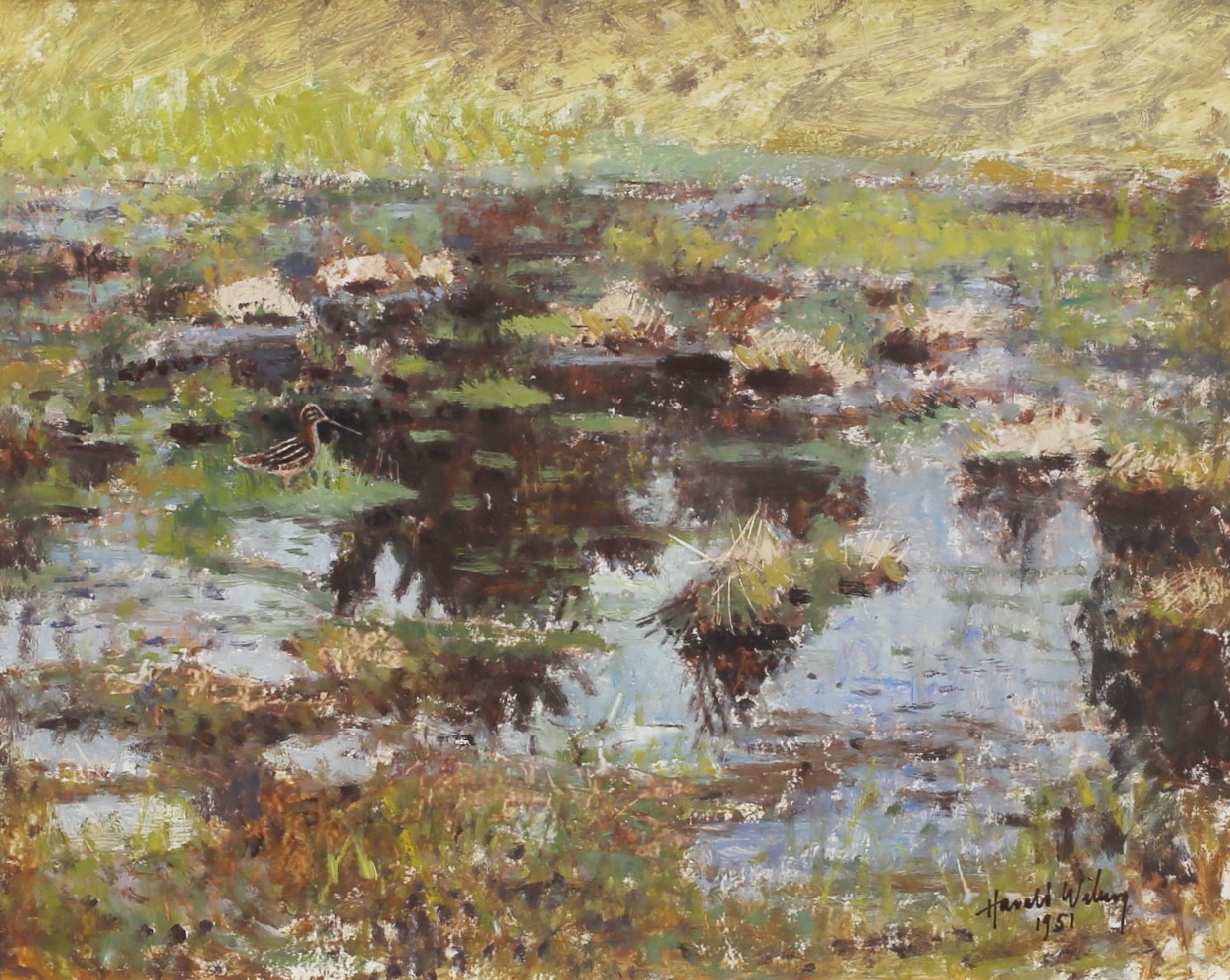
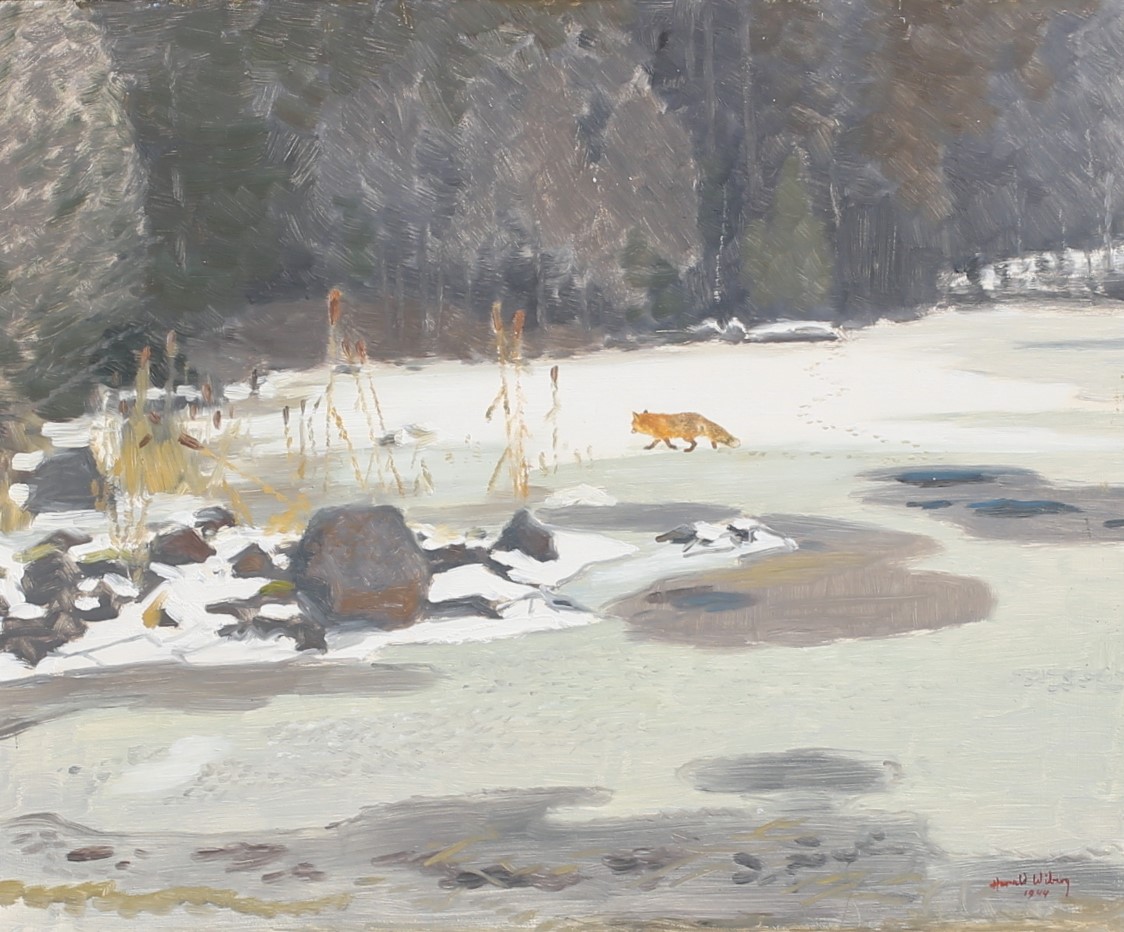
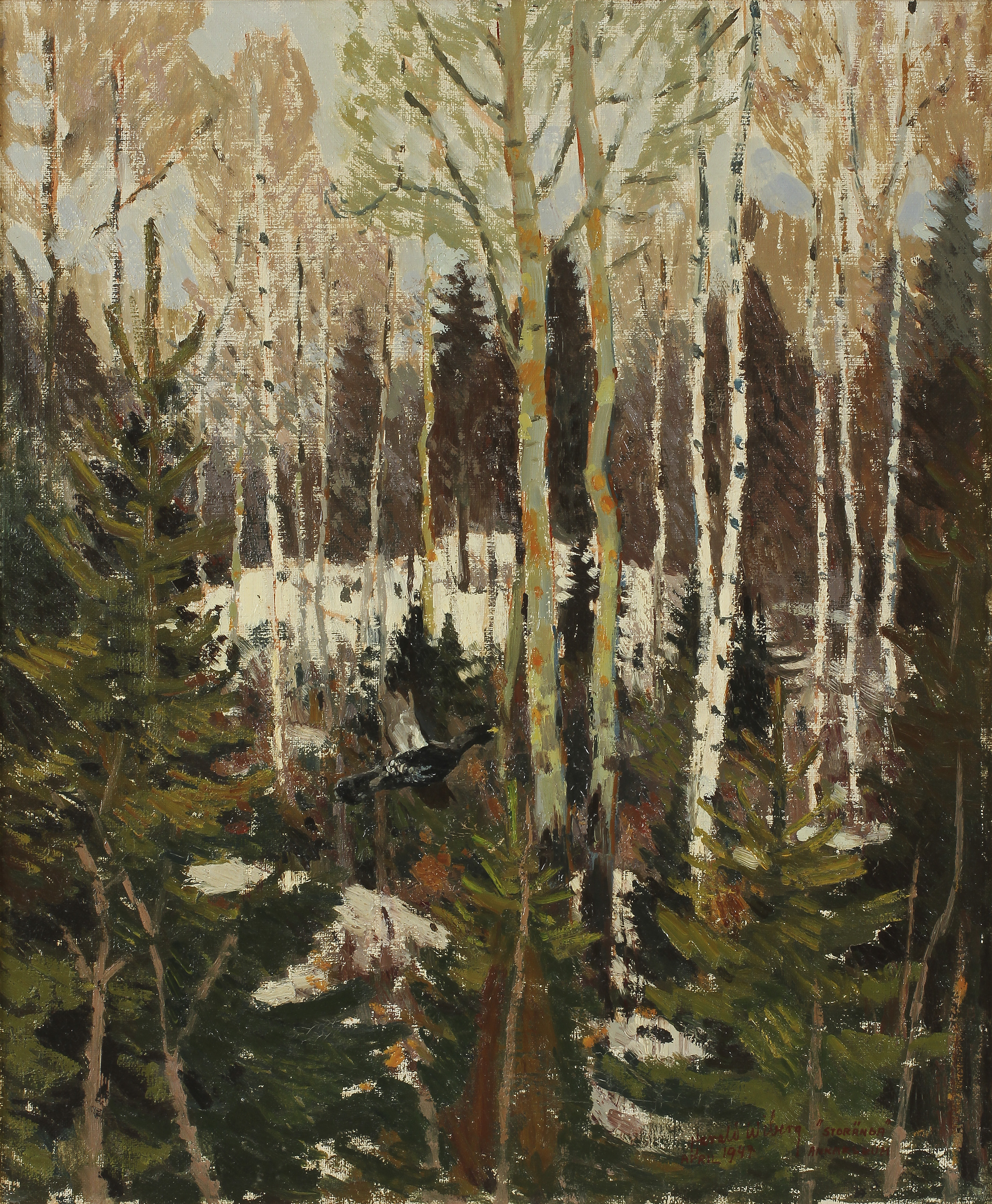
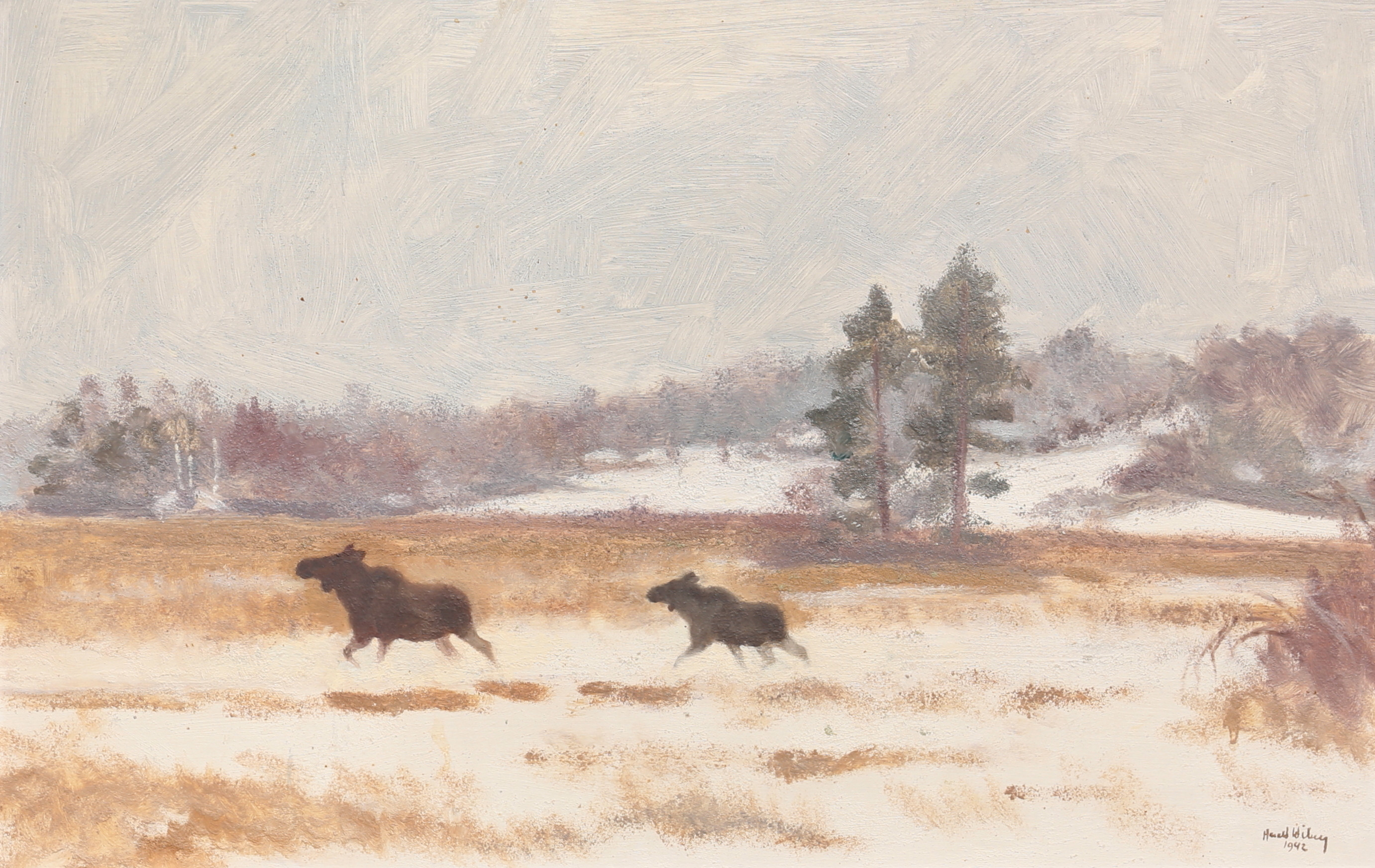
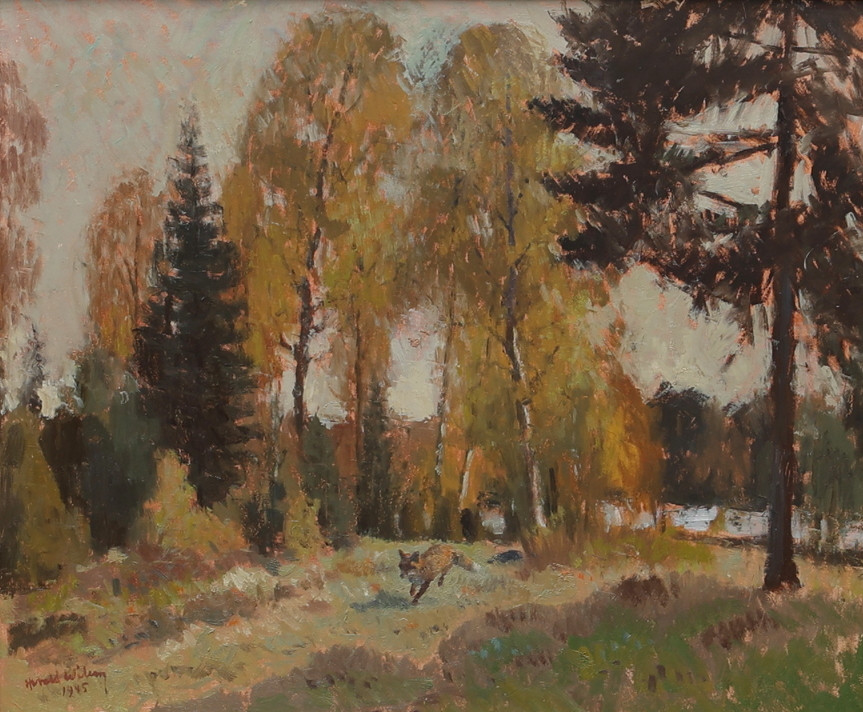
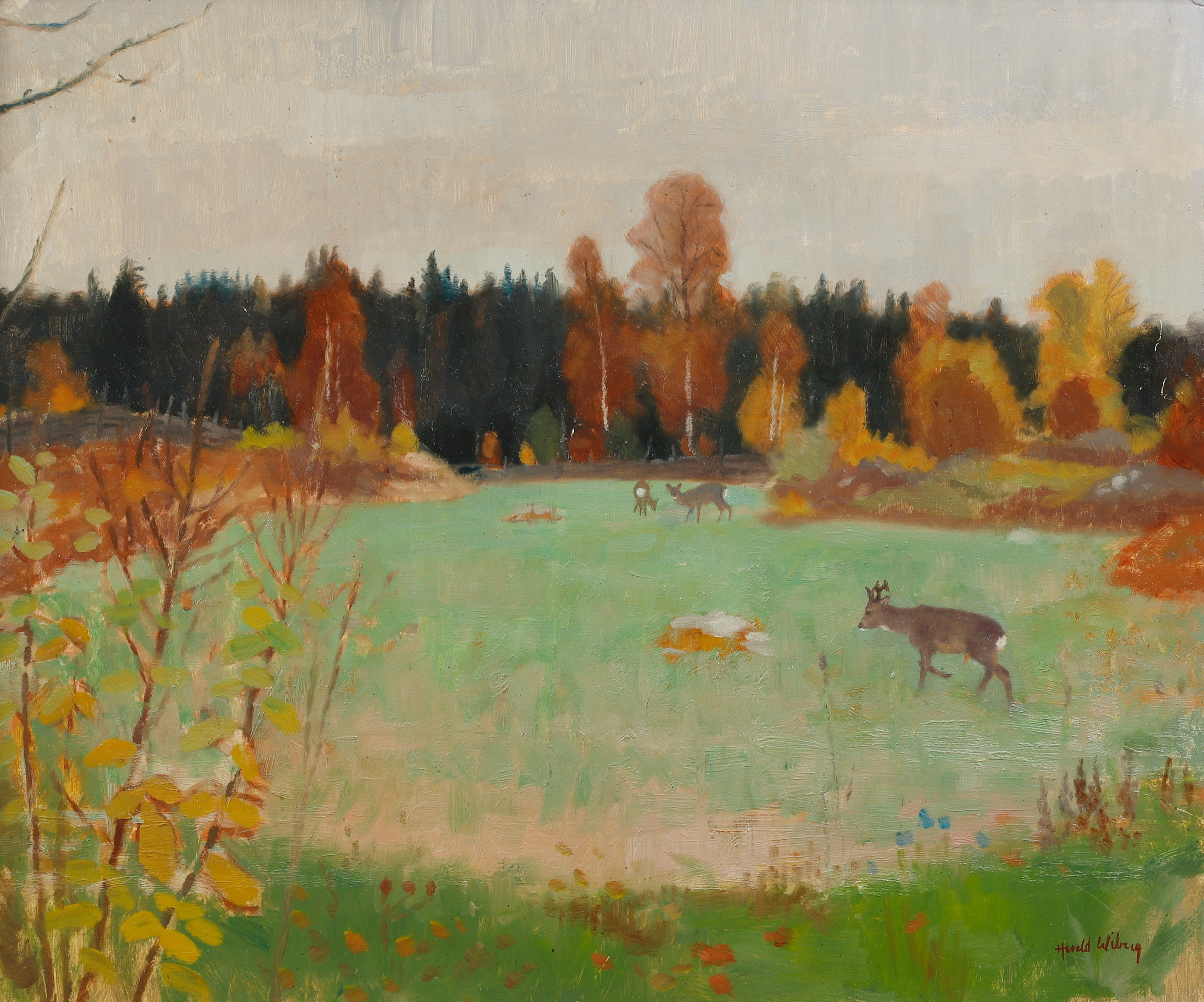
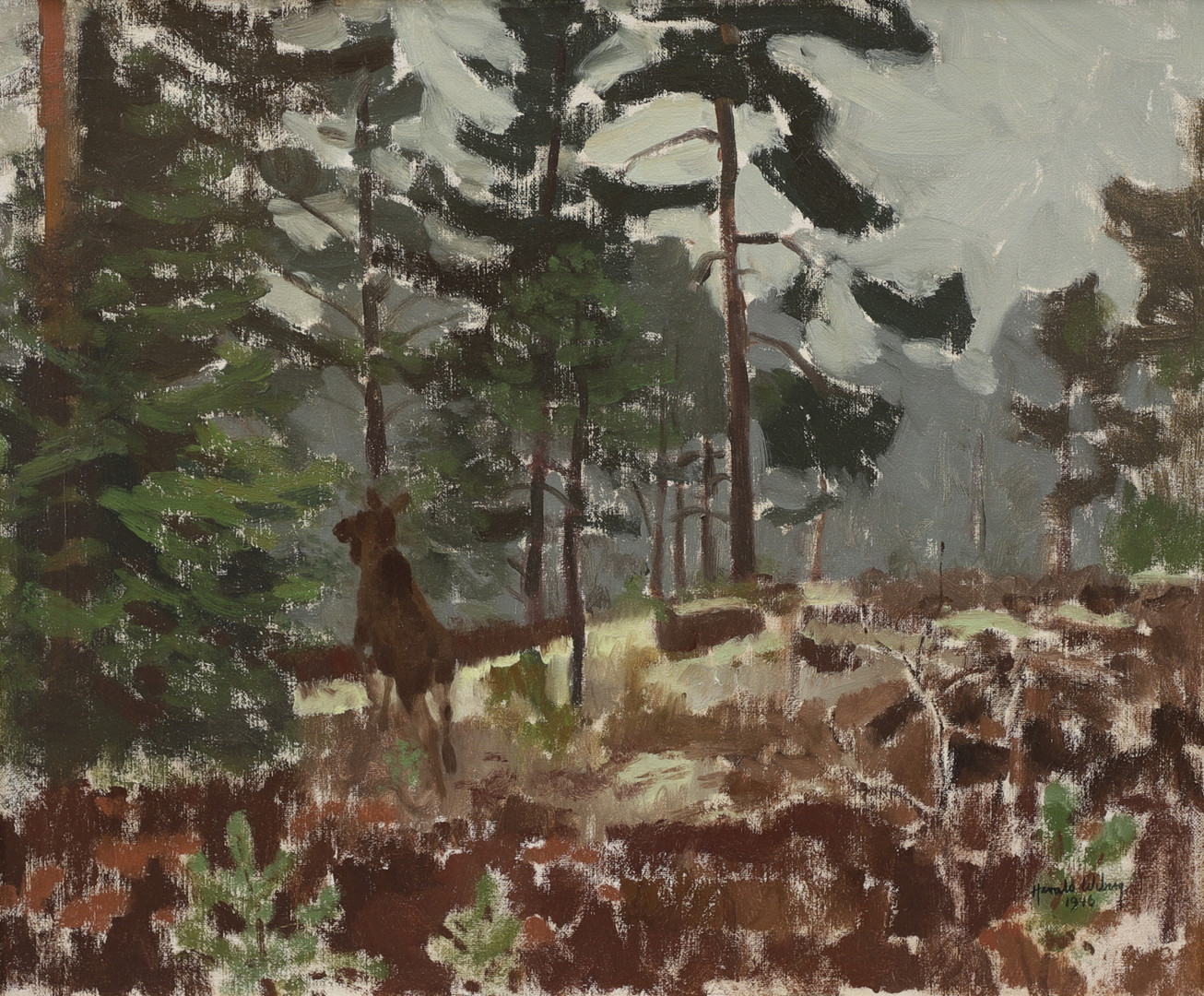
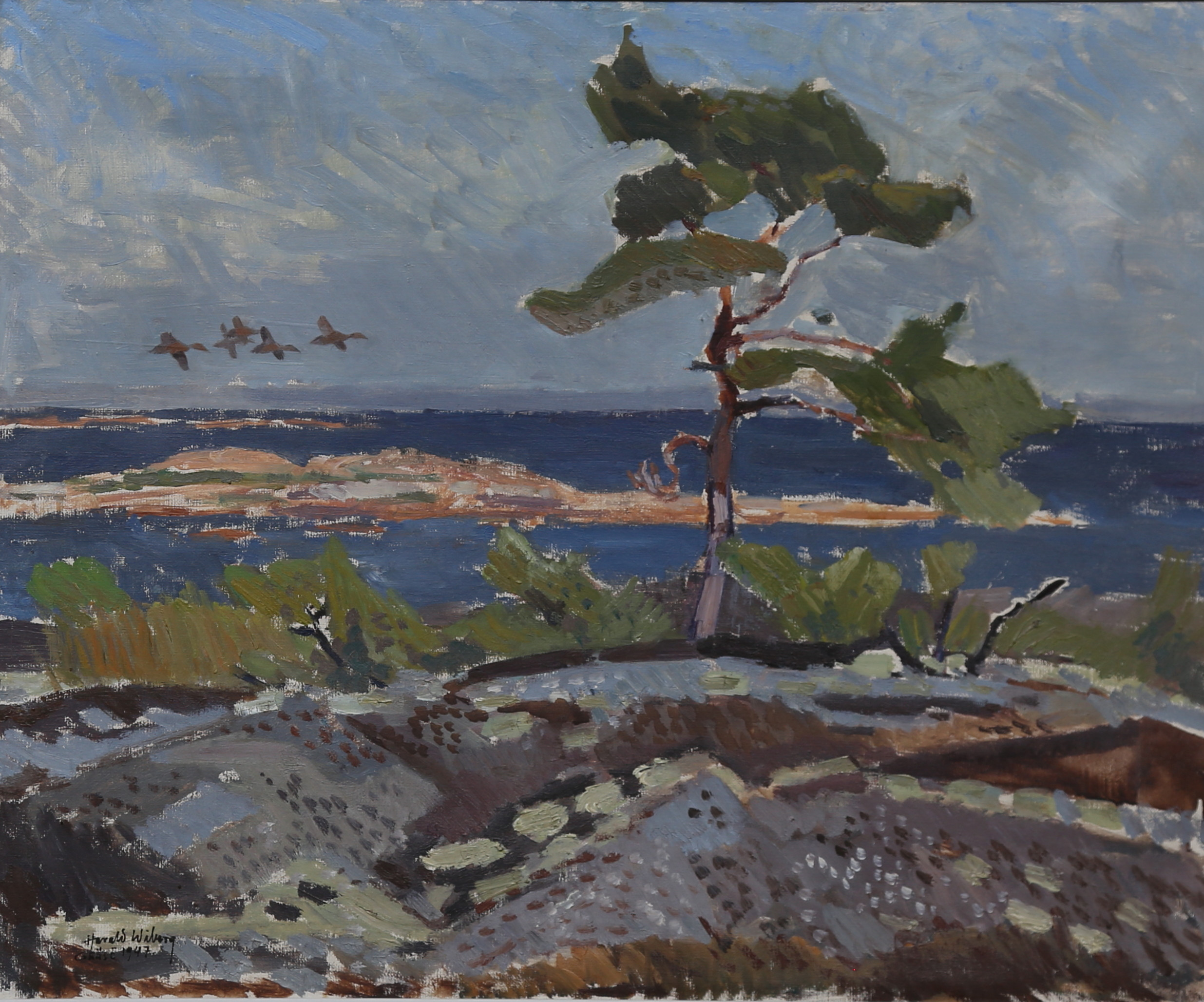
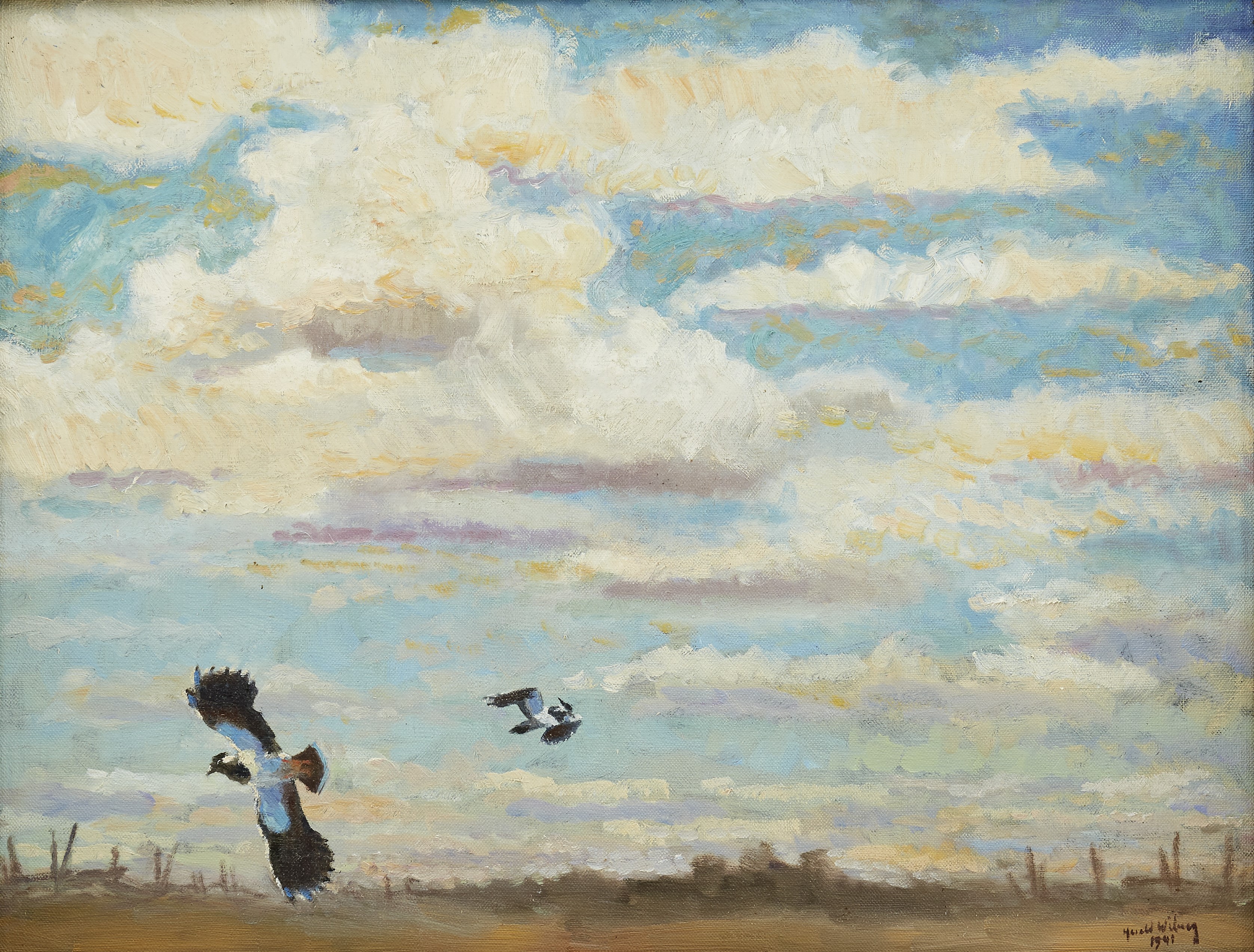
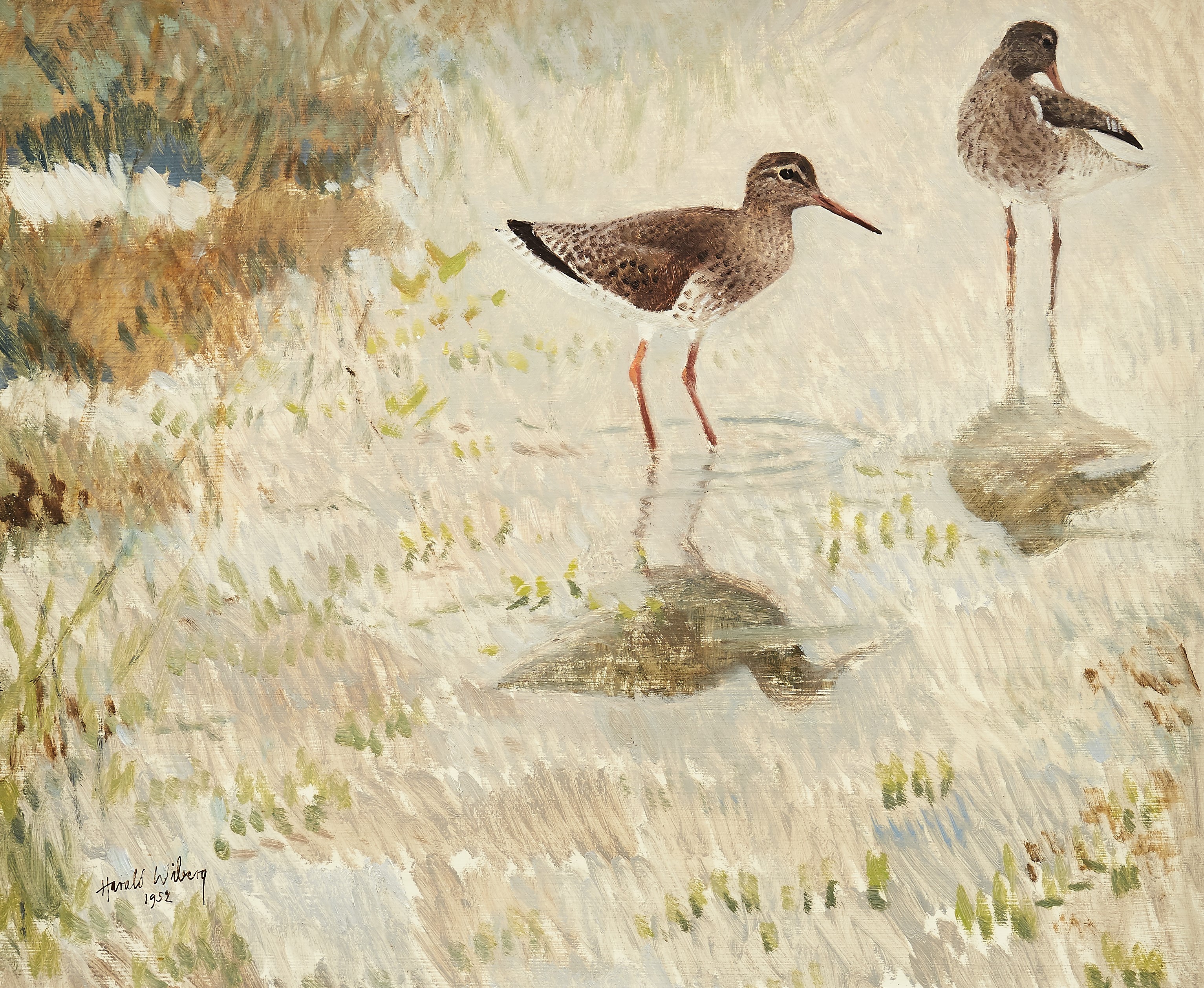
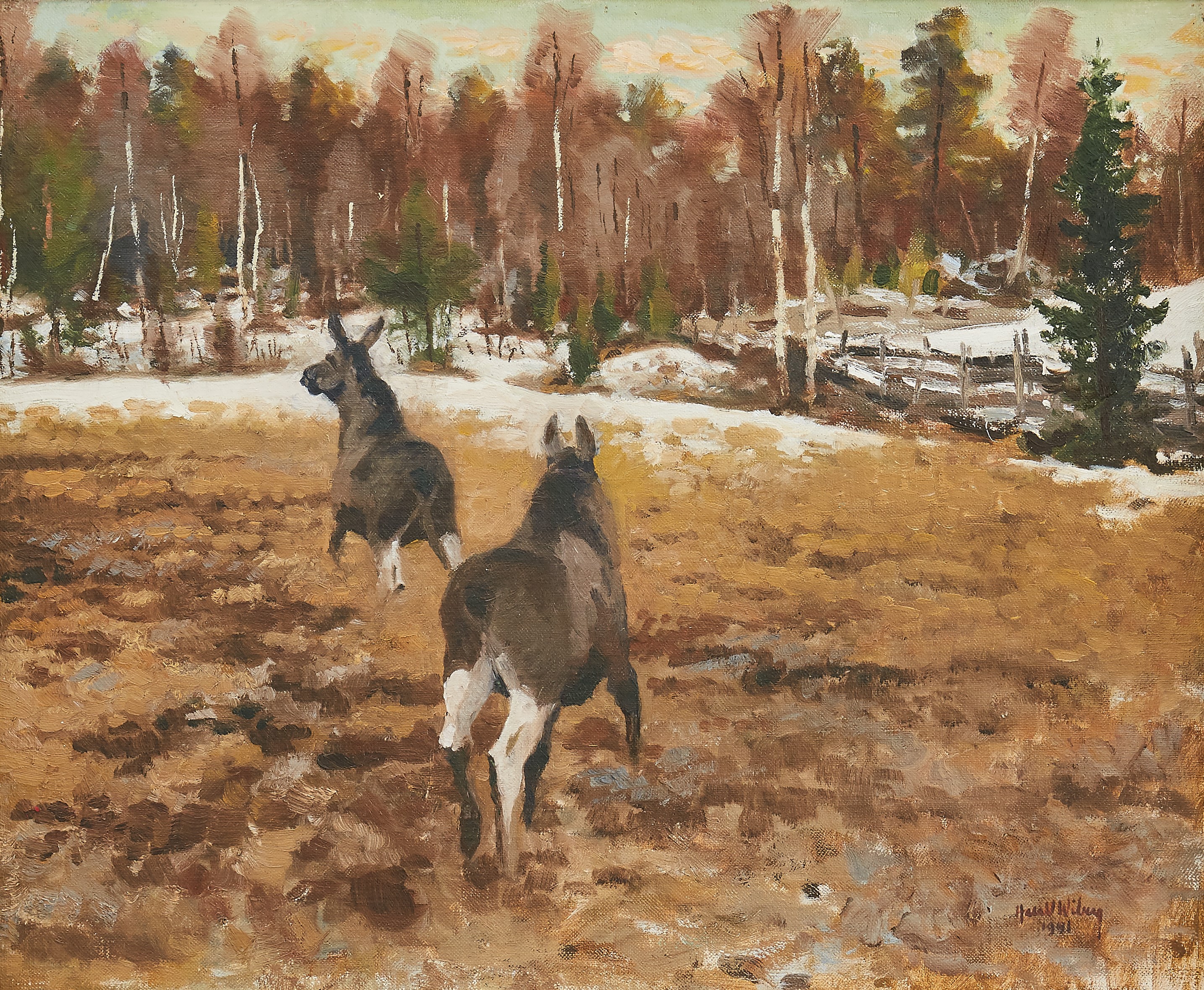
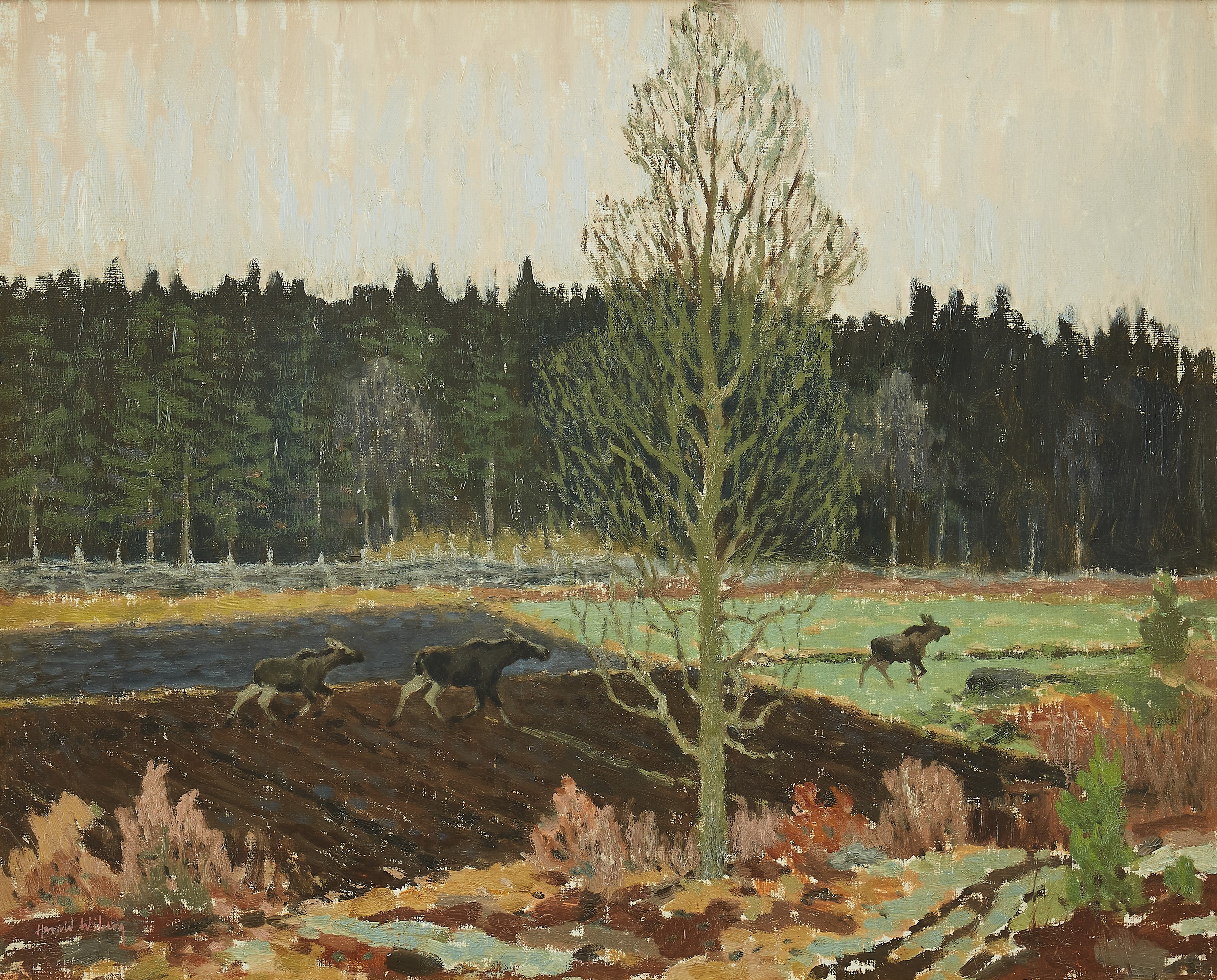
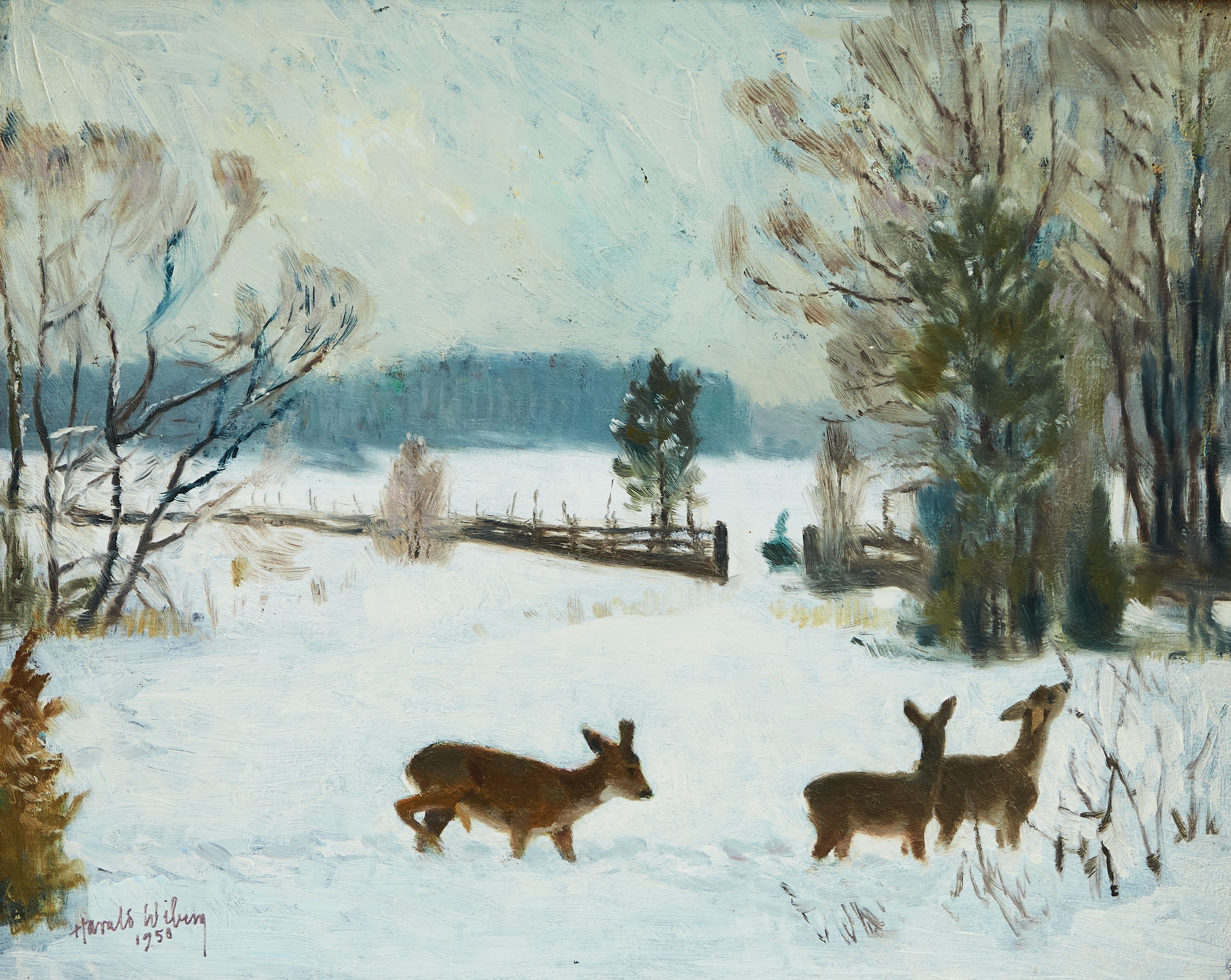
Harald also produced fantastic oil paintings which captured nature and wildlife in action with more depth. His oil paintings often feature serene winter scenes, capturing the quiet beauty and subtle color variations of snow-covered forests and fields. Wiberg’s technique is distinguished by his delicate brushwork and a keen sense of light and shadow, which lend a luminous quality to his paintings. His ability to convey the tranquility and isolation of nature through his use of soft, muted tones and intricate textures sets his work apart.
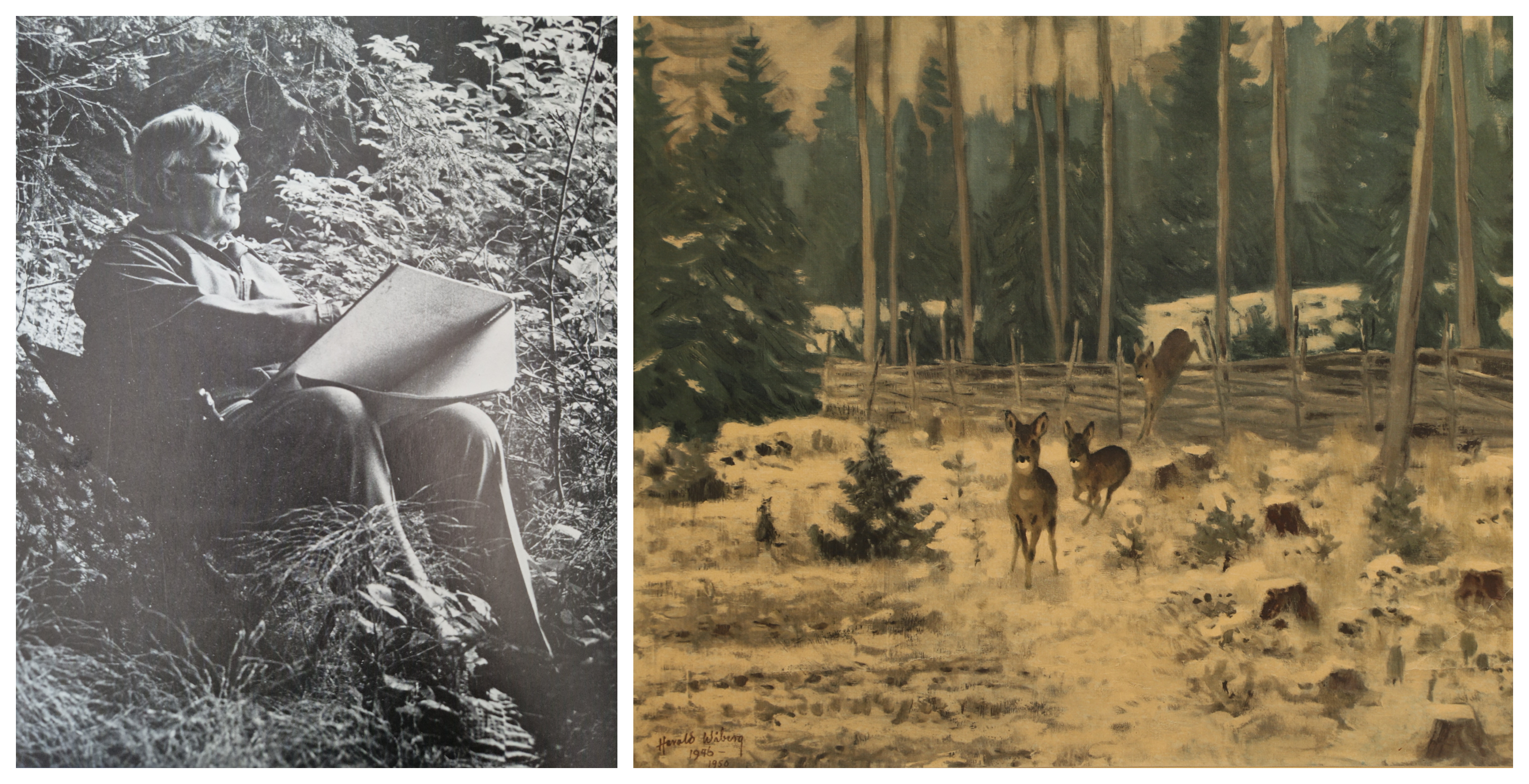
Wiberg’s style is both realistic and atmospheric, creating a sense of intimacy and nostalgia that resonates with viewers, making his paintings timeless and unique. A collection of his oil paintings can be seen below:
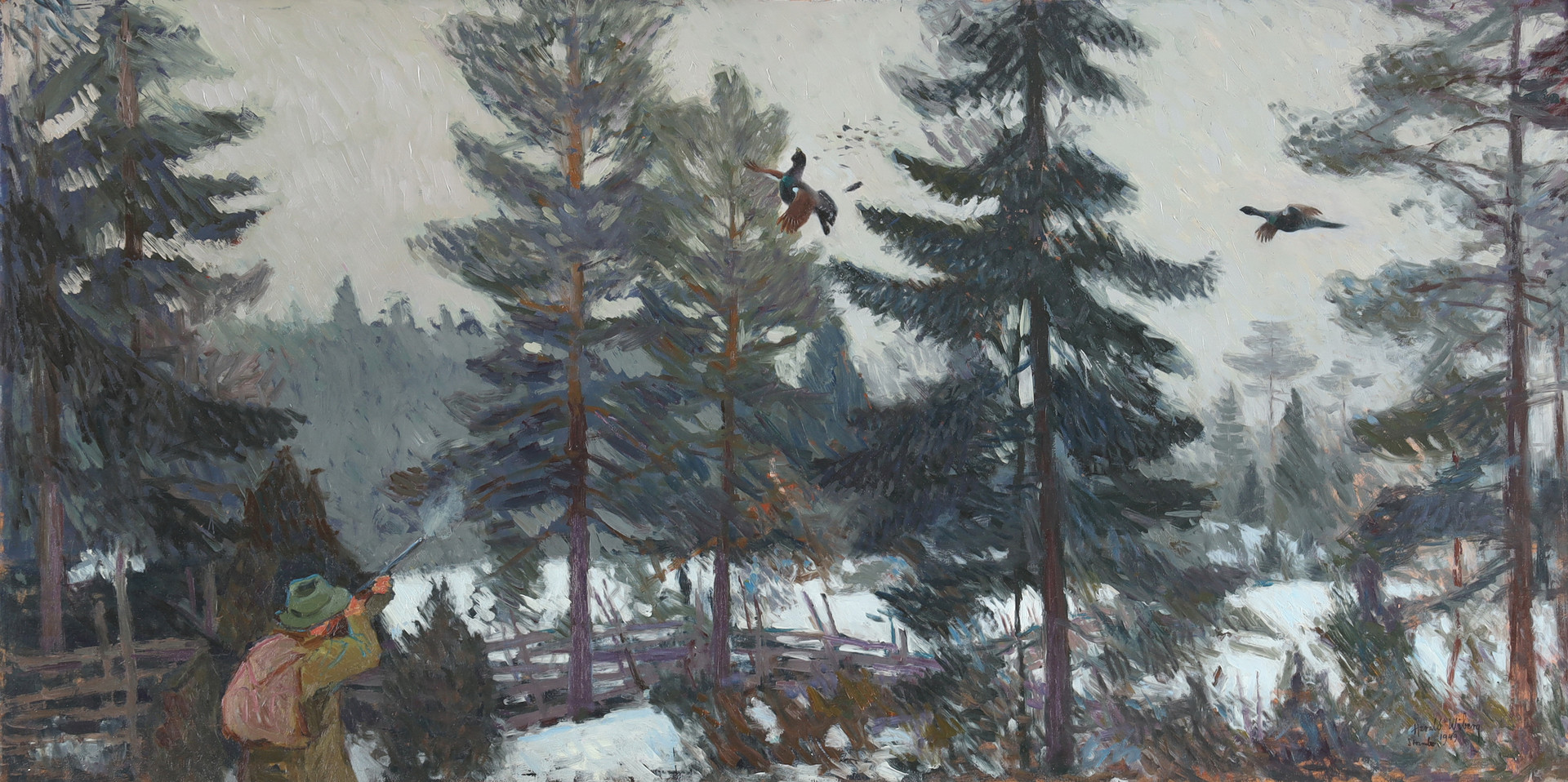
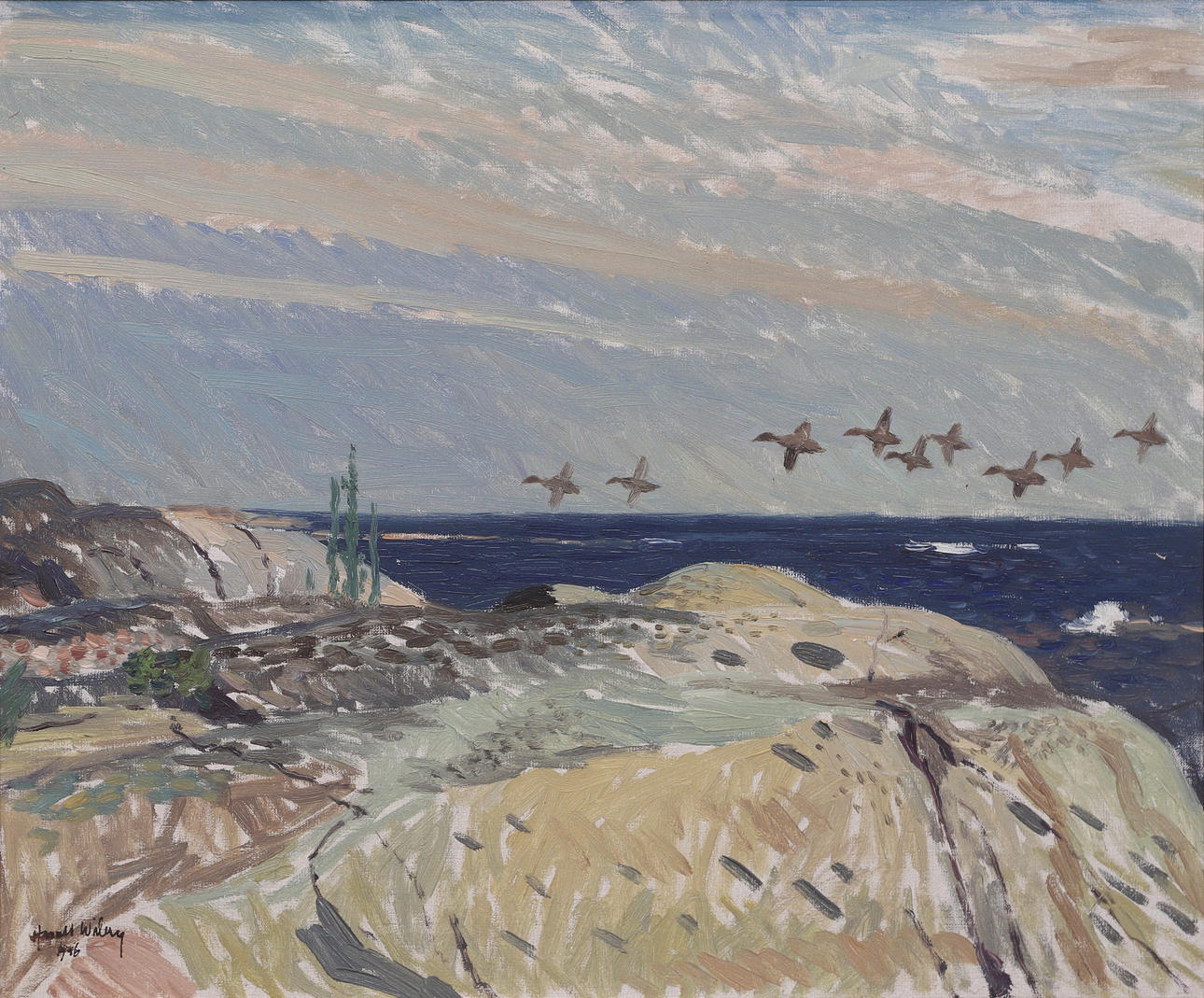
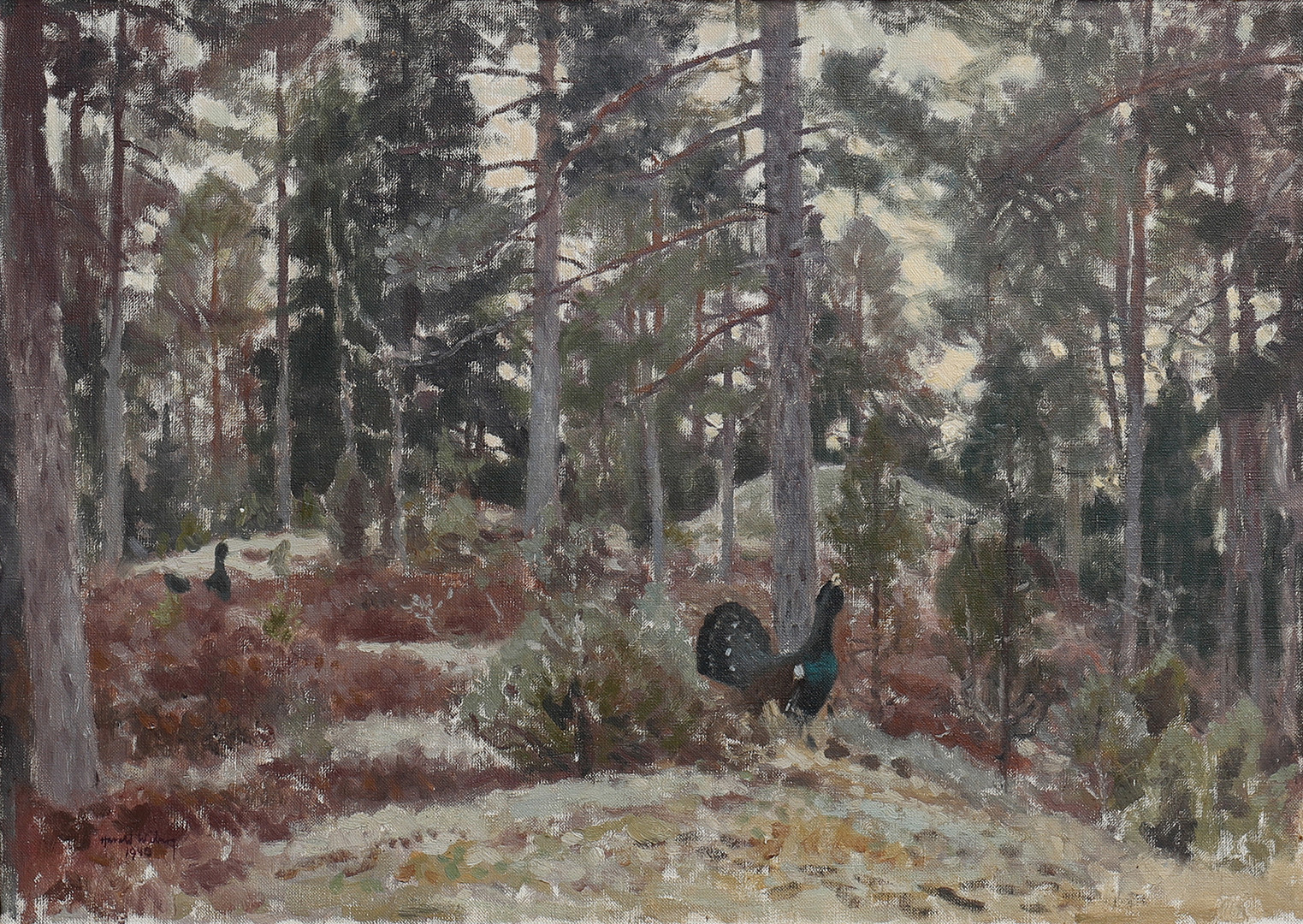
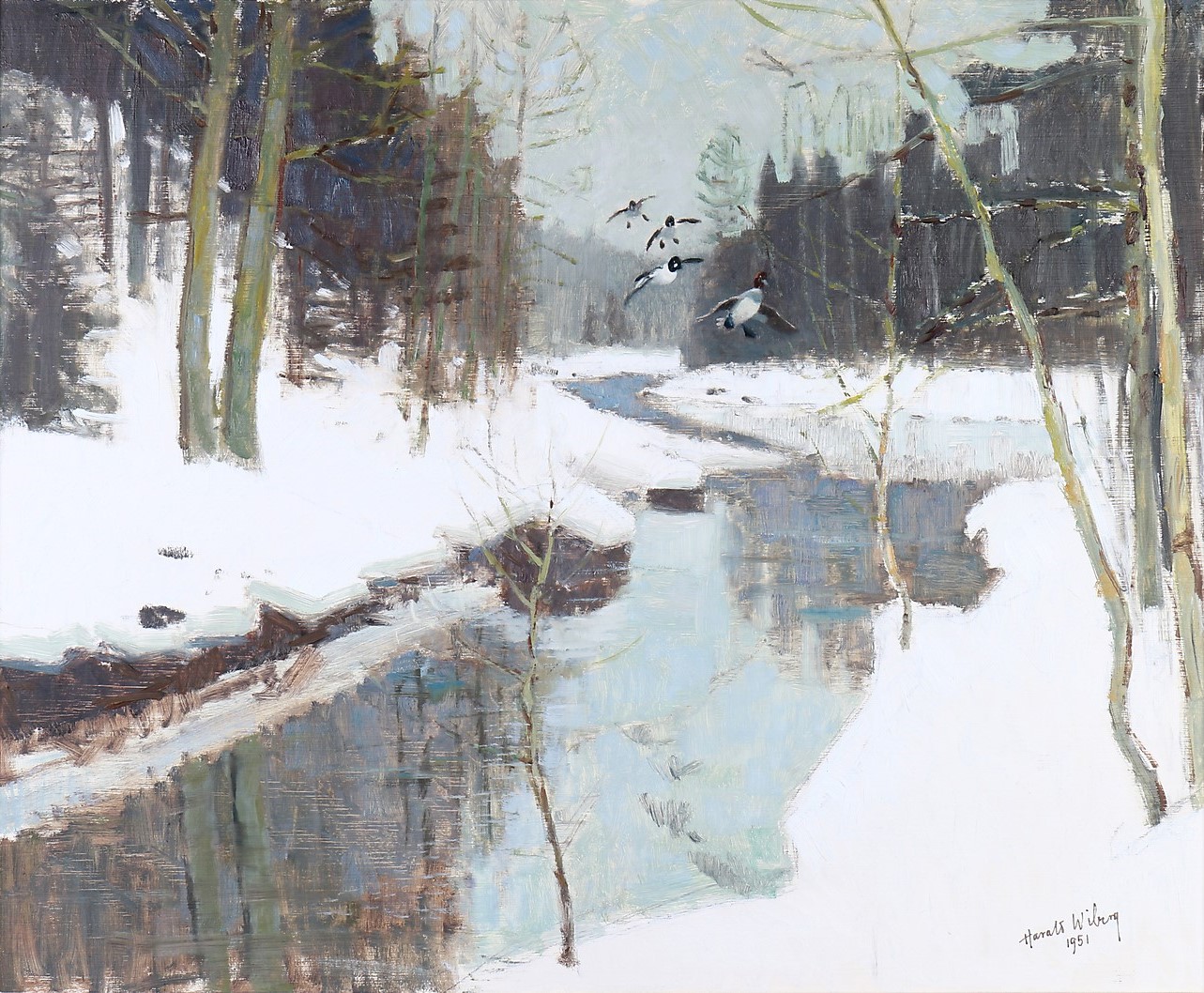
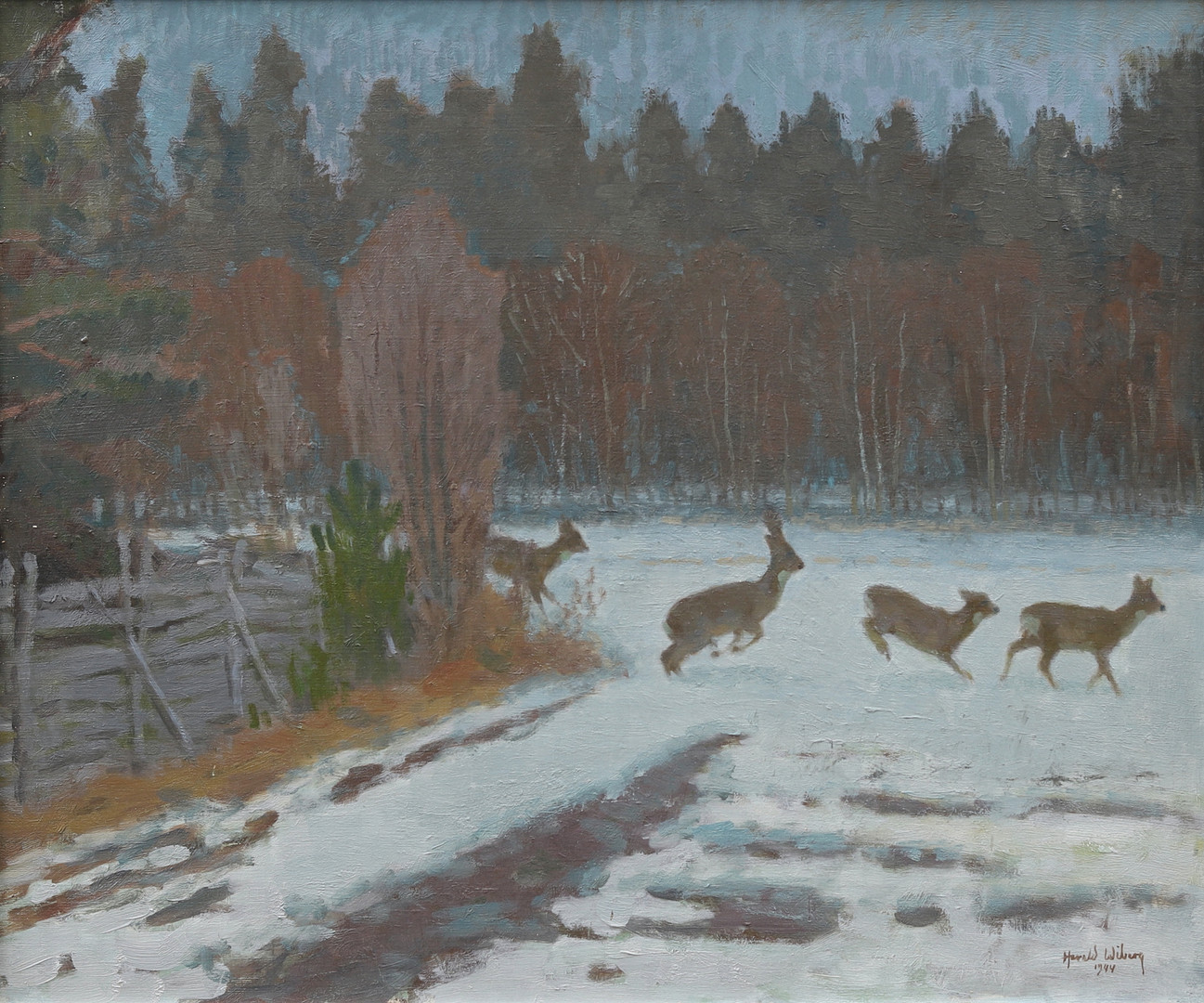
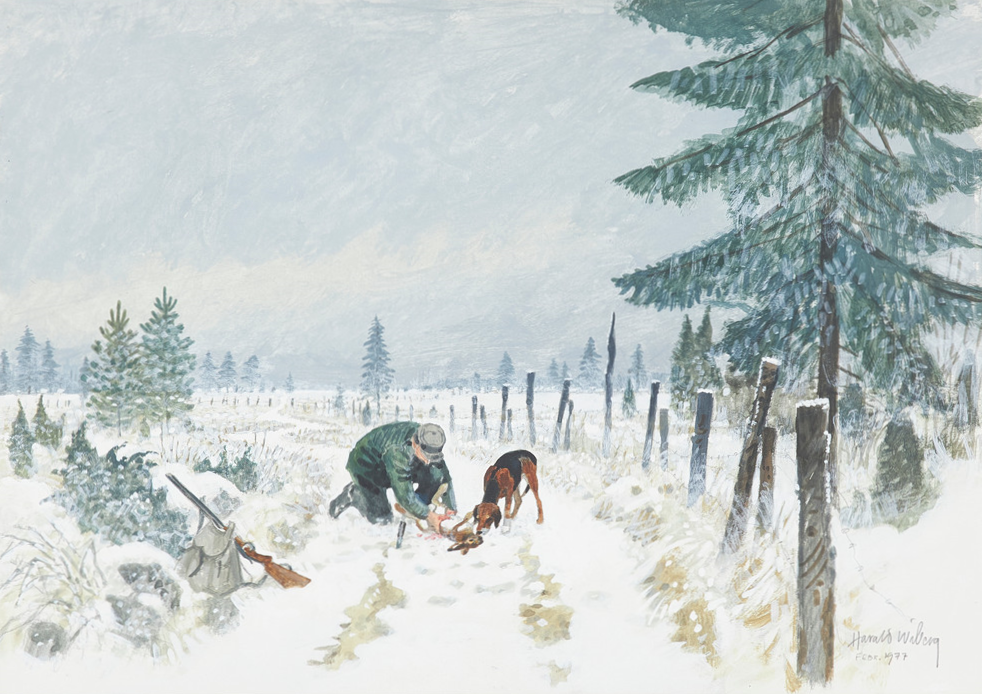
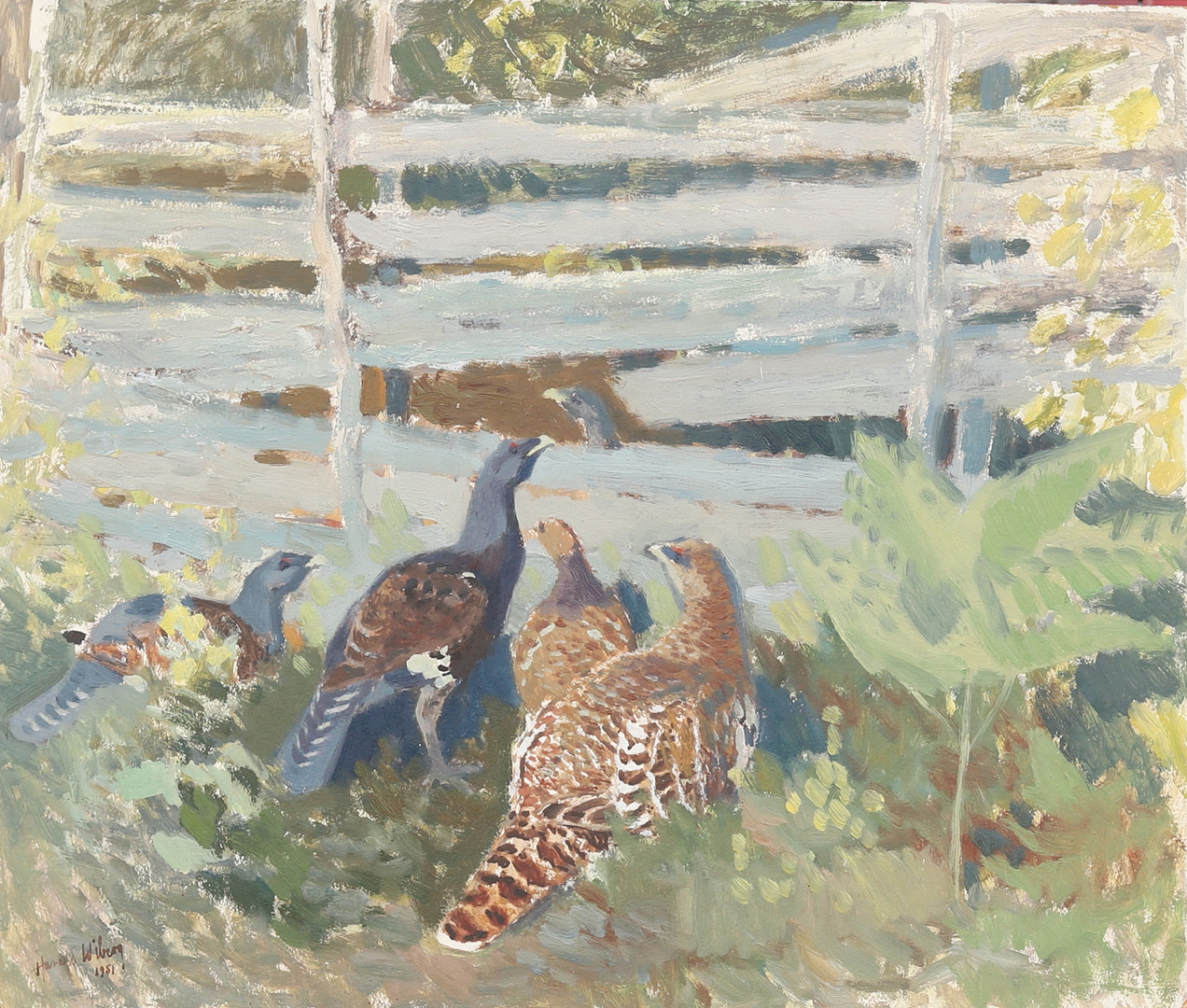
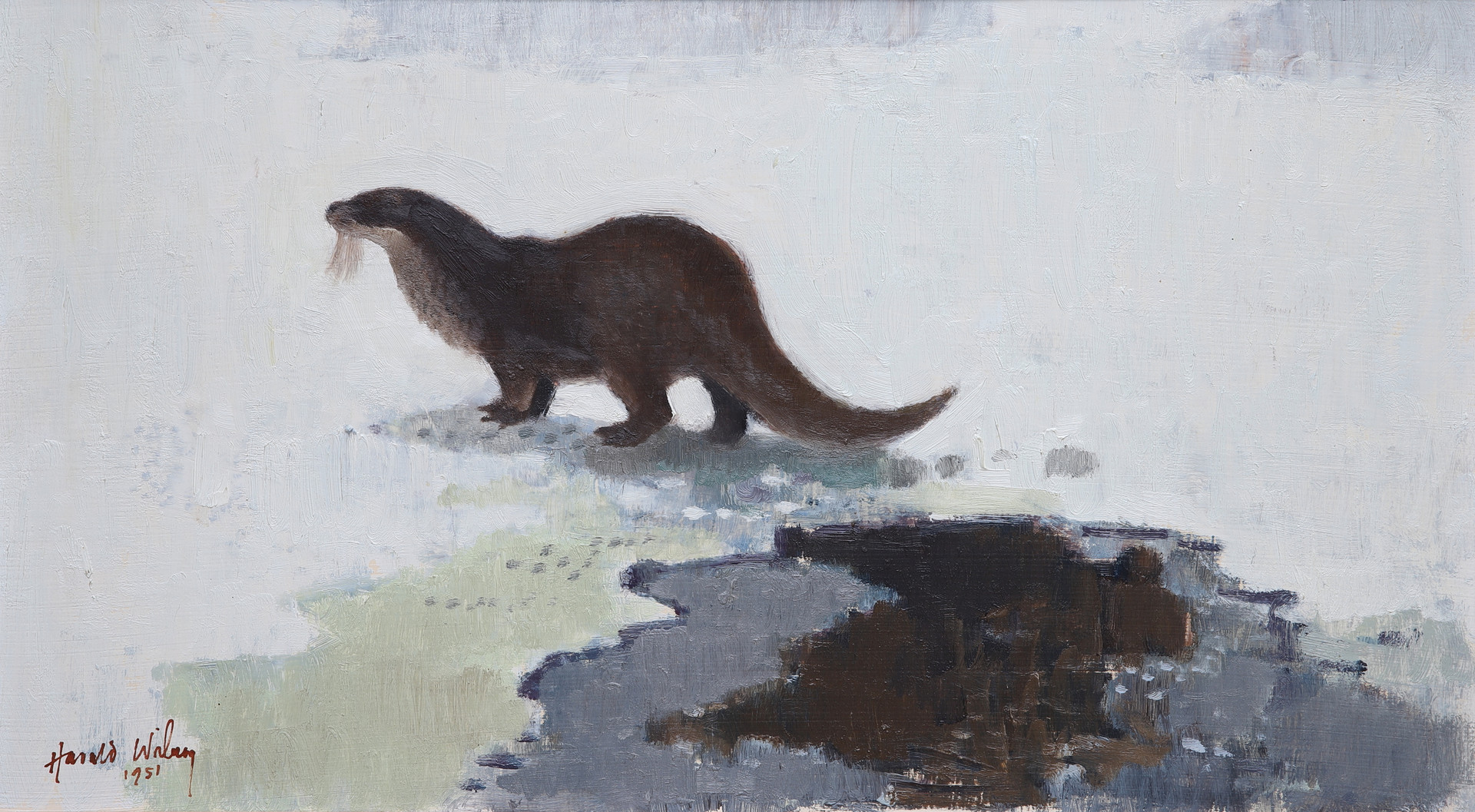

Pencil drawings
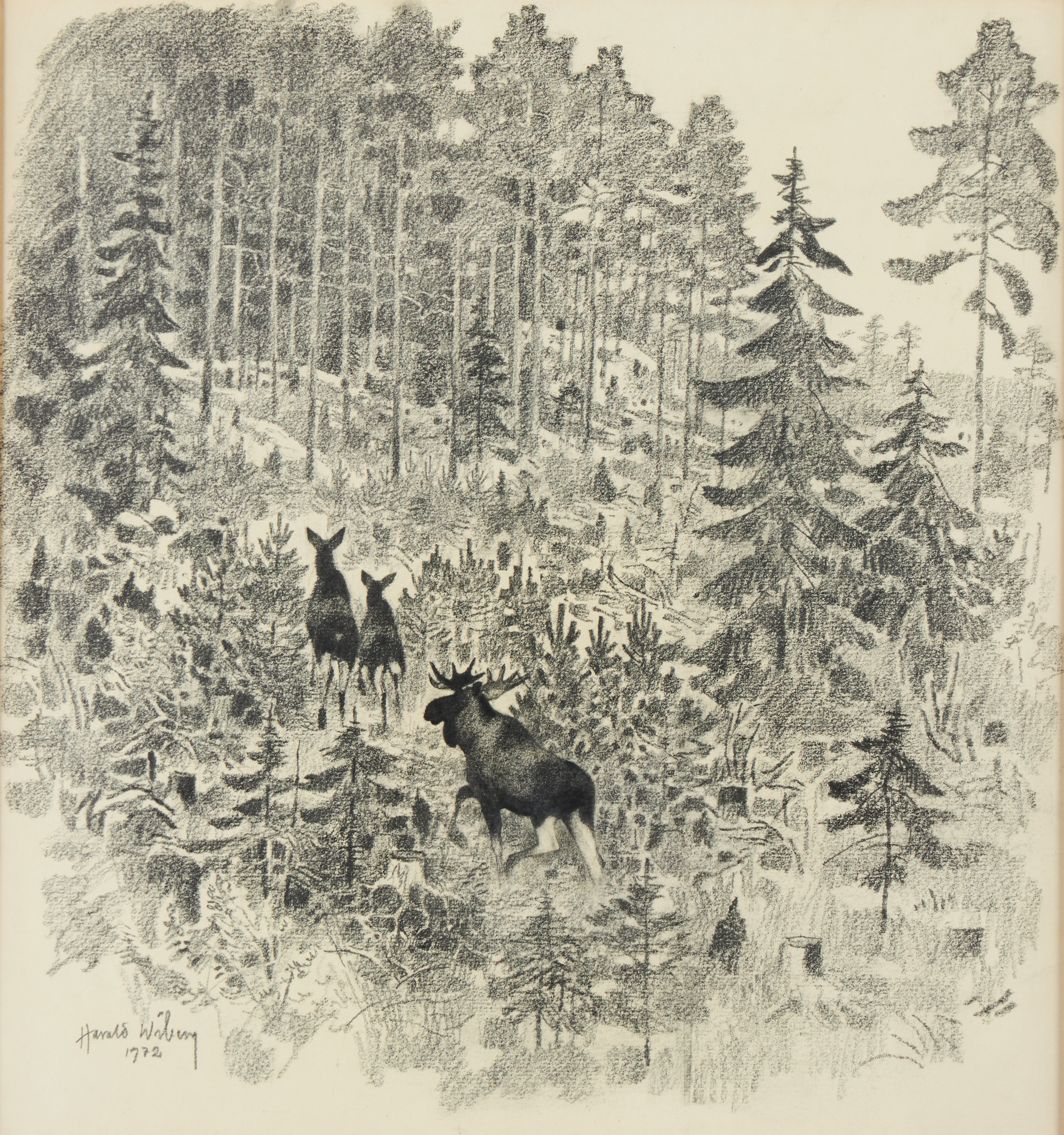
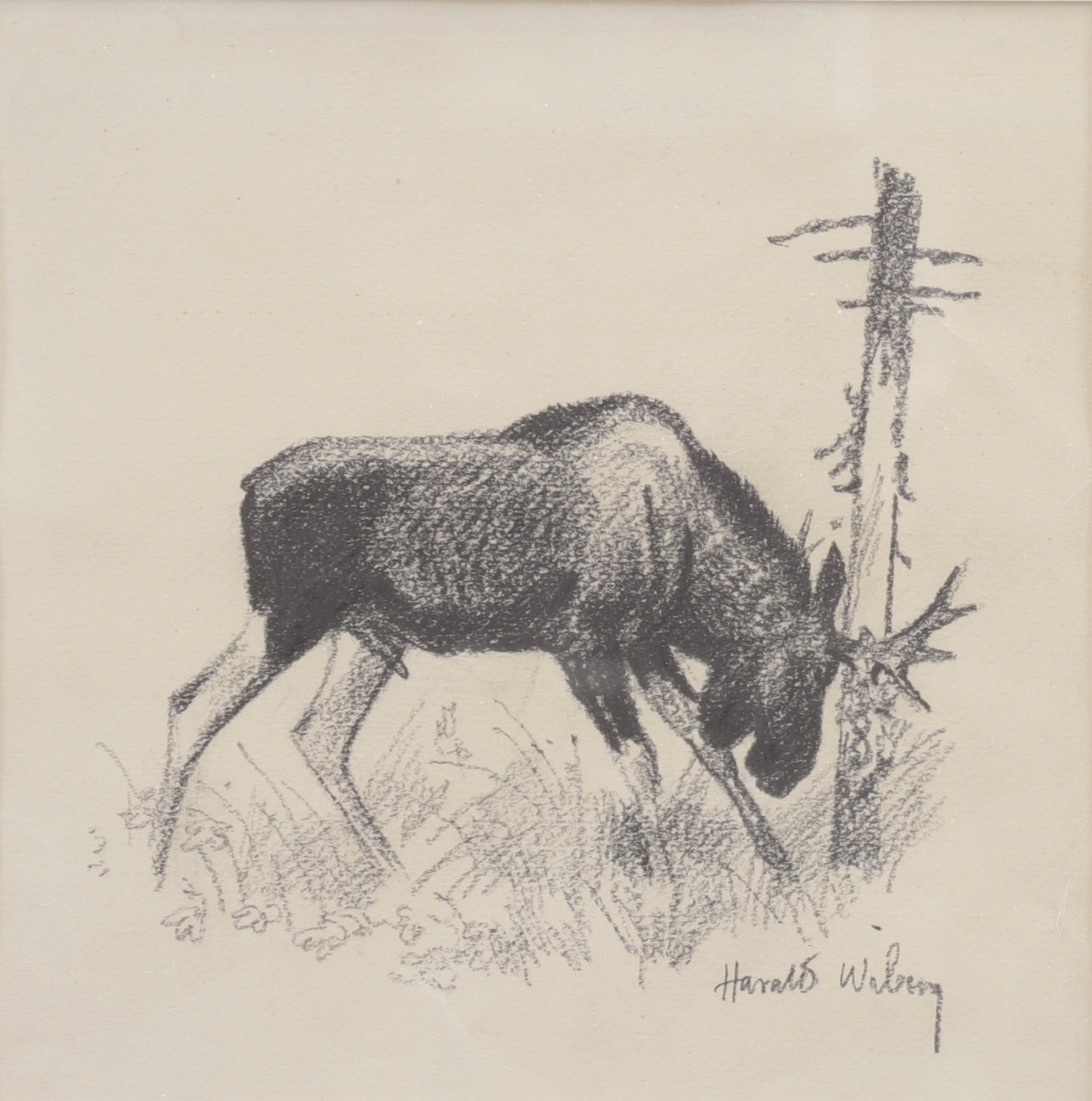
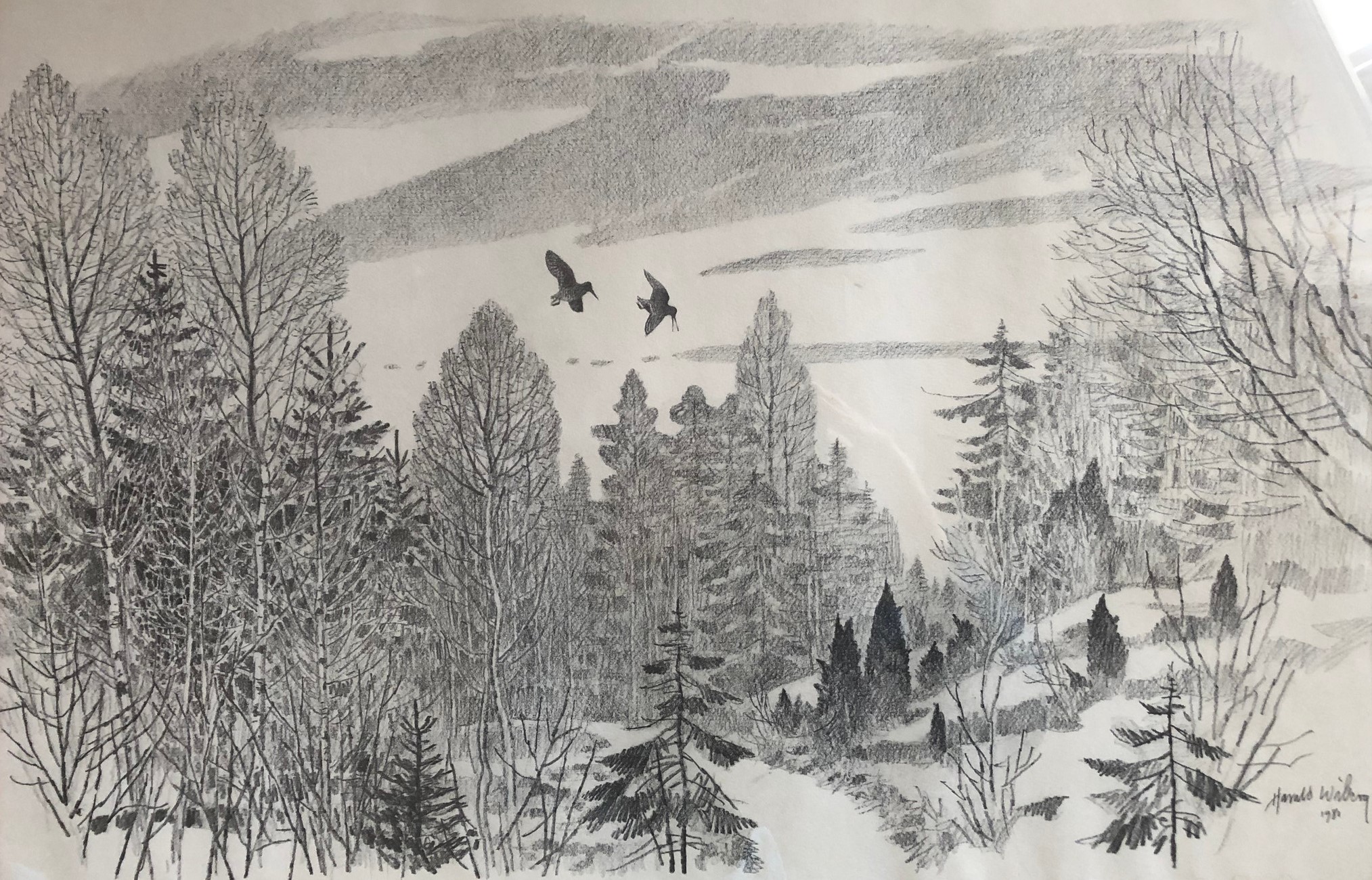
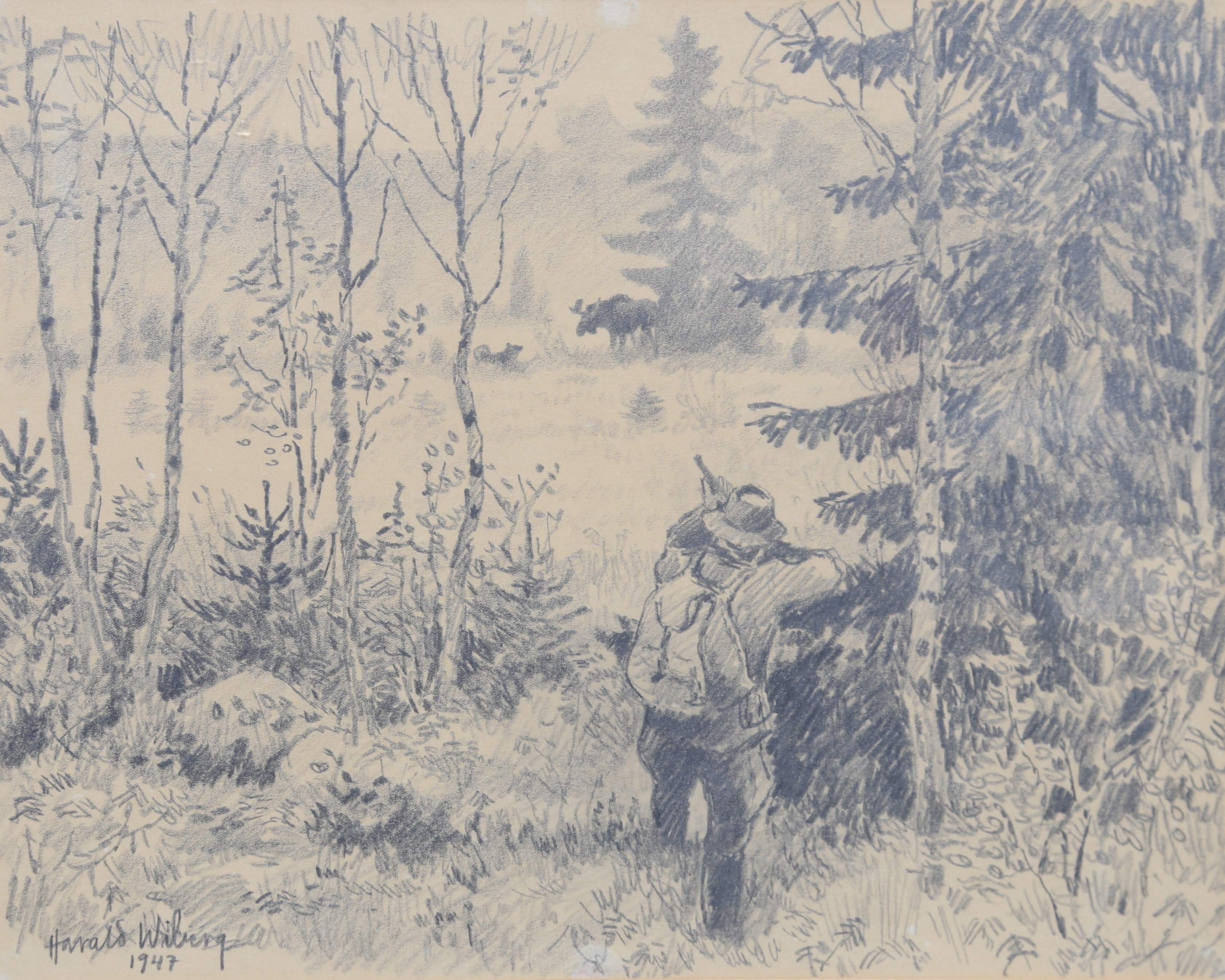
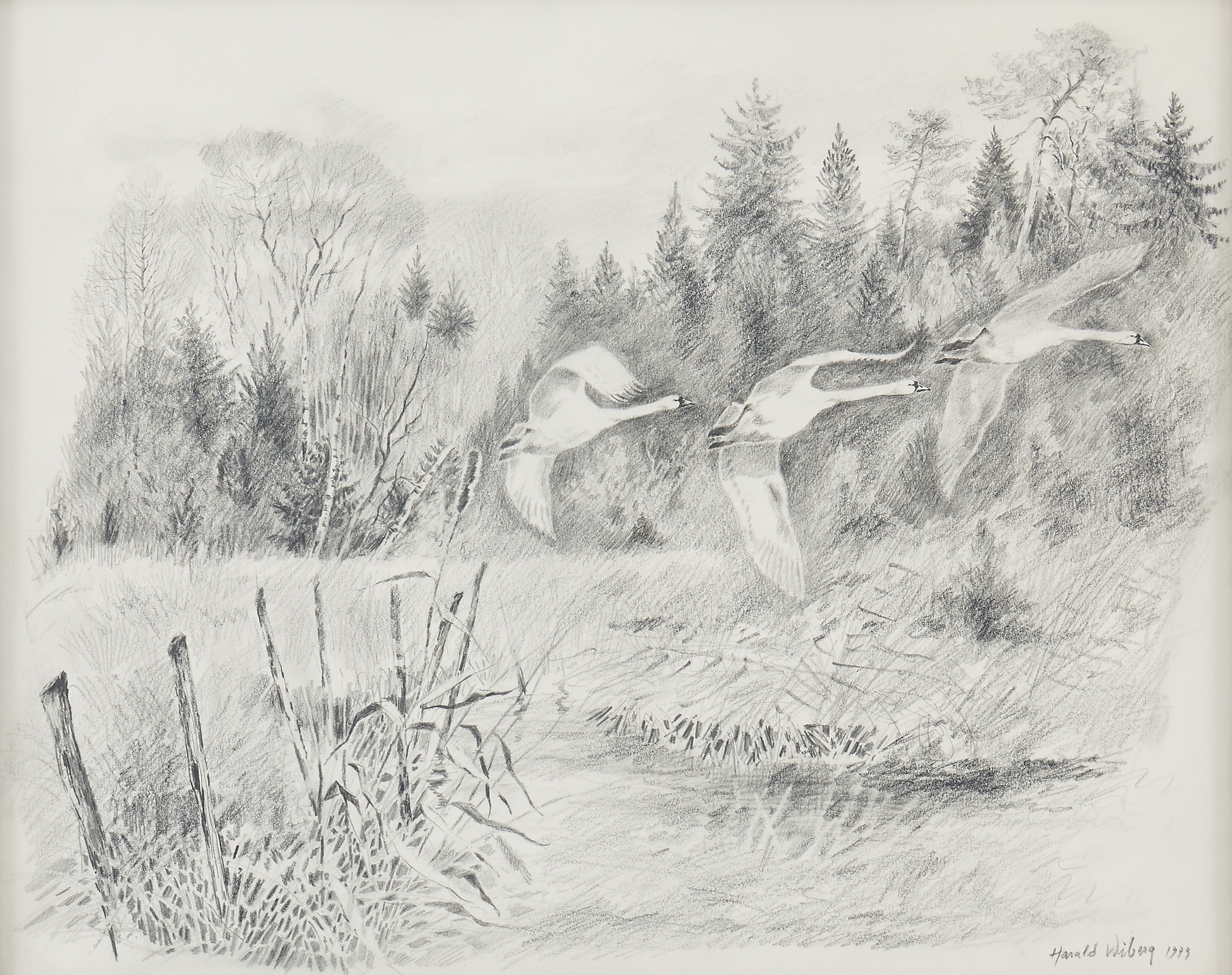
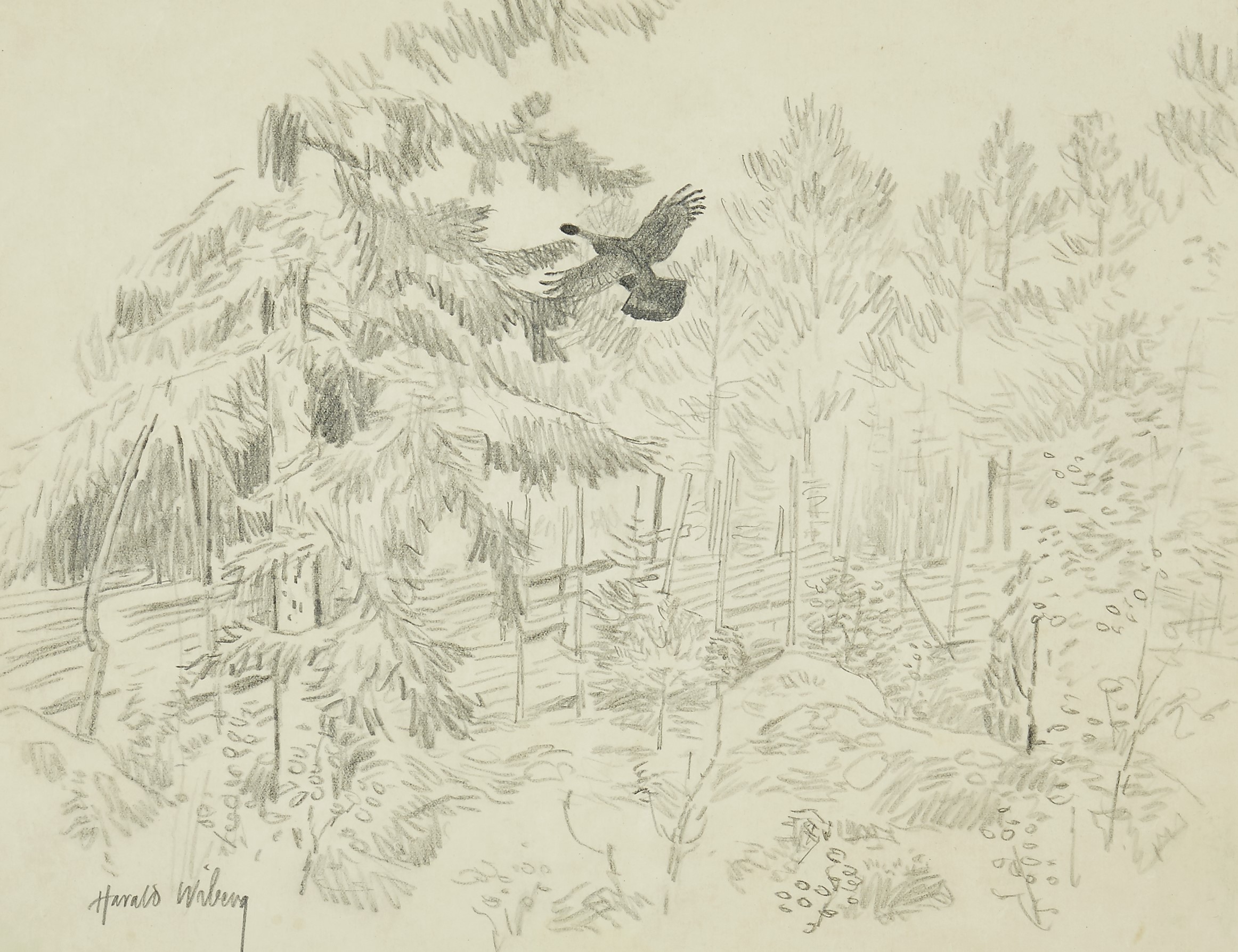
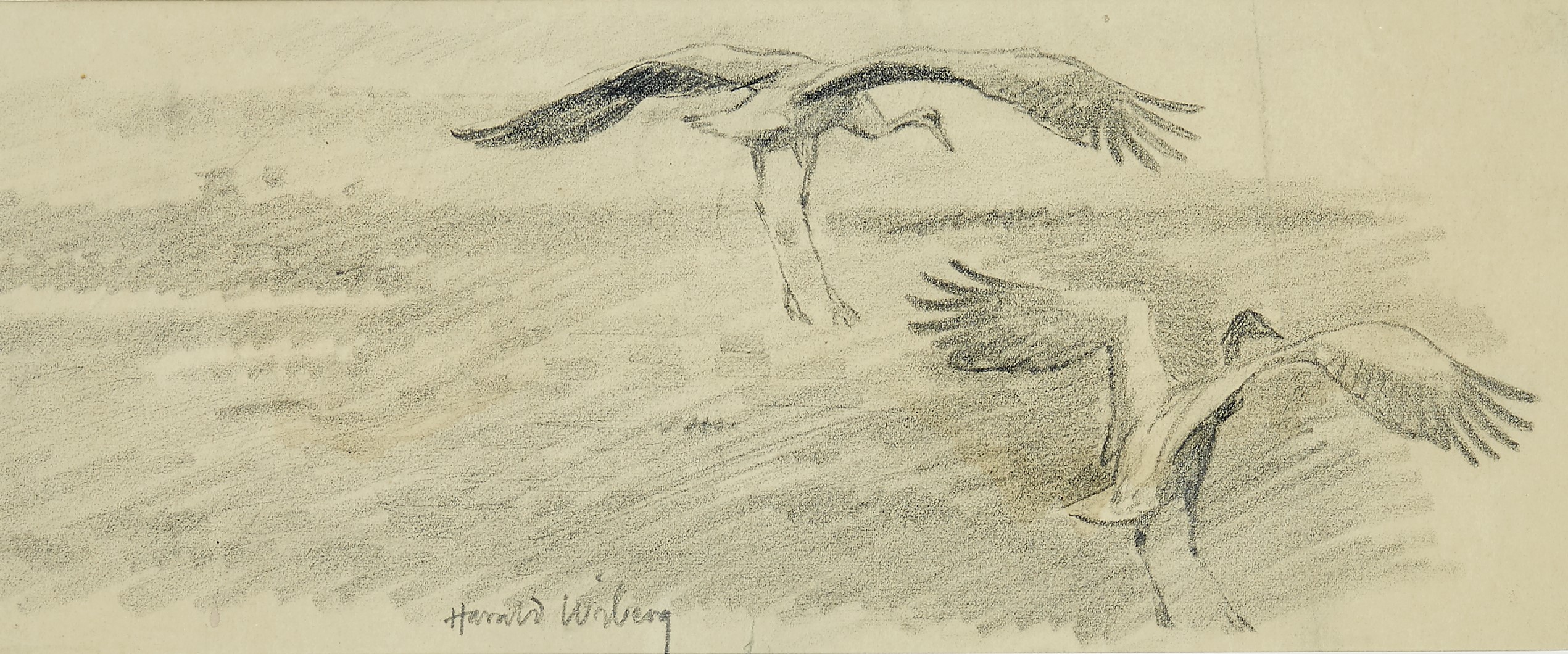
Book illustrations
Harald Wiberg was a collaborator and illustrator for the magazine Svensk jakt from 1939 and then again in 1960 for Året runt i naturen.
Wiberg partnered with various authors to create illustrations for their books, many of which were childrens books. His artwork vividly portrayed the tales of Swedish folklore and nature. He was also an author, writing and illustrating his own books. Here is a selection of the published works Wiberg contributed to (a more comprehensive list can be found here – birds.nu):
| Year | English Title | Swedish Title | Author |
|---|---|---|---|
| 1948 | Animals in nature | Djur i naturen | Harald Wiberg |
| 1950 | Angling life | Sportfiskarliv | Ragnar Arbman |
| 1957 | The world’s strangest animals | Världens underligaste djur | Åke Löfgren |
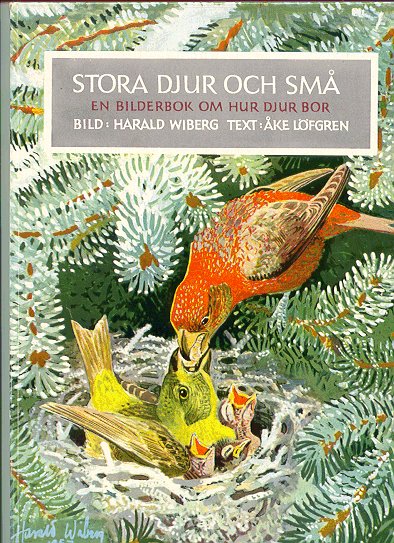
| 1958 | Big and small animals | Stora djur och små | Åke Löfgren & Harald Wiberg |
| 1960 | The Tomten | Tomten är vaken | Astrid Lindgren |
| 1961 | Christmas in the Stable | Jul i stallet | Astrid Lindgren |
| 1961 | Dogs of the World in Colour | Hundar i färg | Ivan Swedrup |
| 1961 | Fishing in the evening sun | Fiske i aftonsol | Ragnar Arbman |
| 1968 | The bears of Big stream valley | Björnarna i Storådalen (1960) | Edor Burman |
| 1964 | Benjamin has a birthday | Lill-Olle och sommardagen (1962) | Hans Peterson |
| 1968 | Three wolverines of Rushing Valle | Storbjörnen (1960) | Edor Burman |
| 1965 | The Tomten and the Fox | Räven och tomten | Astrid Lindgren |
| 1967 | Christmas at the tomten’s farm | Gammaldags jul | Harald Wiberg |
| 1969 | Animals and landscapes | Djur och landskap | Harald Wiberg |
| 1969 | When Peter Was Lost in the Forest | När Per gick vilse i skogen | Hans Peterson |
| 1966 | Dogs of the world | Hundar i färg | Ivan Swedrup |
| 1975 | The big snowstorm | Den stora snöstormen | Hans Peterson |
| 1980 | The Christmas Tomten | Lille Viggs äventyr på julafton | Viktor Rydberg |
| 1981 | The troll boy | Trollpojken | Pelle Svensson |
Wiberg illustrated many children’s books, and almost all of them feature Scandinavian landscapes, animals and traditional mythological characters: trolls and tomtens (called nisse in Norway).
One of Wiberg’s most notable collaborations was with the beloved Swedish author Astrid Lindgren.
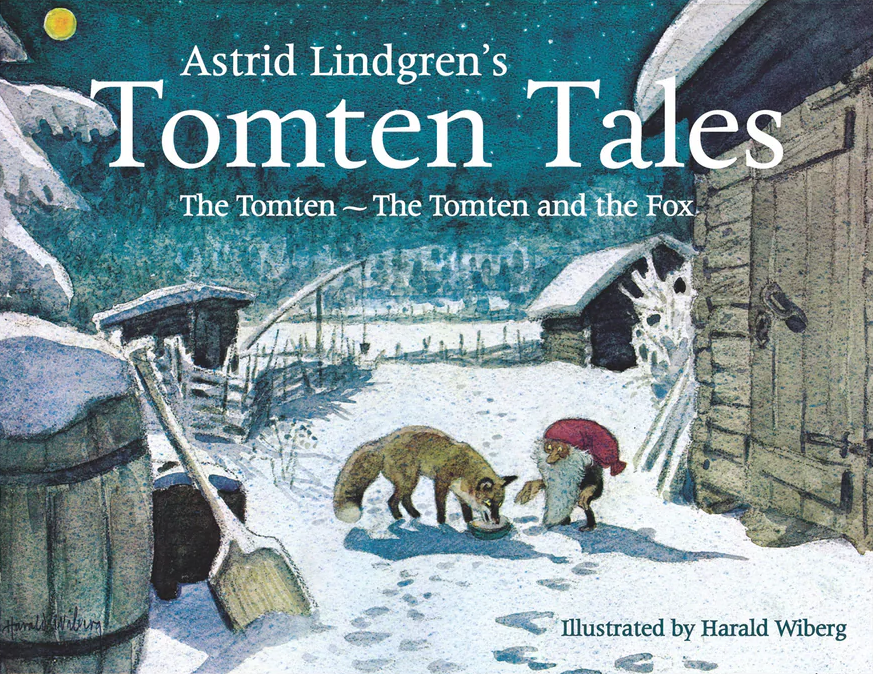
The poem Tomten was written by Viktor Rydberg in 1881 which tells the story of a small elf who watches over a farm during winter nights. In 1957, it was published in the children’s magazine Klumpe Dumpe with illustrations by Harald Wiberg. At the time, Lindgren worked as an editor at the book publishing company Rabén & Sjögren. She convinced the company to publish the poem and the illustrations in a book form. In 1960, the book with the illustrations by Wiberg was published by Rabén & Sjögren and was an immediate success. Subsequently, the publishing house decided to sell the rights to publish the book abroad, and for the convenience of translation, Rydberg’s poetic text was replaced with prose written by Lindgren. This version of the book was released in the same year in Germany. One year later it was published in the US, UK and other countries. In these countries, Rydberg’s name no longer appeared on the book’s title, instead Lindgren’s name was mentioned. The book gained international success and the story of the Tomten has since enchanted children and adults alike for generations.
In 1965, a classic poem by Karl-Erik Forsslund was published next to illustrations by Wiberg in Sweden. For the release in other countries, Lindgren once again adapted the poetic text wrote and the book was published as “The Tomten and the Fox”.
Wiberg’s illustrations in “The Tomten” and “The Tomten and the Fox” complement Lindgren’s narratives perfectly: His delicate watercolors bring to life the mystical, wintry landscapes of Sweden, adding depth and visual charm to Lindgren’s storytelling.
Kirkus Reviews gave the book The Tomten a starred review. The fascinating story and “Harald Wiberg’s darkly luminous rendition of a tranquil snowy farm” turn the book into a great bedtime story for children and leave a lot of room for fantasy.
The writer Sarah Moore Fitzgerald thinks The Tomten and the Fox is “gentle, benign and soothing”. It was her favourite book as a child.
The success of these works prompted Wiberg to write and illustrate his own Tomten book entitled “Gammaldags jul”. The book was translated into English (Christmas at the Tomten’s Farm). Another work by Viktor Rydberg, Björn’s Advent on Christmas Eve (Lille Viggs äventyr på julafton, 1980) was also illustrated by Wiberg. The book was also translated into English (The Christmas Tomten).
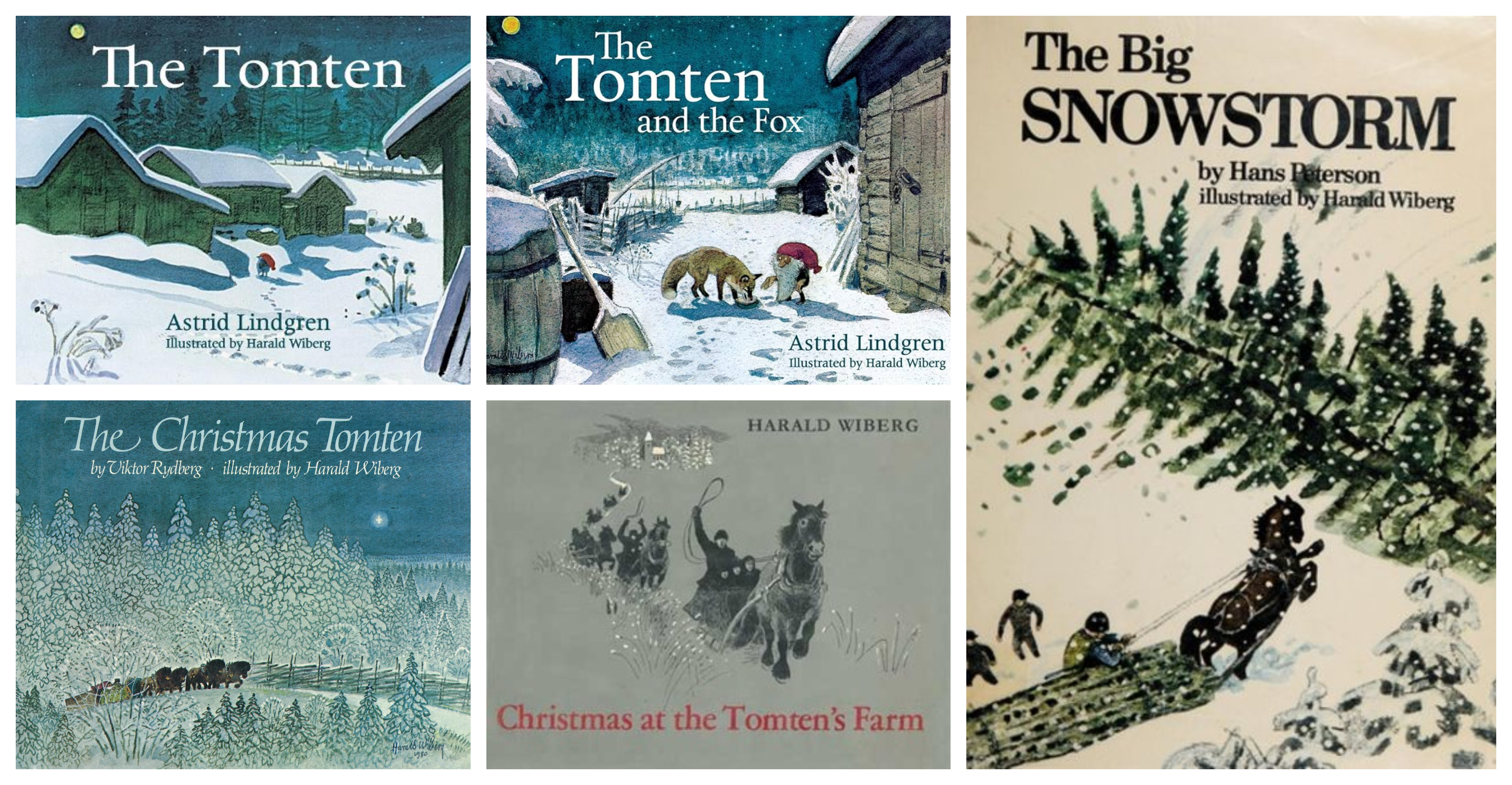
Both Lindgren Tomten books were later published into one book called “Tomten Tales”:
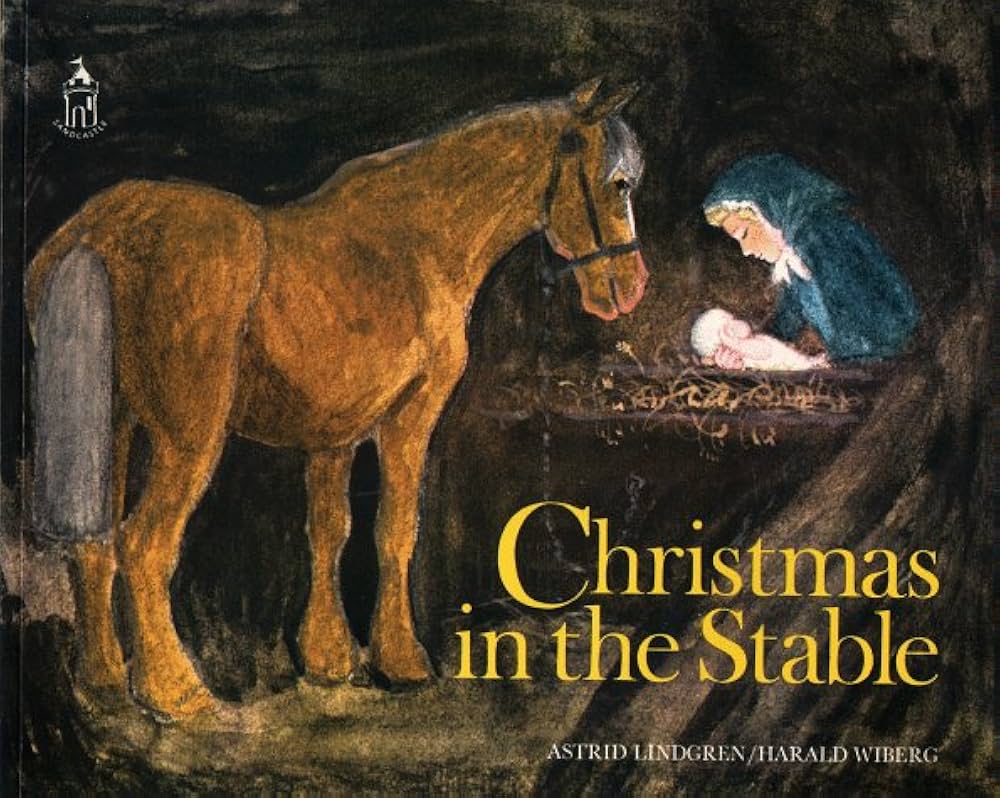
The collaboration between Wiberg and Lindgren was not limited to these two books: in 1961, Wiberg also created illustrations for her picture book “Christmas in the Stable” (” Jul i stallet”), which is another incarnation of the well-known gospel story.
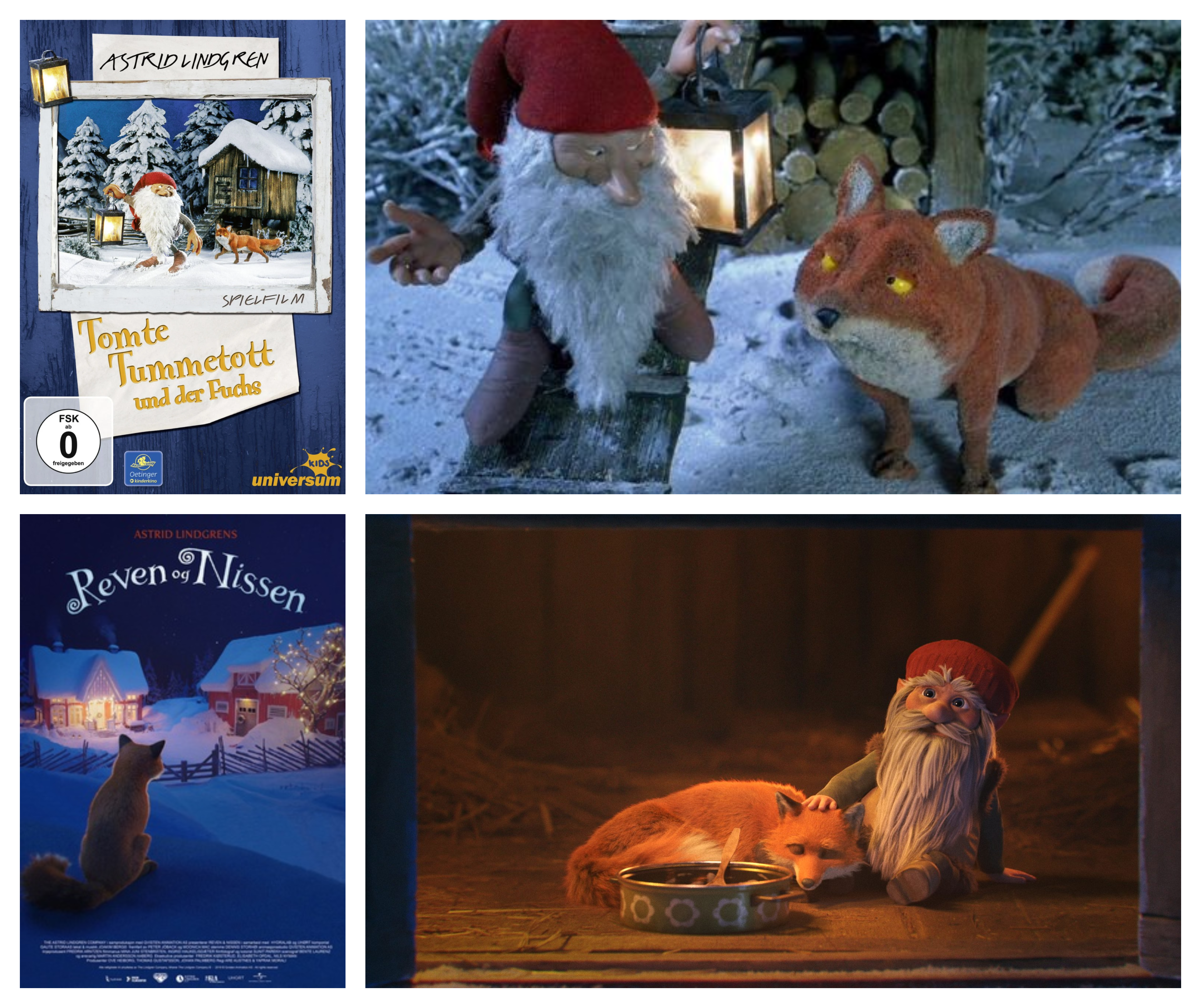
Two films have been made based on the Tomten books:
- 2007: The German 30min stop motion animation film Tomte Tummetott und der Fuchs (The Tomten and the Fox) is adapted from Wiberg’s original illustrations. The English version was released on the German DVD edition of the film. The DVD also has the Tomte Tummetott song in English, German and Swedish.
- 2019: The Norwegian 9min CGI animation film Reven og Nissen (The Tomten and the Fox) is adapted from the later republished book illustrations by Eva Eriksson. The title song was composed by Joakim Berg, the singer in the Swedish rock band Kent. For this purpose, he rewrote the poem by Karl-Erik Forsslund, on which the book by Lindgren is based, into a song.
Collaborations
Harald Wiberg’s artistic talents extended beyond book illustrations, leading to notable collaborations with prestigious Swedish and Danish companies. These partnerships allowed Wiberg to apply his exquisite depictions of Scandinavian wildlife and folklore to fine porcelain and glassware, creating collectible pieces that blended art with functionality. His designs, often featuring the beloved Tomten and other elements of Swedish nature and wildlife, brought a touch of enchantment to everyday items. These collaborations not only showcased Wiberg’s versatility as an artist but also helped to preserve and celebrate Nordic cultural heritage through beautifully crafted homeware.
Royal Copenhagen porcelain figurines
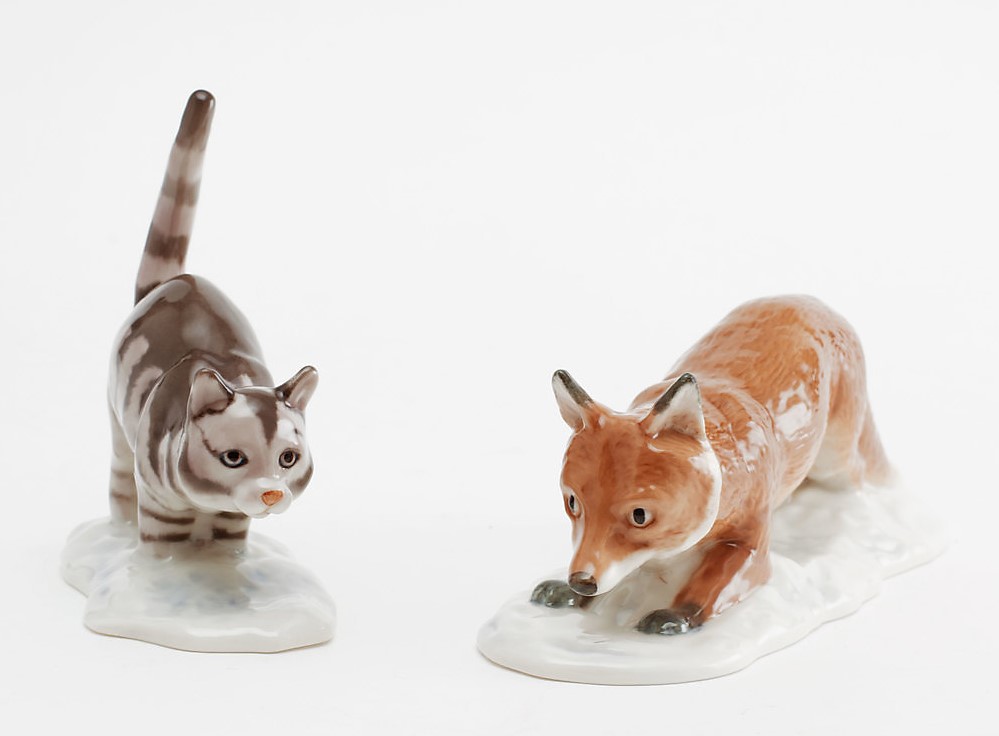
Harald Wiberg’s illustrations were brought to life by Royal Copenhagen in this fantastic collaboration. Royal Copenhagen, renowned for its high-quality porcelain and artistic designs, featured Wiberg’s characters from the Tomten books in porcelain figurines. Royal Copenhagen mentions the following on their website: “Charming porcelain sculptures and figurines from Royal Copenhagen are a true classic. Over a century, countless figurines in all shapes and sizes have left the factory halls. Every animal imaginable, adults, children and even fairy tale creatures have been sculpted by the talented craftsmen and made their way to homes across the world. The figurines are as much part of Royal Copenhagen’s proud heritage as the beloved blue-painted collections“.
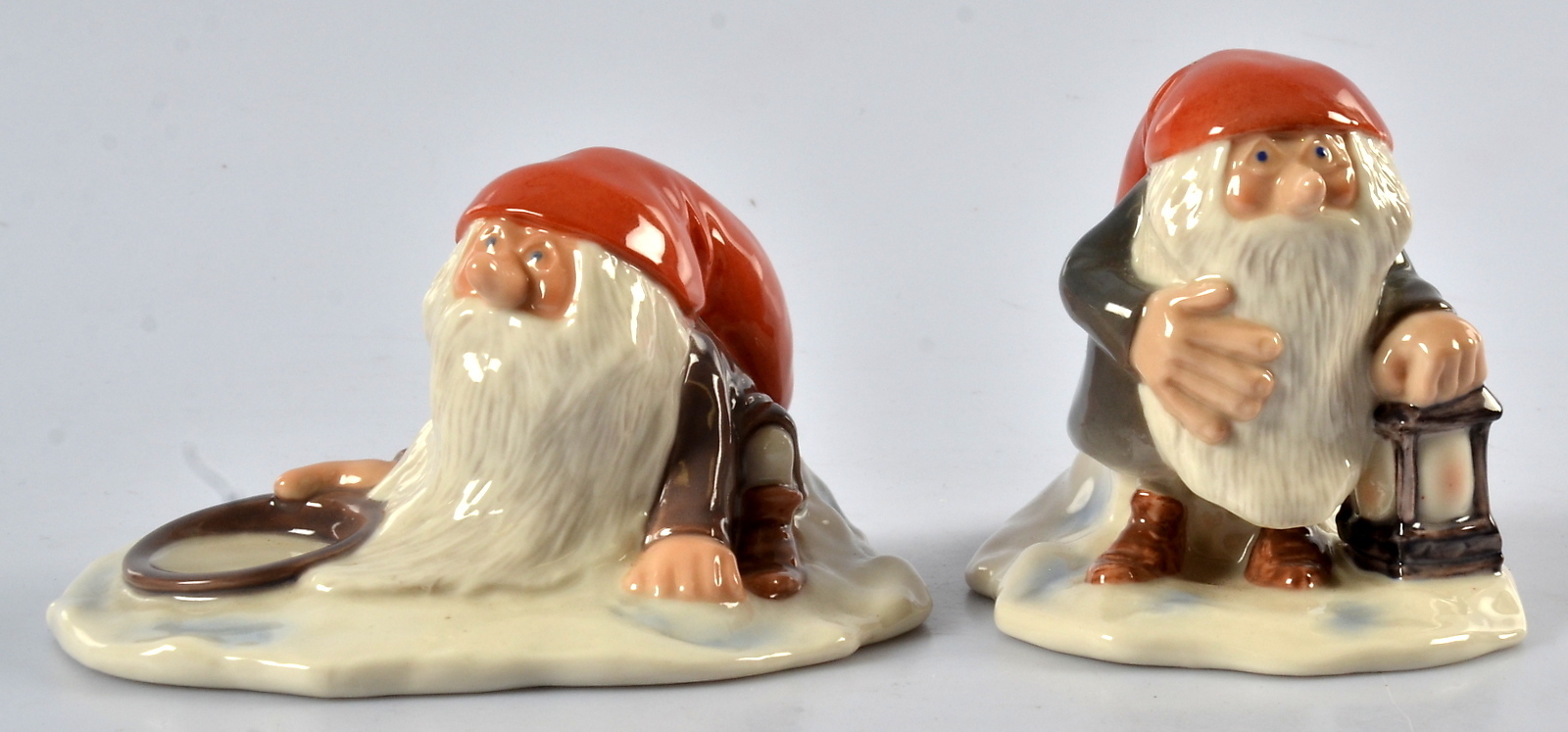
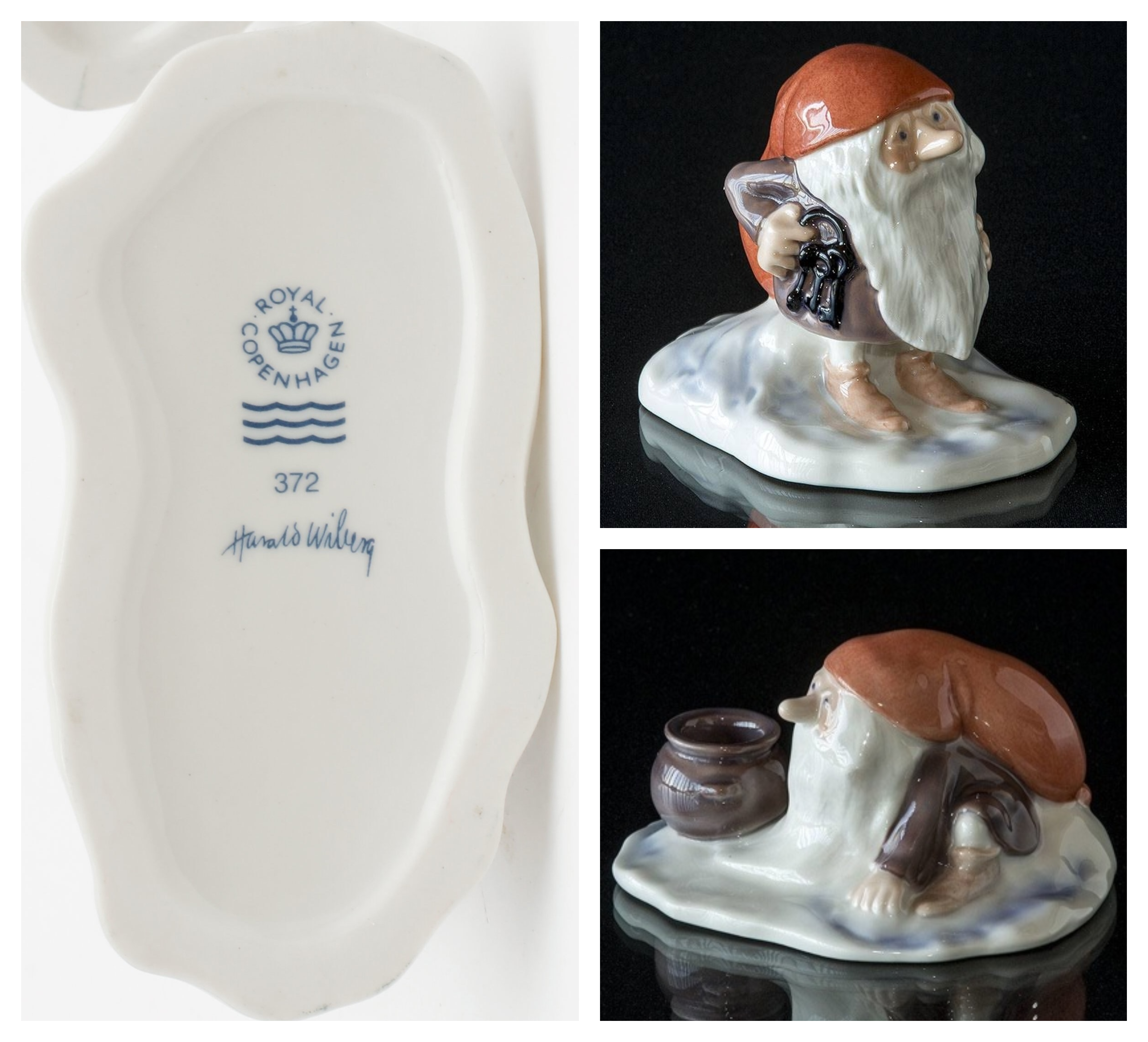
Each figurine is stamped underneath with the Royal Copenhagen logo, number identifying the figure and Harald Wiberg’s signature:
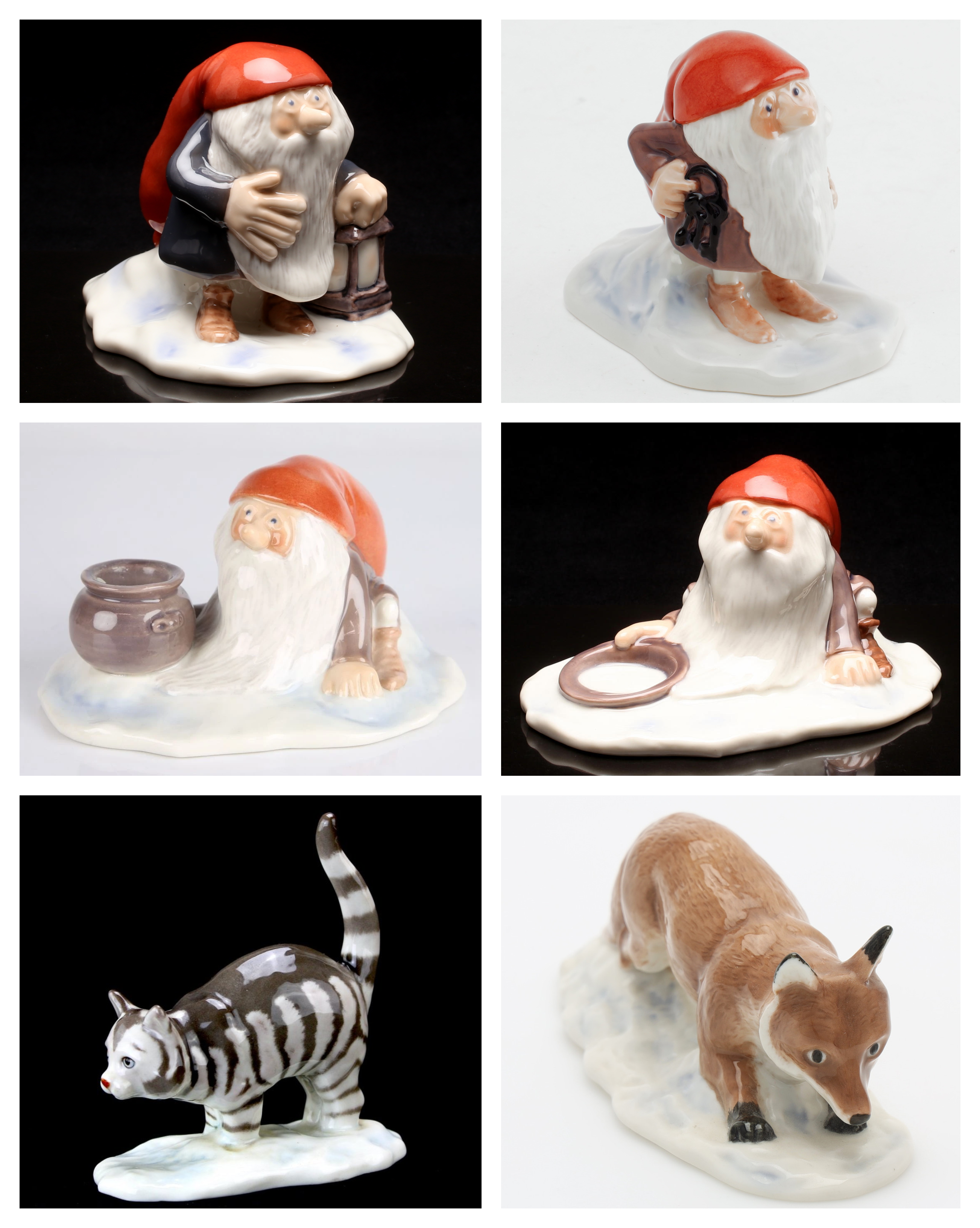
There are 6 porcelain figurines in total to collect:
Bing & Gröndahl
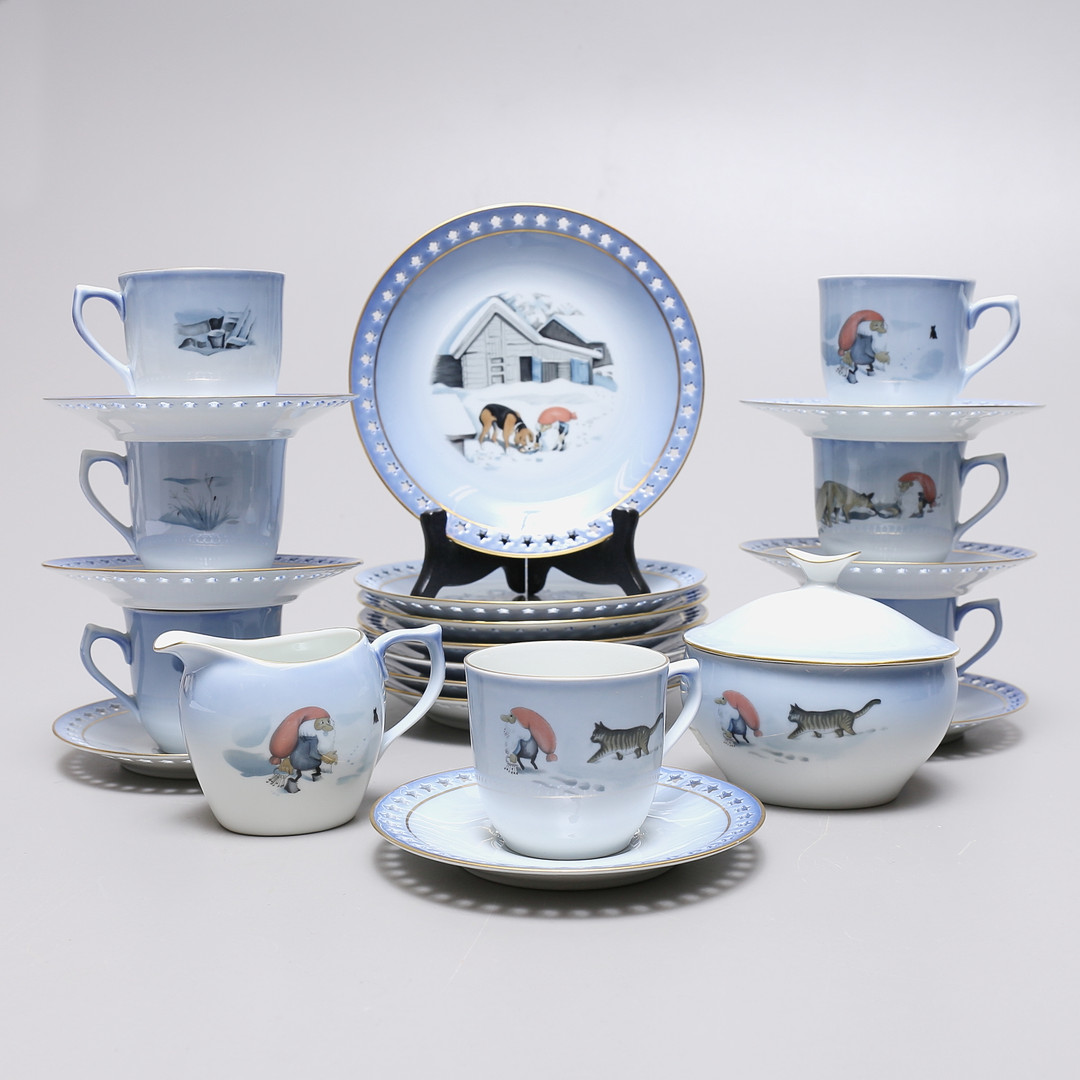
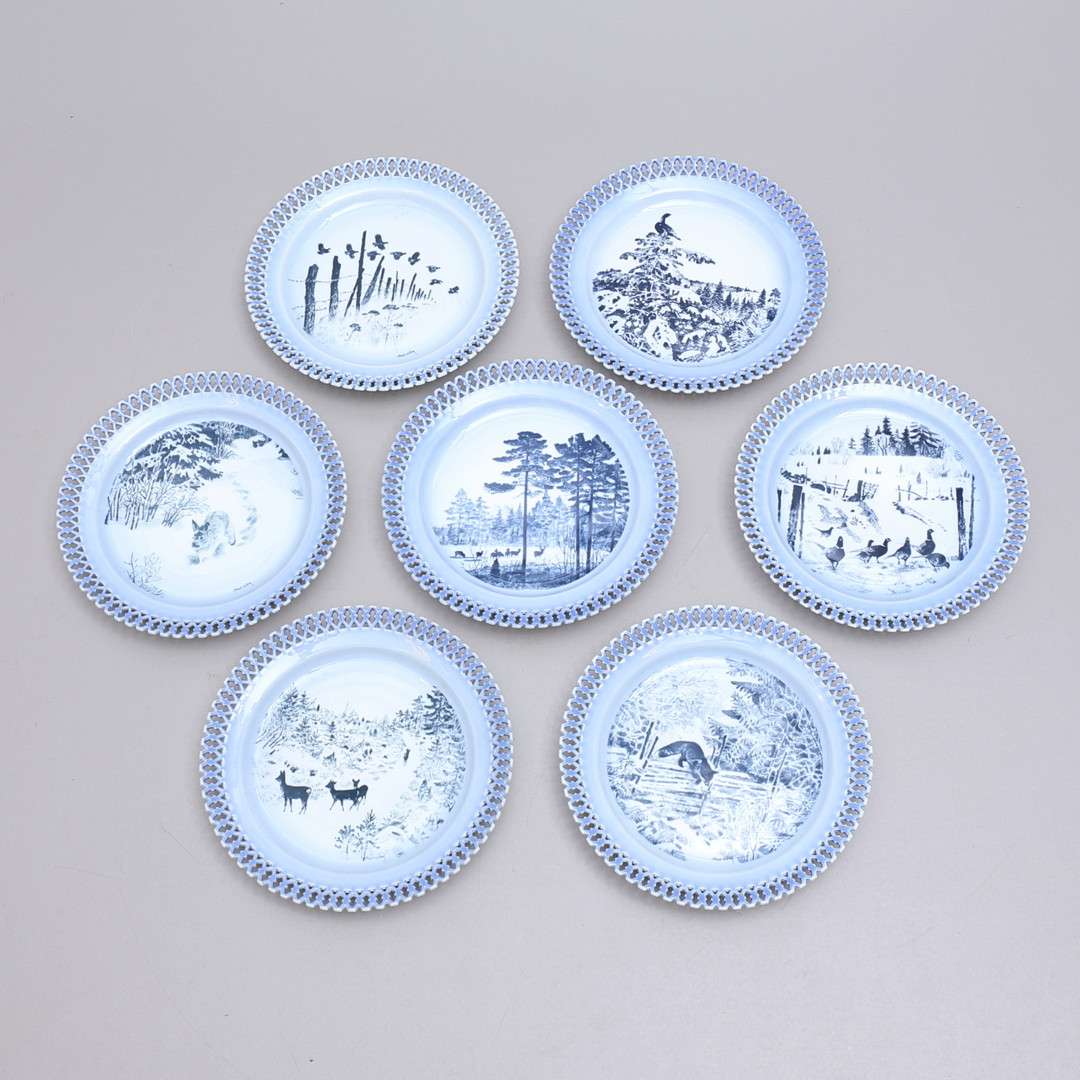
Another significant collaboration for Harald Wiberg was with Bing & Grøndahl, another esteemed Danish porcelain company. Known for their exquisite craftsmanship and decorative art pieces, Bing & Grøndahl provided a perfect canvas for Wiberg’s illustrations. His artwork was featured on a variety of items, including plates, mugs, and entire tea sets. Wiberg’s ability to convey the charm and mystery of the Tomten, along with the serene beauty of Scandinavian nature and wildlife, made these products highly popular among collectors.
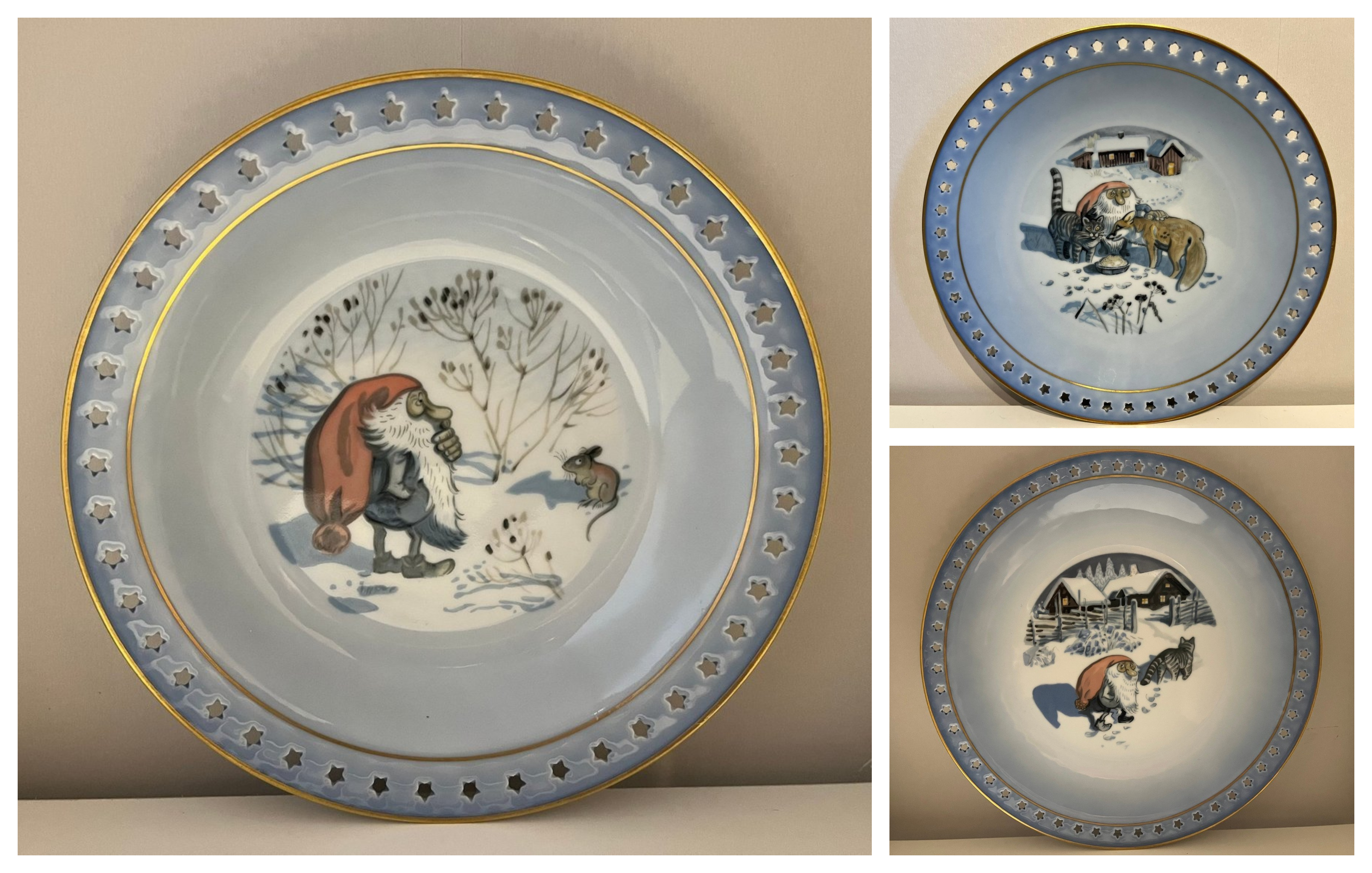
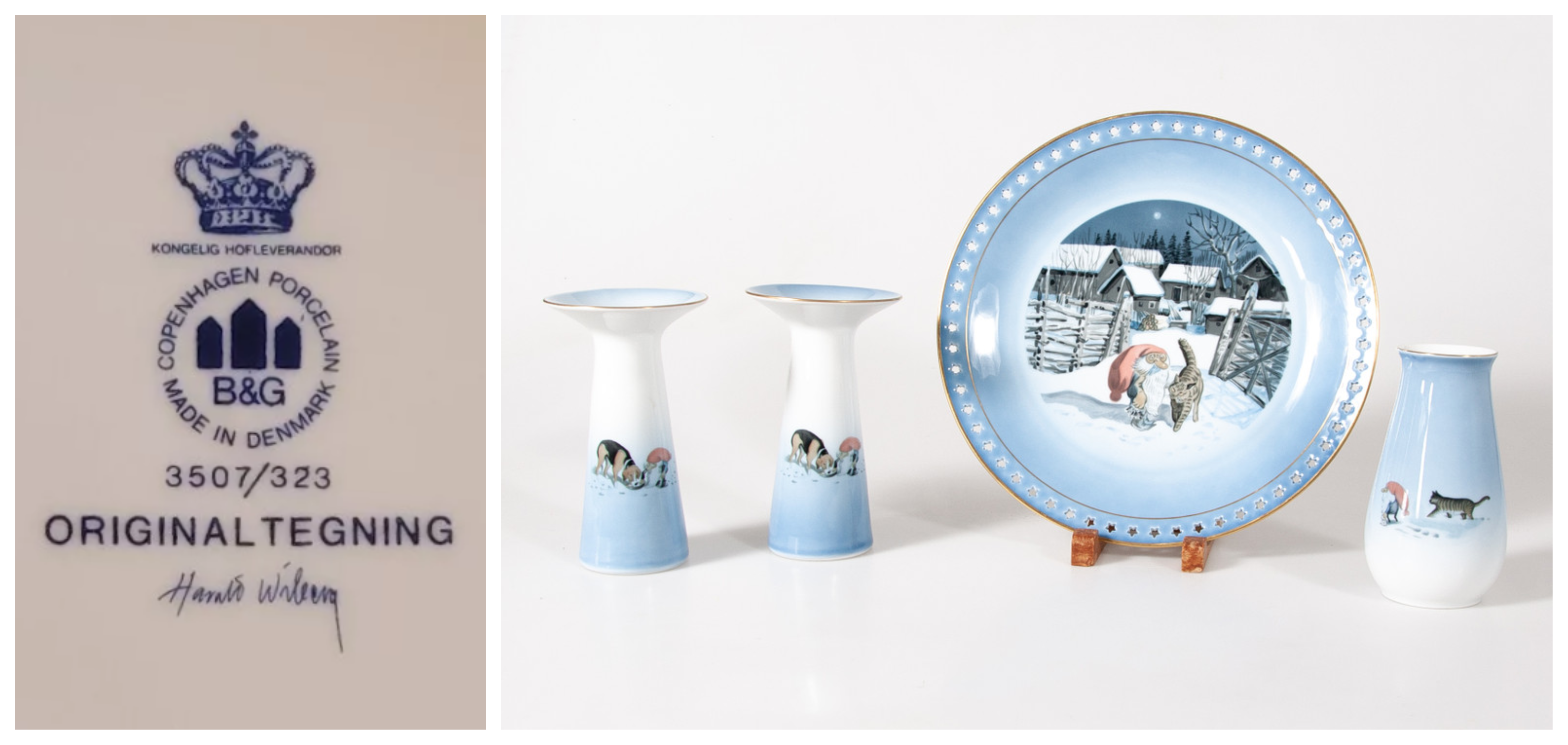
The series of wall plates featuring his wildlife nature scenes was called “Animals at dawn“:
Rörstrand
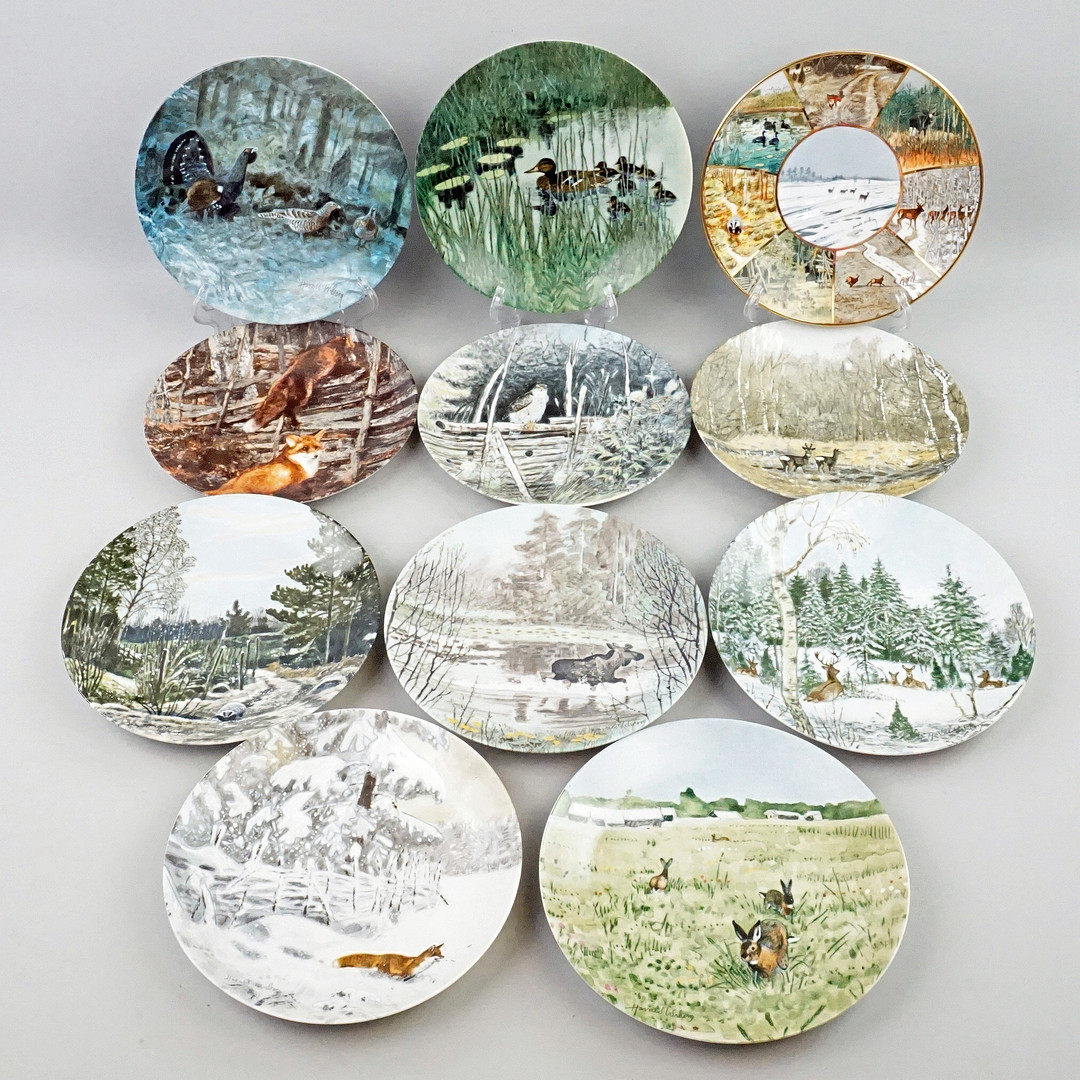
A special local collaboration with Rörstrand porcelain – one of the most famous Swedish porcelain manufacturers. The collaboration focused on wall plates with images of Wiberg’s wildlife paintings. The series was called “Moments in nature” which consisted of 11 plates:
Guldkroken
More fantastic porcelain plates from this collaboration with Guldkroken:
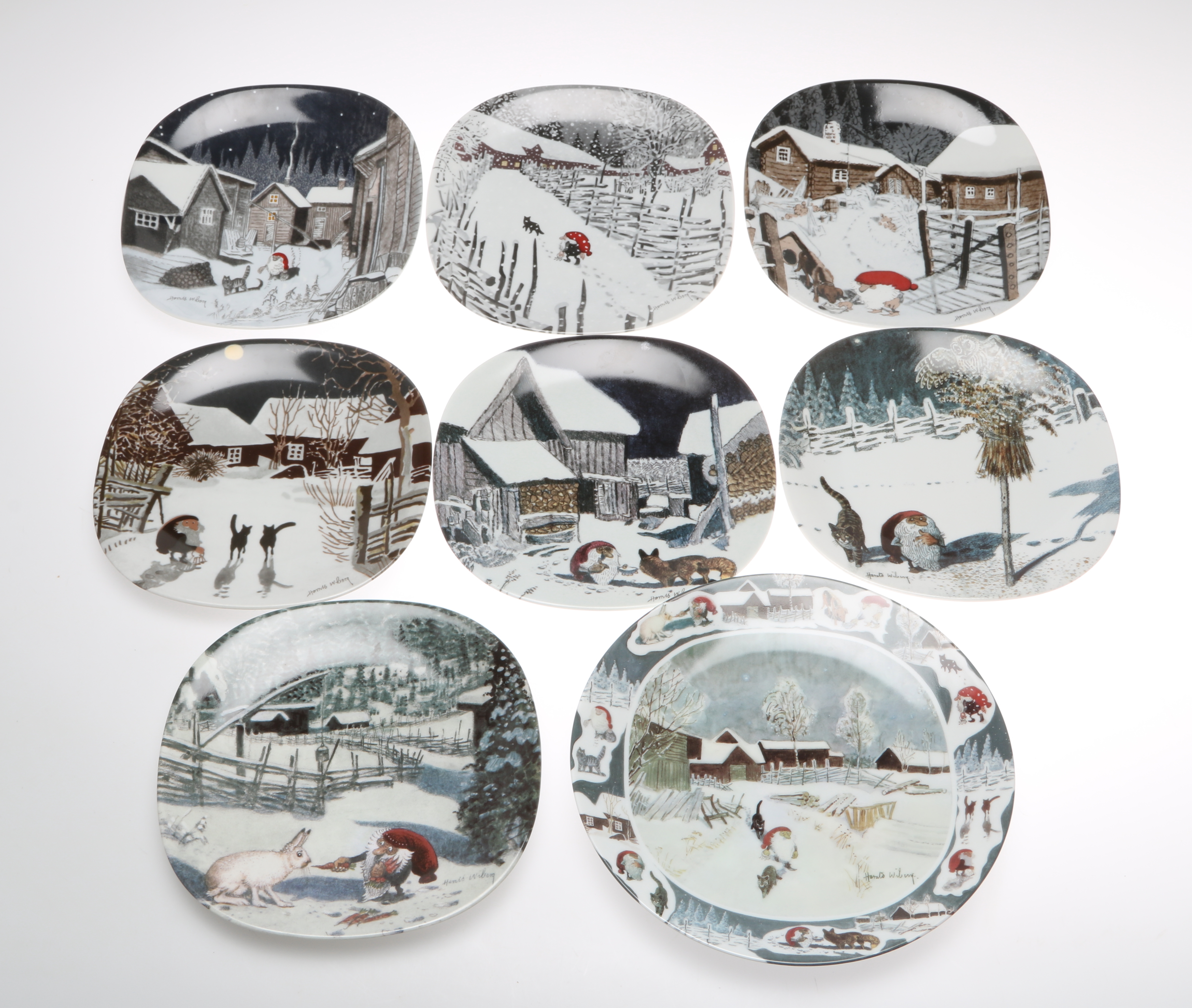
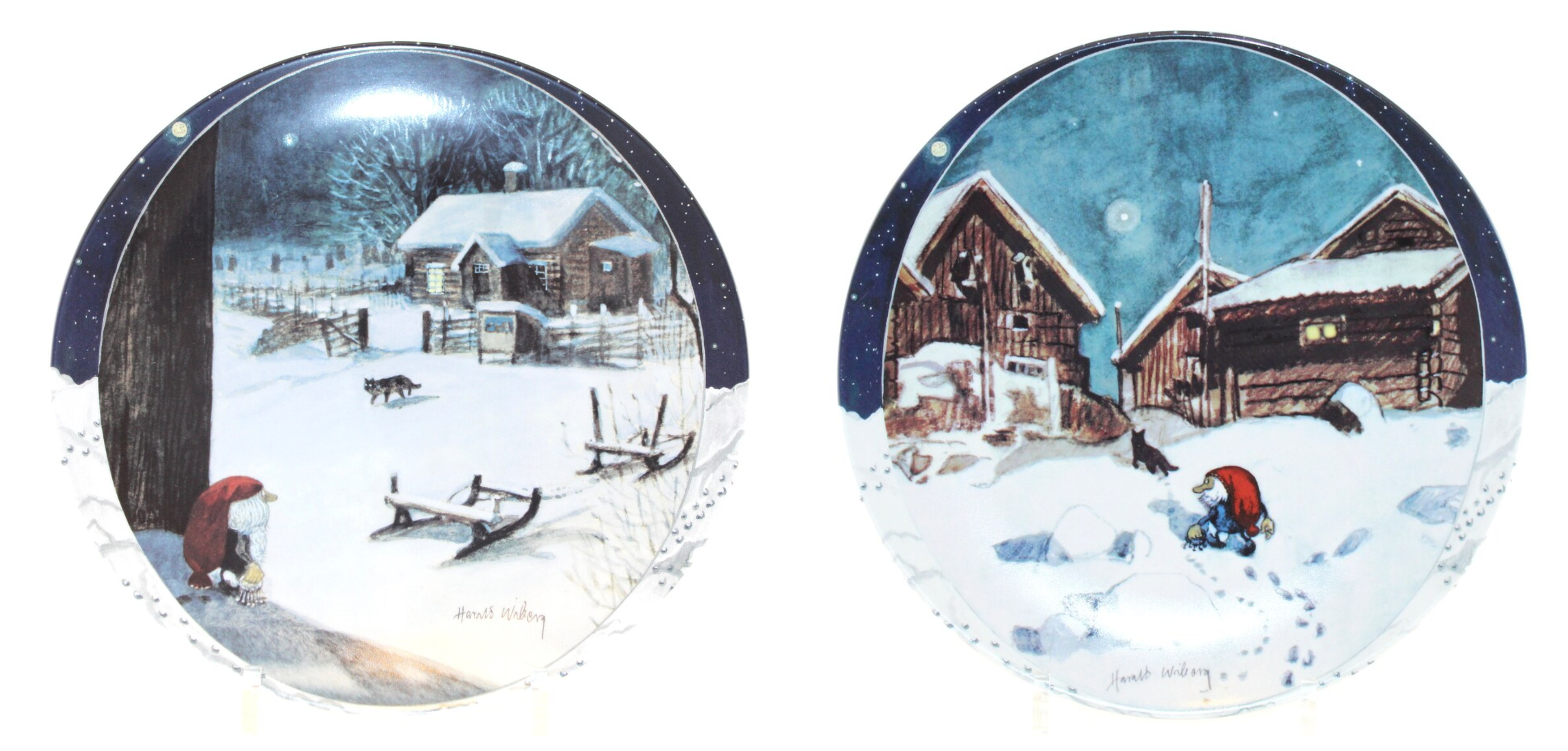
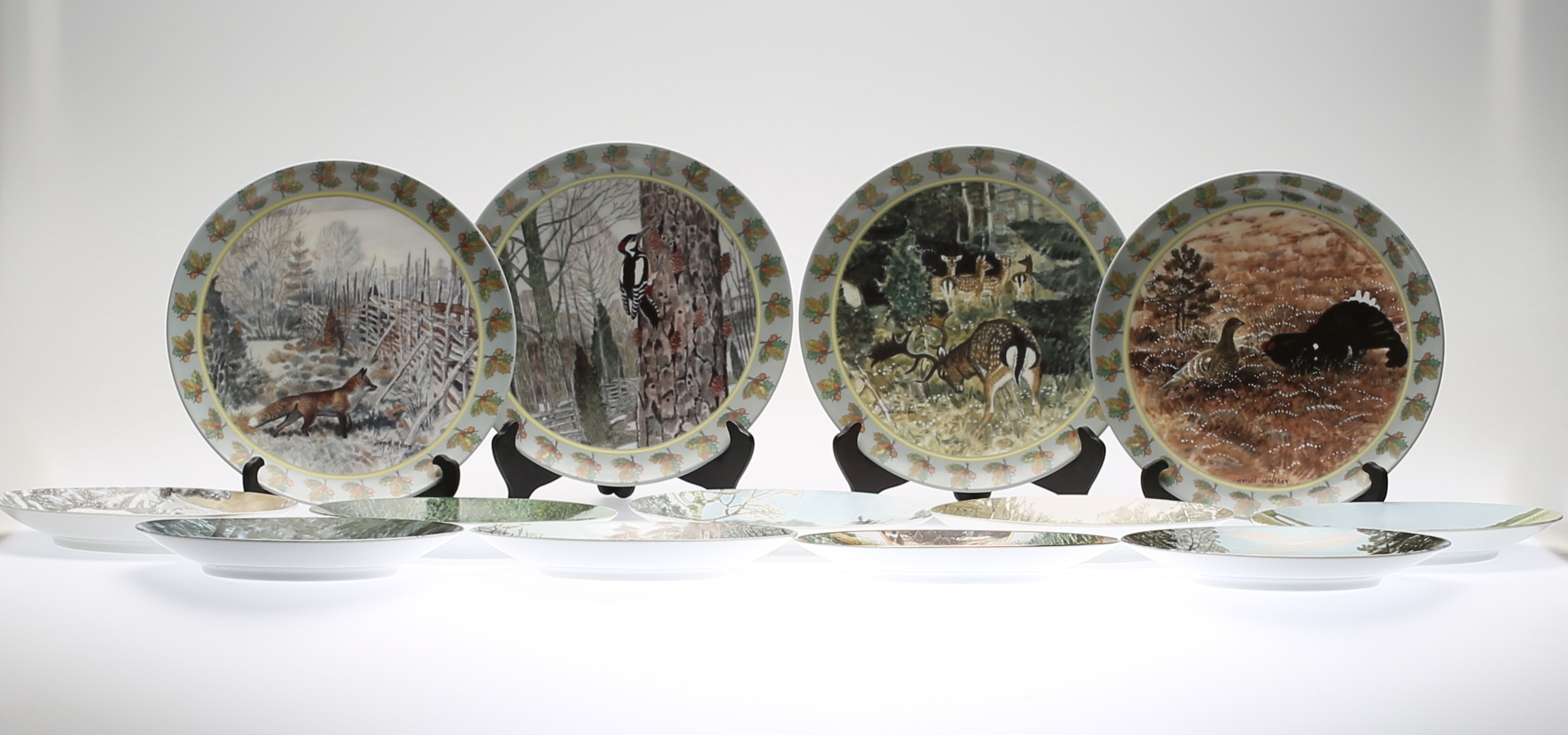
Kosta Boda
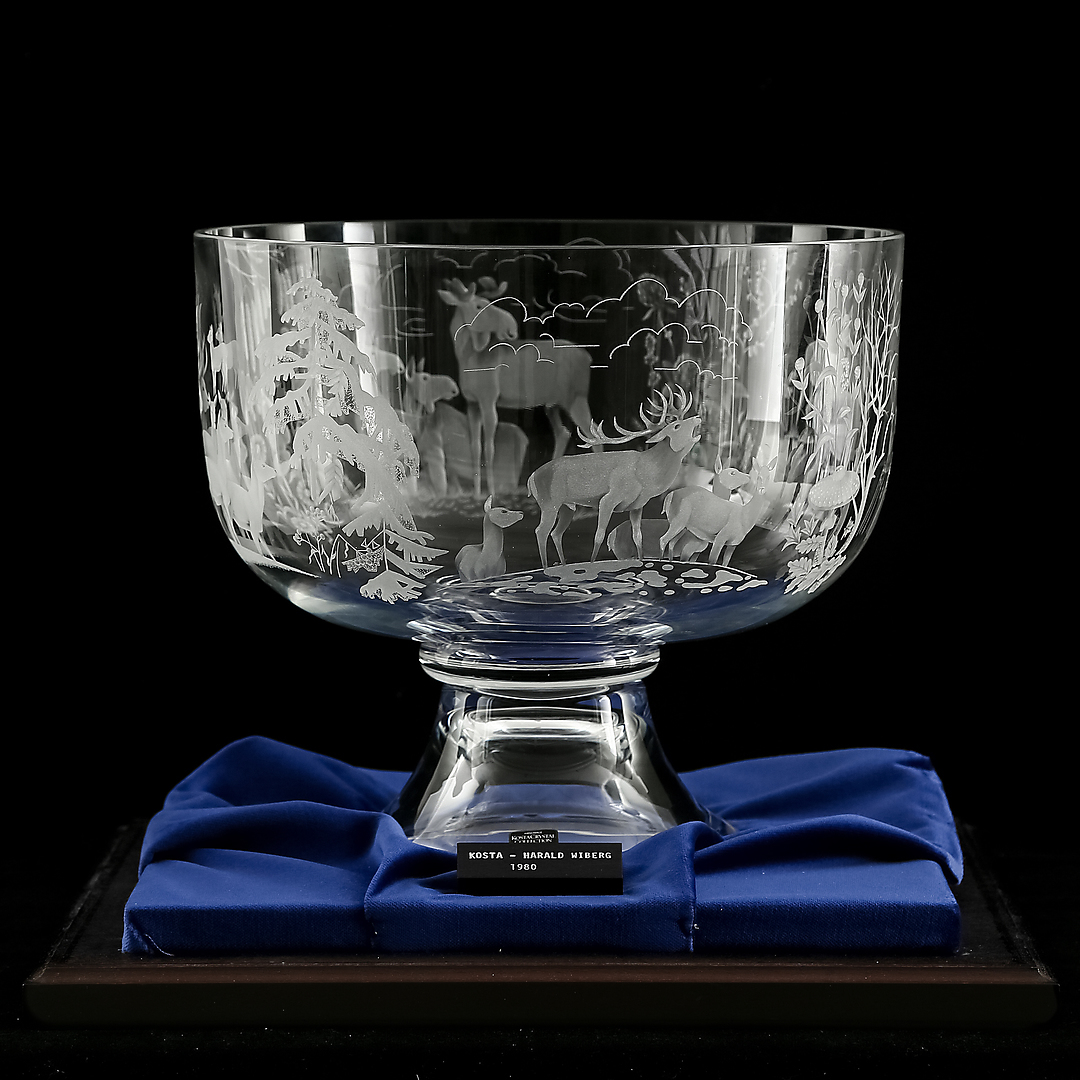
A special collaboration with Kosta Boda in 1980 resulted in the creation of limited edition, handmade full lead crystal glasses that featured Harald Wiberg’s wildlife designs.
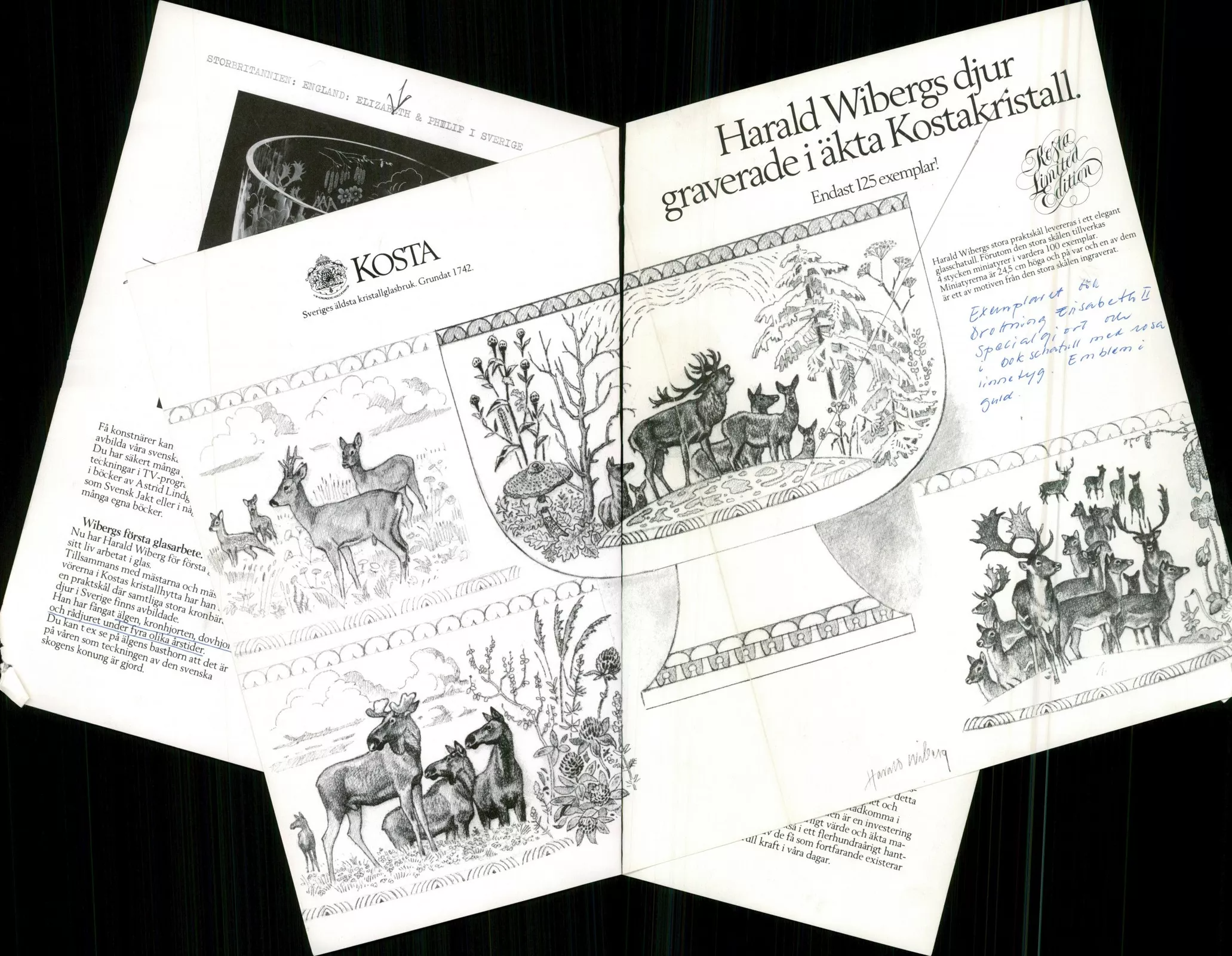

Holmegaard
Harald Wiberg’s artistic reach also extended to glassware through a collaboration with Holmegaard, Denmark’s oldest and most renowned glass factory. Holmegaard’s tradition of combining innovative design with superior craftsmanship provided an ideal platform for Wiberg’s much loved Tomten character. His illustrations were translated into two different designs on carafes, each coming with two shot glasses. These items often featured scenes of the Tomten in winter landscapes, etched or painted onto the glass with meticulous detail.
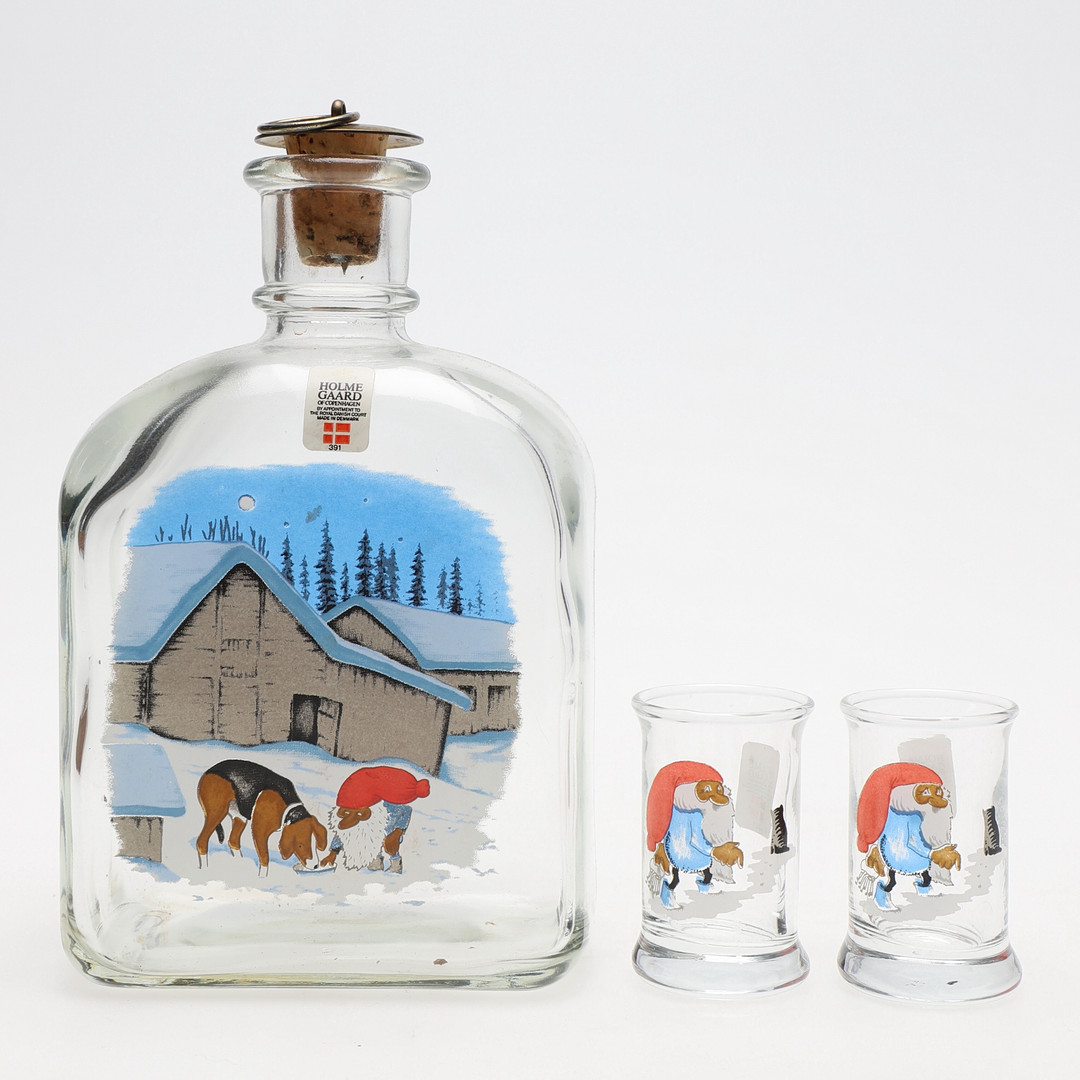
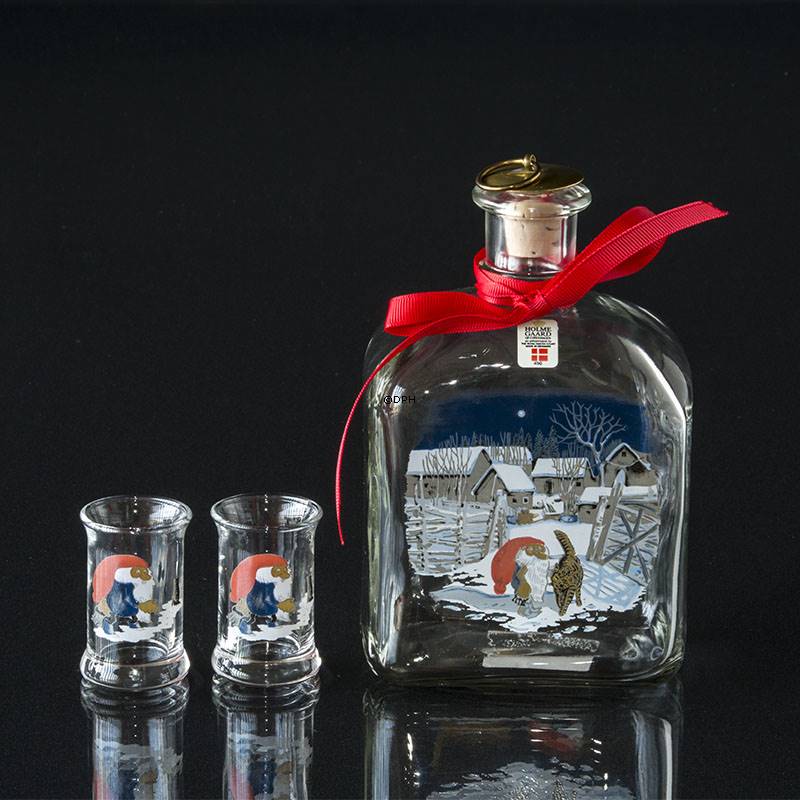
There is a cherished Swedish tradition of singing “Hej Tomtegubbar” during festive celebrations, particularly during Christmas and midsummer. This lively, traditional song, whose title roughly translates to “Hello, old man Tomte,” is often performed in a joyful, communal setting, inviting everyone to join in. The song calls upon the tomtegubbar, or little gnome-like creatures from Swedish folklore, to come and join the festivities, emphasizing themes of merriment, togetherness, and hospitality. After singing, it is customary to toast with a shot of schnapps or aquavit – a traditional Scandinavian spirit infused with spices and herbs, which adds to the lively atmosphere and celebrates the warmth and communal spirit of Swedish cultural gatherings. Making this carafe the perfect match for these occasions!
Harald Wiberg’s collaborations with Royal Copenhagen, Bing & Grøndahl, and Holmegaard not only expanded his artistic influence but also enriched the product offerings of these esteemed Danish companies. By infusing everyday objects with the magic of Scandinavian folklore and the natural world, Wiberg’s artwork continued to captivate and inspire, ensuring that his legacy as a master illustrator lived on in homes around the world.
Awards & Prizes
- 1970: Lewis Carroll Shelf Award for Christmas in the Stable (shared with Astrid Lindgren)
- 1971: Graphic class animal painting Budapest for the motif: Running deer
- 1973: The Brooklyn Art Books For Children Citations for Christmas in the Stable (shared with Astrid Lindgren)
- 1976: Elsa Beskow Plaque for The big snowstorm
Wiberg is represented with a book at, among others, the National Museum in Stockholm and
the Kalmar Art Museum.
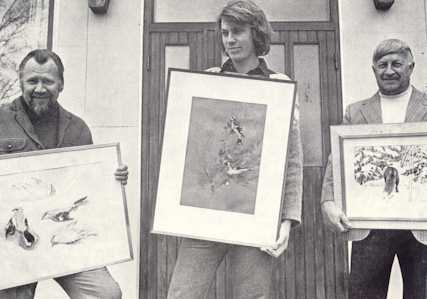
Gallery Z in Odensbacken was inaugurated in October 1971. Harald Wiberg exhibited there in November 1970. In 1979, Galleri Z invited a large anniversary exhibition in Fiskingegården under the theme “10 years of good art by good artists”. Three of the nature painters who exhibited at the time were Gunnar Brusewitz, Lars Jonsson and Harald Wiberg:
Legacy
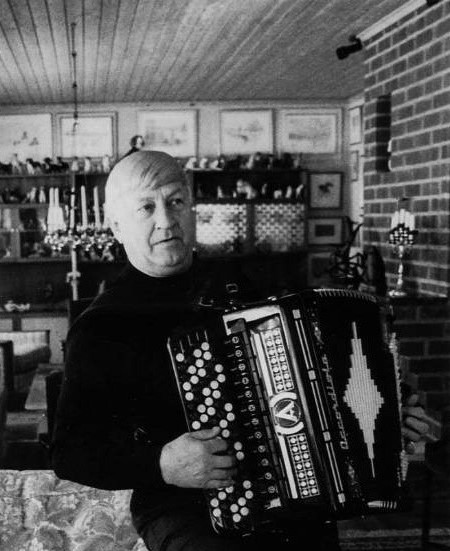
“He was a down-to-earth and happy person“, Christina Wiberg points out. “He was a good accordion player. As a young man, he had played the accordion at the silent film screenings at the IOGT venue in Ankarsrum. And like most musicians, he was an abysmal dancer. He couldn’t dance!” (Source: Hemmets Journal).
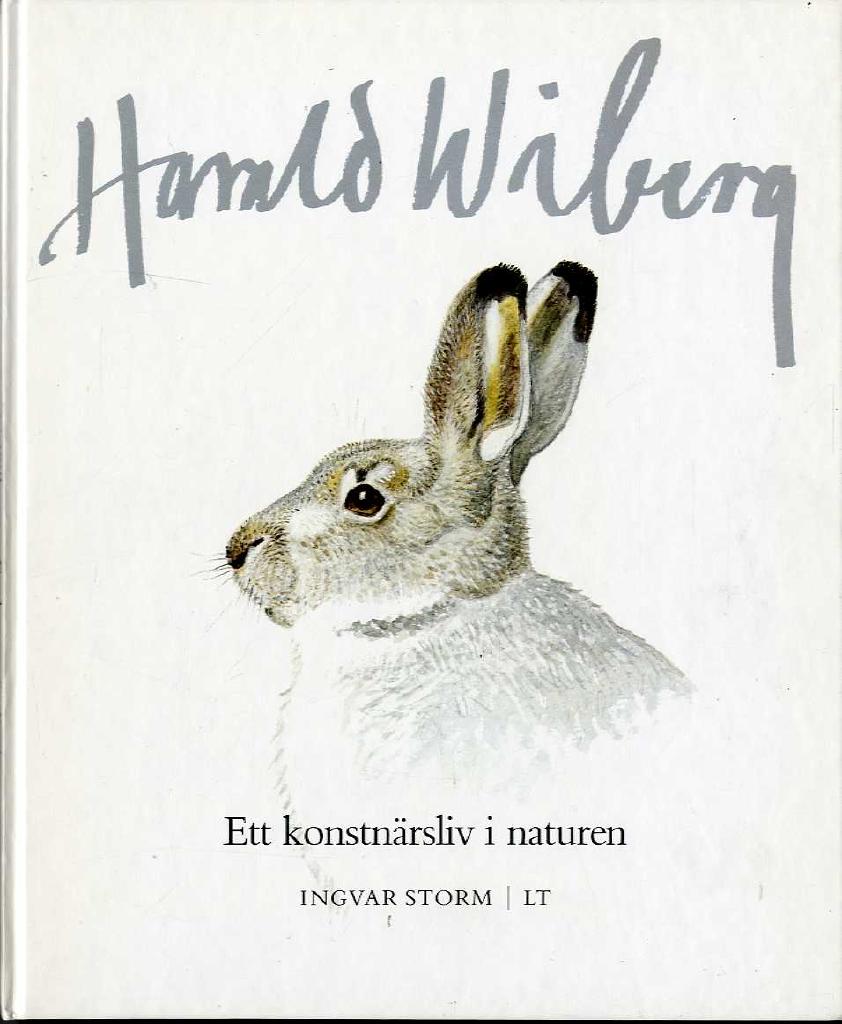
In 1985 Ingvar Storm published the book “Harald Wiberg – Ett konstnärsliv i naturen” (Harald Wiberg – An artist’s life in nature). The back cover has the following text:
Harald Larald Wiberg’s images of Swedish nature are so immediate that they go straight into our minds. Everyone recognizes themselves in his realistic depictions of nature. They evoke strong memories of forest walks, mushroom excursions, fishing trips and hunting.
The author Ingvar Storm, producer at Sveriges Radio, together with Harald Wiberg, has made a wide selection of drawings and watercolours. The book not only presents the riches of Swedish nature, it also provides rich insights 1 Harald Wiberg’s biography, work methods and ideas. He tells about his childhood 1 Ankarsrum, about his student years in Stockholm, about the dear old Koltorpet in Småland and about his experiences of landscapes and animal encounters during a manhood
Harald Wiberg has an inordinate curiosity about nature, and he is intensely present in what he does, in the documentation of the moment. Precisely in the ability to empathize with the subject lies the secret of his popularity.
“If you want to become a good animal artist, it is not enough to be nimble with your hand. You also have to learn to understand the animals so that you can feel like a deer, a hare or an elk. And when you draw the landscape around the animal, you have to understand why it lives there and not elsewhere.”
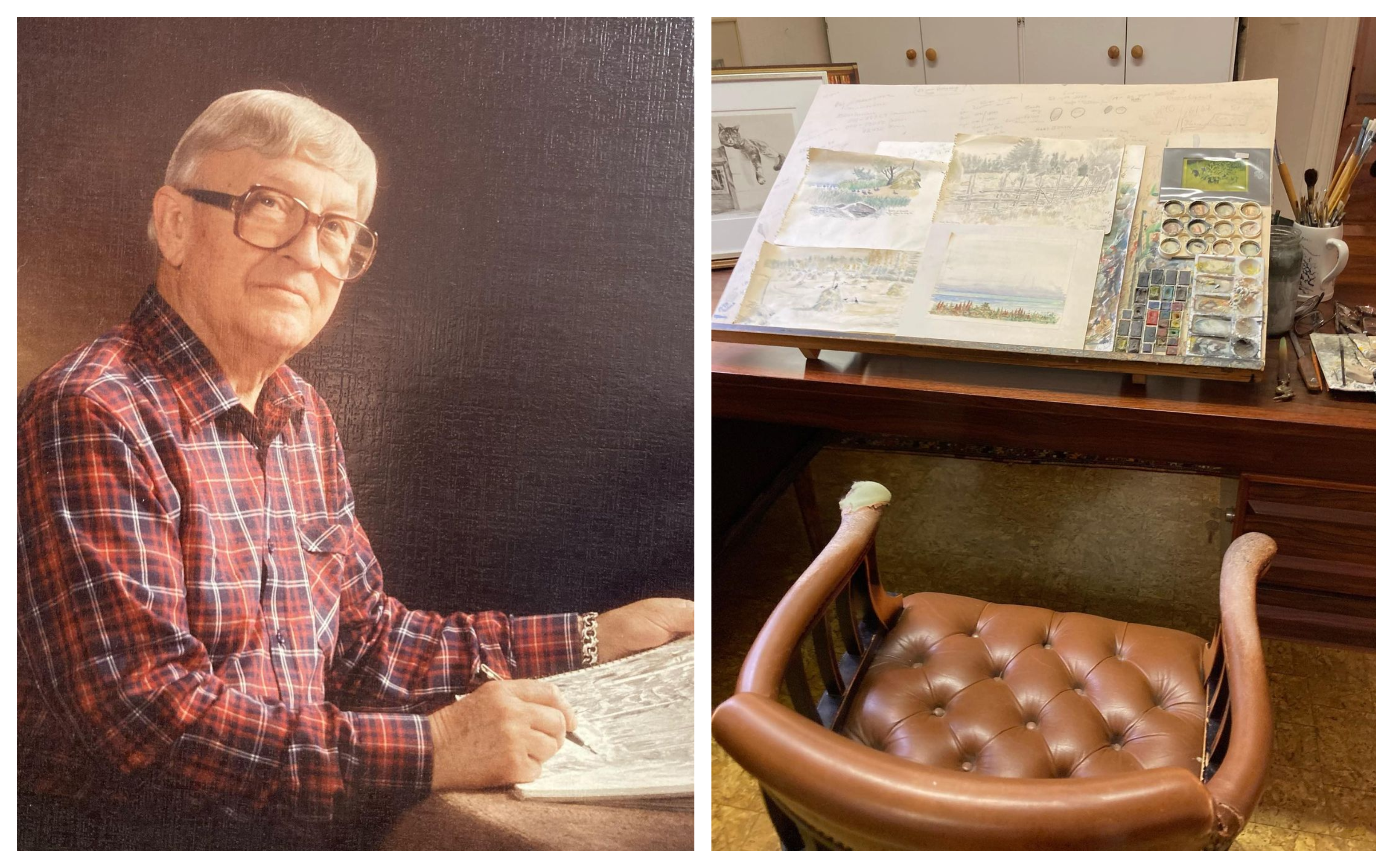
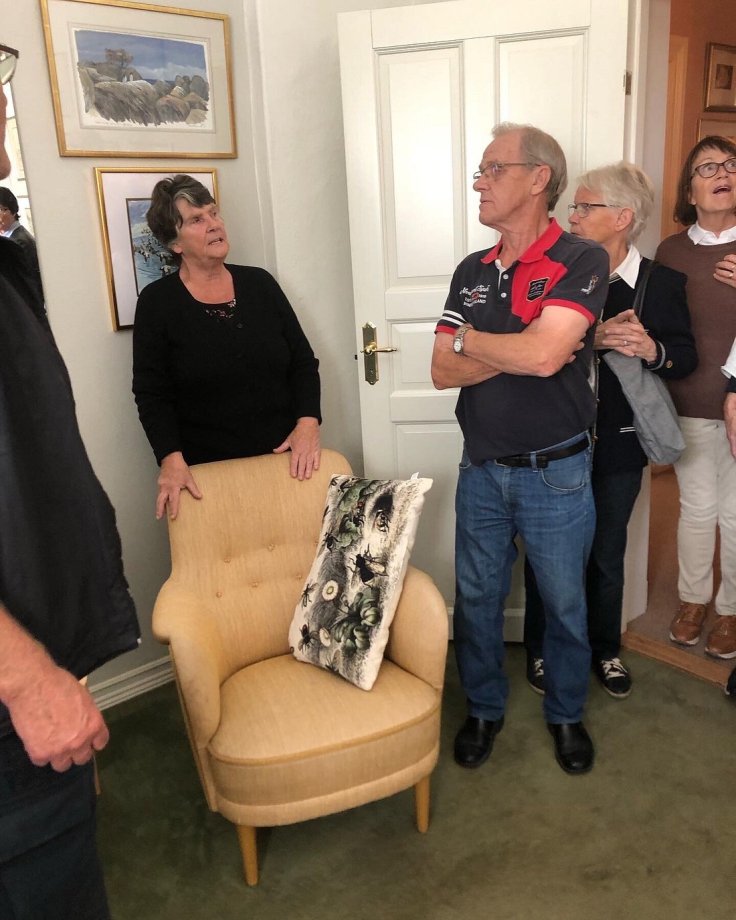
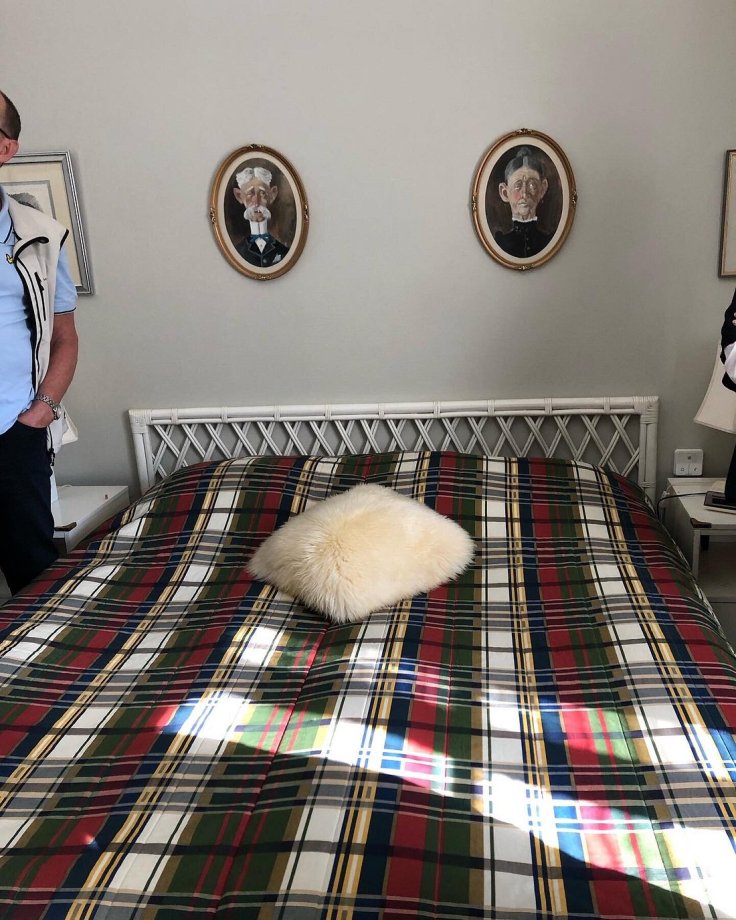
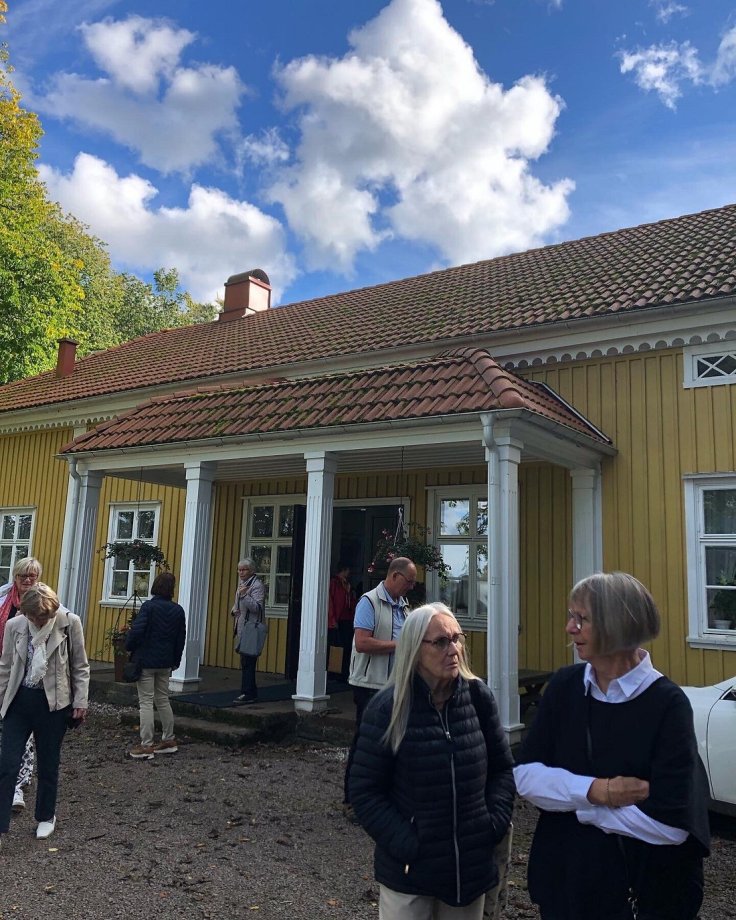
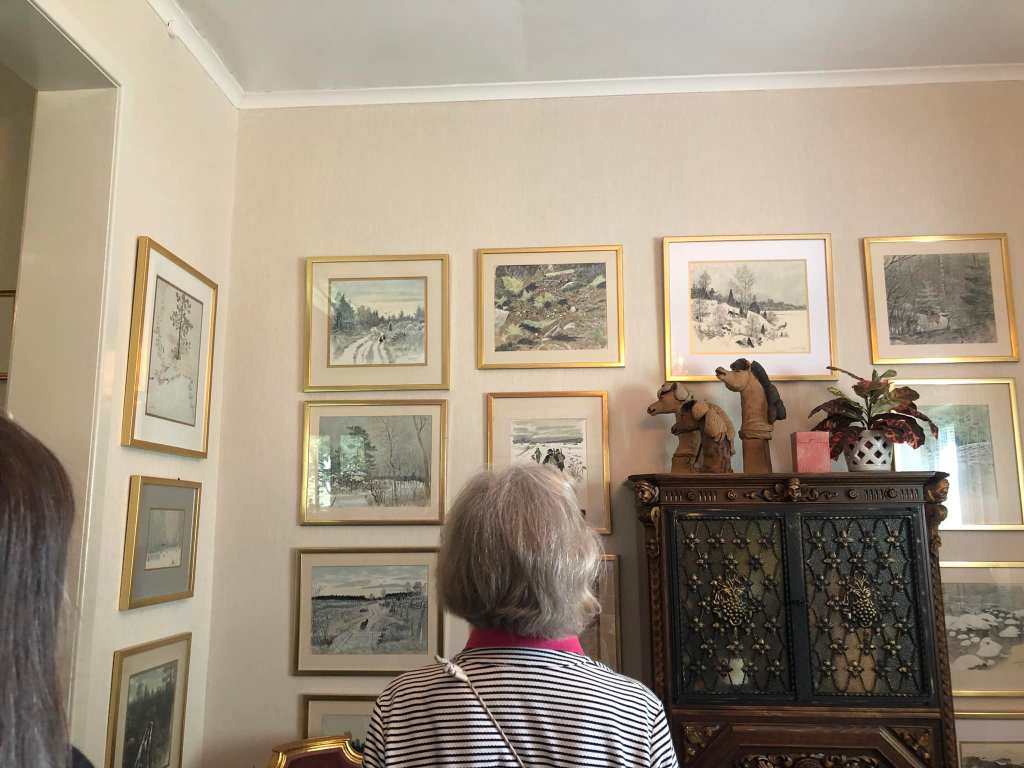
Wiberg passed away on 15 August 1986 in Falköping, Sweden. He was still making art up until the time of his death. In the room to the right of the entrance to his house at Redberga farm, Harald’s desk lays untouched to this day. There are his three glasses, there are the drawings that he never had time to finish. “Time has stood still here“, admits Christina. “Harald used to say that I could clean everywhere but here.” (Source: Hemmets Journal).
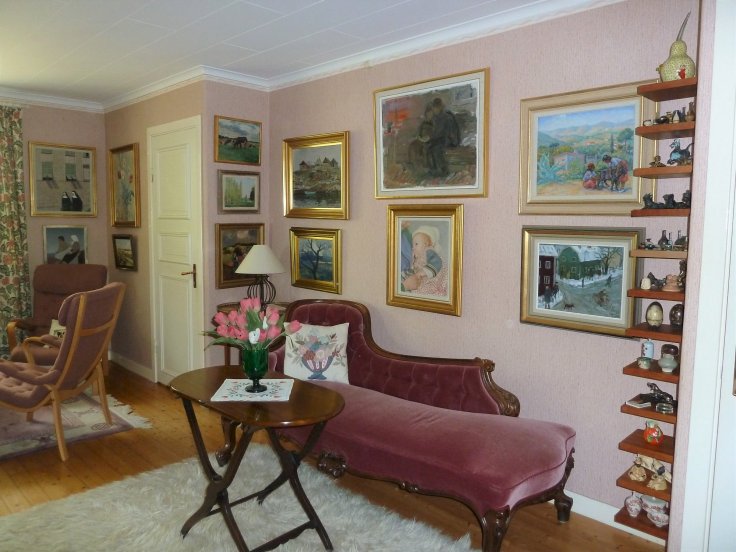
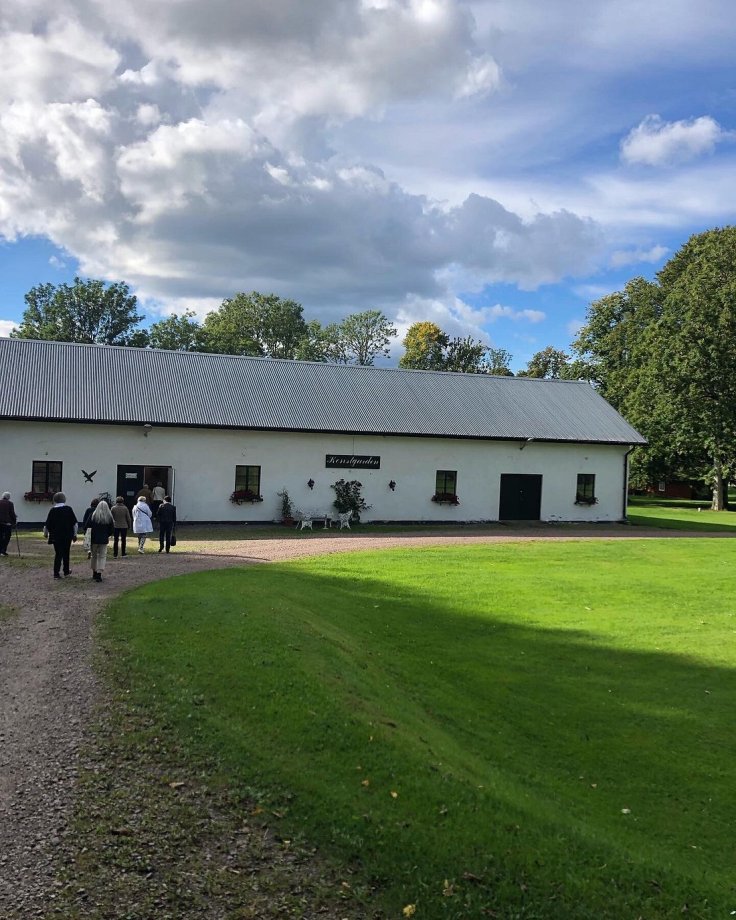
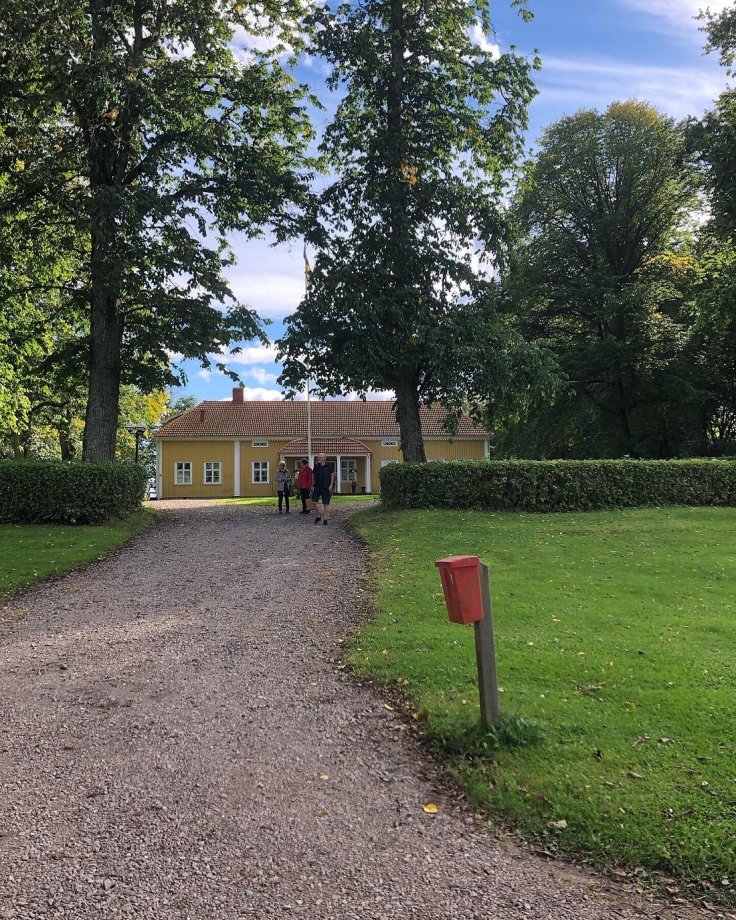
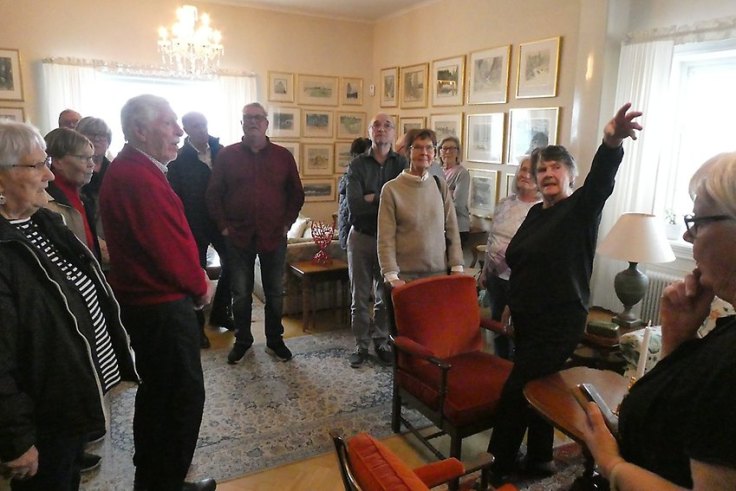
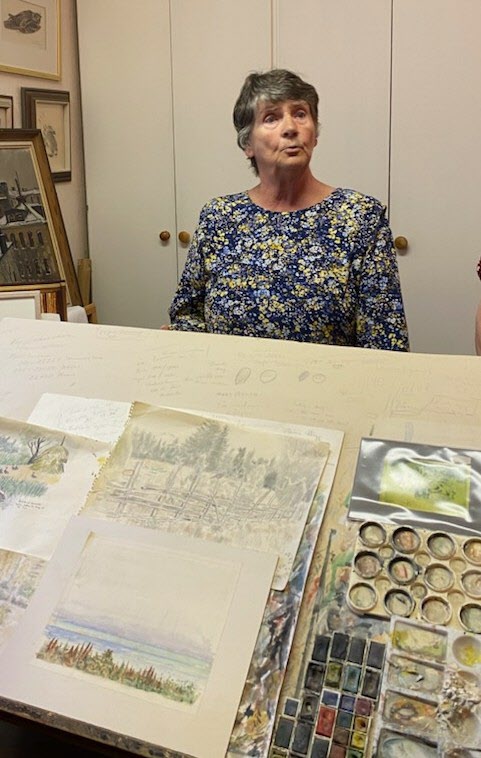
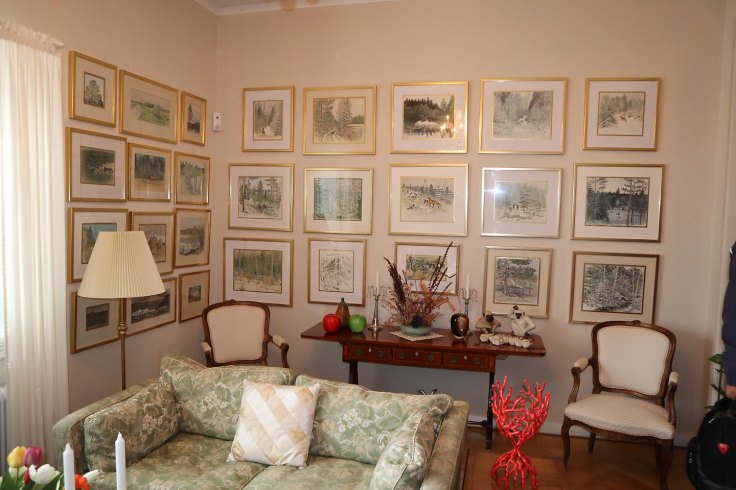
Konstgården Redberga (Redberga Art Gallery) is open to guided tours by Christina Wiberg. One visitor wrote: “She narrates vividly and it is very interesting to listen to the many facts and interesting stories around the various paintings“. See more info here: Trip Advisor.
On 25 September 1986, a program by Boris Engström about the 78-year-old artist from Småland aired on Swedish TV1 with the title: Harald Wiberg: Hunter with pen and brush. In the program, Wiberg reflects on the beginning of spring. “Harald Wiberg is rarely seen without a pen or brush. He does not work to live – he lives to draw, paint, put down on paper everything that his sharp senses perceive from the wonders of nature“. You can watch a clip from the program below (unfortunately English subtitles are not available):
Wiberg’s influence in the realm of wildlife art and children’s book illustration is profound. His ability to convey the personality and spirit of animals has inspired many artists who strive to capture the beauty of the natural world. This has earned him a place as one of Sweden’s most beloved nature painters.

This article only scratches the surface of Wiberg life’s work. His contributions are a cornerstone of Swedish culture, renowned for their artistic excellence and their role in preserving Scandinavian folklore.
Just as the Tomten watches over the farm for centuries, Harald Wiberg’s art will stand the test of time.
About the Author
For more articles visit Dayne’s Discoveries Blog, browse our online shop, or contact us to share information, stories, or photographs relating to Harald Wiberg.

 Dayne's Discoveries
Leave a comment