
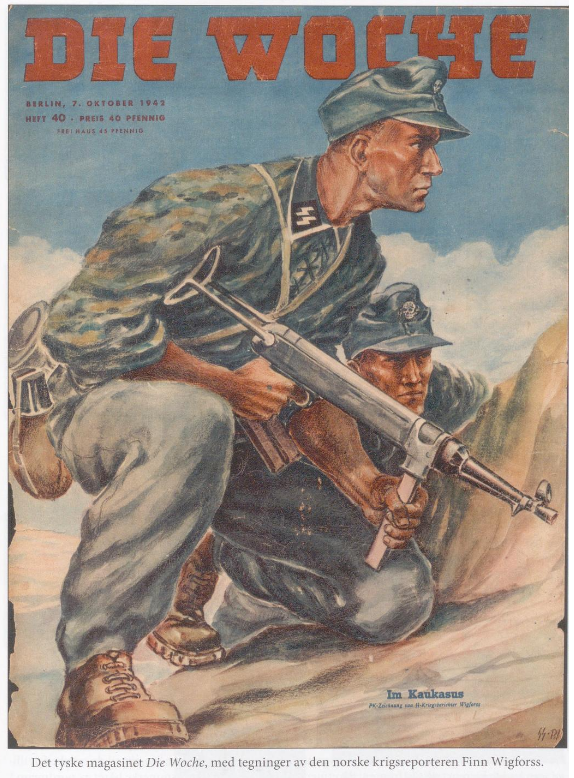
Finn Wigforss was a propaganda illustrator during WW2. He volunteered for the SS Norwegen and became a war correspondent on the Eastern front where he captured scenes directly from the front line.
Finn Wigforss was born in 1909 to a Norwegian mother and Swedish father. He was the youngest in a group of three siblings.
“There are several newspaper articles that refer to his background as an athlete, and it is claimed that he lived in Sweden until 1932. His specialty was the pole vault, and he was for a time an athletics coach in Norway.” (Kristian Hellesund, 2023).
After completing his education, Finn Wigforss became an advertising artist. Some of his first works were advertisements for Stomatol toothpaste.
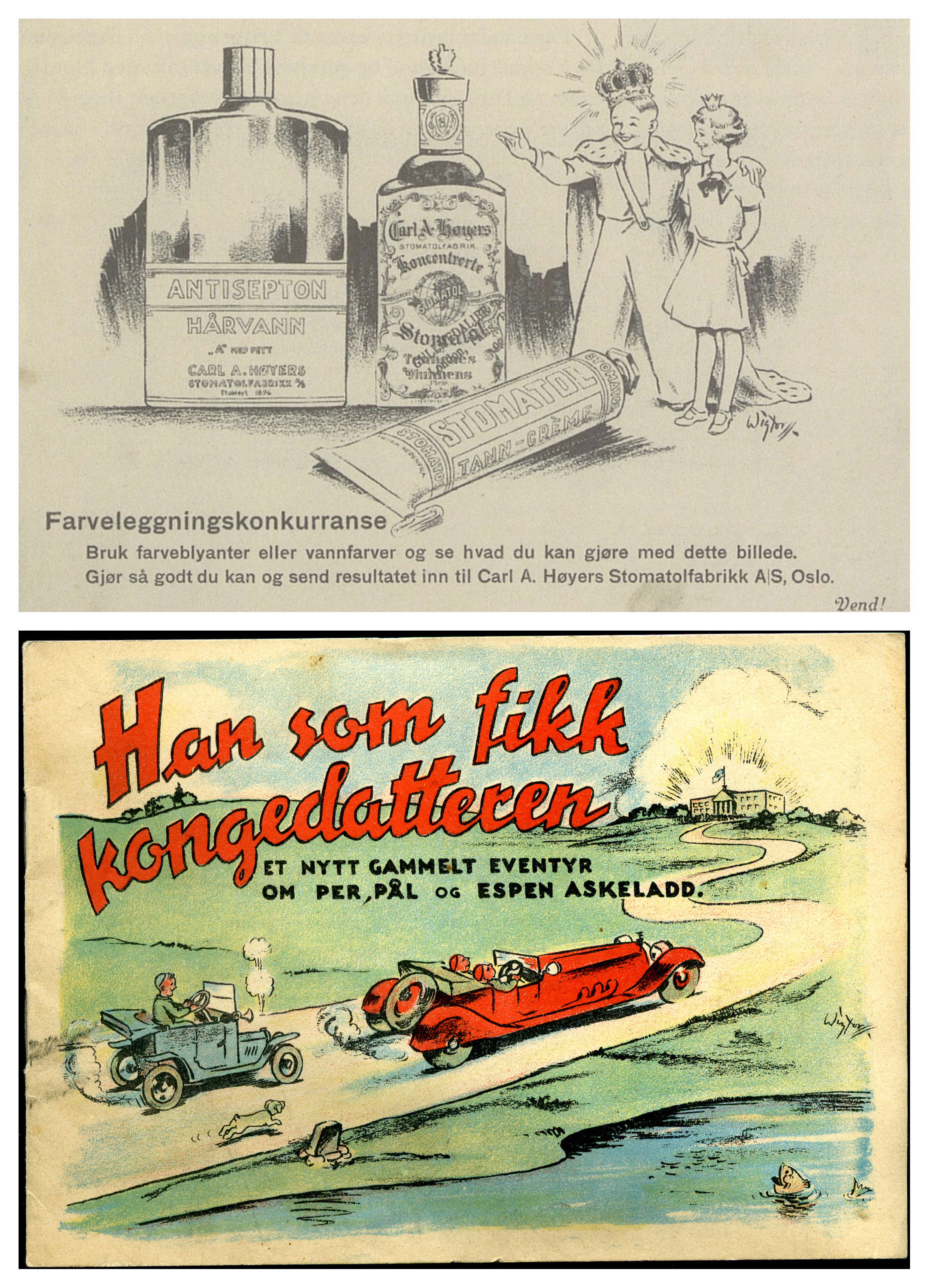

In 1932 he illustrated the cover of the Christmas booklet Sportsmanden (Norske postkort – Nutta Haraldsen, 2018) and in 1933 he created a comic strip called “Skruen” (The Screw) which was printed in Dagbladet and Stavanger Aftenblad in the thirties.
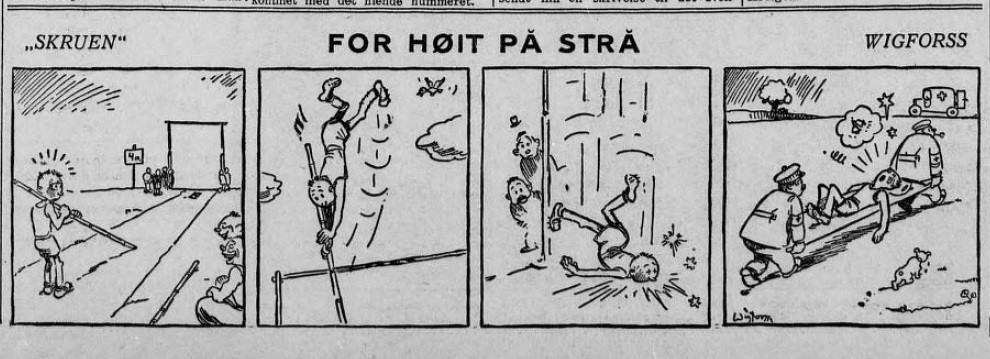
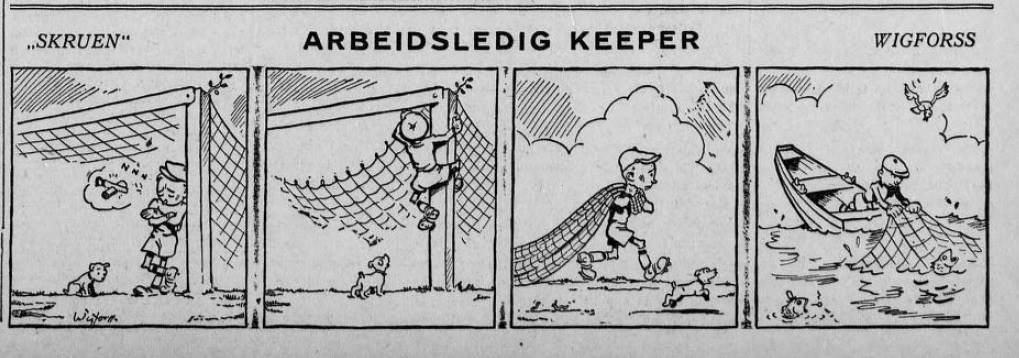

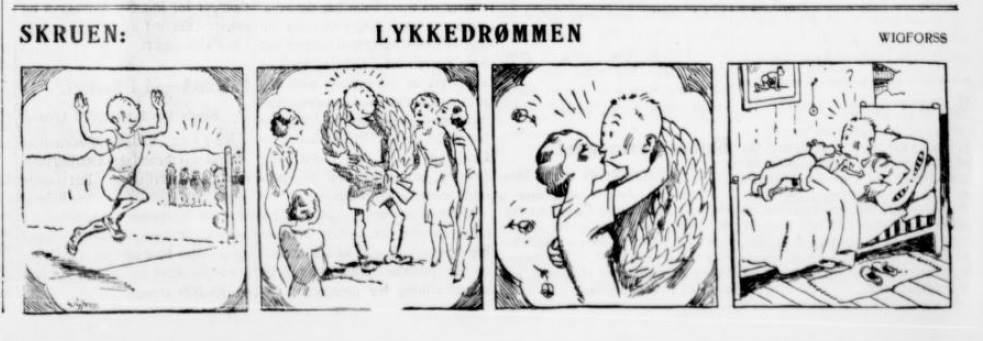
“By all accounts, “Skruen” is the first Norwegian sports cartoon. The main character in the cartoon was Skruen, who found himself in humours contexts when trying his hand at various sports. He had little luck from strip to strip. Like a number of Swedish and Danish newspaper cartoons from the time, “Skruen” was without text.” (Kristian Hellesund, 2016).
Wigforss later became an illustrator and successfully collaborated with detective-oriented magazines.
In 1936 he married Marit Gramstad and illustrated the book Unge mennesker (Young people) by Kjell Steinsvik.
In 1937 he published the book Gatens fugler: politihistorier (The birds of the street: police stories). Wigforss was a freelance draftsman at the time and made his living mainly from assignments for the advertising agencies.
In 1938, Detektiv-magasinets jubileumsnummer (Detektiv-magasinet’s anniversary edition) was published on the occasion of the magazine’s 10-year anniversary. It was in double format, and Finn Wigforss created the iconic cover which depicted Knut Gribb with a pipe in his mouth and the Cathedral on Stortorget in the background.
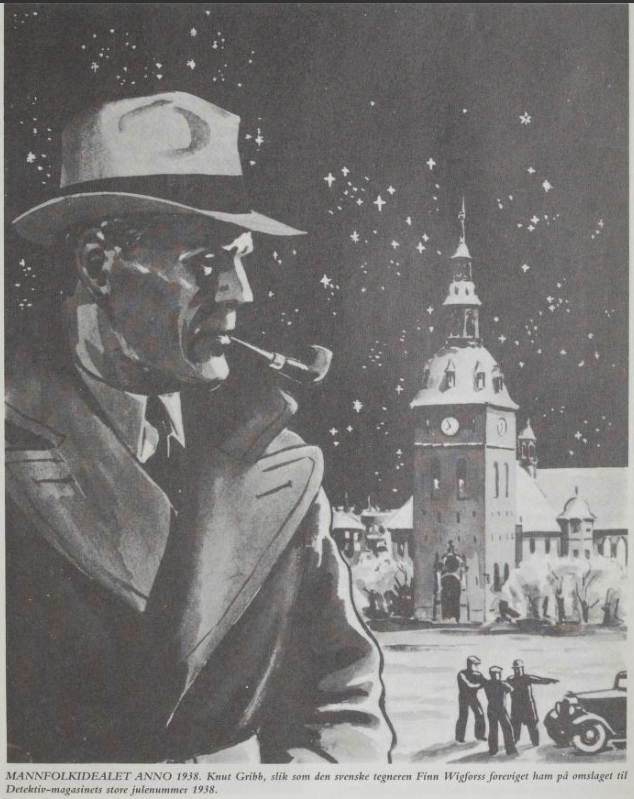

This image soon became a hallmark for Detektiv-magasinet which published Knut Gribb’s adventures. The character of Knut Gribb was born in 1908 in Norway as a policeman who became chief inspector of the superintendency of the police department, earning a great reputation throughout Scandinavia for his naivety and his moral rectitude. A star containing Wigforss’ depiction of Knut Gribb was used as the series logo until 1947.
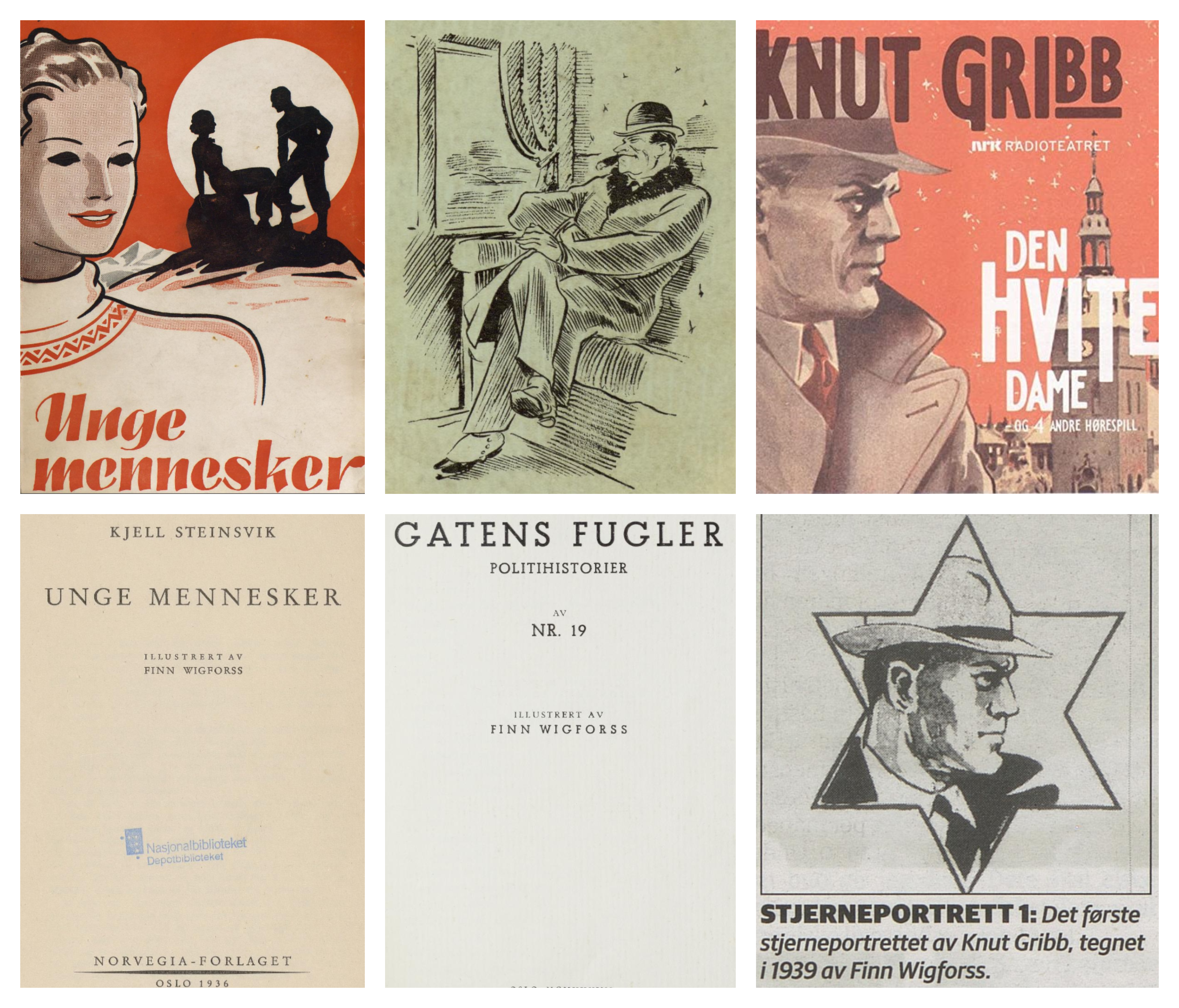
When Germany occupied Norway in 1940, Finn Wigforss created the propaganda postcard (published by Stranberg & Co, Serie 2035) entitled “Troll jager fly” – Trolls chasing planes. The postcard depicts two mythical trolls, supposedly Norwegian and German, hunting for British bombers. Over the years it has been misinterpreted by collectors as Norwegian trolls chasing away German planes and was long thought to be made by the Norwegian resistance.
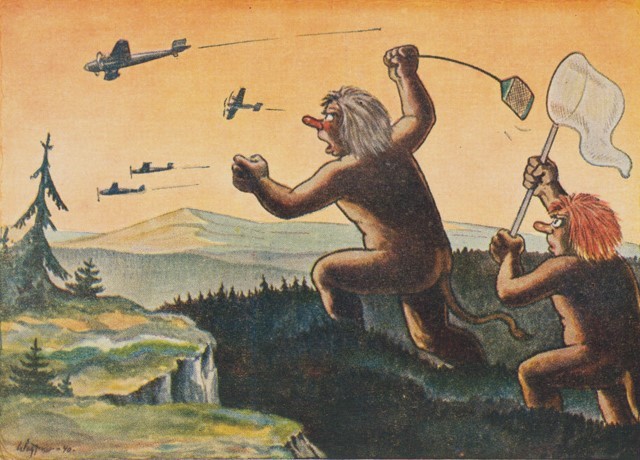
It has recently been discovered that this scene was one of a series of watercolour paintings which told a story in the same way as a comic strip. Erik Sigerson, owner of the watercolour shown below, had the following to share:
“According to my father (Tore Arnesen) these watercolour paintings, 12 or so, were displayed in the lobby of a ski resort where he was staying in 1940. He asked the resort manager about them and was told that the artist was staying at the resort and was paying for his room with the paintings. The manager, like my father, believed the planes in the painting were German, since there were no markings on the planes. At some point, dad got to know Wigforss slightly. One day there was a knock on my father’s door. It was Wigforss. He said he needed to borrow a shirt. Dad said he would trade him a shirt for one of the paintings displayed in the lobby. Wigforss ran to the lobby, removed one of the paintings from the wall and gave it to my father. It’s possible that Wigforss made another painting to replace the one he gave to my father. It also seems that he may have put some thought into his selection. As this scene would likely not be missed since it wouldn’t break the sequence of events in the series. My father said the first painting in the series was the planes flying over a fjord approaching land, with the 2 trolls peeking over the top of a hill watching them. The last in the series was the trolls very happy, having brought down a couple of the planes, as the remaining planes beat a hasty retreat over the fjord. Judging from the sequence of events, my painting would be the one in the series right after the one in the postcard.”

It definitely appears that the painting is from the same series. Same two trolls, same hair colour, carrying the same fishing net and flyswatter. The planes in the painting are depicted plain grey with no symbols to determine whether they are British or German.
During this time, Wigforss also created comic strips in a boys’ magazine and made drawings for the magazine Tyrihans; the first two books in the “Star series” and two posters for Bladkompaniet.
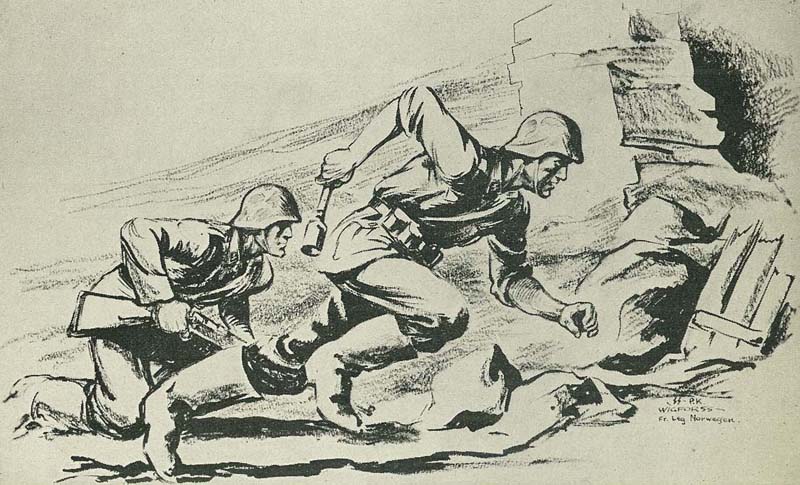
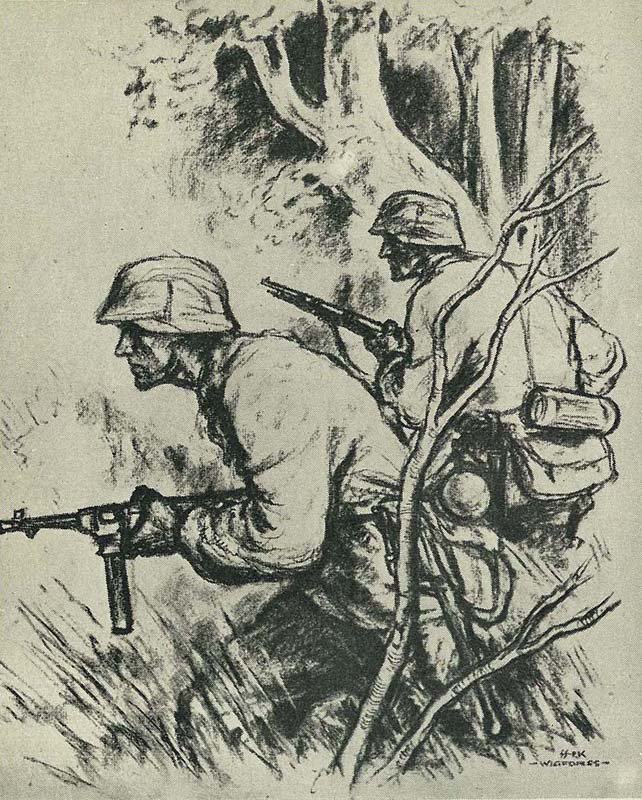
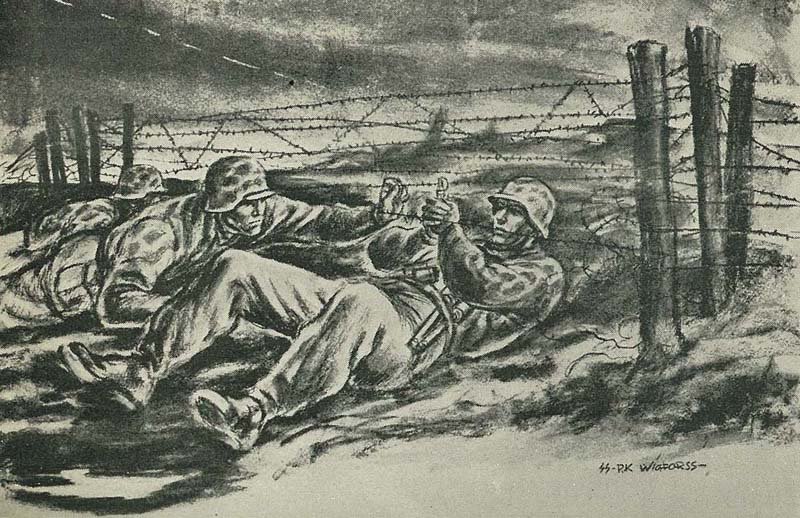
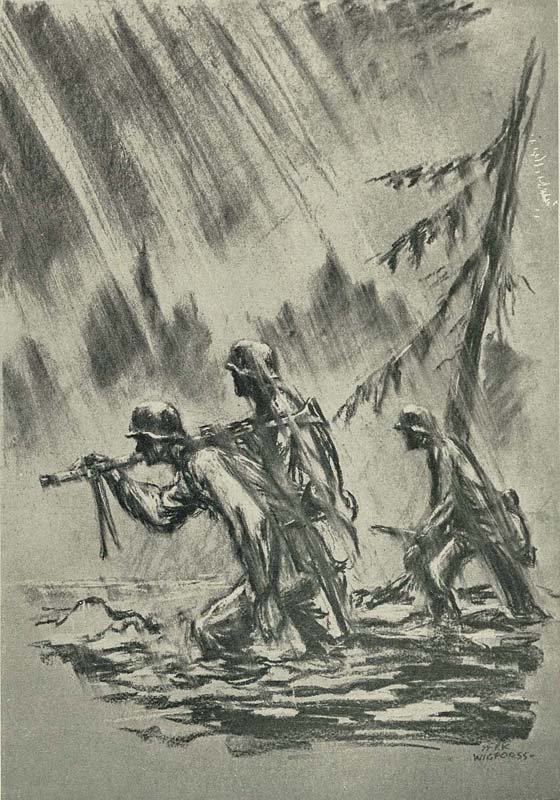
In 1941 Finn Wigforss volunteered for the SS Volunteer Legion “Norwegen” and was soon sent to the Eastern Front as a war correspondent (Kriegsberichter) and artist in the rank of Untersharfuehrer. While serving with the “Das Reich” Division of the Army Group Guderian, he was with the SS-Kampfgruppe which came the closest to Moscow. Soon he became quite popular – his drawings were often published in Norwegian military journals.

His drawings, sketches and paintings were always autographed with the caption SS PK (Propaganda Kompanie) Wigforss Fr. Leg. (Freiwilligen Legion) Norwegen (Norwegian Volunteer Legion). See example below:
In 1943, Finn Wigforss took part in an exhibition of war artists in Berlin where he won an award. His works were recognized by the Ministry of Propaganda of the Third Reich as so successful and suitable for wide publication in the Nazi press that German officials began insisting that Finn Wigforss remove the inscription “Frw. Leg. Norwegen” (Norwegian Legion Volunteer) from the winning work. However, Wigforss threatened to leave the exhibition if it didn’t stay in place.
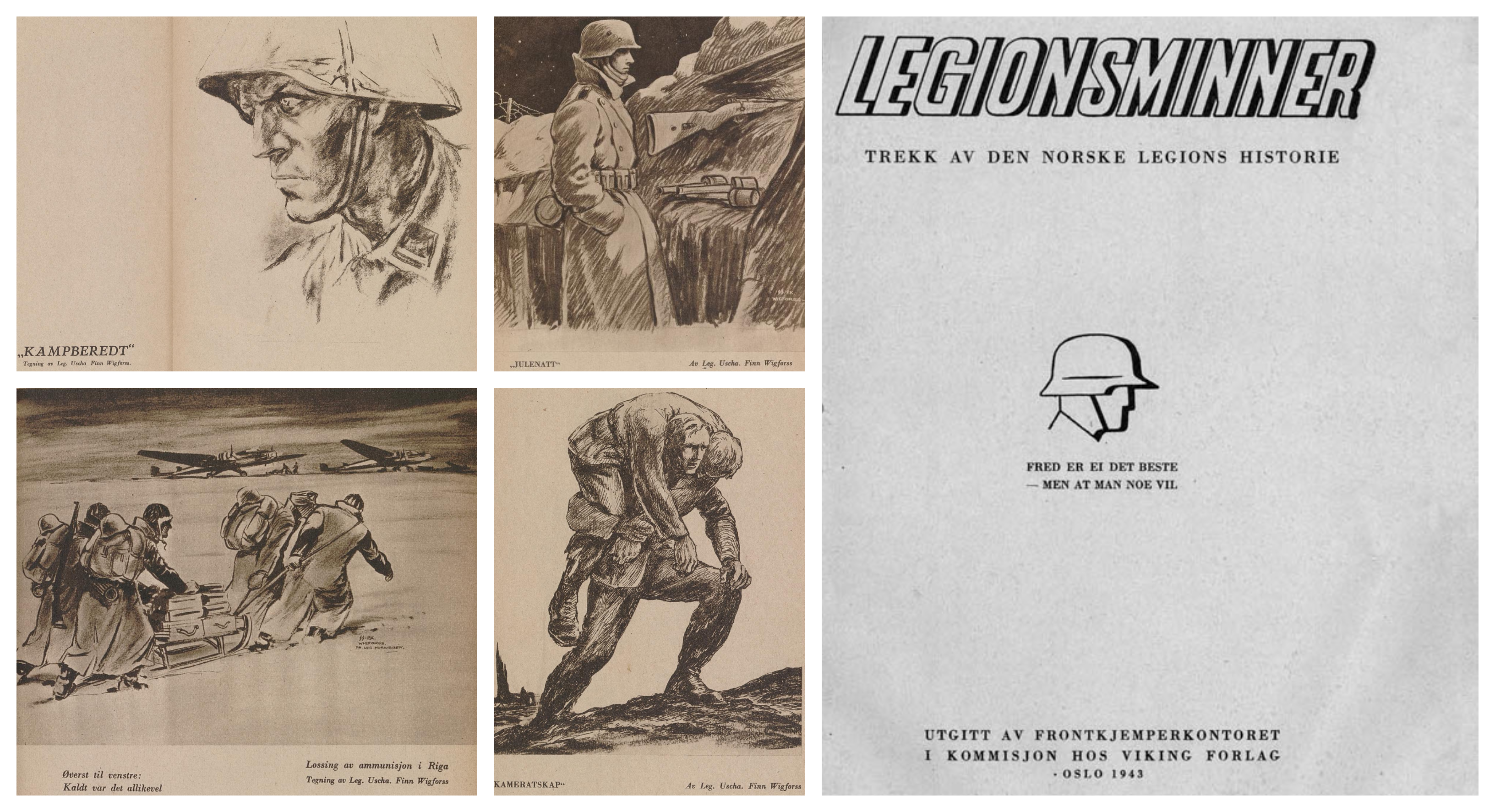
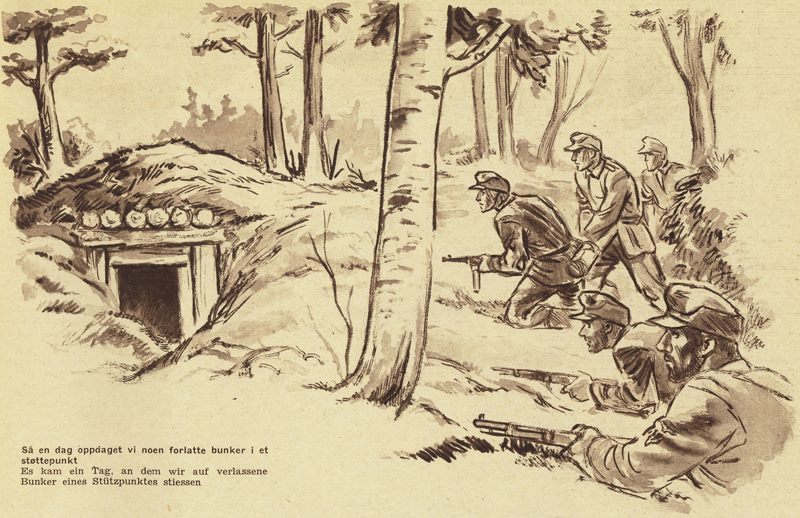
Together with Birger Cranner, he illustrated the book dedicated to the Norwegian Waffen SS legion: Legionsminner: trekk fra den norske legions historie (Legion memories: features of the history of the Norwegian legion) published by Viking publishing in 1943.
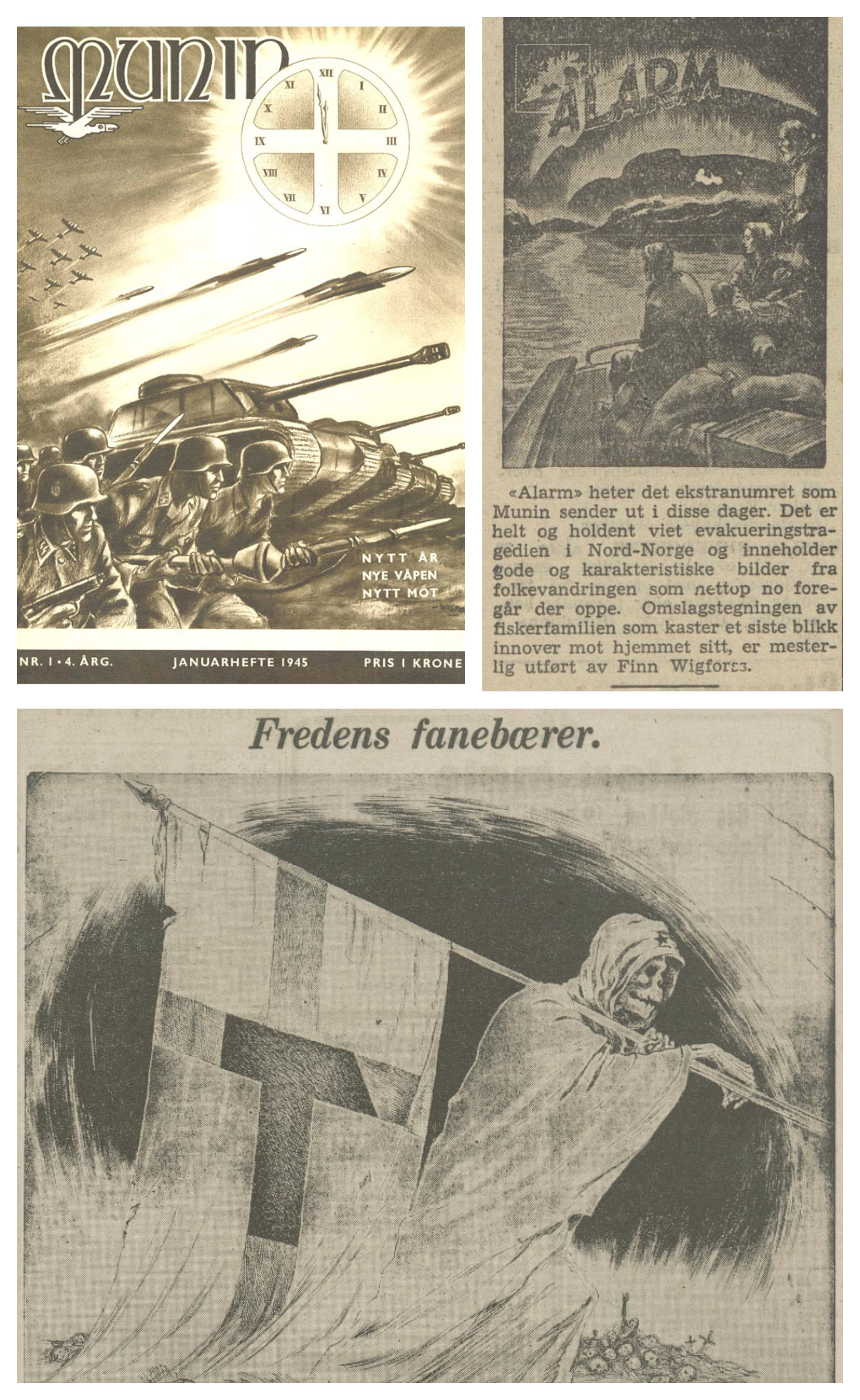
By the end of 1943, graphic works by Finn Wigforss appeared in numerous German and Norwegian magazines (Munin, Nordlandir, Fritt Folk, etc.).
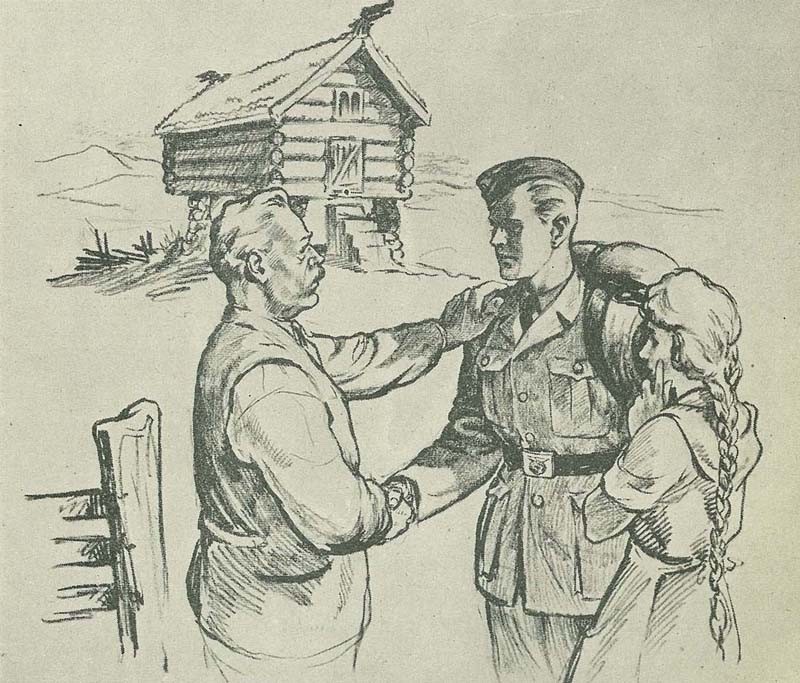
In 1944 Finn Wigforss published his drawings in a book entitled “Krigens ansikt: tegninger fra kampen i aust” – The face of war: Drawings from the battle in the East. In concise texts and drawings, Wigforss describes the battles of the volunteer Norwegian SS legionnaires on the Eastern Front. His drawings provided realistic perceptions of the war, seen with his own eyes on the front line.



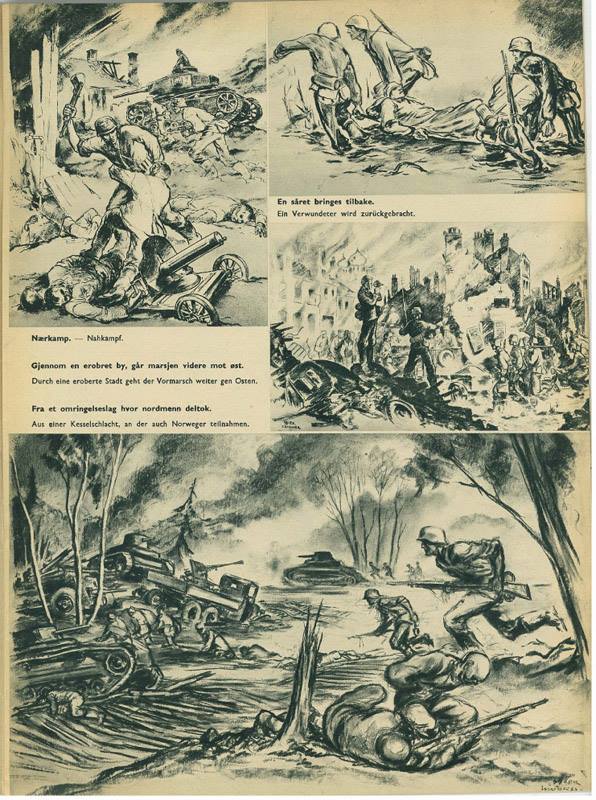
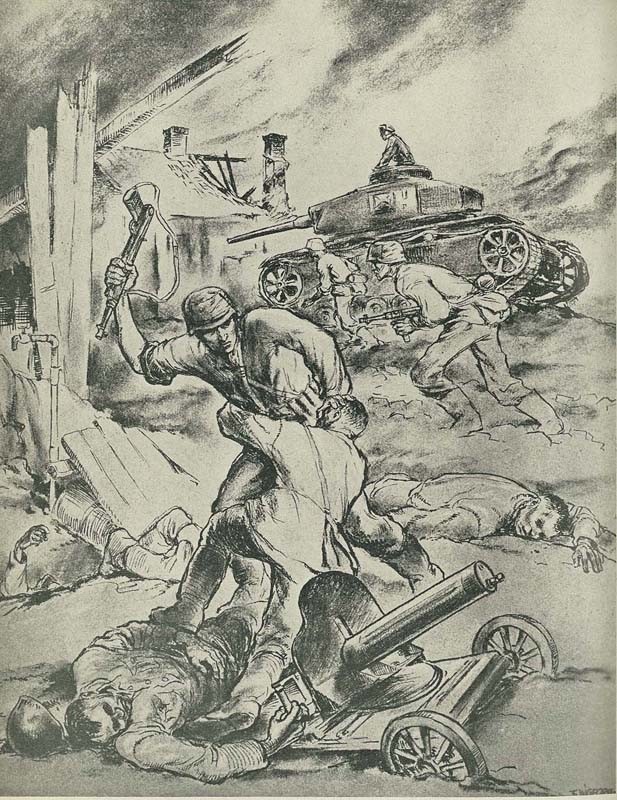

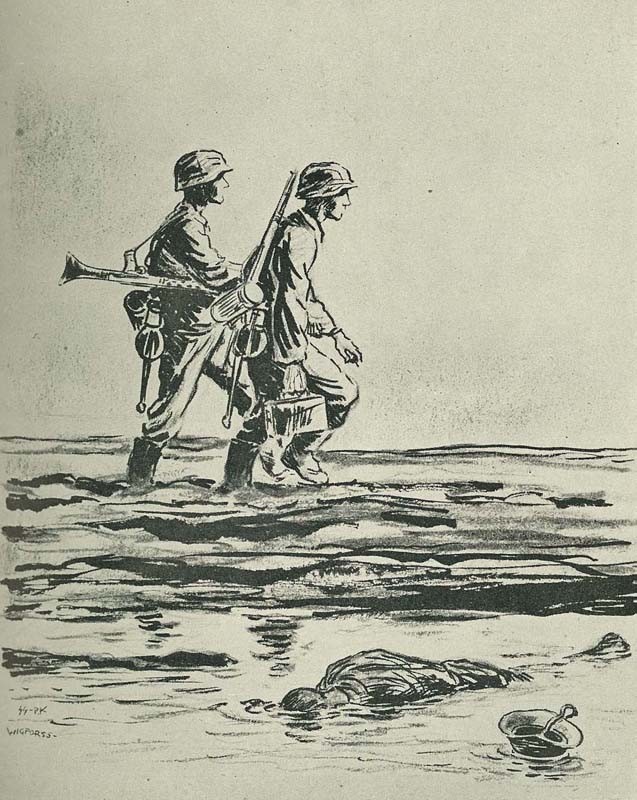


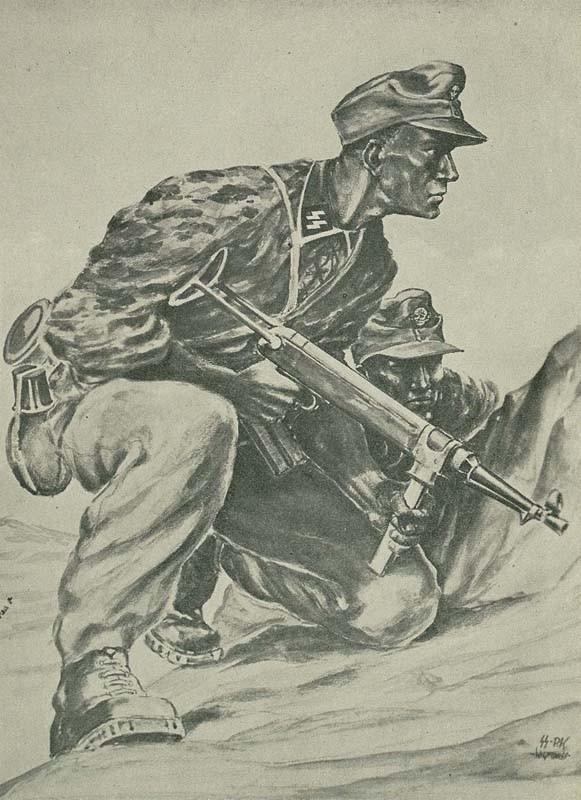
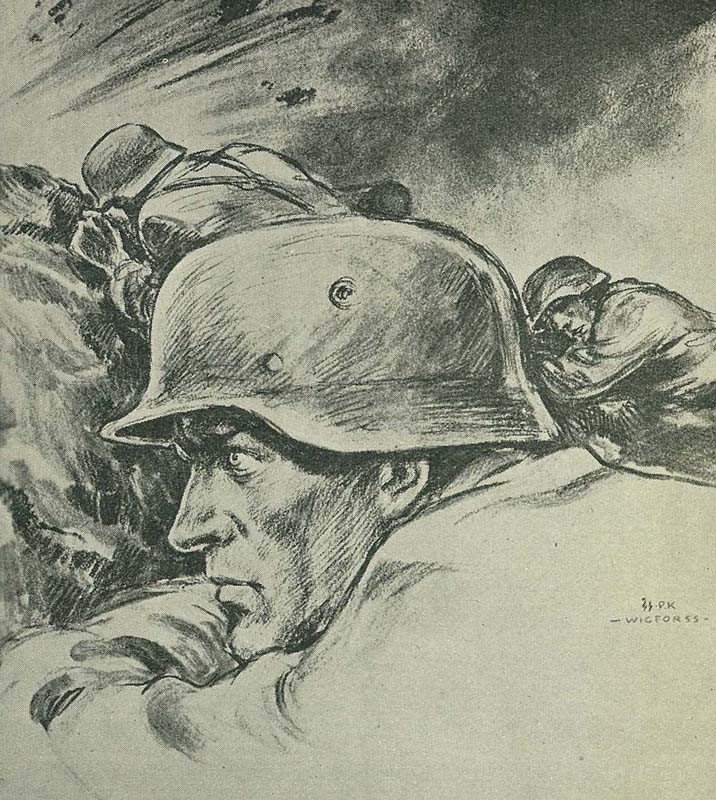


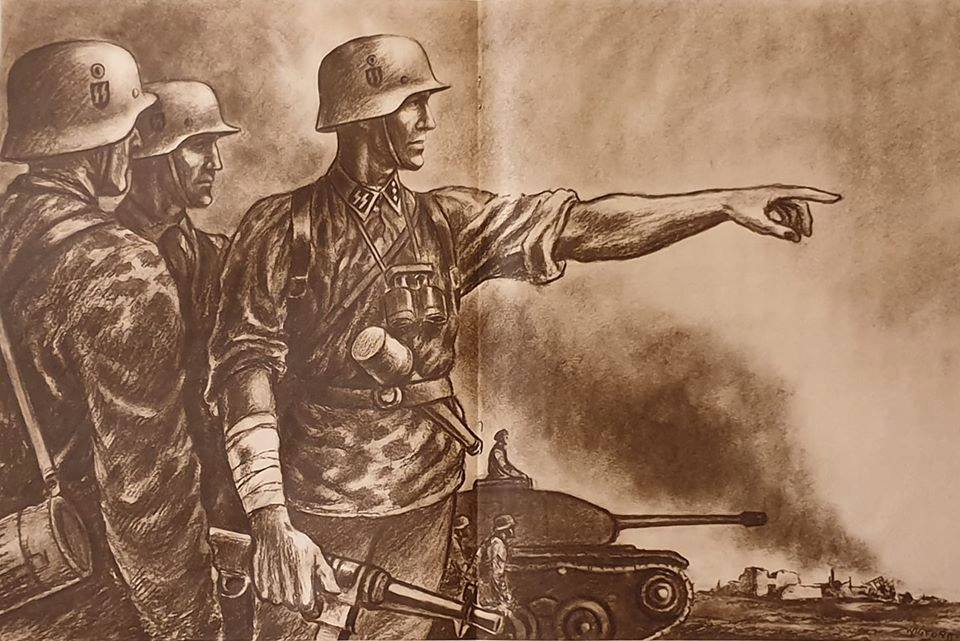
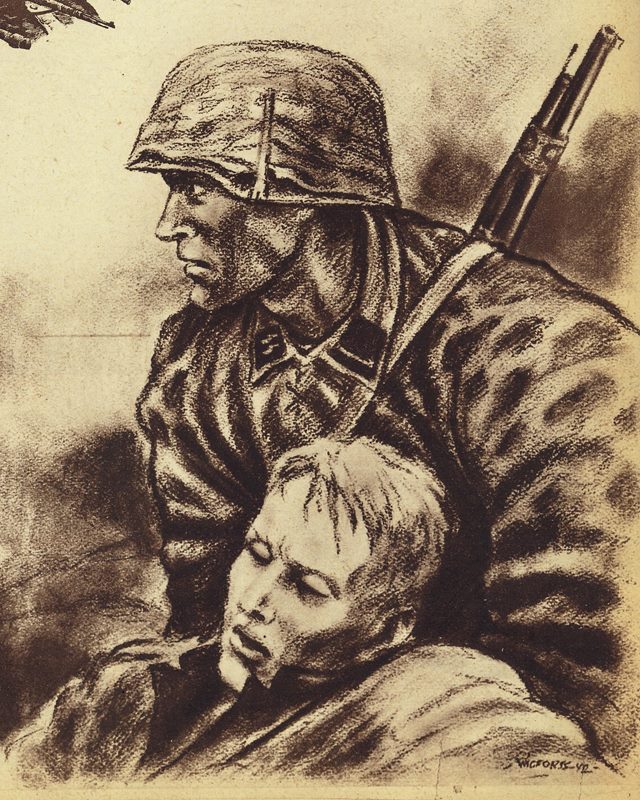
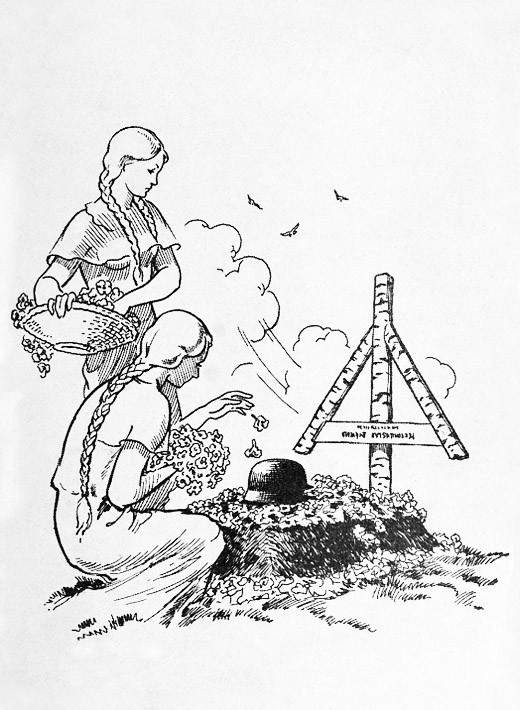
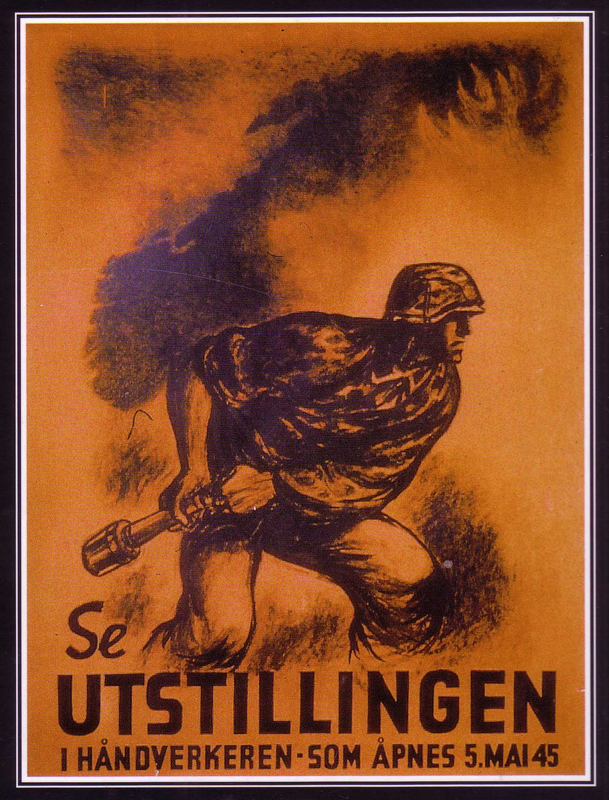
In the last days of the war, 5 May 1945, an exhibition of the fighters of the front under the motto “Norway calls” was inaugurated in Oslo, directed by the general manager Øystein Orre. The central theme of the exhibition according to what was reported by the newspaper “Fritt Folk” was “the fighters of the front fought for the cause of Norway“. Finn Wigforss, Harald Damselth, Guttorm Pedersen and many other Norwegian artists took part in the exhibition which was opened by the head of the “Frontkjemperkontoret” (Front Fighters Office) Bjørn Noreger and Police Minister Jonas Lie. The exhibition lasted only three days because on 8 May 1945 Germany signed the capitulation.
Finn Wigforss remained famous for having created and printed the last poster before the end of the war: it was precisely the poster announcing the exhibition at Håndverkeren in Oslo on 5 May 1945 in the format 79 by 105 cm and printed in 1000 copies. In the poster we see a Norwegian Waffen SS looking east and preparing to throw a hand grenade: in the background the profile of Norway to be defended.
Soon after the end of the Second World War, Finn Wigforss was arrested. His trial took place in November 1945 at the Hedmarken district court in Hamar.
The following was published in the newspaper Hamar Stiftstidende on 24 November 1945:
“Defendant no. 1 is the not unknown draftsman Finn Wigforss. Before the war, he was a widely used man in the daily press and, according to what appears, has not been on the lazy side in recent years either. After pleading not guilty and being examined about his relationship up to the time he signed up for frontline duty, he answers the question whether he knew there was a war between Norway and Germany that he was aware of it. However, he still did not understand the folly of fighting against Russia, which was then connected with Norway. Regarding his frontline efforts, he says that he has never been in combat. He participated out of purely professional interest and was a draftsman for a Norwegian propaganda company for a while. After some time, however, he was ordered over to the German SS propaganda company. Here he drew war drawings that went through Berlin and beyond Europe, of course after first being subject to strict censorship. Some of his drawings were collected and published in Norway. These are shown in court, which notes some pictures under the title “A people’s tragedy”. Here, Wigforss has shown us in drastic strokes a starved and tormented people, which would probably be a typical image of the Russians. He is asked more about these drawings, whether they are not propaganda or perhaps things he has seen elsewhere, but he firmly denies this. These are things he saw, he says, among the Russian civilian population. However, he adds, “behind the German lines”, and without wanting to assert anything or transfer our thinking to our readers, the explanation may be found there. After his return, he continued to draw, and decorated a Front fighter exhibition in Oslo. Regarding the value of his drawings as propaganda material, he believes himself to have almost depicted the war pacifistically. His drawings were therefore not a call to go to the front. The prosecutor goes into more detail about his relationship with the notorious informant Kaas. The defendant says that he knew this man before the war and one day was called to a conference with him. Here he was offered the job of getting hold of people who “said and enriched themselves by sending young boys to England”. This, however, he refused to do.”
Finn Wigforss was sentenced to 4.5 years of forced labour at Ilseng prison. While in prison, he worked in the epistolary genre writing letters and poems. Many of the poems he wrote were dedicated to the fighters of the front, their families and the suffering caused by his generation.
To the fighters of the front
by Finn Wigforss
Loyal to yourself and loyal to the Ideal,
with your life at risk you advanced.
But everything you thought right
was seen as wrong,
and everything you called honor
was converted into treason and shame.
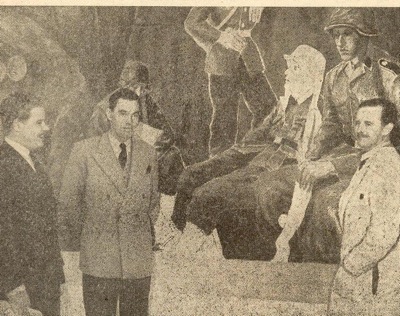
Pictured in the background is an unfinished painting by Finn Wigforss. Image taken from the National Socialist newspaper “Fritt Folk”. From left, exhibition general secretary Øystein Orre, Front Fighters Bureau chief Bjørn Noreger and artist Harald Damsleth. Source: Thule Gallery
In 1945 he reproduced his iconic Norwegian troll postcard drawing, only this time he depicted a family of Norwegian trolls chasing away German bomber planes (identified by the iron cross symbol on the wings).
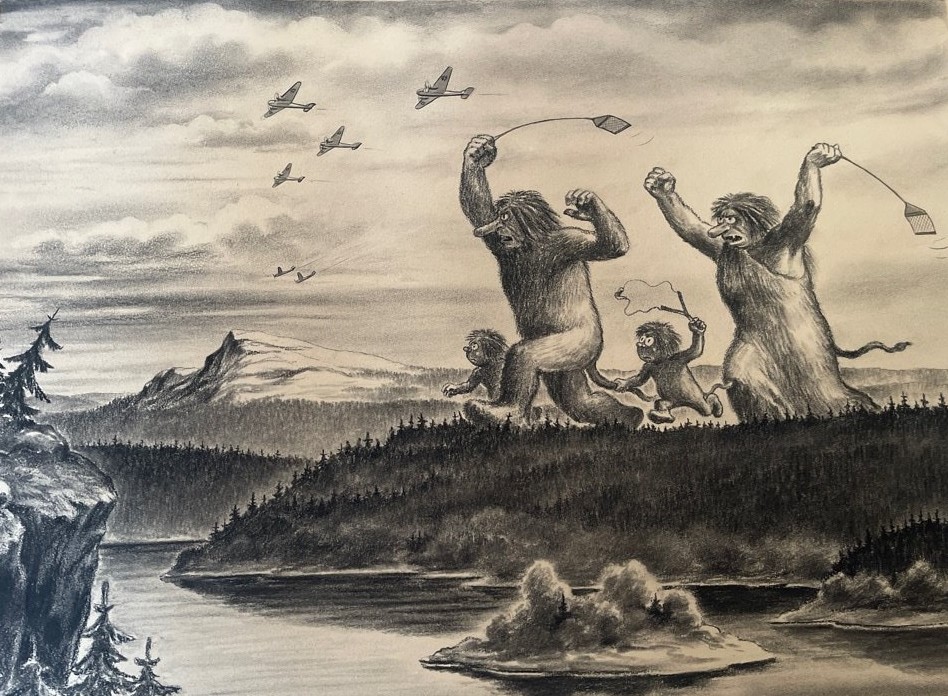
The sketch was only recently discovered in the family of another volunteer of the SS Norwegen, Bjørn Lindstad. Bjørn published a book entitled Den Frivillige – En Frontkjemper forteller sin historie (The Volunteer – A front fighter tells his story).

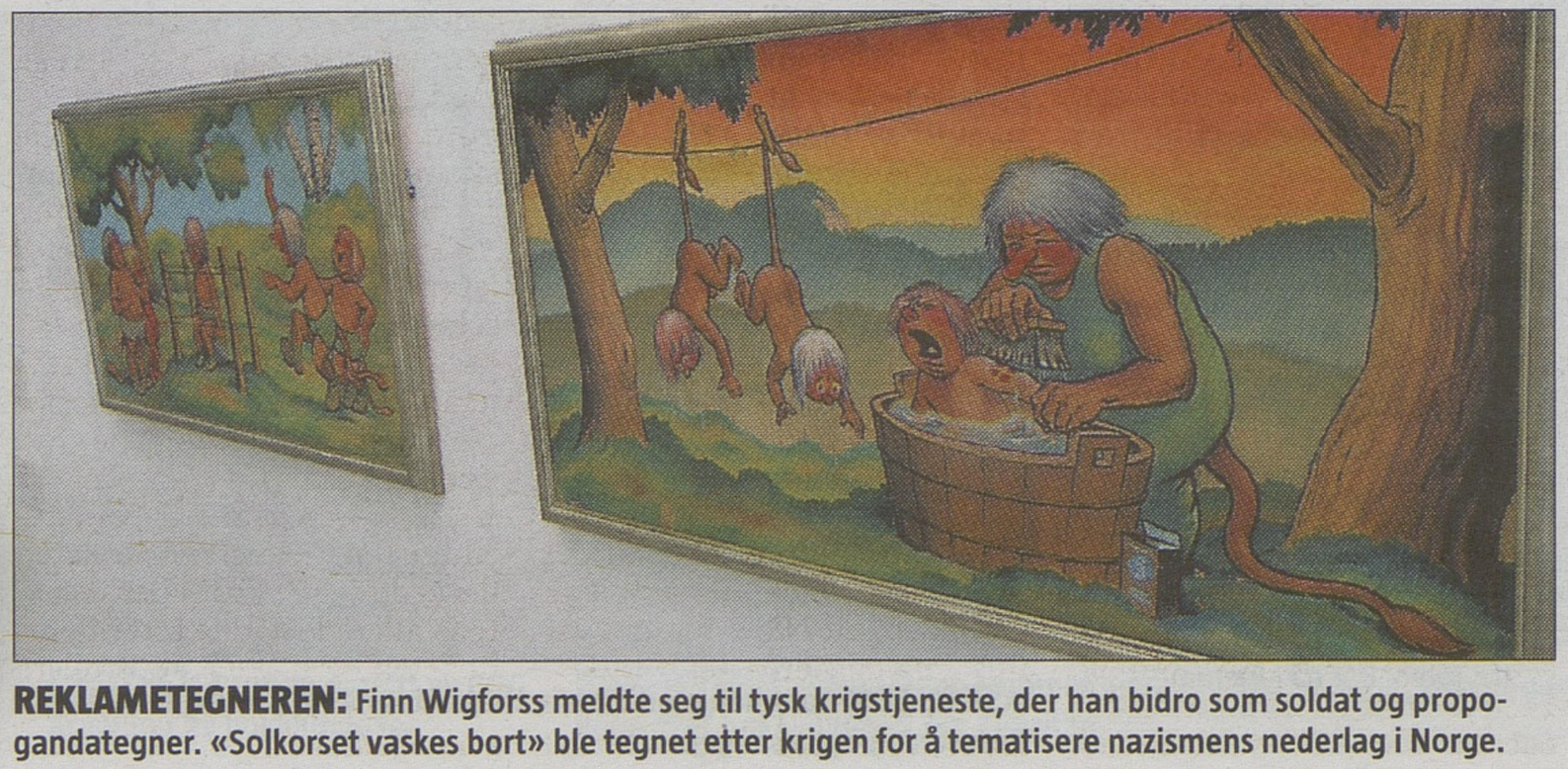
In 1945 Wigforss also produced a drawing entitled Solkorset vaskes bort (The Sun Cross is washed away). The sun cross symbol was used by the Norwegian Nazi party Nasjonal Samling (NS) during World War II. In this drawing Wigforss illustrates his own situation in 1945. He depicts NS members as trolls that are hung out to dry after their mother (which could refer to Norway) has cleansed them of their sun cross marking.
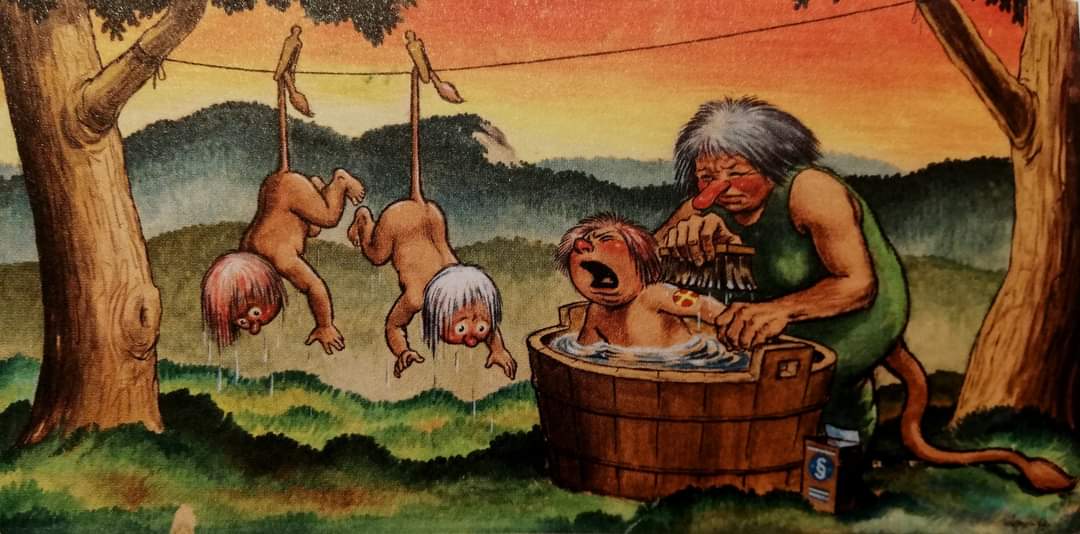
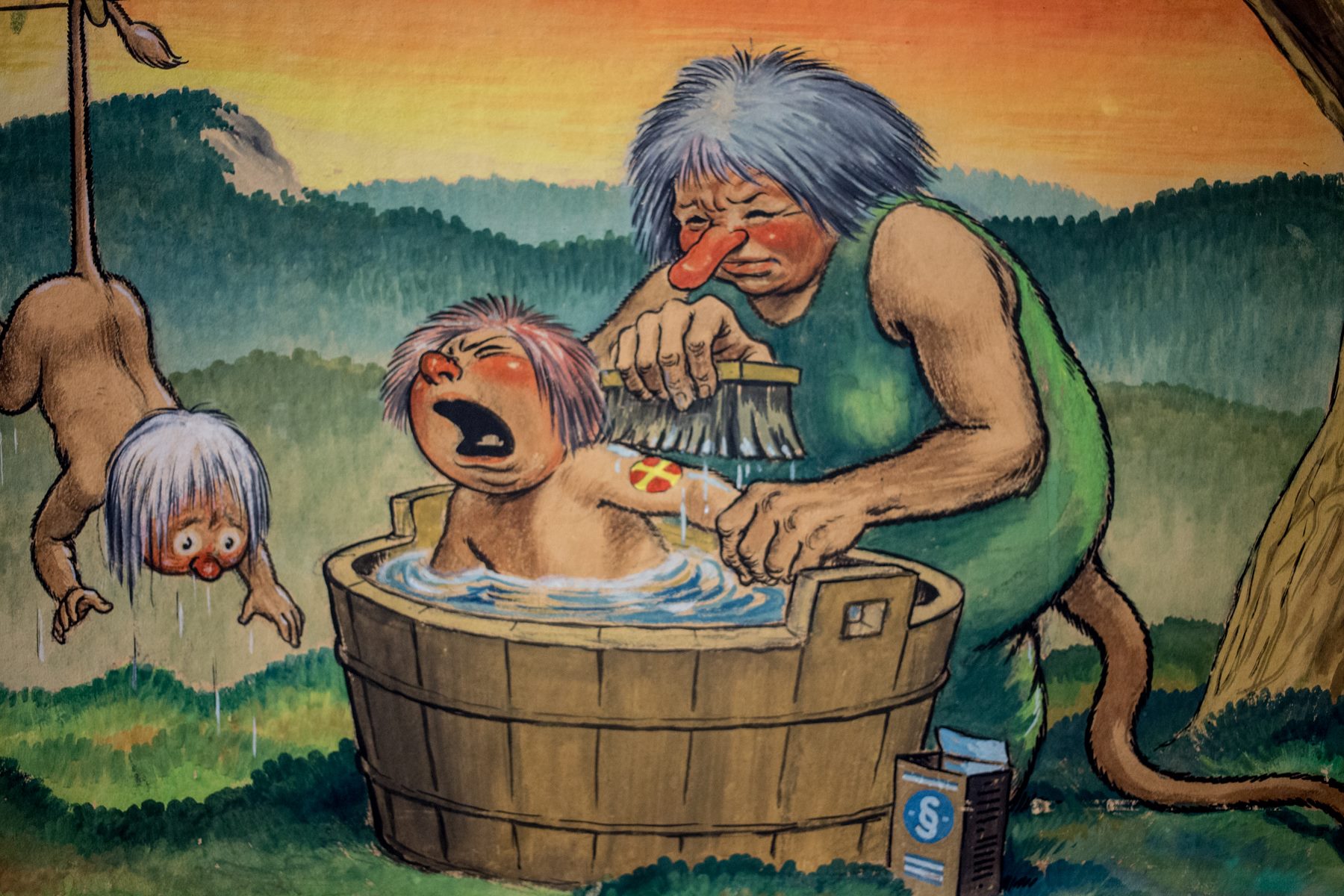
This drawing along with another entitled Bak piggtråd (Behind barbed wire), were exhibited by Bomuldsfabriken in 2015 as part of a collection of art during Norway’s occupation 1940-45.
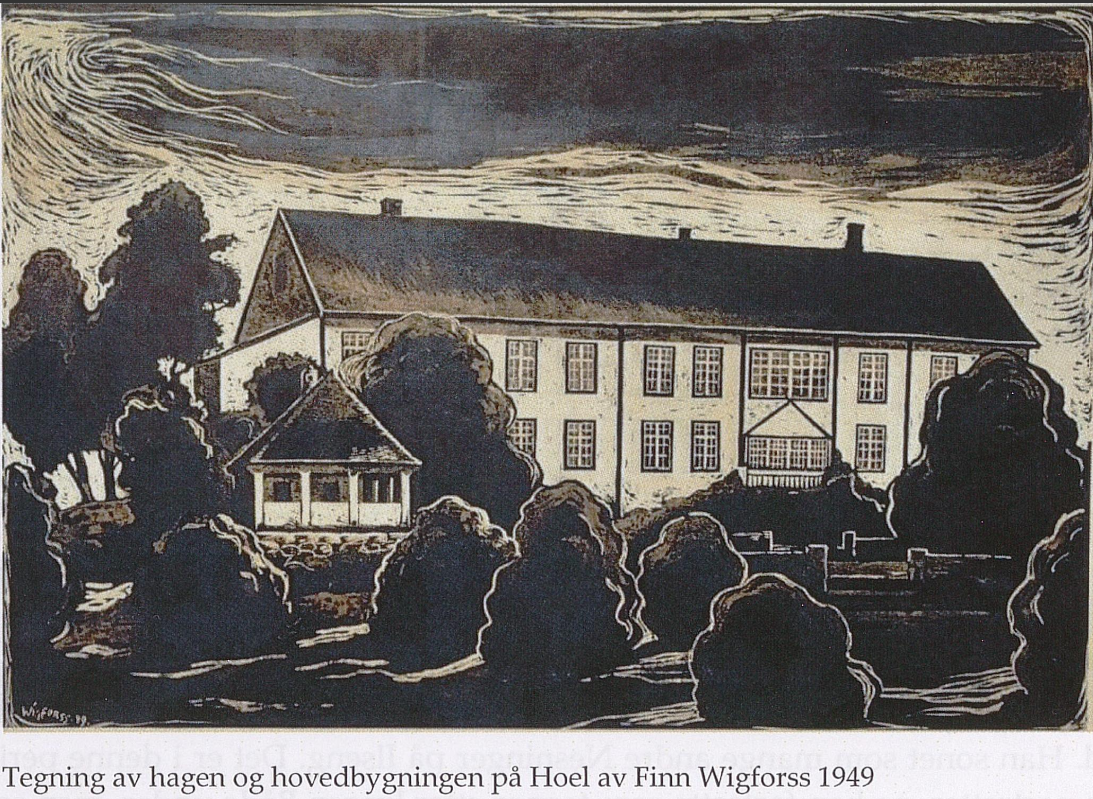
After he was released, there is barely any mention of him in the Norwegian library archives. He made this drawing of the garden and the main building at Hoel in 1949:
He remarried to his childhood friend Olena Holmberger. The couple moved to Sweden and in 1950 they welcomed their first and only child, Kåre Wigforss. He worked for some years as an advertising cartoonist and book cover illustrator in Sweden. The couple later got divorced and he moved back to Norway.
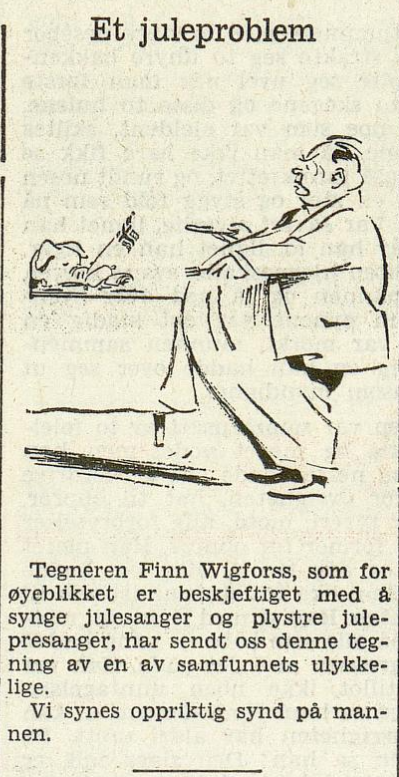
Another drawing appeared in Morgenposten, 23 December 1960:
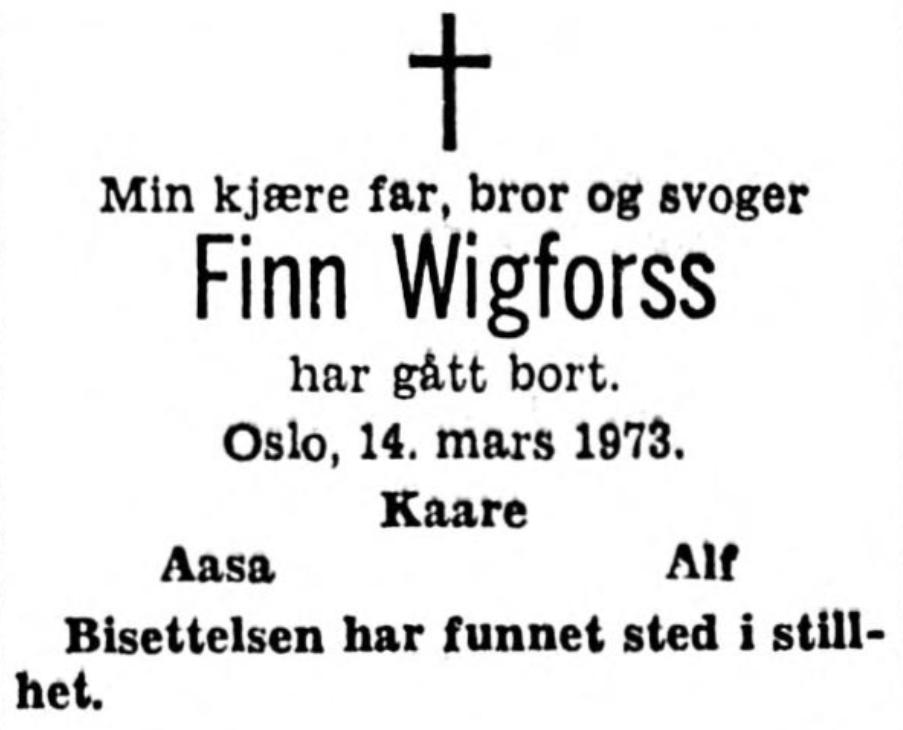
Finn Wigforss passed away in Oslo on 14 March 1973 at the age of 64. Today his illustrations from the Eastern front often appear in books relating to WW2.
About the Author
For more articles visit Dayne’s Discoveries Blog, browse our online shop, or contact us to share information, stories, or photographs relating to Finn Wigforss.

 Dayne's Discoveries