
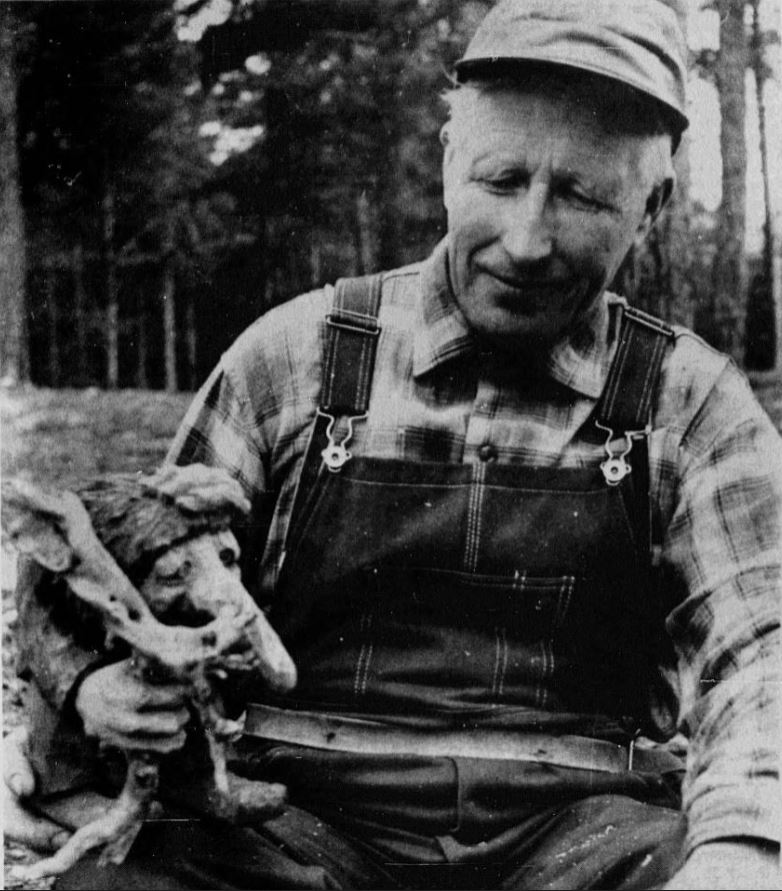
Asbjørn Raanaa (Rånå) was born on 1 September 1914 in Råna, Bjorli, Norway, where he grew up with eight sibilings.
He attended one year at secondary school, two years at Hjerleidske Husflidsskole (Handicraft school) from 1934 and one winter at the Northern Gudbrandsdalen’s School of Agriculture and Home Economics on the historical Klones farm. After this, he was in Son – a densely populated place by the Oslofjord, where he built boats for a few years. He then started as a construction worker in Lesja, Åndalsnes, Dombås and Otta. He has, among other things, helped build the secondary school, the community center and the bank in Dombås, as well as the dry milk factory in Otta. Asbjørn was also a member of the Lesjaskog men’s choir for a number of years. He married Else Kvitrud from Venabygd, and they had three children.
At the age of fifteen/ sixteen he started woodcarving. Although his main profession was carpentry, he continued woodcarving as a hobby and for winter work throughout his life.
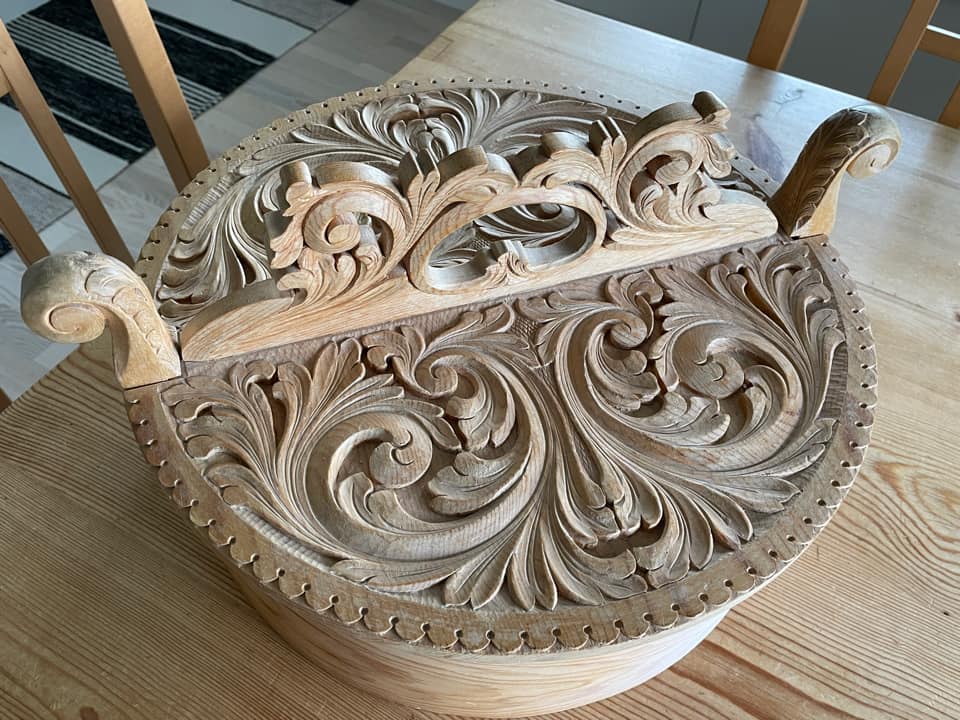
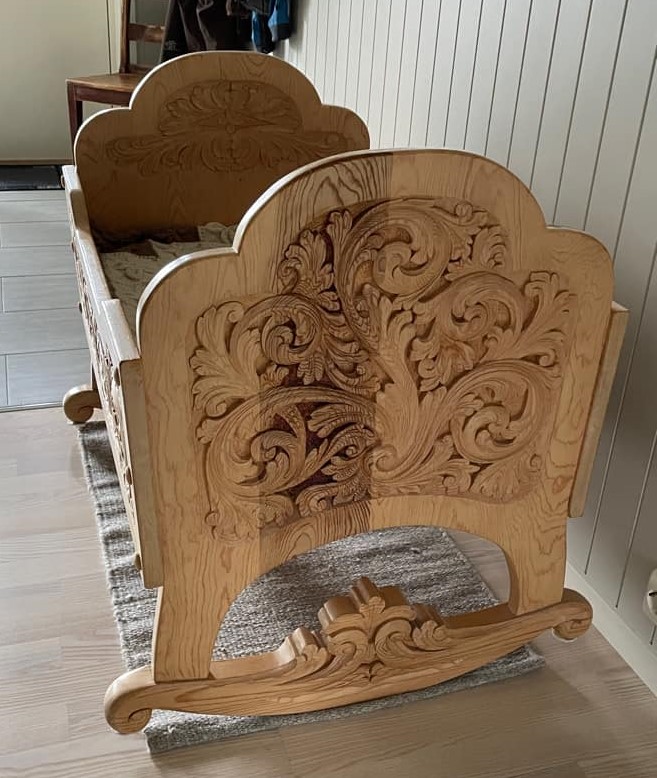
Asbjørn created a workshop at home, and made many long tables, doors, windows and trolls, of which he has produced a lot. He carved many fine things out of wood.


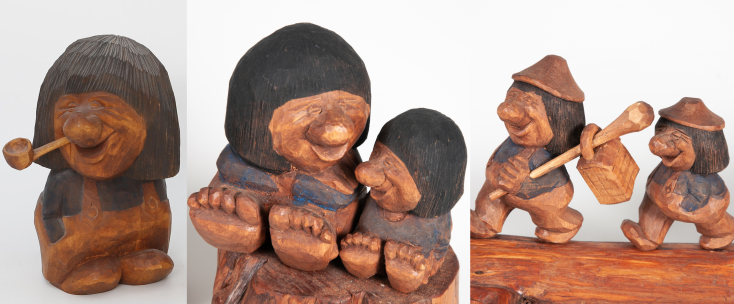
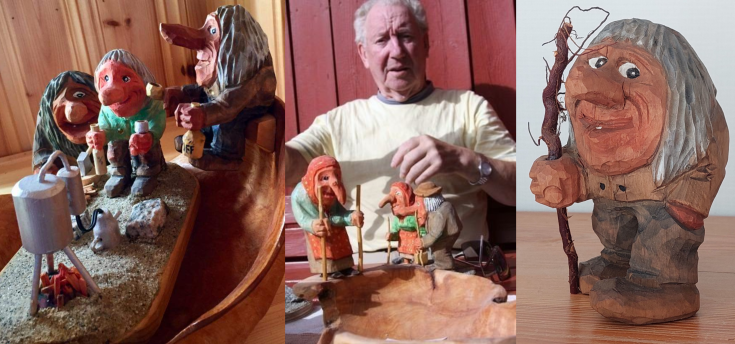
He began creating a unique style of hand carved troll in 1945 at the end of World War 2. The trolls were each a small work of art. In a newspaper article from 1969, Asbjørn mentions that he spent 20 hours making each troll. At the time he was working full-time as a carpenter, so only free time was used for the hobby of souvenir production. However, he still managed to decorate three shops in the district with trolls, carved from birch and alder trees from Dovre.
The trolls sold like hot cakes as “Dovregubber from Dovre” gradually became a concept for tourists. On their journey over Dovrefjell, tourists stopped at Dombås to secure a Dovregubber to take home. The trolls were particularly popular among Americans.
Many of these tourists greeted Asbjørn. “It’s funny”, laughs Asbjørn, “I think most people are disappointed with the acquaintance. They probably think I have taken a model of myself when creating the trolls, and are waiting to meet Dovregubben in person.” (Gudbrandsdølen, 12 July 1969).
His trolls are often holding large walking sticks of natural odd shapes most likely picked directly from the ground. He used earthly colours as you would find them out in nature; at night you would not be sure if you encountered a troll or a dry pine. For some trolls he glued chipped pieces of wood to the top of the troll’s head and painted them black to create textured hair.
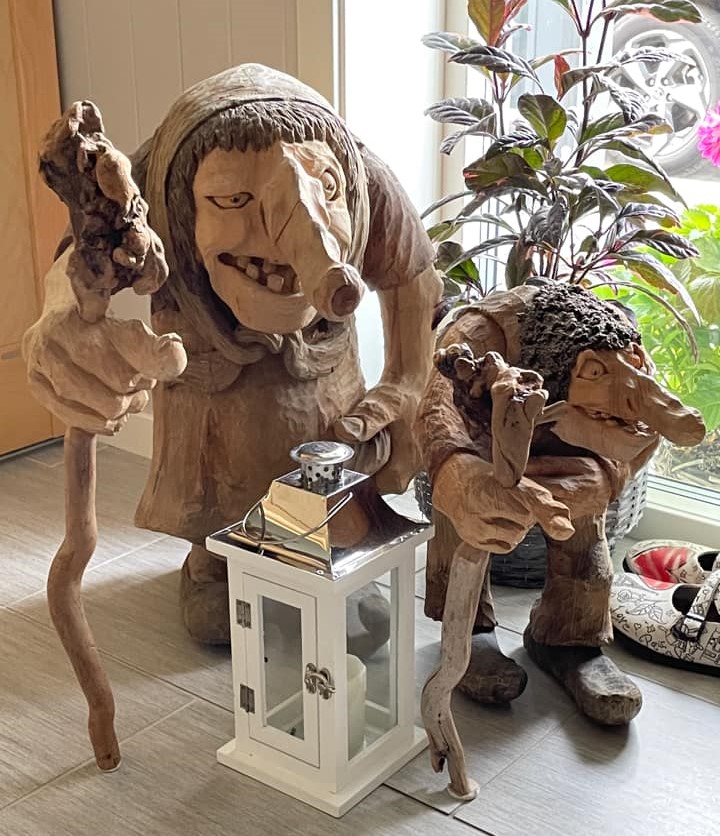


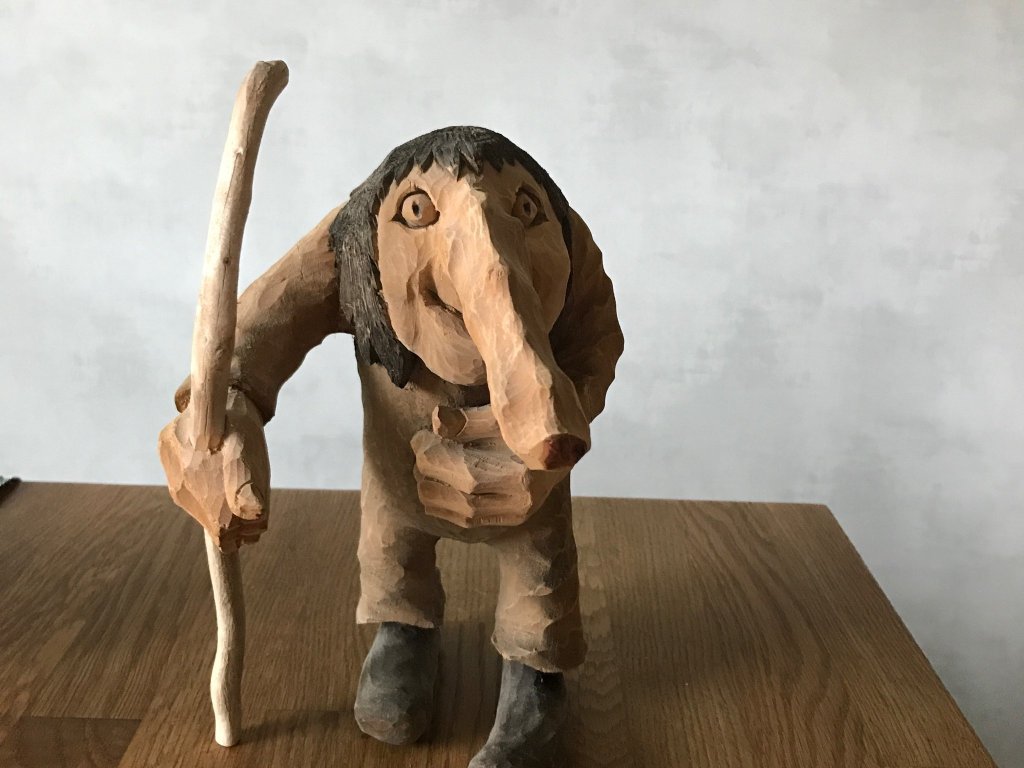
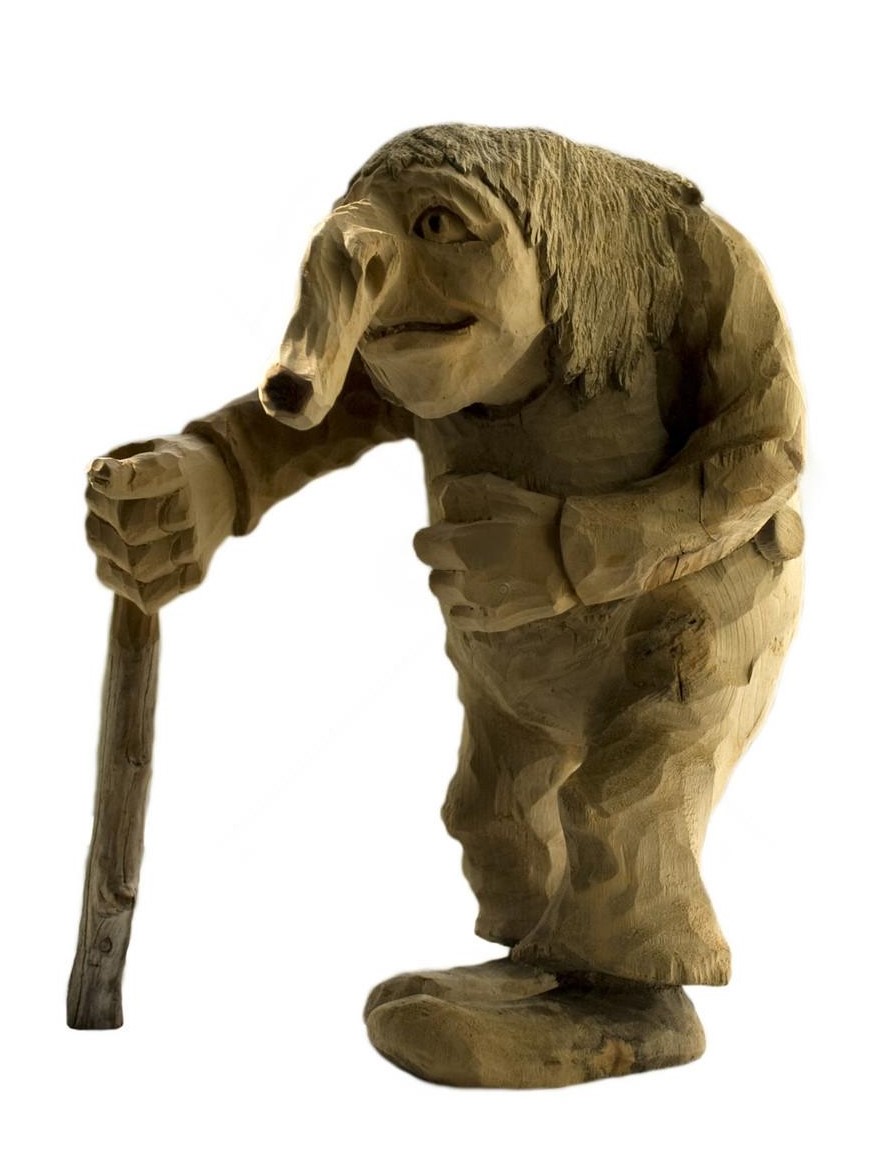
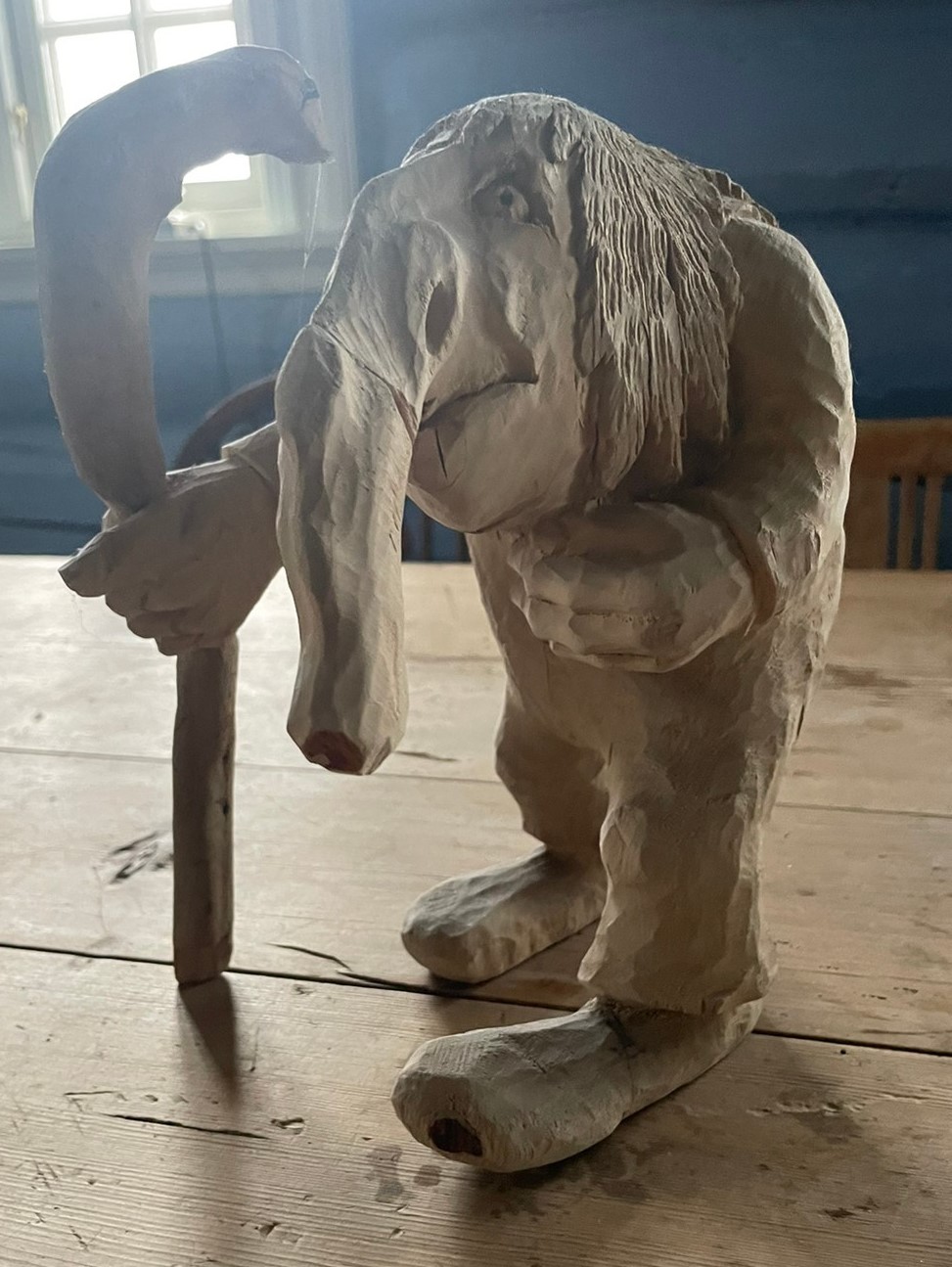
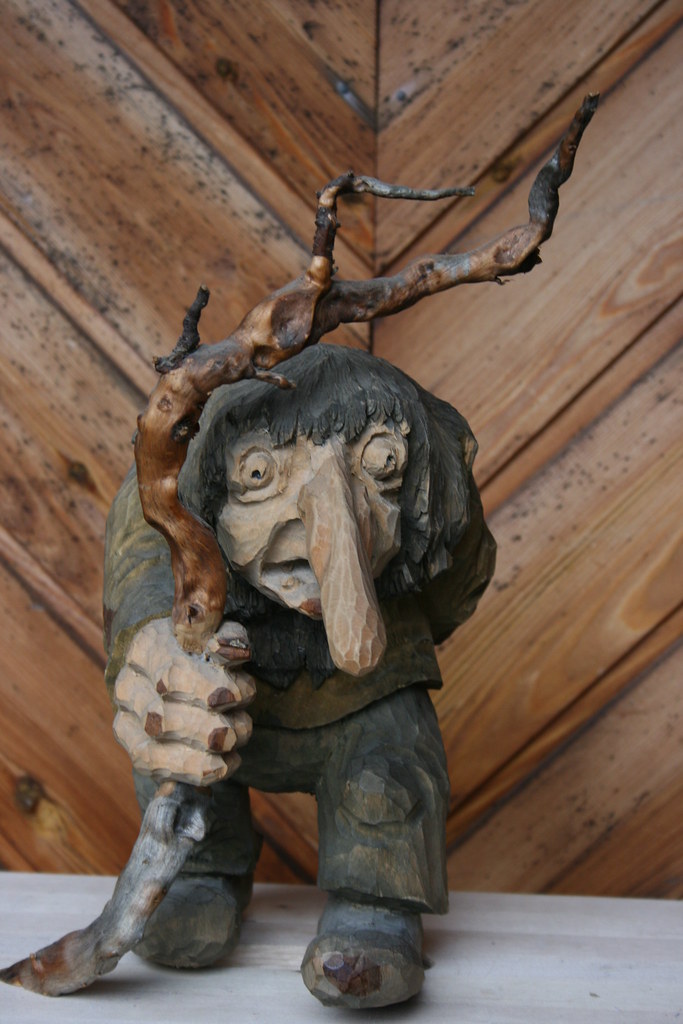
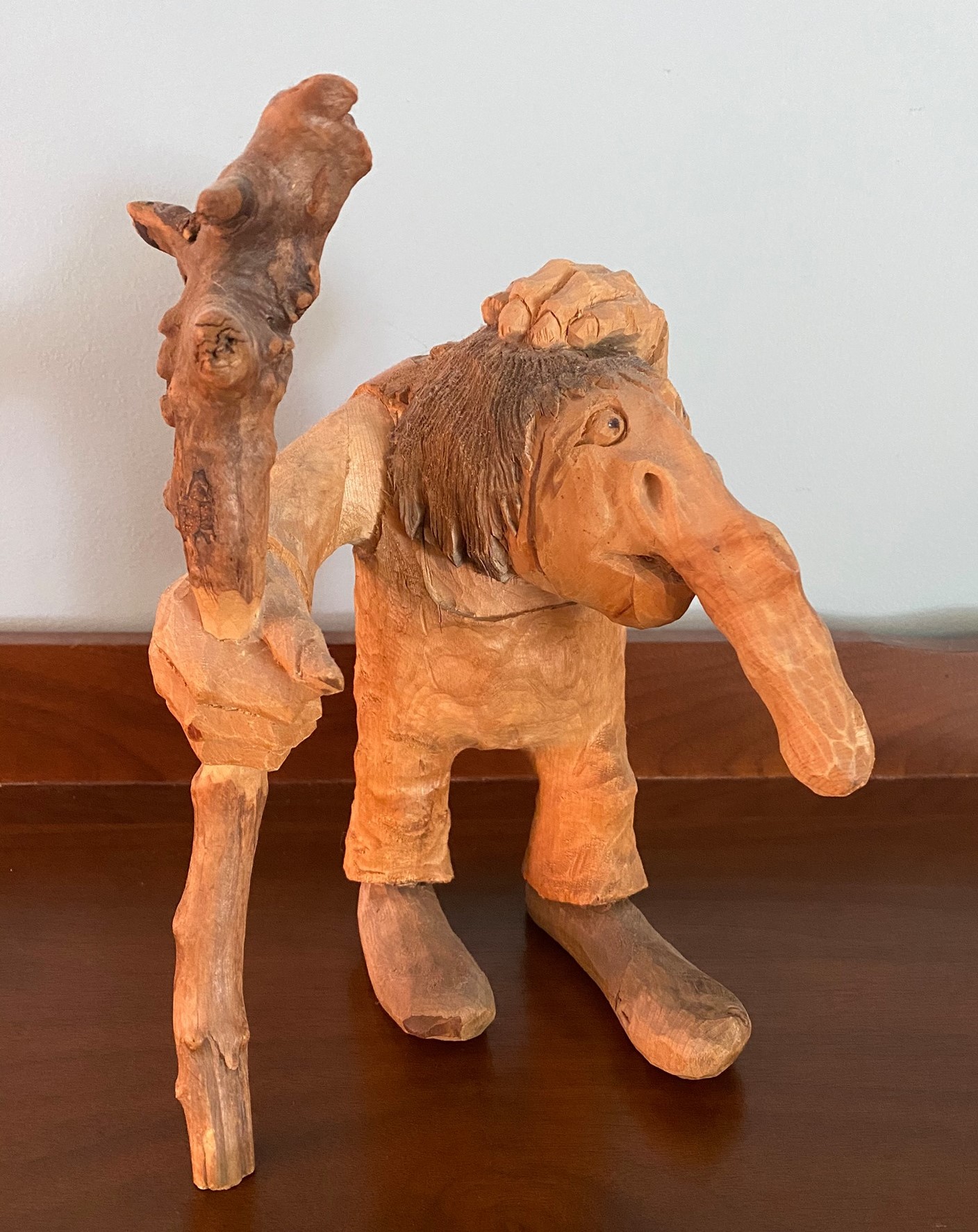
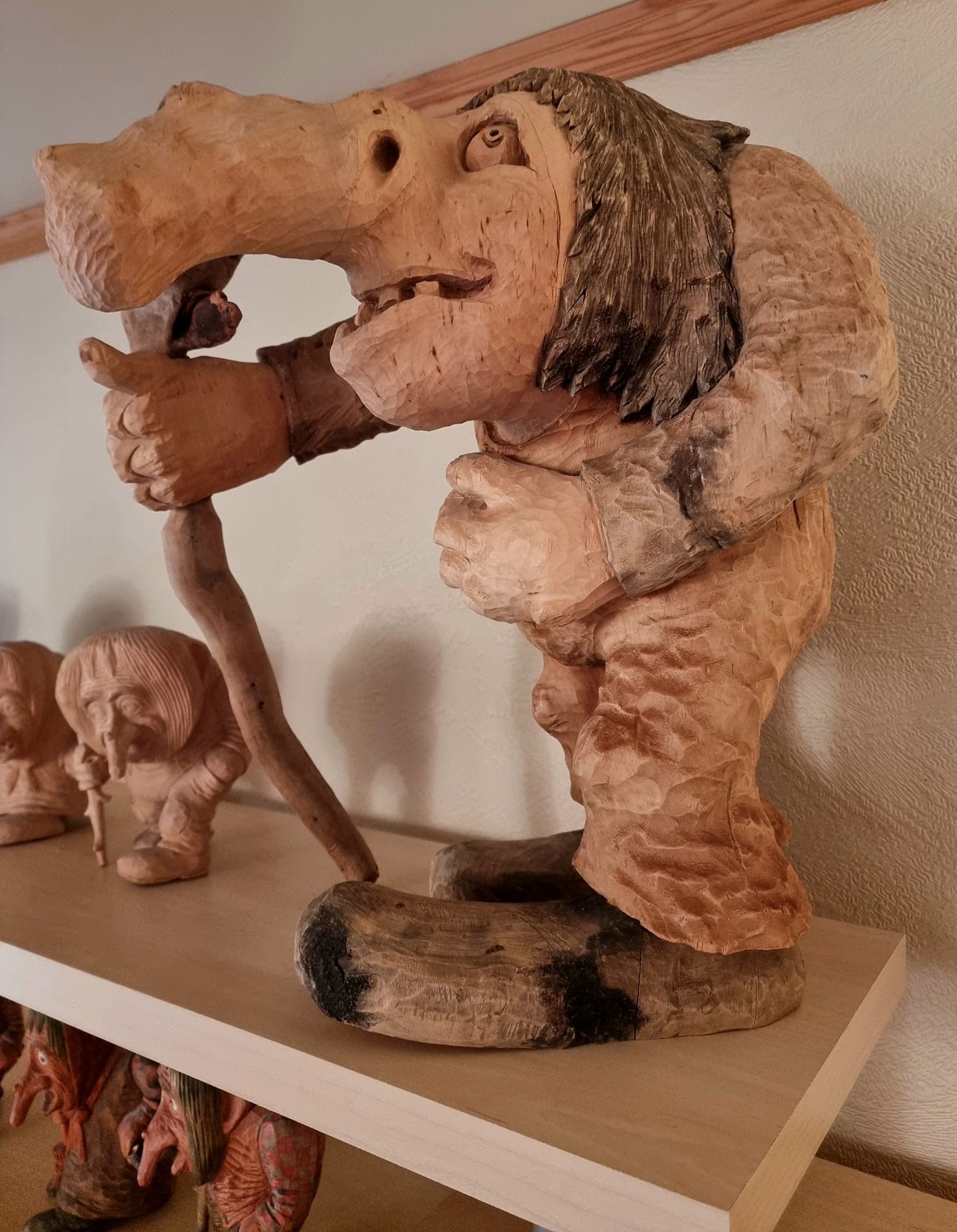
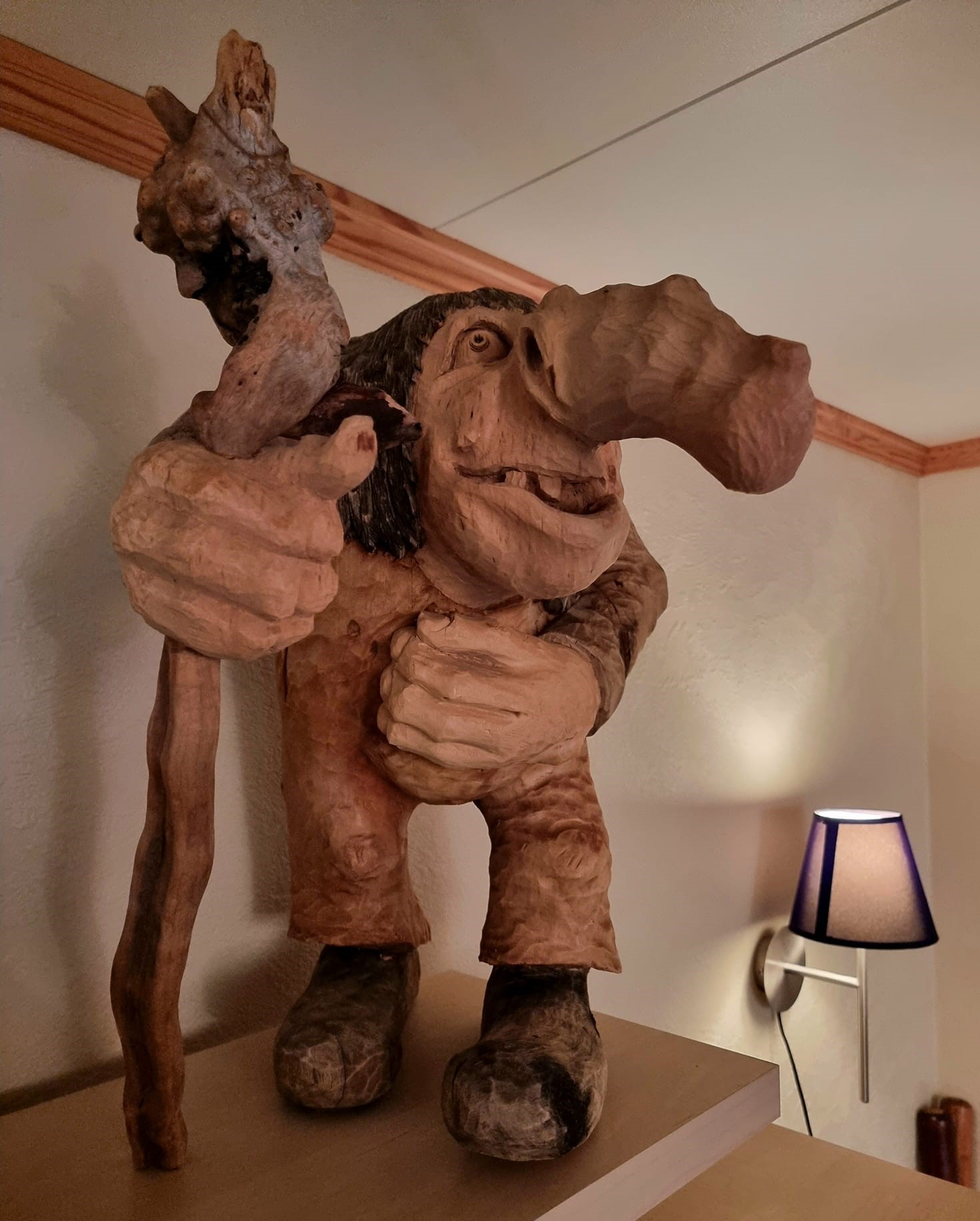

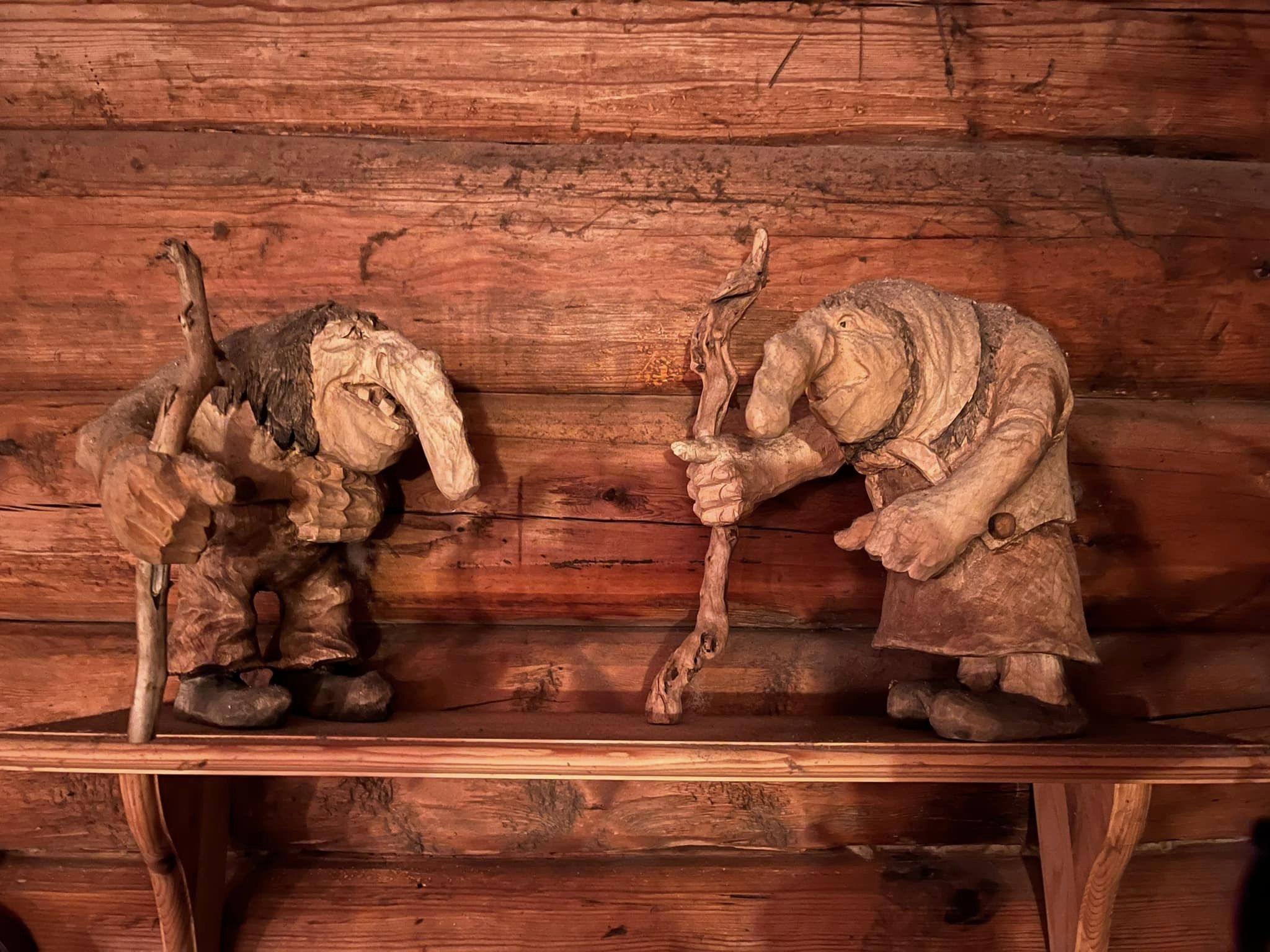

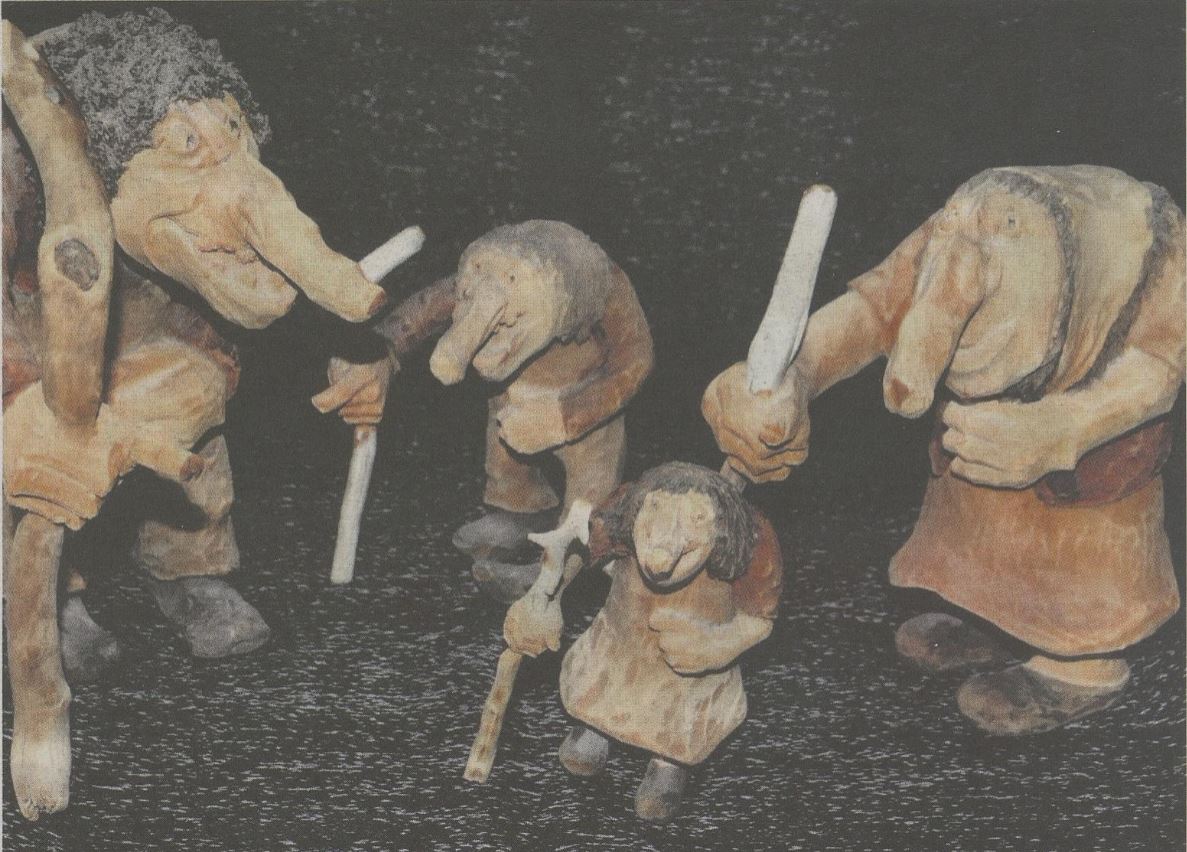
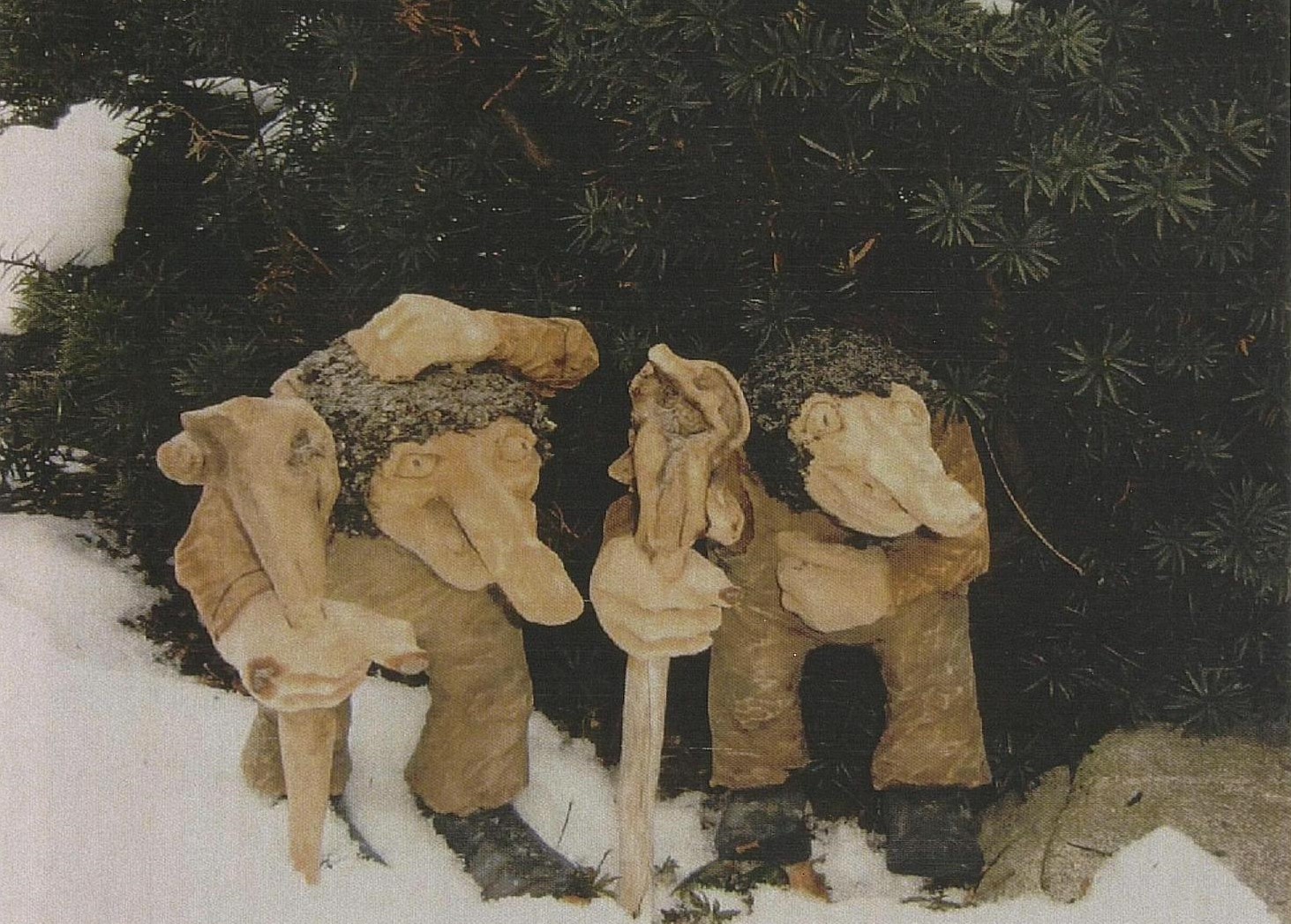
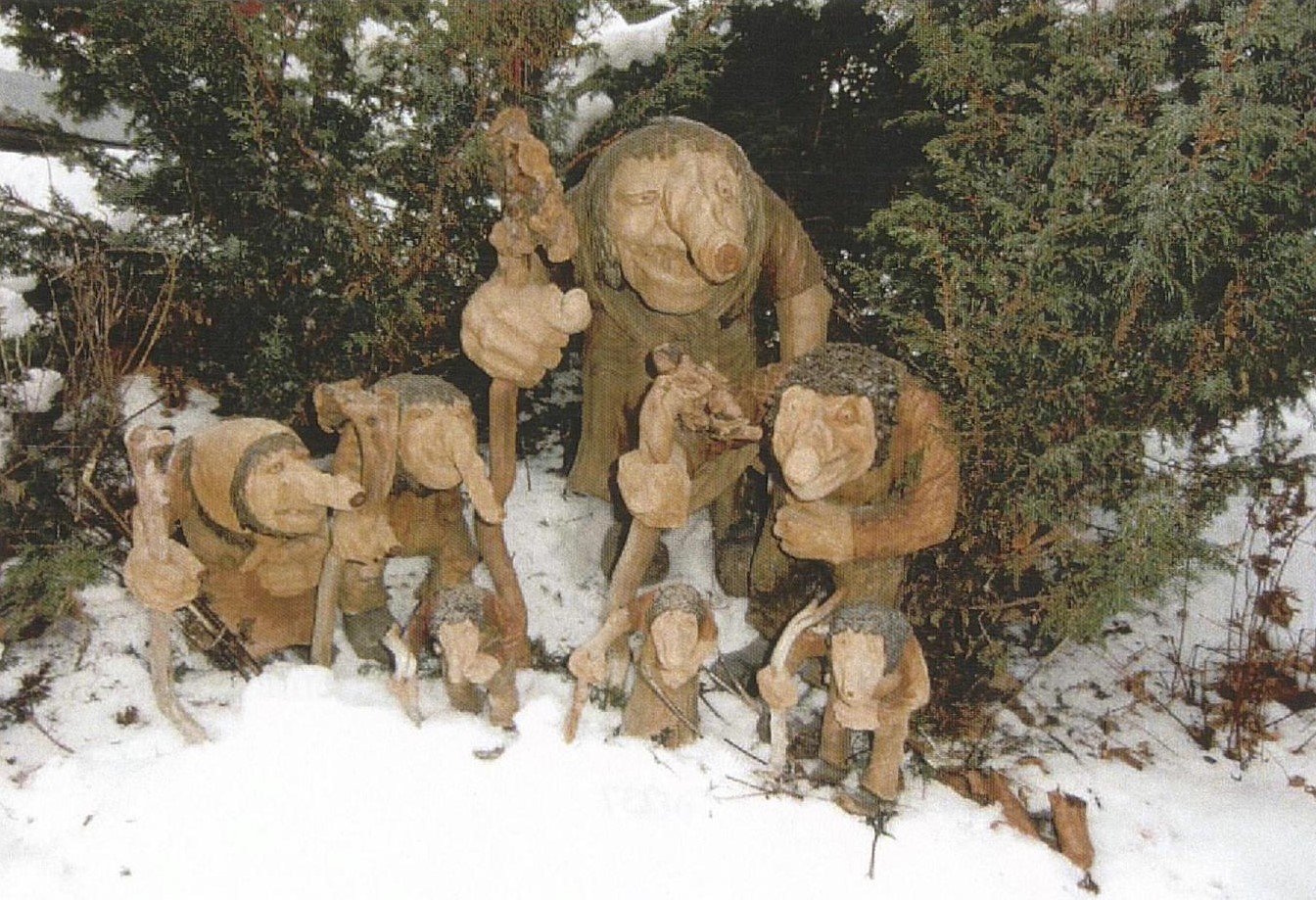
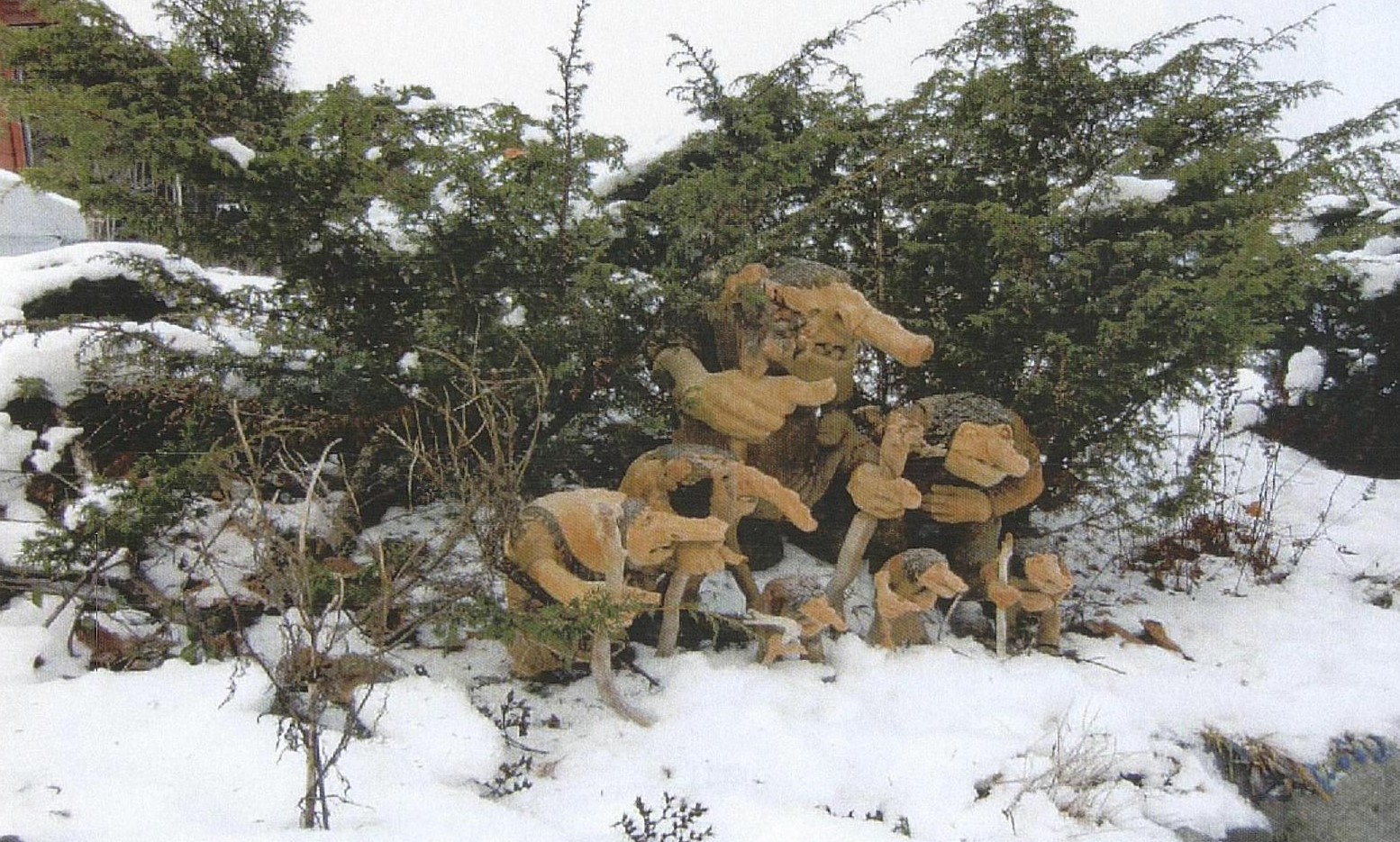
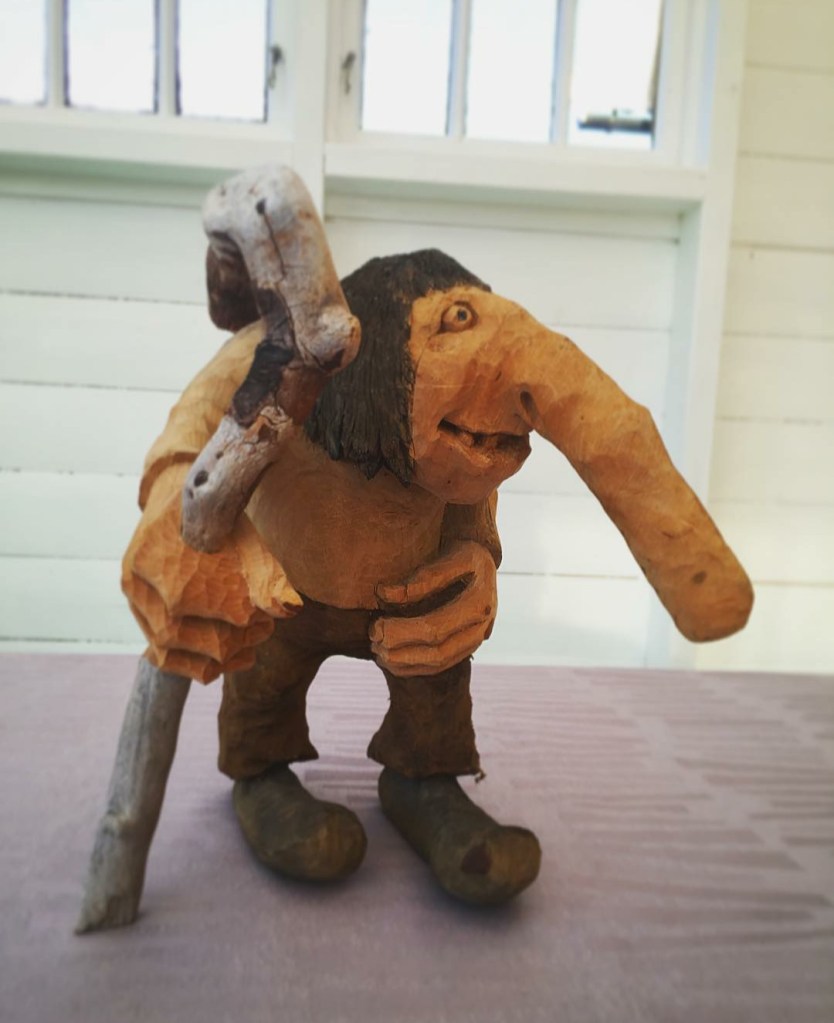
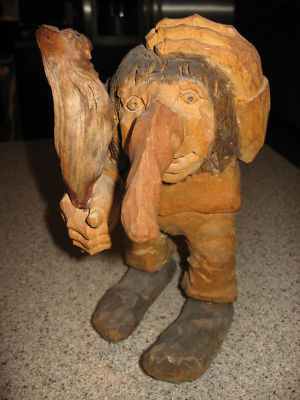

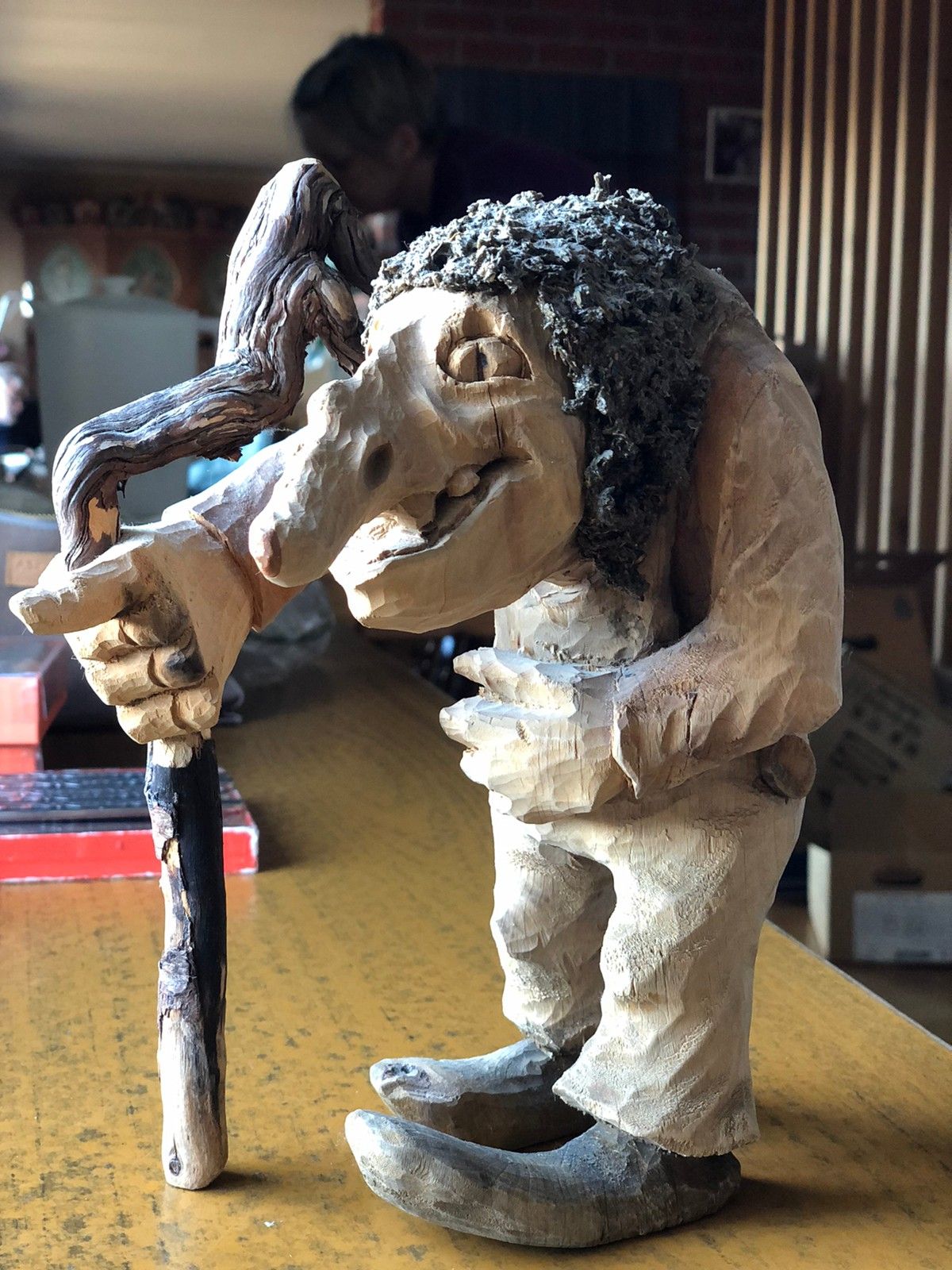
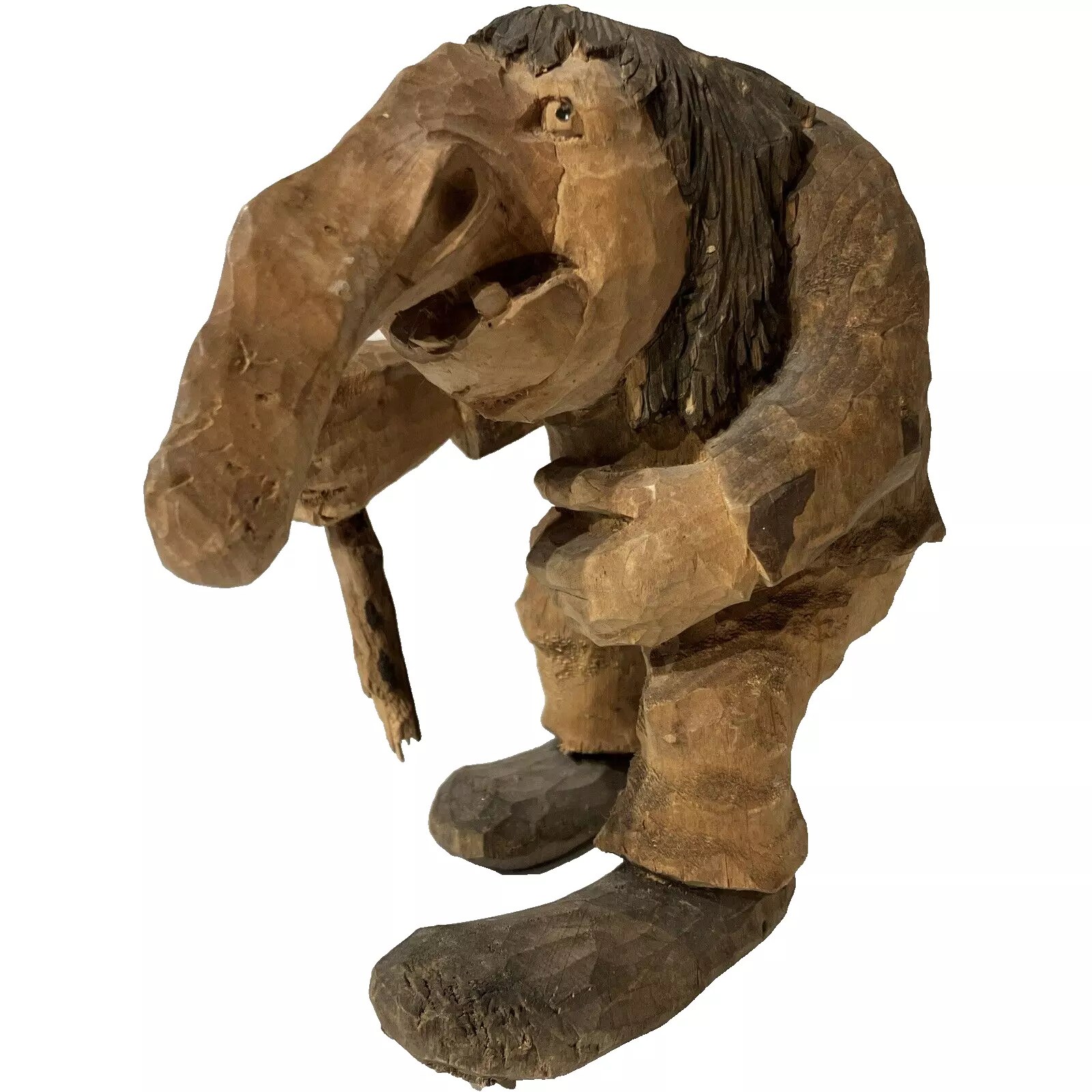
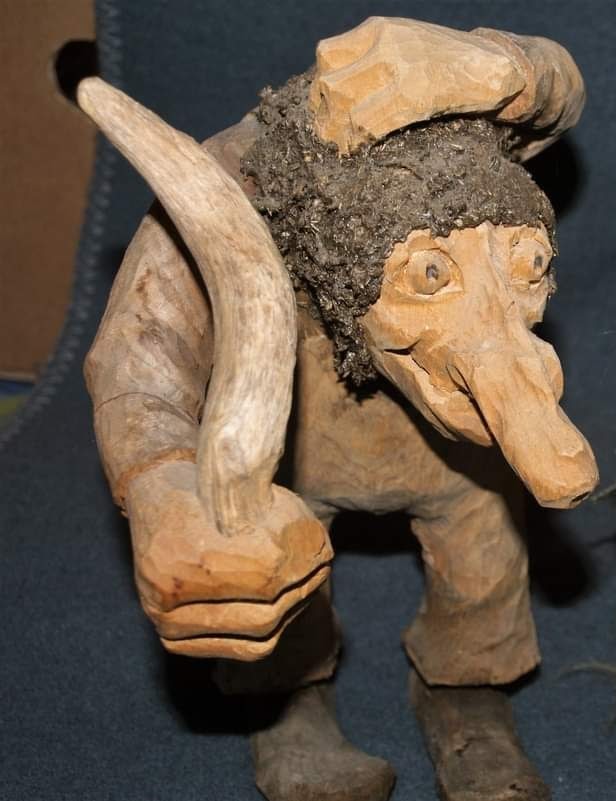
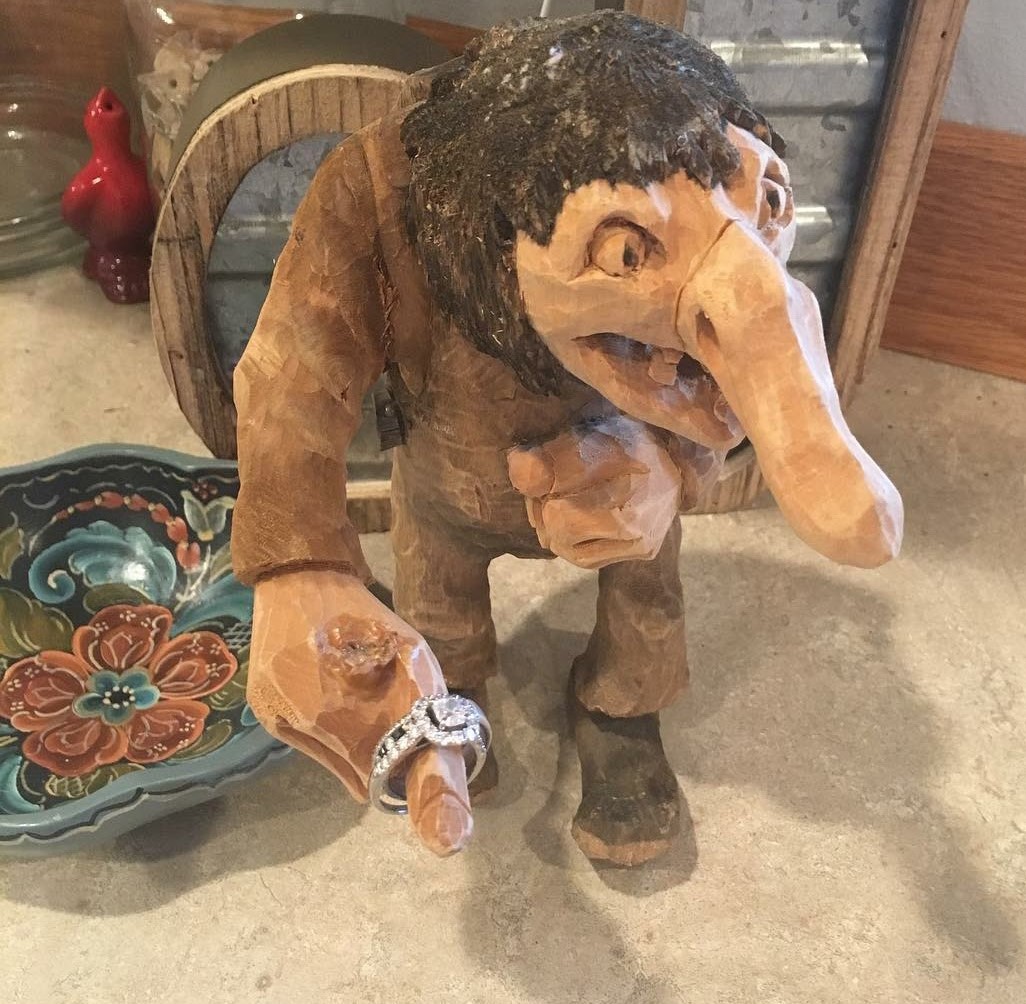
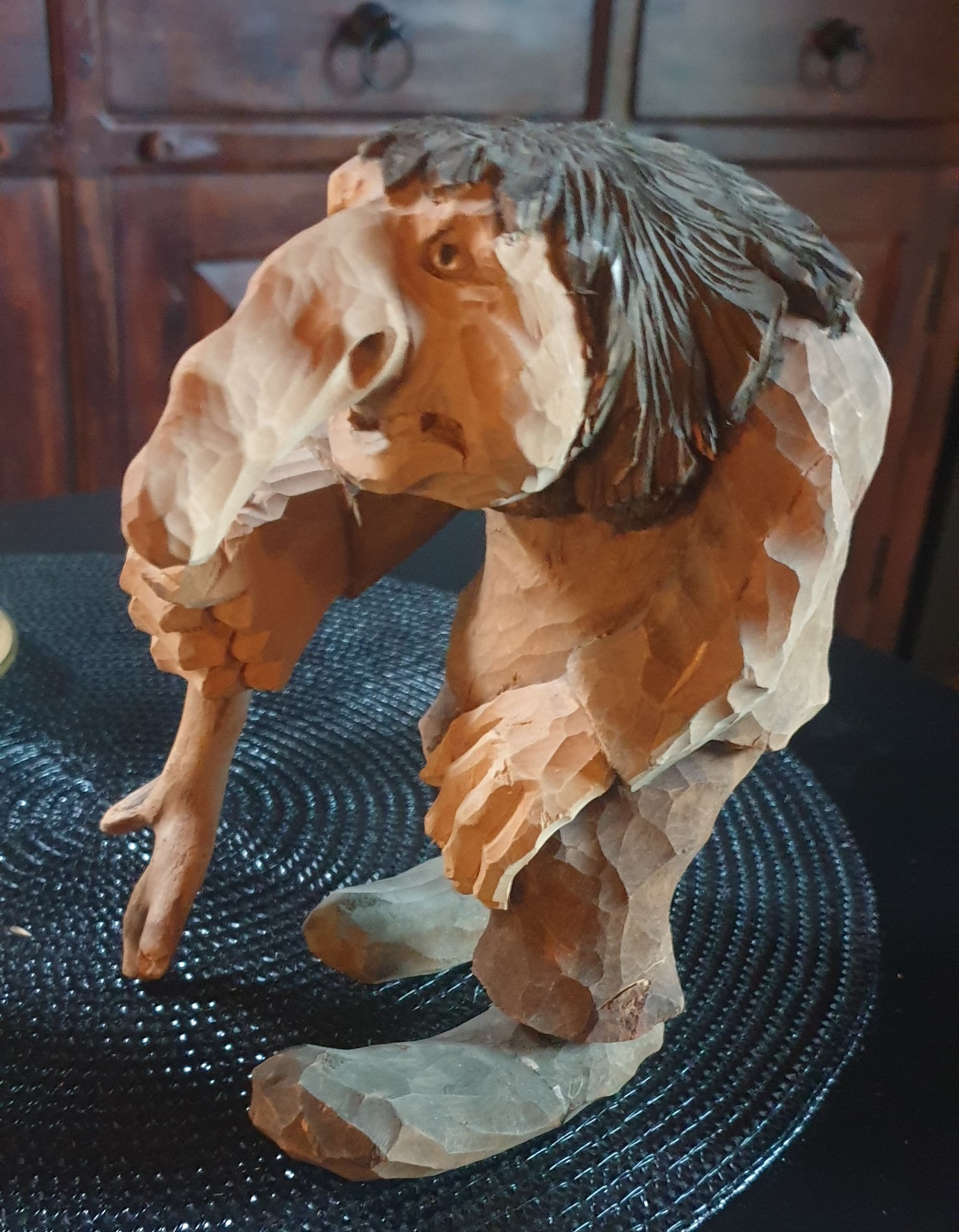
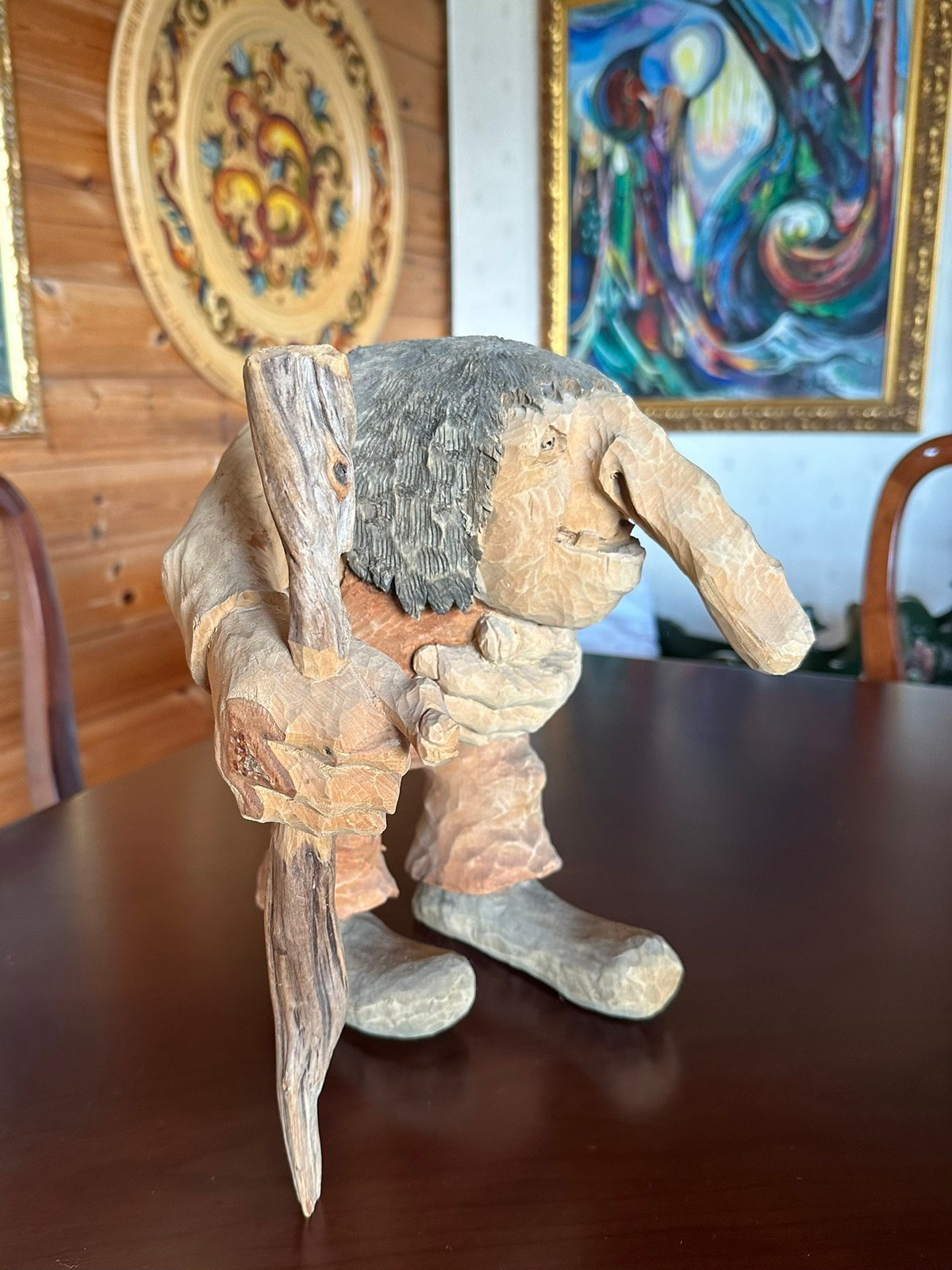
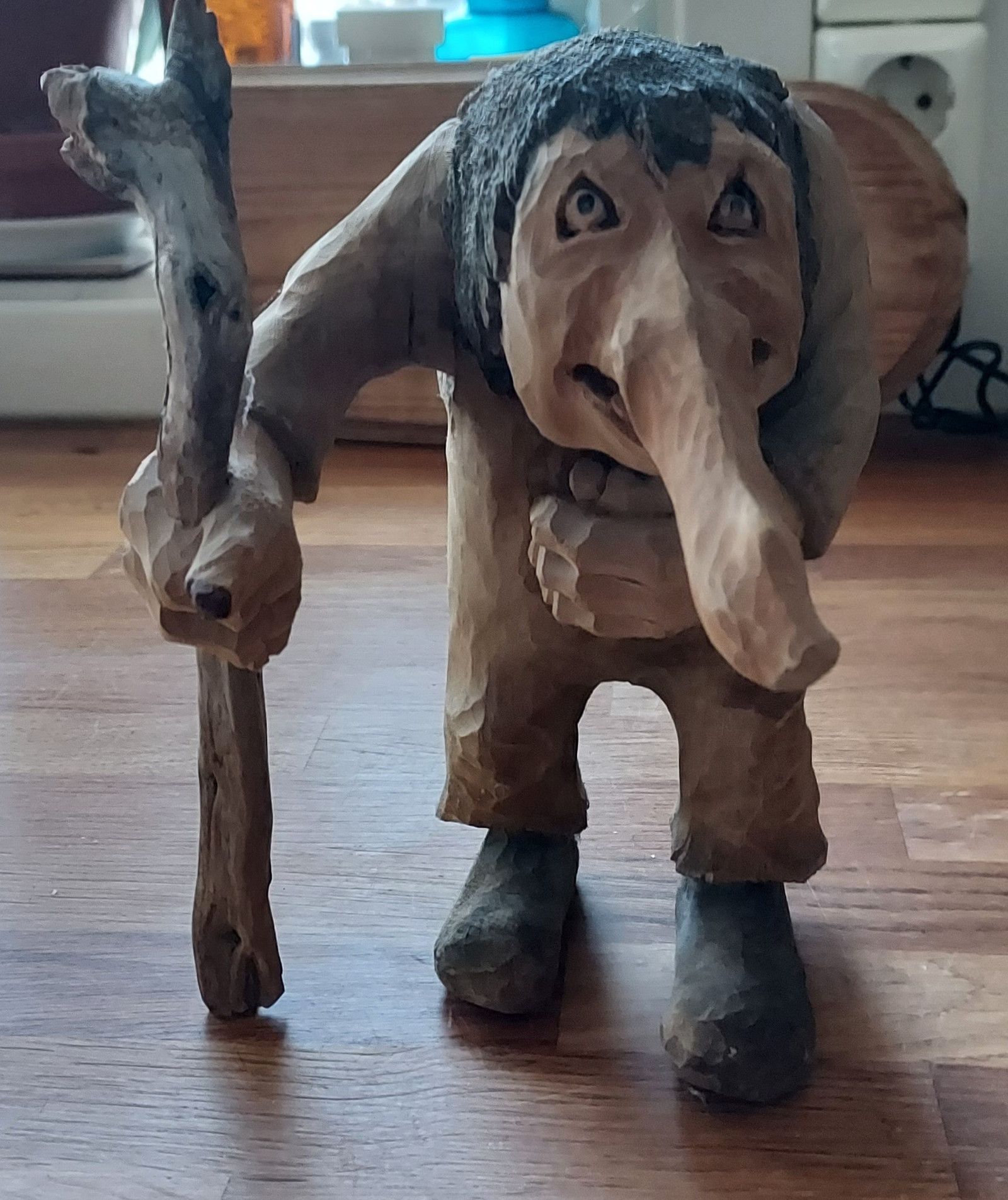


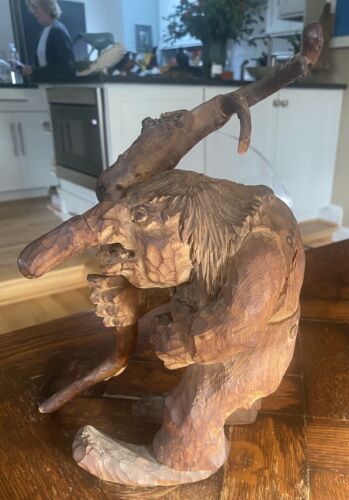


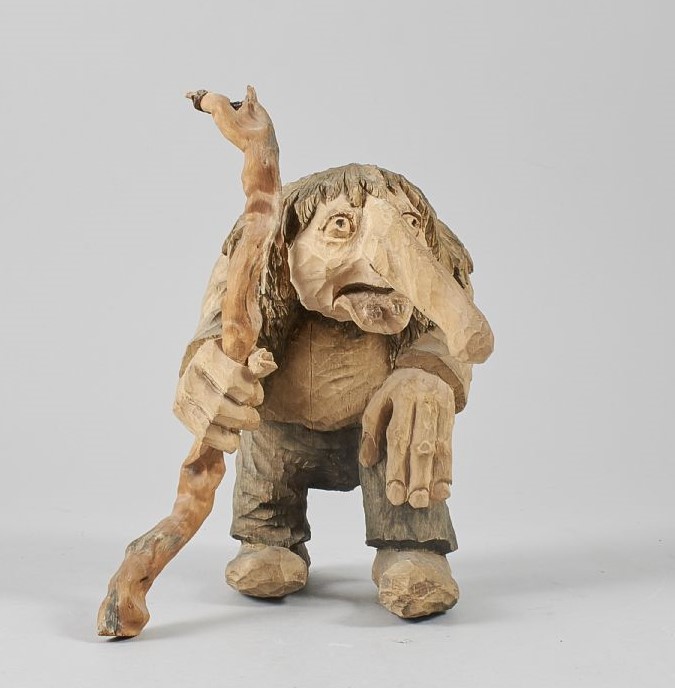
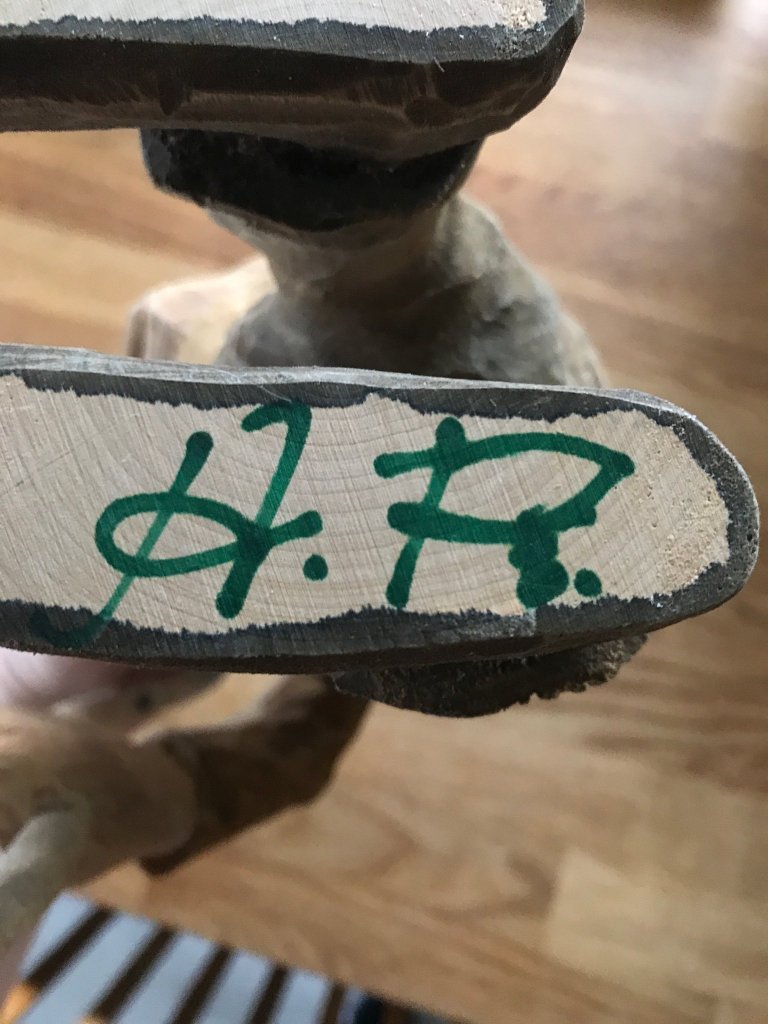
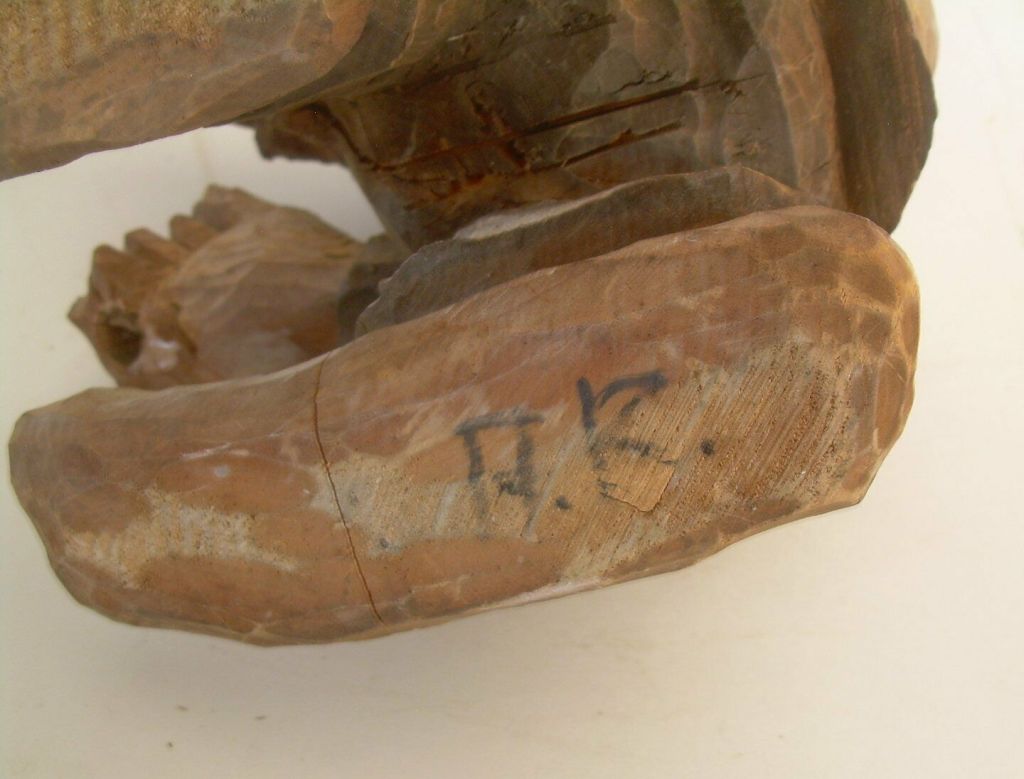
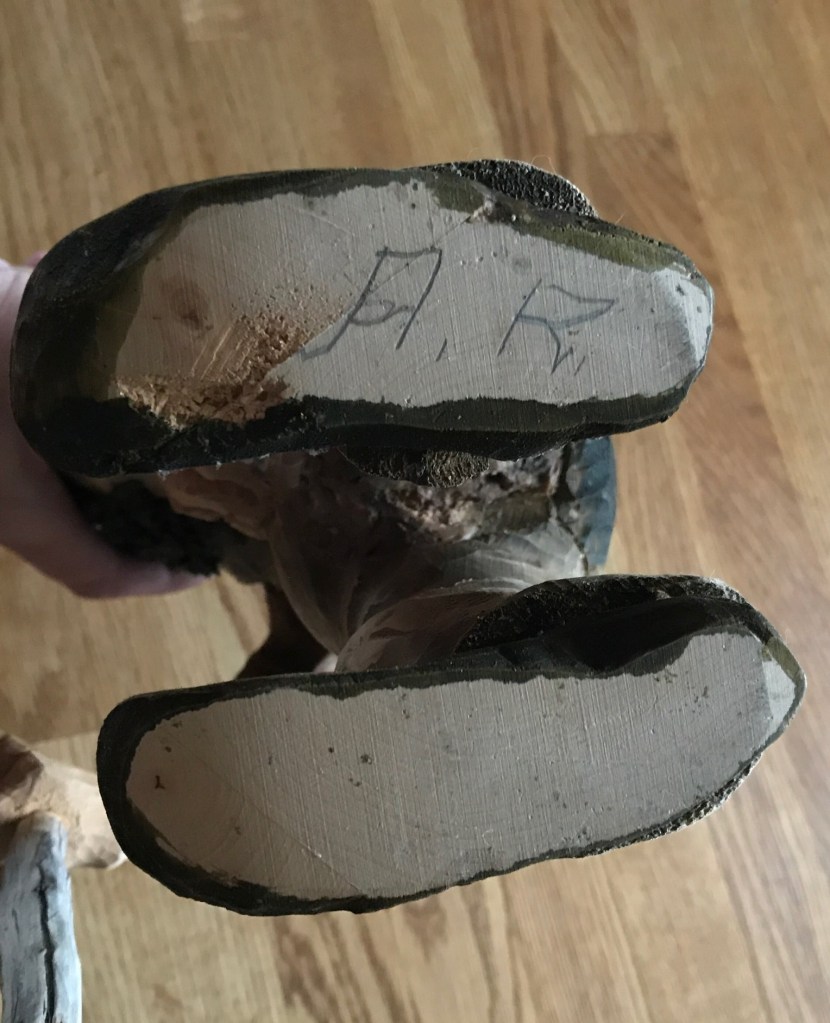
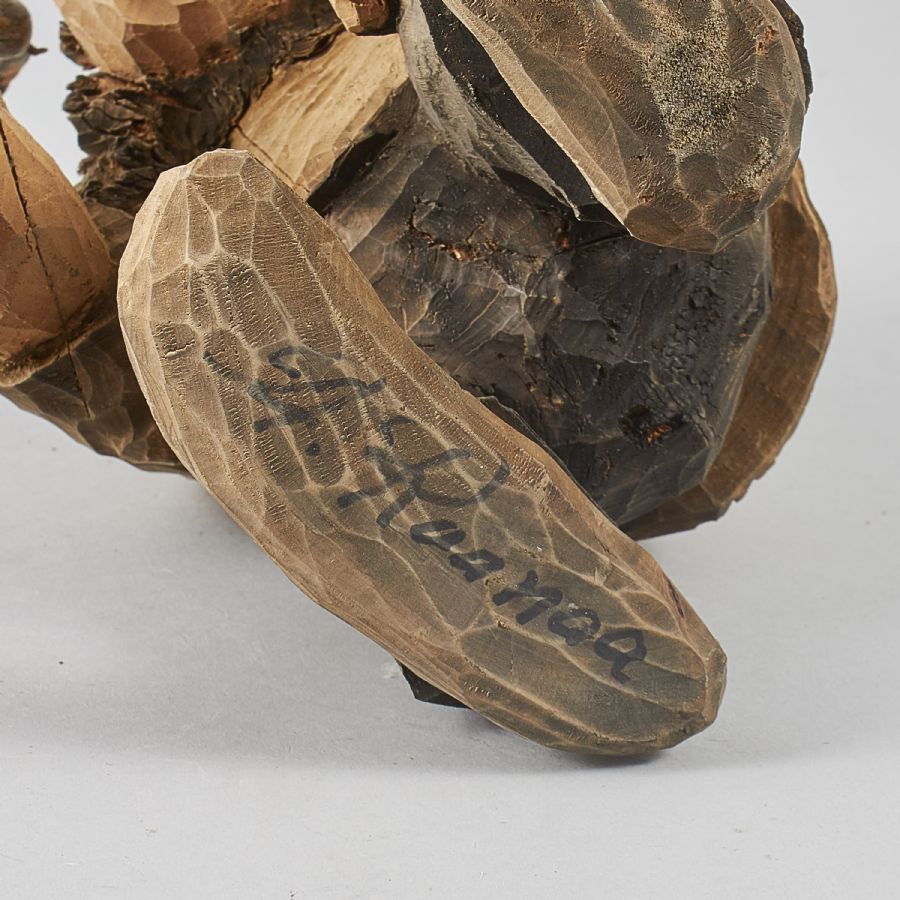
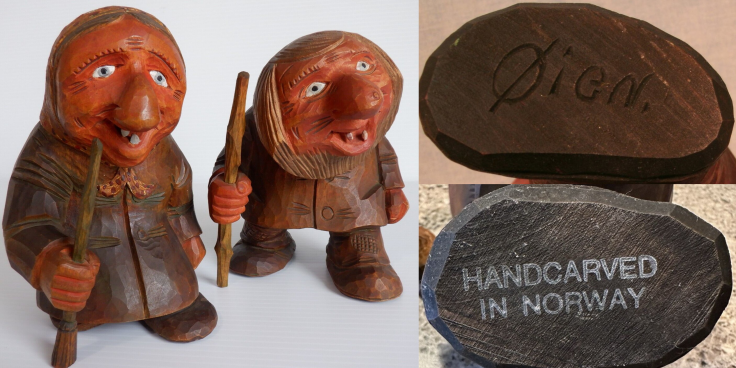
His trolls are usually signed with his initials ”A.R.” but there have also been instances where he has signed the troll ”A. Raanaa” as seen below.
In 1977 Asbjørn and his family were living in the vicinity of Bjorli station, and their house was nicely located in the small forest near Rauma. He received a number of awards for hand carved trolls from abroad, including the USA and Germany. The trolls that he conjures up between his hands look as if they come straight out of the Norwegian fairy tales of Asbjørnsen and Moe. And none of them are exactly the same. There is an incredible amount of creativity and imagination behind his figures. The tourists also thought so, and Asbjørn received quite a few visitors during the summer seasons. However, Asbjørn struggled to meet the demand for his trolls.
“I’m a carpenter, woodcarving is something I do in the winter. When I started carving troll figures, it was not possible to make a living from this alone. Since then I have been doing this on a larger scale for many years now, but only in the winter. I receive such large orders for these wooden figures that I don’t have the strength to fulfill them all. I have a regular delivery of trolls to three businesses in Norway. Two of these are located in Dovre and another in Møre and Romsdal. If the desire to work is good, and it usually is, I can carve around 200 trolls during the winter. If I were to fulfill all the orders I receive, I wouldn’t be able to do anything else.” (Asbjørn Rånå, 1977).
Asbjørn was known to create large human size trolls out of wood. In the Winter of 1981 he made a giant troll that was placed outside Dovregubbens hall in Dovre, where the trolls originally came from. He also created another that was placed in Dombas.
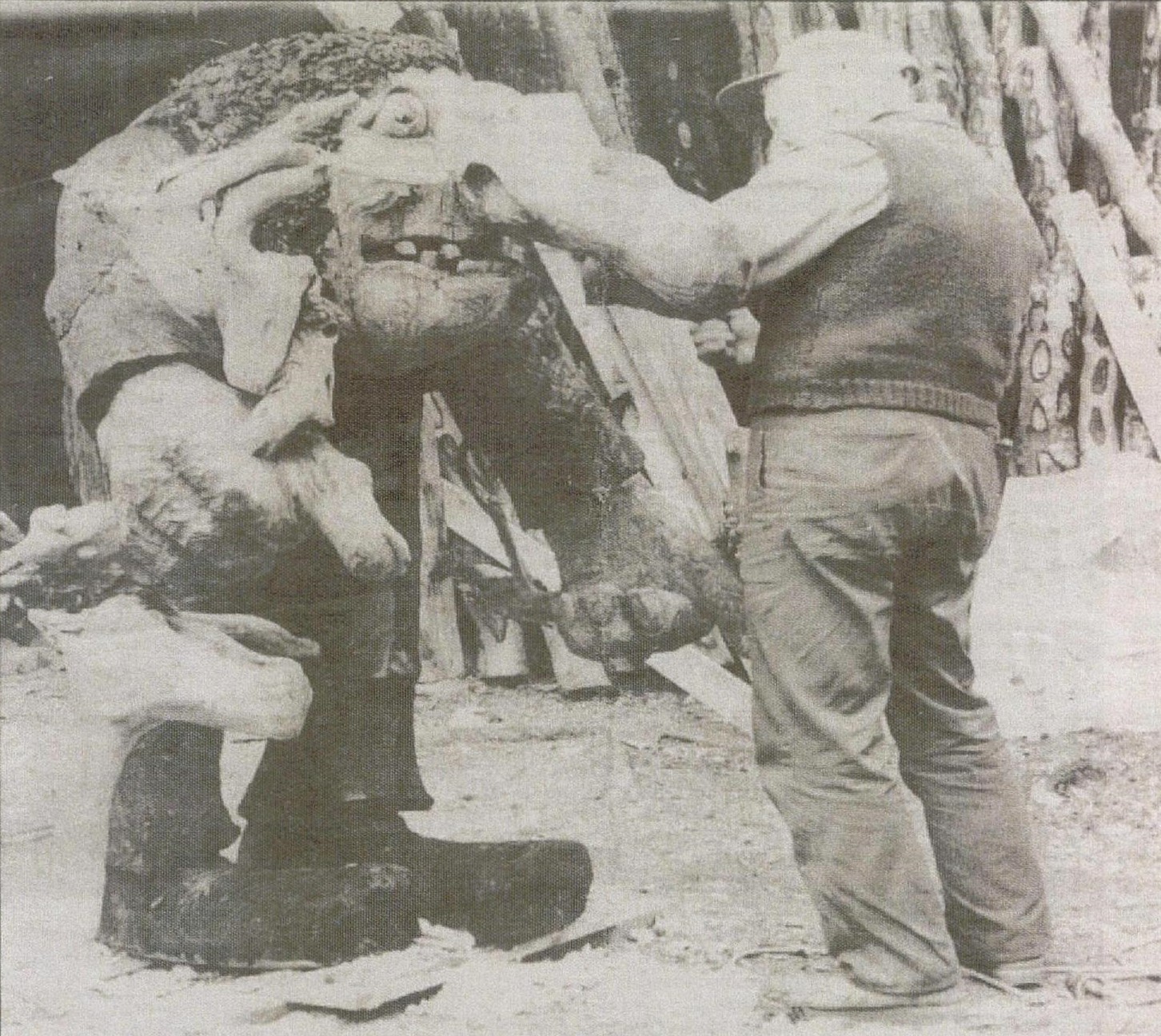
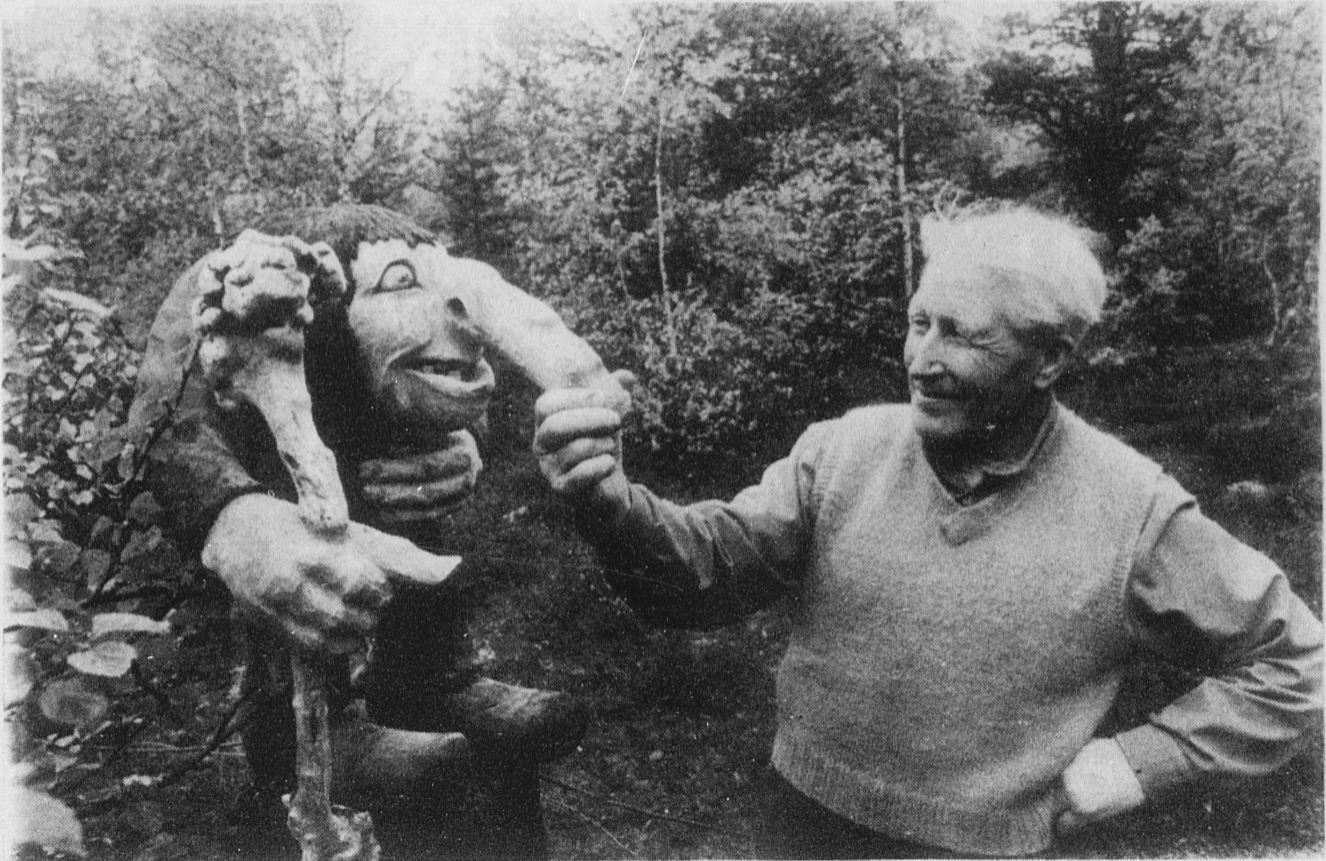
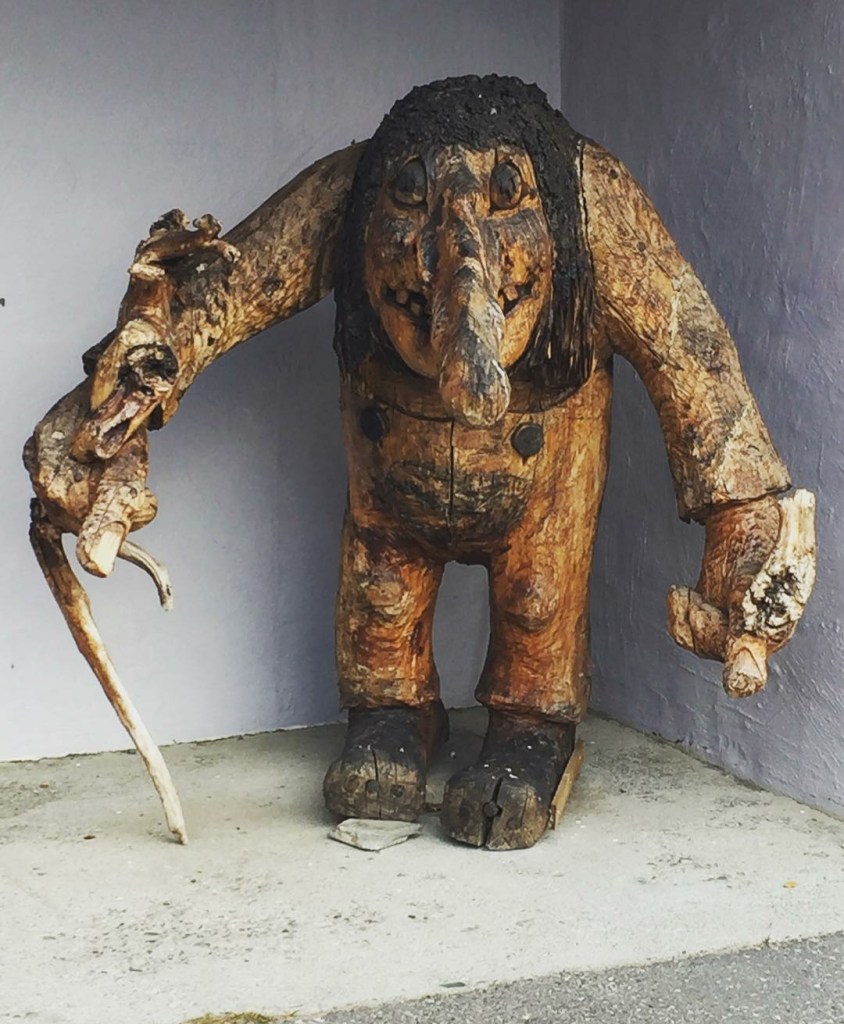
Below is Asbjørn’s large Dovregubben carved troll in Dombås, Norway. The troll has his signature design features – The long nose, long feet, body shape, eyes, etc.

Asbjørn created trolls of different sizes and personalities in his carpentry workshop on the farm. Asbjørn himself said the trolls sold like hot cakes and the three stores that sold them could not get enough. With such a large demand, Asbjørn quit his job as a carpenter and started making trolls full time. ”As long as I have myself as a model, I know the trolls will be good”, said the trollmaker in Bjorli (Source: Norrøna, 15 September 1981).
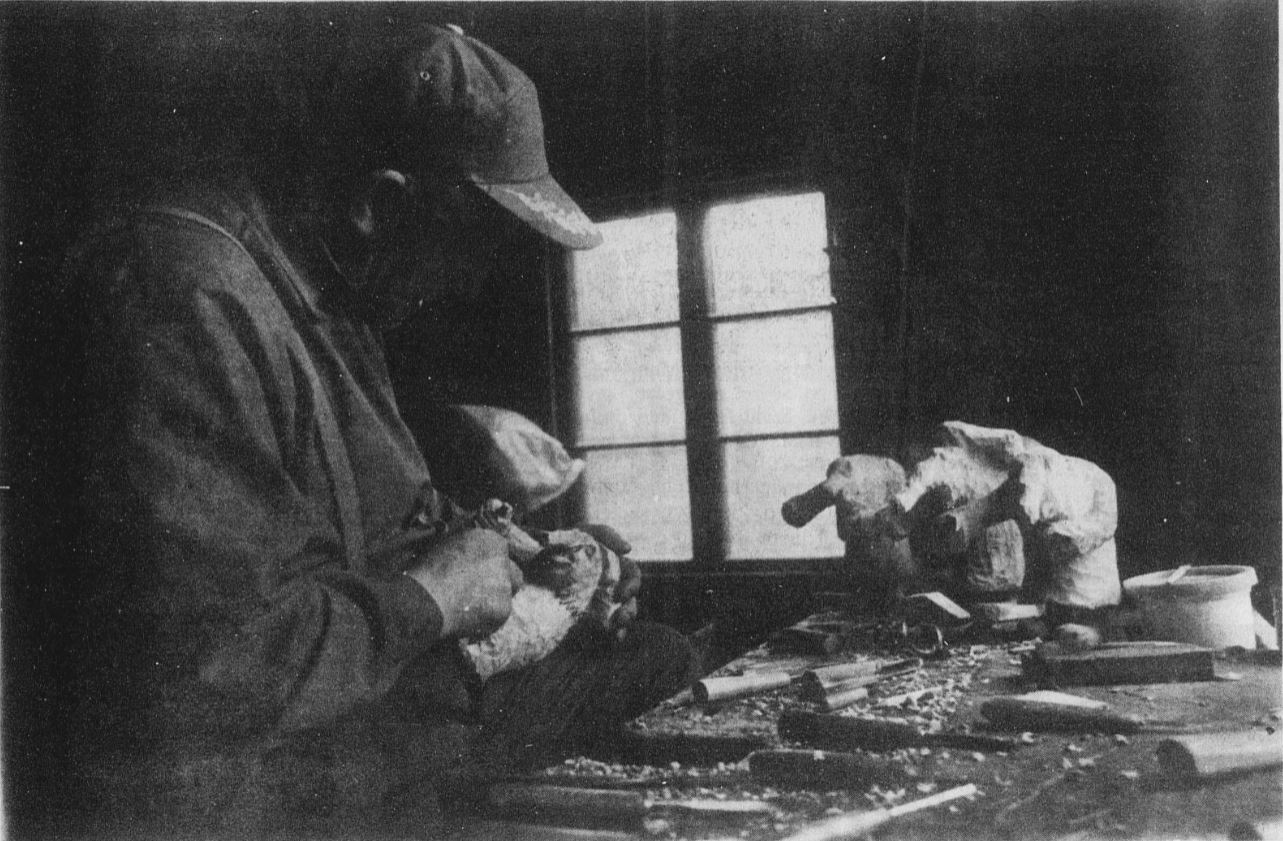
According to Asbjørn’s son, Halvard Raanaa, ”My father carved trolls as a hobby for over 40 years of his life. He probably produced several thousand in total. Each troll was unique. The trolls were sold through shops, and some directly from his workbench.”

Asbjørn passed away on 29 July 2004 at the age of 89. He is buried at the Lesjaskog Church in Norway. Nowadays his trolls don’t come up for sale often and when they do, most people do not know the woodcarver that made them. If you do manage to see one, make sure you add this rare Norwegian troll to your collection.
About the Author
For more articles visit Dayne’s Discoveries Blog, browse our online shop, or contact us to share information, stories, or photographs relating to Asbjørn Raanaa.

 Dayne's Discoveries
Leave a comment